A sulphur-crested cockatoo can scream at 135 decibels, louder than a chainsaw, the moment it feels ignored for five minutes. Cockatoo personality swings between two extremes: velvet-soft cuddling one hour, ear-splitting demands the next. Twenty-one species make up the Cacatuidae family, and each one carries its own blend of intelligence, neediness, and charm inside that same dramatic crest.
Cockatoo personality isn’t a single trait; it’s a full emotional spectrum shaped by species, sex, age, and how much attention a bird actually receives. New owners often fall for the cuddly photos online, then discover the daily reality of a bird that bonds as hard as a dog and screams like a smoke alarm. Understanding what drives this behavior before bringing one home separates a lifelong bond from a rehoming statistic decades later.
What Is a Cockatoo’s Personality Like?
Big emotions define the typical cockatoo, packed into a body that ranges from 12 to 24 inches depending on species. Bonding runs deep and fast, often within the first few weeks in a new home, and that bond rarely fades. Curiosity drives much of the daily behavior, with cockatoos investigating cage locks, drawer handles, and phone chargers using surprising mechanical skill.
Physical affection matters more to this bird family than to almost any other parrot group, including frequent cuddling, preening, and head-scratching sessions. Cockatoo personality can shift within a single day, moving from playful at noon to clingy or irritable by evening if left alone too long. Individual temperament still varies widely, so two birds of the same species can behave completely differently based on early handling and socialization.
Explore the Fascinating World of Cockatoo Parrots. Read more in Cockatoo Parrot Diet, Temperament, and the Commitment Few Expect.
Cockatoo Temperament and Behavior
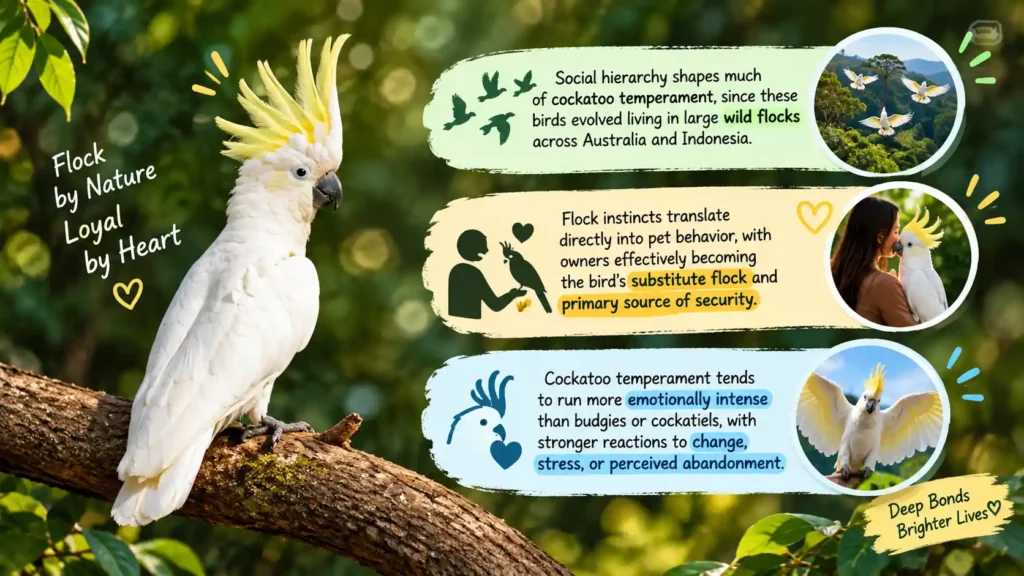
Social hierarchy shapes much of cockatoo temperament, since these birds evolved living in large wild flocks across Australia and Indonesia. Flock instincts translate directly into pet behavior, with owners effectively becoming the bird’s substitute flock and primary source of security. Cockatoo temperament tends to run more emotionally intense than budgies or cockatiels, with stronger reactions to change, stress, or perceived abandonment.
Trust builds slowly with nervous or previously mishandled birds, sometimes taking months before physical contact feels safe. Consistency in daily routine helps stabilize temperament, while sudden schedule changes often trigger anxiety or regression. Positive reinforcement training, rather than punishment, produces the most reliable long-term behavior results according to avian behaviorists.
Are Cockatoos Affectionate?
Yes, cockatoos rank among the most physically affectionate pet birds, frequently described as “velcro birds” for their tendency to stay glued to an owner’s shoulder or lap. Cuddling, mutual preening, and head-scratches count as standard daily bonding behaviors for a well-socialized bird. Independence often suffers as a result, since many cockatoos develop separation anxiety without deliberate training.
Are Cockatoos Good With People?
Strangers often receive a more cautious reception than the primary bonded owner, especially from cockatoos that imprinted heavily on one person. Children can be wonderful companions for a well-socialized bird, though supervision matters given the bird’s strong beak and unpredictable startle response. Multiple household members sharing handling duties from an early age produces a more balanced, people-friendly adult bird. Jealousy toward a partner or new baby is a documented issue, particularly in single-bonded cockatoos, and requires proactive management rather than punishment.
How Intelligent Are Cockatoos?
Problem-solving skills place cockatoos among the smartest birds on the planet, rivaling some primates in controlled cognitive tests. Goffin’s cockatoos, in particular, have demonstrated composite tool use in peer-reviewed research published in Scientific Reports, combining a stick and a ball to retrieve food from a puzzle box. Object permanence and flexible problem-solving under changing conditions have both been confirmed in university studies.
Cockatoo personality shifts noticeably when this intelligence goes unused, since a bored, understimulated bird channels that brainpower into screaming, feather plucking, or escape attempts. Puzzle feeders, foraging toys, and daily short training sessions give the bird’s mind a productive outlet. Locks, latches, and cage doors rarely stay secure for long once a cockatoo decides to investigate them.
Cockatoo Social Behavior
Flock-based instincts drive nearly every social interaction a pet cockatoo has with its household. Physical closeness ranks as a primary social need, with many birds refusing to play independently for more than short stretches. Vocal communication serves a social function too, including contact calls meant to check where flock members are located.
Preening between a cockatoo and its owner mimics natural flock grooming and reinforces the bond on a near-daily basis. Isolation, even for a single day, can register as a genuine threat to a highly social cockatoo. Multi-bird households sometimes work well, though introductions require careful, gradual supervision to prevent territorial conflict.
Do Cockatoos Need a Lot of Attention?
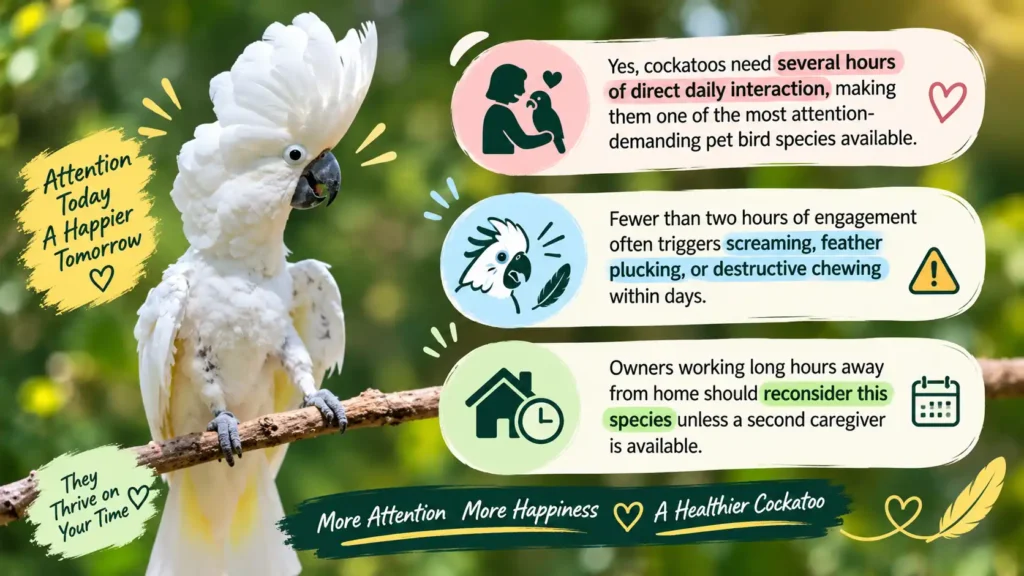
Yes, cockatoos need several hours of direct daily interaction, making them one of the most attention-demanding pet bird species available. Fewer than two hours of engagement often triggers screaming, feather plucking, or destructive chewing within days. Owners working long hours away from home should reconsider this species unless a second caregiver is available.
Are Cockatoos Loud and Destructive?
Yes, cockatoo vocalizations can reach 130 decibels or more, comparable to a jet engine at takeoff, and daily chewing destroys wood, drywall, and furniture without proper redirection. Loudness varies by species, with Moluccan cockatoos ranking among the loudest and Goffin’s cockatoos considered comparatively quieter. Dedicated chew toys and scheduled screaming-free training reduce, but rarely eliminate, both behaviors.
Cockatoo Personality by Species
Species identity accounts for much of the personality variation seen across the cockatoo family, according to breeders and avian behavior specialists. Cockatoo personality by species ranges from the boisterous Moluccan to the comparatively mellow Goffin’s, with noise level, cuddliness, and independence all shifting noticeably between types. Sulphur-crested cockatoos tend toward high energy and strong opinions, while Umbrella cockatoos lean into clinginess and gentle affection. Galahs, smaller and often calmer, suit owners wanting cockatoo charm without the loudest extremes.
The table below breaks down common personality traits by species for a quick side-by-side comparison, useful for anyone comparing which cockatoo might fit their home.
| Species | Typical Personality | Noise Level | Best Suited For |
| Umbrella Cockatoo | Affectionate, clingy, gentle | High | Owners home most of the day |
| Moluccan Cockatoo | Intense, emotional, deeply bonded | Very High | Experienced owners only |
| Sulphur-Crested Cockatoo | Bold, energetic, opinionated | Very High | Active, engaged households |
| Goffin’s Cockatoo | Playful, curious, comparatively quiet | Moderate | First-time cockatoo owners |
| Galah (Rose-Breasted) | Sweet, mellow, less destructive | Moderate | Smaller households, apartments |
| Citron-Crested Cockatoo | Sensitive, loyal, prone to anxiety | High | Calm, low-stress homes |
Male vs. Female Cockatoo Behavior Differences
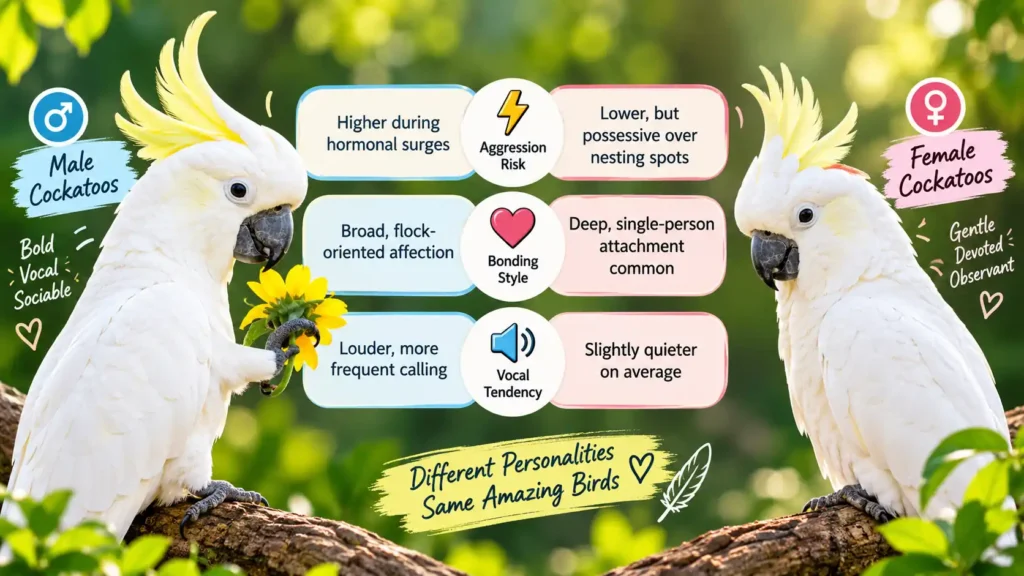
Sex-based behavior differences exist in cockatoos, though individual variation often outweighs generalizations tied strictly to gender. Male cockatoos are frequently described as more prone to sudden aggression during hormonal periods, particularly in species like the Umbrella and Moluccan. Female cockatoos often show steadier temperaments day to day, though hormonal nesting behavior can trigger possessiveness over a chosen person or nest-like space. Neither sex reliably outperforms the other for trainability, speech, or affection level, based on data from experienced breeders and rescue organizations.
The comparison below highlights general tendencies rather than guarantees for any individual bird, since upbringing shapes behavior as much as biology does.
| Trait | Male Cockatoos | Female Cockatoos |
| Aggression Risk | Higher during hormonal surges | Lower, but possessive over nesting spots |
| Bonding Style | Broad, flock-oriented affection | Deep, single-person attachment common |
| Vocal Tendency | Louder, more frequent calling | Slightly quieter on average |
| Hormonal Season Behavior | Increased biting, territoriality | Nesting and egg-laying behaviors, mood shifts |
How a Cockatoo’s Personality Changes With Age
Baby cockatoos generally appear cuddly, calm, and eager to please during the first year. Adolescence brings the biggest behavior shift, typically starting between one and three years old, when boundary-testing and biting increase sharply. Sexual maturity, arriving around three to seven years depending on species, introduces hormonal behavior including increased aggression, nesting instincts, and possessiveness.
Adult cockatoos between roughly seven and thirty years old tend to settle into a more predictable, stable temperament with consistent training. Senior birds, some living past 60 years in captivity according to avian sanctuaries, often mellow further while remaining strongly bonded to familiar caregivers. Consistent handling throughout every life stage prevents most of the dramatic personality swings owners report.
Common Cockatoo Behavior Problems
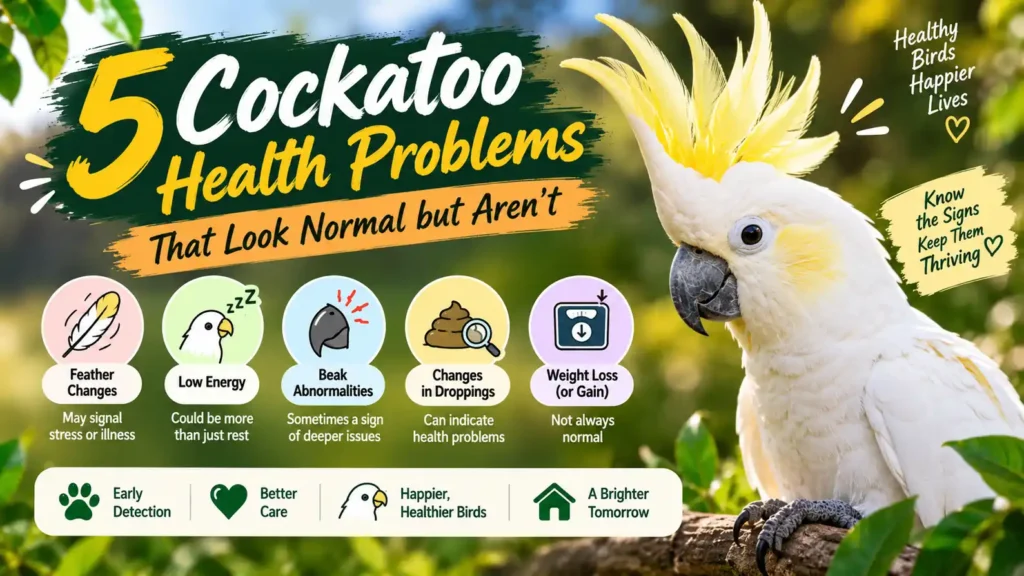
Feather-destructive behavior ranks among the most reported problems in pet cockatoos, according to veterinary behavior case studies. Screaming for attention, biting during hormonal periods, and excessive chewing round out the most common complaints from owners. Boredom and insufficient social interaction cause the majority of these issues rather than any inherent flaw in the bird. Early intervention, environmental enrichment, and consistent training resolve many behavior problems before they become chronic.
The table below outlines frequent problems alongside their typical causes and practical fixes, giving owners a quick starting point for troubleshooting.
| Behavior Problem | Common Cause | Practical Fix |
| Screaming | Attention-seeking, boredom, separation anxiety | Reward quiet moments, increase enrichment |
| Feather Plucking | Stress, boredom, medical issues, poor diet | Vet exam first, then enrichment and routine |
| Biting | Hormones, fear, poor socialization | Body-language reading, positive reinforcement training |
| Excessive Chewing | Instinct, understimulation | Rotate chew-safe toys, cockatoo-proof rooms |
| Overbonding to One Person | Limited early socialization | Rotate caregivers, encourage independent play |
How to Keep a Cockatoo Happy and Well-Behaved
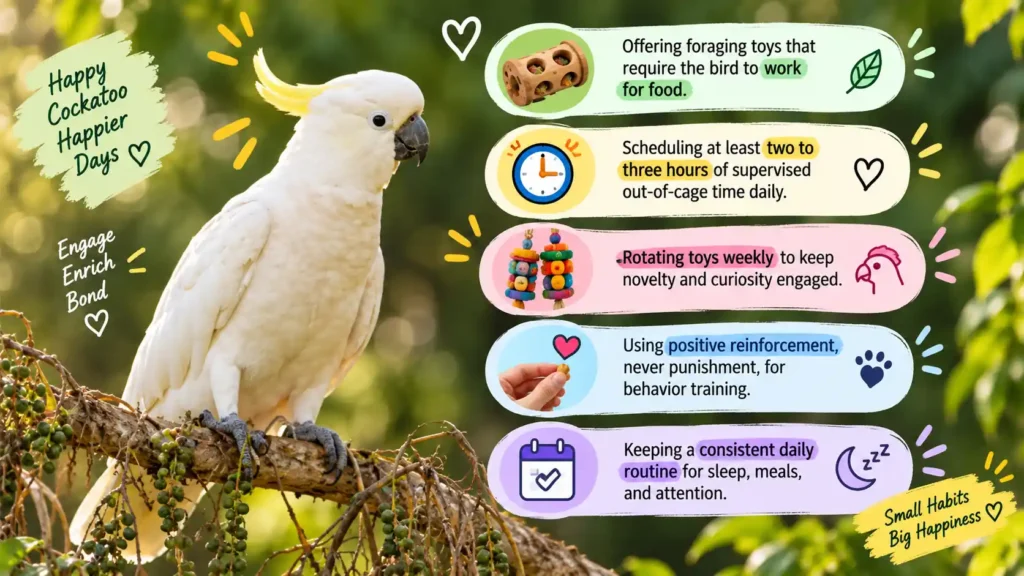
Daily enrichment prevents most of the behavior problems linked to cockatoo boredom, according to guidance from the Association of Avian Veterinarians (AAV). Reliable results tend to come from a combination of physical activity, mental challenges, and predictable social time. Practical steps that make the biggest difference include the following:
- Offering foraging toys that require the bird to work for food
- Scheduling at least two to three hours of supervised out-of-cage time daily
- Rotating toys weekly to keep novelty and curiosity engaged
- Using positive reinforcement, never punishment, for behavior training
- Keeping a consistent daily routine for sleep, meals, and attention
Veterinary checkups at least once a year help catch medical causes of behavior change, including nutritional deficiencies or early illness.
Is a Cockatoo a Good Pet for First-Time Owners?
Demanding daily care requirements make cockatoos a genuinely difficult choice for most first-time bird owners. Attention needs alone rule out households where everyone works long hours away from home. Noise tolerance matters enormously too, since even a moderate cockatoo species can register above 100 decibels during excitement or distress. Lifespan commitment stretches decades, often 40 to 70 years, meaning a cockatoo purchased today may outlive its original owner.
Rescue organizations, including the ASPCA, report frequent cockatoo surrenders tied directly to unrealistic expectations about noise and neediness. Smaller, calmer species like the Goffin’s or Galah suit cautious first-time owners better than a Moluccan or Sulphur-Crested. Anyone still committed after honest research tends to build one of the strongest bonds available in the pet bird world.
Reconsider a cockatoo if any of the following apply:
- Away from home more than 8 hours on most days
- Living in an apartment with thin walls or close neighbors
- Unable to commit to a 40-plus year care plan
- Limited budget for avian vet visits and enrichment toys
Before You Bring a Cockatoo Home
A cockatoo’s personality ultimately blends deep affection, sharp intelligence, and an unmistakably loud voice into one demanding but rewarding companion. The general temperament runs emotionally intense, shaped heavily by flock instincts carried over from the wild. Social needs stay high across every life stage, with attention shortfalls quickly triggering screaming or destructive chewing. Species differences matter enormously, from the boisterous Moluccan to the comparatively calm Goffin’s and Galah.
Sex-based tendencies add another layer, influencing aggression risk and bonding style during hormonal periods. Age brings its own shifts, moving from a cuddly chick to a hormonal adolescent to a settled, decades-long companion. Behavior problems like plucking and screaming almost always trace back to boredom or insufficient social time, both fixable with consistent enrichment. First-time owners should weigh this reality carefully, since a cockatoo’s needs and its multi-decade lifespan rarely fit a casual lifestyle.
FAQs on Cockatoo Behavior and Care
What Defines Cockatoo Personality?
Intelligence, strong social bonding, high emotional sensitivity, and a daily need for interaction shape this bird’s temperament across nearly all 21 species in the family.
How Long Do Cockatoos Live?
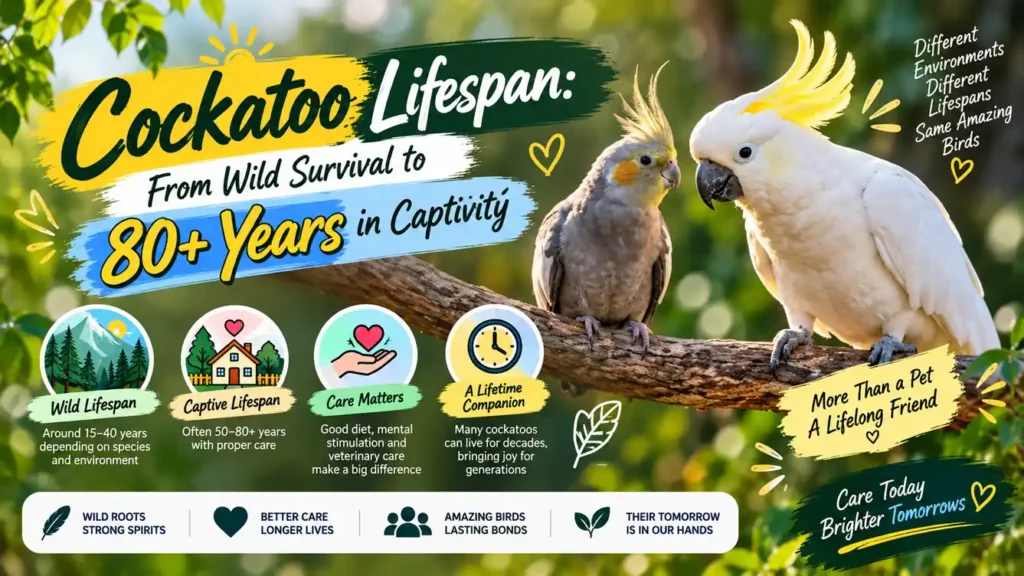
Most pet cockatoos live between 40 and 70 years with proper diet, veterinary care, and mental stimulation, according to data compiled by the World Parrot Trust.
Can Cockatoos Be Left Alone During the Day?
Short periods of four to six hours are generally manageable for a well-trained adult cockatoo, though daily isolation beyond that often triggers anxiety-driven screaming or feather plucking.
Which Cockatoo Species Is Quietest?
Goffin’s cockatoos are widely considered the quietest of the commonly kept species, though “quiet” remains relative within a naturally loud bird family.
Do Cockatoos Bond With One Person Only?
Single-person bonding happens often, especially without early multi-person socialization, though households that rotate handling from a young age typically raise a more balanced, people-friendly bird.
How Much Does a Pet Cockatoo Cost?
Initial cockatoo prices generally range from $700 to $3,000 USD depending on species and source, with rescue adoption fees often falling between $100 and $500 USD.