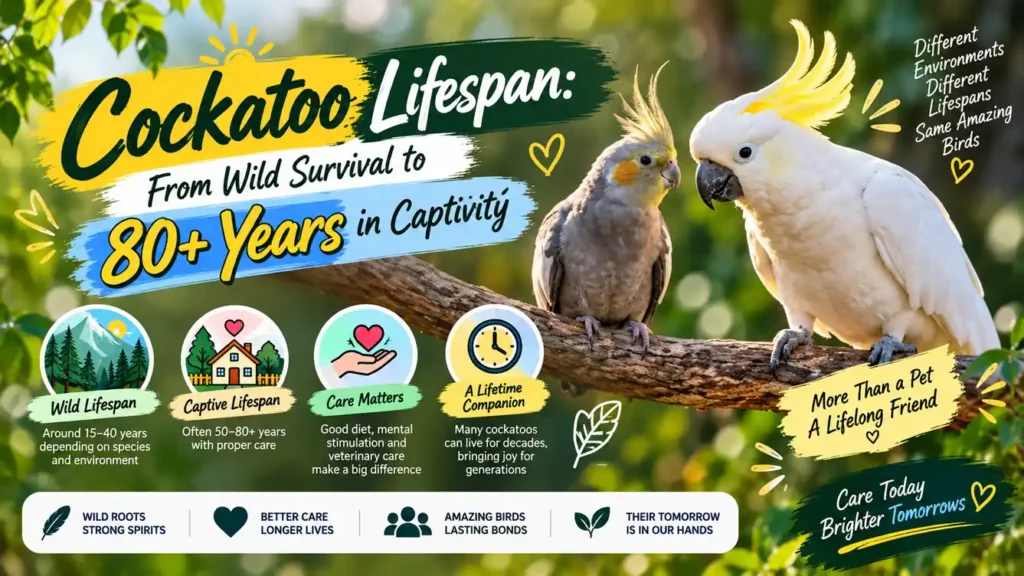
Cockatoo lifespan ranges from 40 to 60 years for most pet species, though some individuals live even longer with excellent care. Smaller species like Goffin’s cockatoos usually live between 40 and 60 years, while larger species such as Moluccan and sulphur-crested cockatoos often reach 60 to 70 years or more in captivity.
Wild cockatoos tend to have a shorter lifespan due to predators, disease, and limited food, while pet cockatoos benefit from steady meals, veterinary care, and a safe home.
This long cockatoo lifespan means adopting one of these birds is a decision that can affect several decades of your life, often outlasting other pets and even matching the lifespan of the person caring for them.
How Long Do Cockatoos Live? A Look at Cockatoo Lifespan
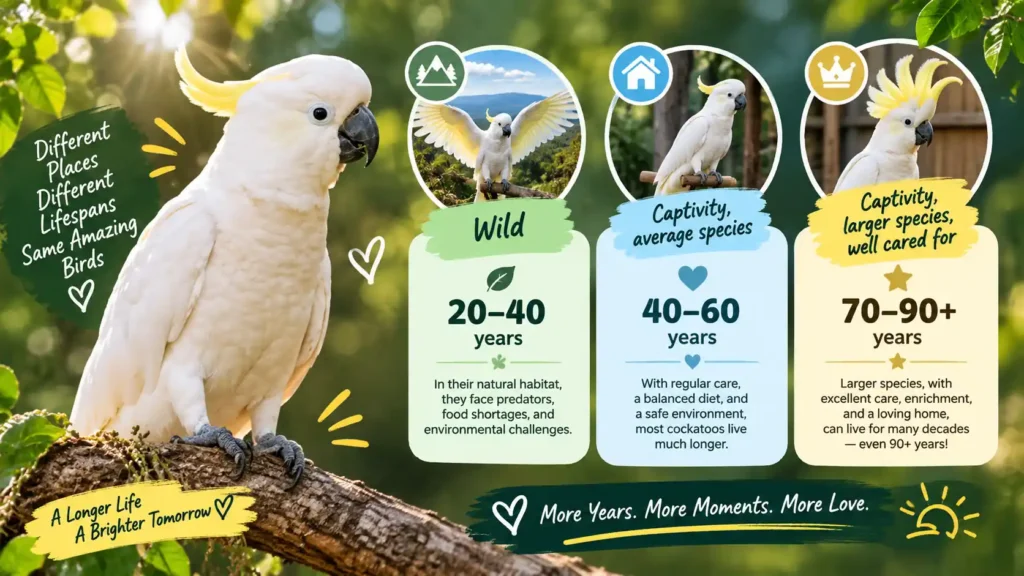
Wild cockatoos typically survive for 20 to 40 years, largely because predators, disease, and food scarcity cut life short well before old age. Captive birds face none of those daily threats, so their typical range shifts up to 40 to 60 years, with several larger species pushing past 70. Diet quality, veterinary access, and mental stimulation account for most of that gap between a wild bird and a well-kept companion animal.
Owners frequently underestimate this expected lifespan, since a bird purchased today could still be alive when a grandchild reaches middle age. Species size plays a major role too, as smaller cockatoos and their cockatiel relatives trend toward the shorter end of these ranges while the larger white cockatoos anchor the long end.
The comparison below breaks down typical cockatoo ages across the three settings owners ask about most.
| Setting | Typical Age Range |
| Wild | 20–40 years |
| Captivity, average species | 40–60 years |
| Captivity, larger species, well cared for | 70–90+ years |
Cockatoo Lifespan by Species
Cockatoo lifespan varies a lot by species, since body size closely predicts how long a bird will live within this family. Three species come up most often when people plan to get a cockatoo, and knowing their typical age range helps set realistic expectations.
- Moluccan Cockatoo: One of the largest cockatoos, often living 60 to 70+ years with proper care.
- Sulphur-Crested Cockatoo; Also long-lived, typically reaching 50 to 70 years, sometimes more.
- Goffin’s Cockatoo; Smaller in size, usually living 20 to 40 years, shorter than its larger cousins.
Moluccan Cockatoo Lifespan
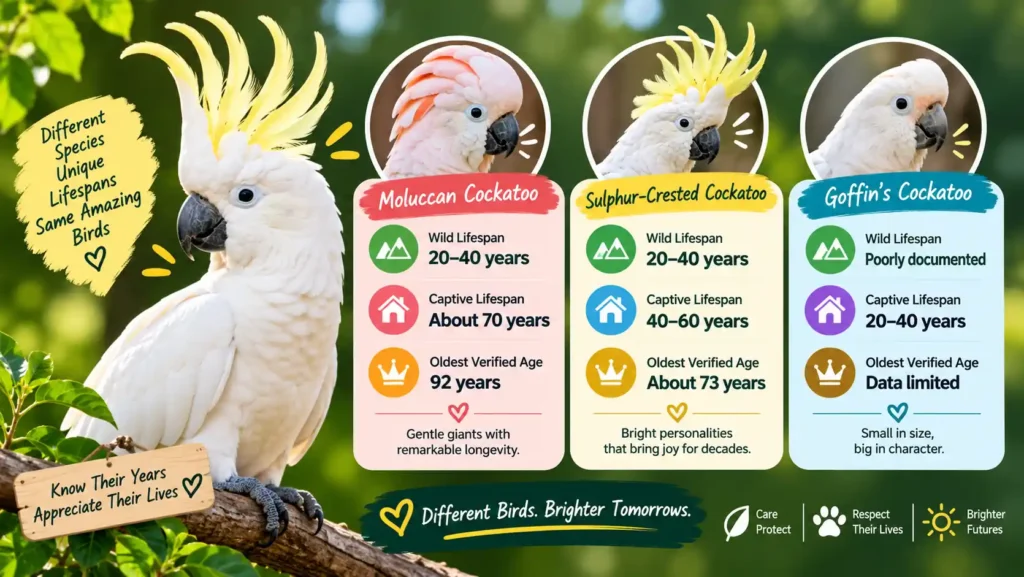
Wild Moluccan cockatoos generally live 20 to 40 years, a range shortened by habitat loss across their native Indonesian islands. Captive Moluccan cockatoos commonly reach 70 years, and a longevity study titled Survival on the Ark documented one individual that lived to 92.
Size explains part of this longevity, since Moluccans rank among the largest white cockatoo species. The World Parrot Trust lists this species as vulnerable in the wild, which makes captive-bred birds an increasingly common source for new owners.
Sulphur-Crested Cockatoo: Wild and Captive Years
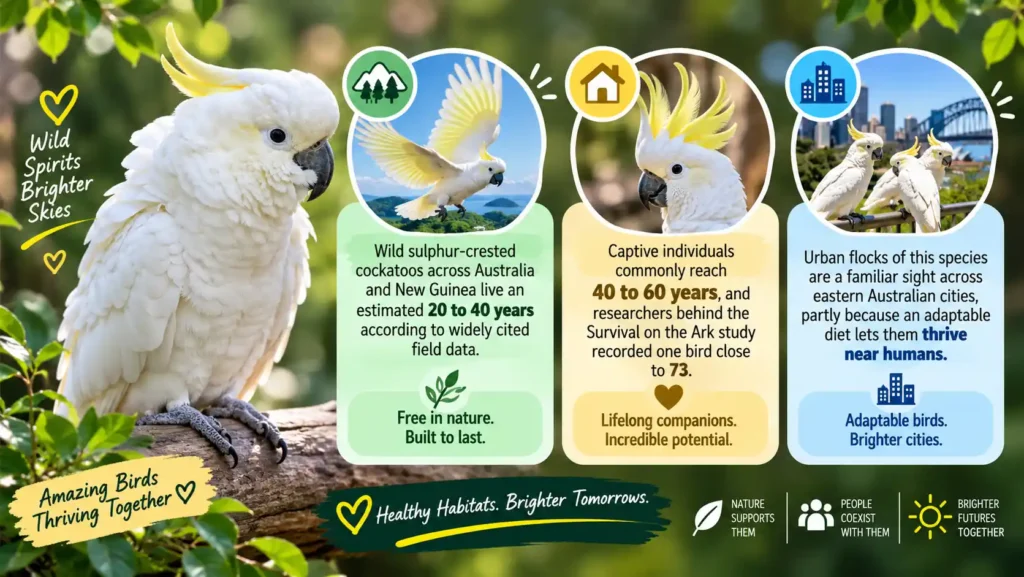
Wild sulphur-crested cockatoos across Australia and New Guinea live an estimated 20 to 40 years according to widely cited field data. Captive individuals commonly reach 40 to 60 years, and researchers behind the Survival on the Ark study recorded one bird close to 73. Urban flocks of this species are a familiar sight across eastern Australian cities, partly because an adaptable diet lets them thrive near humans. Loud, food-motivated, and intelligent, sulphur-crested cockatoos require significant behavioral enrichment to reach the upper end of that captive range.
Goffin’s Cockatoo: A Shorter-Lived Cousin
Goffin’s cockatoos measure roughly 12 inches long, making them one of the smallest members of the cockatoo family. Documented longevity data for this species remains thinner than for larger relatives, though most sources place a well-kept Goffin’s between 20 and 40 years.
Popularity as a pet has grown recently thanks to the species’ problem-solving intelligence, which has made it a favorite subject in avian cognition research. Smaller body size likely explains the shorter ceiling compared with Moluccan or umbrella cockatoos. Owners drawn to this species for its intelligence should still budget for two to four decades of committed care, since even the shorter end of the cockatoo range outlasts most household pets.
The quick-reference table below lines up wild and captive ranges for the species covered here, plus the oldest verified age on record for context.
| Species | Wild Lifespan | Captive Lifespan | Oldest Verified Age |
| Moluccan Cockatoo | 20–40 years | About 70 years | 92 years |
| Sulphur-Crested Cockatoo | 20–40 years | 40–60 years | About 73 years |
| Goffin’s Cockatoo | Poorly documented | 20–40 years | Data limited |
| Major Mitchell’s (Pink) Cockatoo | 40–60 years | 40–60 years typical | 83 years (Cookie) |
Cockatoo Life Cycle
A cockatoo’s life unfolds in four main stages, beginning with an egg that takes about 28 to 30 days to hatch. Growth is fast in the early years, then levels off once the bird reaches maturity, which can happen anywhere between two and seven years depending on the species.
- Each stage brings its own needs for feeding, socializing, and handling.
- Skipping any stage often leads to behavioral issues down the line.
- Breeders and rescues agree that handling during the first year shapes a cockatoo’s temperament for life.
- Knowing these stages helps new owners set realistic expectations instead of expecting adult behavior too soon.
Cockatoo Chicks
Hatchlings emerge blind, featherless, and entirely dependent on parents or a hand-feeding schedule every two to three hours. Feather development begins within the first few weeks, and chicks typically fledge, or take their first flight, between eight and twelve weeks of age. Hand-raised chicks require careful attention to feeding temperature and formula consistency, since crop burns and aspiration remain leading causes of chick mortality. Weaning off formula onto solid food generally finishes by four to six months, depending on species size.
Young Cockatoos
Juvenile cockatoos spend one to several years testing boundaries, biting experimentally, and building social skills they rely on as adults. Sexual maturity arrives anywhere from two years in smaller species to seven years in some larger Moluccans, though full physical maturity can lag. Adolescence often brings a noisy, less predictable stretch that mirrors similar juvenile stages in other highly social parrot species. Consistent training during this window sets behavioral patterns that tend to stick for the rest of a bird’s life.
Adult Cockatoos
Mature cockatoos settle into stable pair bonds, often mating for life once they select a partner. Breeding typically occurs annually, with most species laying two to three eggs per clutch during their native breeding season. Physical decline arrives slowly, and well-cared-for birds can remain active, vocal, and reproductively capable into their 40s or 50s. Long-term owners should plan for a companion that may outlast multiple life stages of their own household, including children growing up and moving out.
What Affects How Long a Cockatoo Lives
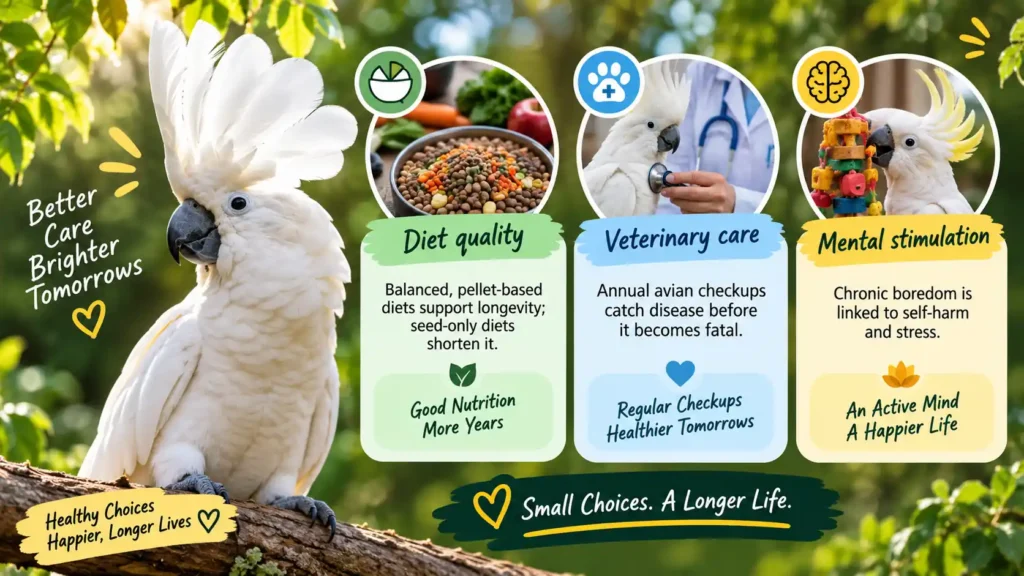
Genetics sets the outer ceiling on cockatoo lifespan, but daily care determines whether an individual bird gets close to it. Diet ranks among the most influential variables, since a seed-only menu lacks the vitamins and calcium that pelleted, fortified diets provide. Chronic stress from inadequate space, isolation, or unpredictable routines shows up physically as feather-plucking and self-mutilation, both linked to shortened lifespans in clinical reports. Household toxins pose a sudden and often fatal risk, particularly the fumes released when non-stick cookware overheats.
Access to a qualified avian veterinarian for annual checkups catches problems like fatty liver disease and psittacosis before they become life-threatening, and organizations such as the Association of Avian Veterinarians publish species-specific wellness guidelines that most exotic-pet clinics now follow.
The table below summarizes the variables veterinarians most often cite when explaining why one bird outlives another of the same species.
| Factor | Effect on Lifespan |
| Diet quality | Balanced, pellet-based diets support longevity; seed-only diets shorten it. |
| Veterinary care | Annual avian checkups catch disease before it becomes fatal. |
| Mental stimulation | Chronic boredom is linked to self-harm and stress-related illness. |
| Environmental toxins | Overheated non-stick cookware and lead or zinc exposure can cause sudden death. |
| Species size | Larger cockatoo species generally outlive smaller relatives. |
How to Help Your Cockatoo Live Longer
Consistent daily care compounds over decades, so small improvements made early tend to matter more than dramatic changes made later in a bird’s life. Nutrition deserves priority, since replacing a seed-heavy diet with a formulated pellet base addresses one of the most common preventable health issues. Daily interaction and rotating toys reduce the boredom that drives feather-plucking and other stress behaviors in highly intelligent birds. Boring, repeatable habits protect a cockatoo far more reliably than occasional grand gestures of care. A few consistent habits make the biggest difference:
- Offer a fortified pellet diet supplemented with fresh vegetables, limiting seeds to an occasional treat
- Schedule annual checkups with an avian-certified veterinarian rather than a general small-animal vet
- Provide at least two to three hours of supervised out-of-cage time daily
- Rotate foraging toys weekly to prevent boredom-driven feather damage
- Keep the home free of non-stick cookware fumes, scented candles, and other airborne toxins
Curious About Cockatoos? Find Out More About These Amazing Birds. Read more in Cockatoo Parrot Diet, Temperament, and the Commitment Few Expect.
Conclusion: Genetics, Care, and Cockatoo Lifespan
Cockatoo lifespan depends on both species genetics and daily care, with wild birds living 20 to 40 years while captive cockatoos often reach 40 to 60 years or more. Species vary widely, from Goffin’s cockatoos at 20 to 40 years to Moluccan cockatoos documented living as long as 92.
Diet, vet care, safety, and mental stimulation matter more day to day than genetics alone, and simple steps like pellet-based nutrition, annual avian checkups, and rotating toys help any bird thrive. Cookie’s 83 years prove that while genetics sets the ceiling, consistent care determines how close a bird gets to it. Bringing home a cockatoo means committing to a companion for decades, not just years.
Cockatoo FAQs
What Is the Average Lifespan of a Cockatoo?
Most pet cockatoos live between 40 and 60 years when kept on a balanced diet with regular veterinary care, though wild birds average only 20 to 40 years. Species size shifts this average considerably, with smaller Goffin’s cockatoos landing near the lower end and larger Moluccans regularly exceeding it.
Can Cockatoos Live for 70 Years?
Yes, several species regularly reach 70 years in captivity, particularly Moluccan and umbrella cockatoos given proper nutrition and veterinary care. Documented cases have pushed even higher, including a Moluccan cockatoo recorded at 92 years old in published longevity research.
What Is the Longest-Living Cockatoo on Record?
Cookie, a Major Mitchell’s cockatoo at Brookfield Zoo in Illinois, holds the widely cited record at 83 years old, certified by Guinness World Records in 2014 as the world’s oldest living parrot before he died in 2016. His age far exceeded the 40-to-60-year range typical for his species, illustrating how much individual variation exists within a single species’ expected lifespan.