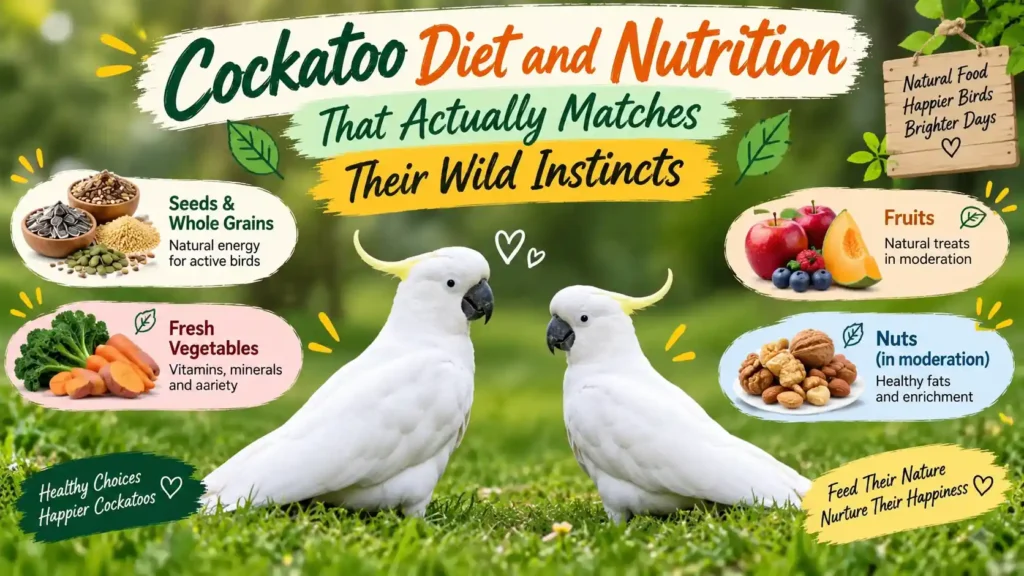
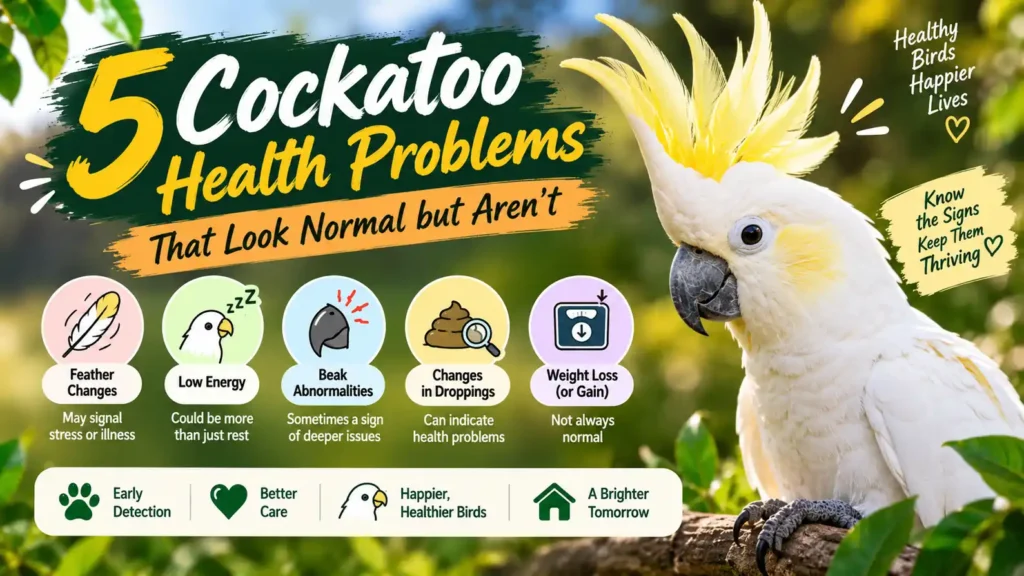
Cockatoo health problems fall into a few major categories that every owner should recognize early: infectious diseases like psittacosis, nutritional issues like fatty liver disease, viral conditions like PBFD, and behavioral signs like feather plucking. Most cockatoo health problems develop slowly and quietly, which is why birds often seem fine one day and seriously ill the next.
A cockatoo hunched at the bottom of its cage, breathing with an open beak, or refusing favorite foods needs a vet visit that same day, not a wait-and-see approach. Weight loss is especially dangerous because it hides under feathers, so owners should check body condition by feel, not by sight alone. Droppings also tell a story: sudden changes in color, texture, or smell often show up before other symptoms appear. Regular checkups with an avian vet, at least once a year for healthy birds, catch problems while they are still treatable and cheap to manage.
Thinking About a Cockatoo? Discover What You Should Know. Read more in Cockatoo Parrot Diet, Temperament, and the Commitment Few Expect.
Common Cockatoo Health Problems
Cockatoos face a fairly specific set of medical issues compared with smaller parrots, largely due to their long lifespan, high intelligence, and emotional sensitivity. Chronic stress, boredom, and social isolation show up physically in this species far more than in most other birds. Nutritional deficiencies remain widespread, especially in birds raised on all-seed diets low in vitamin A and calcium.
Respiratory infections, liver disease, and feather conditions account for the bulk of veterinary visits reported at avian clinics. Genetics play a role too, sulphur-crested and umbrella cockatoos show a higher rate of feather-destructive behavior than smaller species like the goffin’s or bare-eyed cockatoo. Left unaddressed, minor issues in this group escalate quickly because cockatoos hide symptoms so effectively.
Signs of Illness in Cockatoos
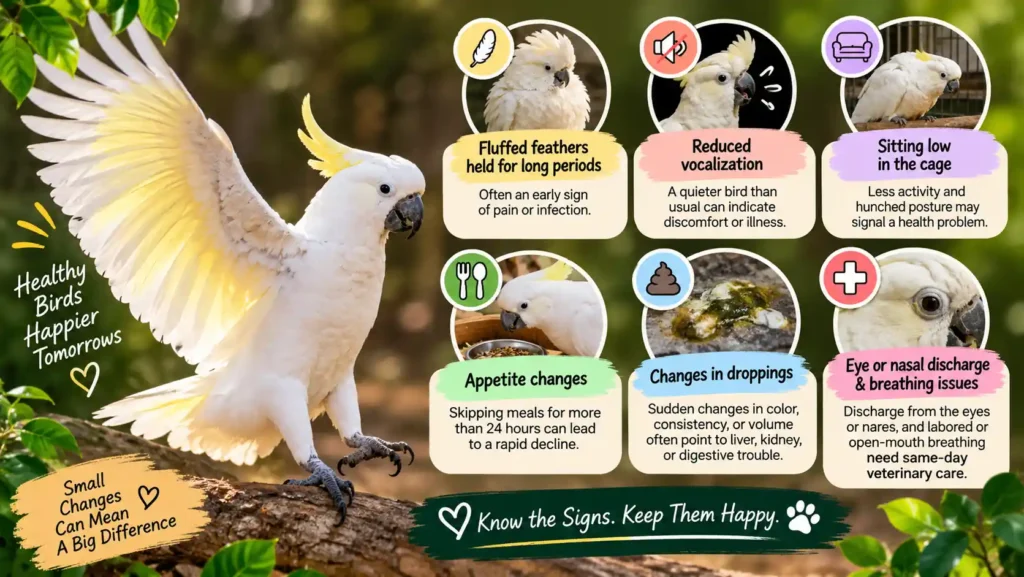
Behavioral shifts usually appear before any physical symptom does. Fluffed feathers held for long periods, reduced vocalization, and sitting low in the cage often signal pain or infection. Appetite changes deserve immediate attention, since a cockatoo skipping meals for more than 24 hours can decline rapidly. Droppings also reveal a great deal, sudden changes in color, consistency, or volume often point to liver, kidney, or digestive trouble. Discharge from the eyes or nares, along with labored or open-mouth breathing, signals a problem serious enough for same-day veterinary care.
The table below summarizes the warning signs most avian veterinarians treat as red flags.
| Sign | Possible Meaning |
| Fluffed feathers, lethargy | Pain, infection, or low body temperature |
| Loss of appetite over 24 hrs | Digestive illness, stress, or liver disease |
| Labored or open-mouth breathing | Respiratory infection or aspergillosis |
| Sudden change in droppings | Kidney, liver, or GI dysfunction |
| Overgrown or flaky beak | Liver disease or PBFD |
| Feather loss or bleeding quills | Feather-damaging behavior, PBFD, or mites |
Common Diseases in Cockatoos
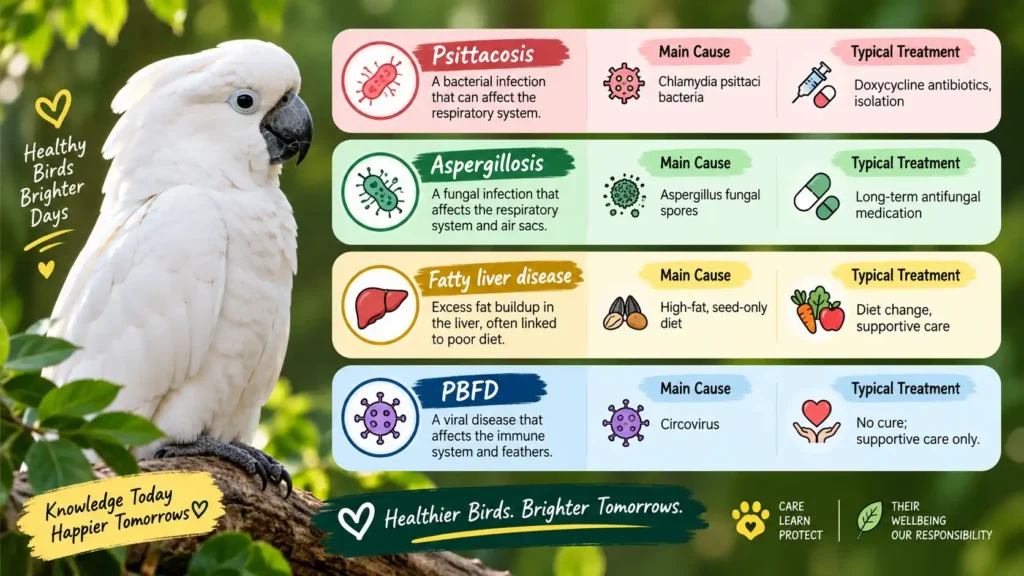
Four conditions account for most serious cockatoo diagnoses seen in avian practice. Bacterial, viral, fungal, and nutritional causes all produce overlapping symptoms, which is exactly why lab testing matters more than guesswork. Some of these diseases, like psittacosis, carry a genuine zoonotic risk to human family members. Others, like fatty liver disease, develop silently over months before symptoms appear. Each condition below covers the cause, the typical presentation, and what treatment realistically looks like.
A fast comparison of the four conditions appears in the table below.
| Disease | Main Cause | Typical Treatment |
| Psittacosis | Chlamydia psittaci bacteria | Doxycycline antibiotics, isolation |
| Aspergillosis | Aspergillus fungal spores | Long-term antifungal medication |
| Fatty liver disease | High-fat, seed-only diet | Diet change, supportive care |
| PBFD | Circovirus | No cure; supportive care only |
Psittacosis
Psittacosis, sometimes called parrot fever, comes from the bacterium Chlamydia psittaci and spreads through dried droppings and feather dust. Human transmission is documented and taken seriously enough that public health agencies like the Centers for Disease Control and Prevention (CDC) track and report confirmed cases every year. Infected cockatoos often show lethargy, greenish droppings, and labored breathing, though some carriers show no symptoms at all. Doxycycline remains the standard antibiotic treatment, and a full course typically runs several weeks even after symptoms fade. Any household with an immunocompromised person should treat a suspected case as urgent, not routine.
Respiratory Problems
Aspergillosis ranks as the most common fungal respiratory disease in cockatoos, triggered by mold spores found in damp bedding, dusty seed, or poor ventilation. Early signs stay subtle, mild tail-bobbing, quiet wheezing, or reduced activity, which is why the disease often reaches an advanced stage before diagnosis. Chronic stress and prolonged antibiotic use both weaken the immune response enough to let the fungus take hold.
Treatment usually combines antifungal medication with nebulization therapy over several months, and even then, recovery isn’t guaranteed in severe cases. Clean housing and good airflow remain the two cheapest, most effective forms of prevention available.
Fatty Liver Disease
Hepatic lipidosis develops when a cockatoo’s liver cells get replaced by fat deposits, usually the direct result of an all-seed, high-fat diet. Weight gain often goes unnoticed under feathers, so lethargy, an overgrown beak, or labored breathing are frequently the first visible clues. Blood testing during a routine wellness exam catches this disease long before outward symptoms appear, a point emphasized in nutrition guidance published by the Association of Avian Veterinarians (AAV). Dietary correction, shifting toward pellets, vegetables, and controlled portions, reverses early-stage cases in many birds. Left untreated, the condition can prove fatal within months.
Feather Plucking and Cockatoo Health Problems
Feather-destructive behavior affects cockatoos more than almost any other parrot group, and umbrella and Moluccan cockatoos top the list of affected breeds. Medical causes include PBFD, skin infections, allergies, and pain from an unrelated illness, so a vet visit always comes before any behavioral fix. Psychological triggers matter just as much, boredom, insufficient sleep, and inadequate social interaction drive plucking in birds with a clean bill of health.
Distinguishing normal molting from destructive plucking comes down to pattern: molting sheds evenly, while plucking targets the chest and legs a bird can reach with its beak. Full feather regrowth can take several months even after the underlying cause gets resolved.
Cockatoo Beak and Feather Problems
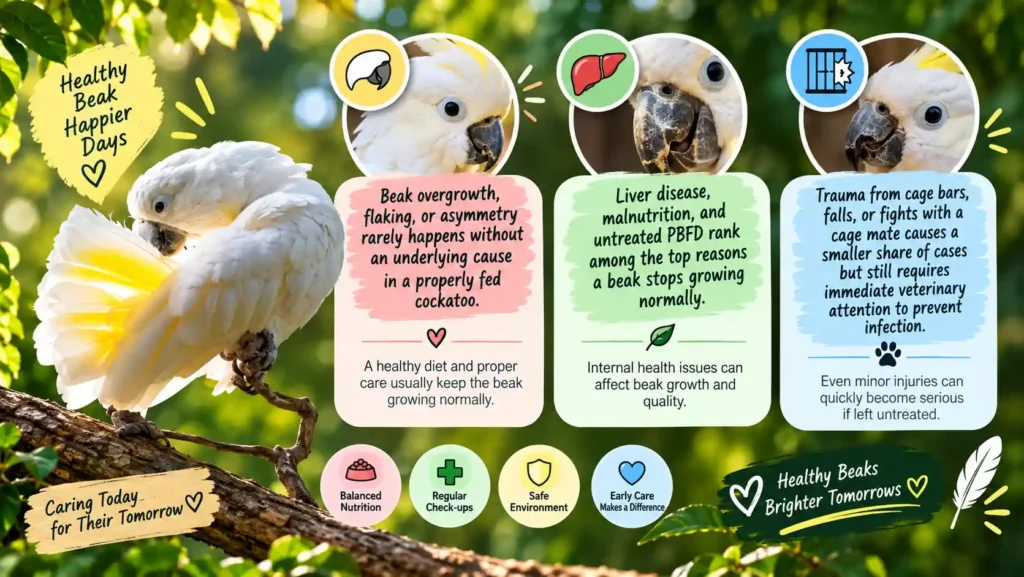
Beak overgrowth, flaking, or asymmetry rarely happens without an underlying cause in a properly fed cockatoo. Liver disease, malnutrition, and untreated PBFD rank among the top reasons a beak stops growing normally. Trauma from cage bars, falls, or fights with a cage mate causes a smaller share of cases but still requires immediate veterinary attention to prevent infection.
Feather condition tells a similar story: brittle, discolored, or stress-barred feathers point toward diet gaps or chronic illness rather than normal wear. Regular beak and feather checks during handling catch most problems while they are still minor and inexpensive to treat. A DNA test for PBFD, available through most avian vet clinics, remains the only reliable way to rule the virus in or out.
How to Prevent Health Problems in Cockatoos
Diet quality prevents more cockatoo health problems than any medication or supplement ever could. A pelleted base diet supplemented with fresh vegetables, limited fruit, and only occasional seed treats keeps weight, liver function, and feather quality on track. Daily out-of-cage time, foraging toys, and rotating enrichment address the boredom that drives feather plucking and stress-related illness, welfare guidance from groups such as the RSPCA recommends several hours of supervised, cage-free interaction each day for highly social parrot species.
Annual wellness exams, including blood work and a fecal test, catch problems like early fatty liver disease before symptoms show. Quarantine of any new bird for 30 to 45 days protects an existing flock from PBFD and psittacosis alike. Clean water, fresh air, and a consistent sleep schedule of 10 to 12 hours round out a solid prevention plan.
The checklist below turns these habits into a simple daily and yearly routine.
| Prevention Habit | Why It Matters |
| Pelleted diet + fresh vegetables | Prevents fatty liver disease and obesity |
| Daily foraging toys and out-of-cage time | Reduces boredom-driven feather plucking |
| Annual avian vet exam with bloodwork | Catches disease before symptoms appear |
| 30–45 day quarantine for new birds | Blocks spread of PBFD and psittacosis |
| 10–12 hours of sleep nightly | Supports immune function and mood |
Protecting Your Cockatoo: What It All Comes Down To
Cockatoo health problems rarely appear out of nowhere, diet, environment, and missed early signs usually explain most cases. Common diseases covered above, including psittacosis, aspergillosis, fatty liver disease, and PBFD, share overlapping symptoms that make prompt veterinary testing essential rather than optional. Watching for fluffed feathers, appetite changes, and breathing trouble catches illness while treatment still has the best chance of working.
Beak and feather changes deserve the same attention, since both often signal disease long before a cockatoo appears seriously ill. Prevention comes down to a handful of consistent habits: a pelleted diet, daily enrichment, annual bloodwork, and quarantine for new birds. None of these steps guarantee a cockatoo will never get sick, but together they stack the odds heavily in its favor. A well-fed, well-stimulated, closely watched cockatoo stands the best chance of reaching its full, decades-long lifespan.
Cockatoo Health Problems FAQs
What are the most common diseases in cockatoos?
Psittacosis, aspergillosis, fatty liver disease, and PBFD account for the majority of serious cockatoo diagnoses reported by avian veterinarians. Feather-destructive behavior and beak overgrowth also appear frequently, though these often stem from one of the four core diseases rather than existing independently. Diet-related illness alone makes up a significant share of veterinary visits, since seed-heavy diets remain common among pet cockatoos despite decades of nutritional guidance.
How do you know if a cockatoo is sick?
Fluffed feathers, reduced appetite, labored breathing, and unusual droppings rank among the clearest signs of illness in a cockatoo. Behavioral changes, quietness, aggression, or sitting low in the cage, often appear before any physical symptom does, since cockatoos instinctively hide weakness. A same-day vet visit is warranted whenever two or more of these signs appear together.
What is the most common cause of death in cockatoos?
Organ failure linked to obesity and fatty liver disease ranks among the leading causes of death in captive cockatoos, closely followed by complications from untreated infections such as aspergillosis and psittacosis. Poor diet and lack of exercise drive most of these outcomes, making both largely preventable with proper care. Regular veterinary checkups catch the majority of these conditions long before they become fatal.