
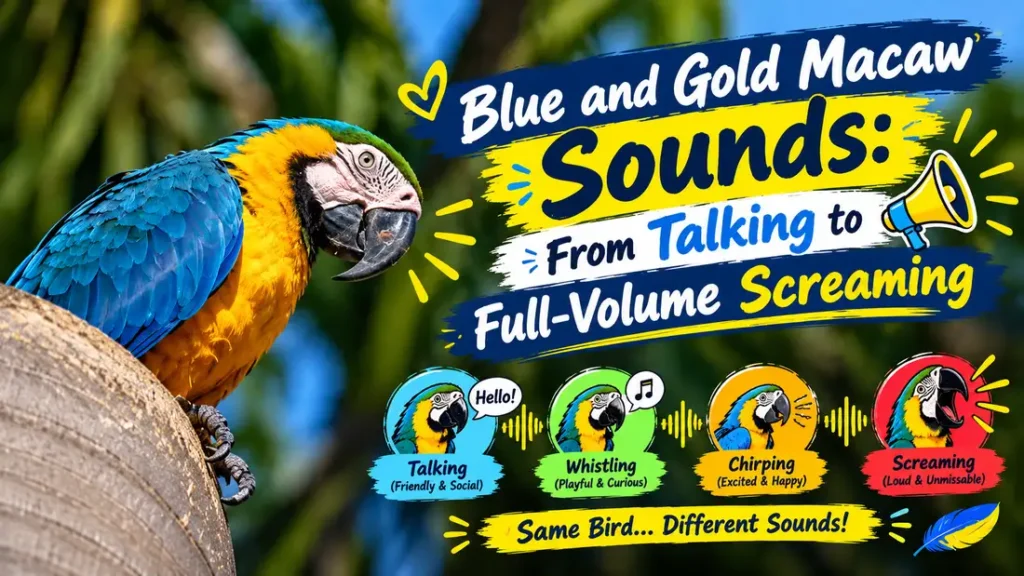
Blue and Gold Macaws are naturally loud parrots, using contact calls, squawks, screams, chatter, and mimicked sounds to communicate with their flock and their owners. A contact call is a short, sharp squawk used to check where flock members are, while a contentment sound is a soft, low chatter made when the bird feels relaxed and safe.
The loudest of all Blue and Gold Macaw sounds is the scream, which can reach around 100–105 dB, a volume used to signal danger, express excitement, or simply demand attention. Some individuals also mix in clicks, growls, and even mimicked words once they bond closely with their owners. Recognizing these different sound types helps owners respond correctly instead of guessing what their bird needs.
What Makes Blue and Gold Macaw Sounds So Distinct
Every parrot species produces sound through an organ called the syrinx, positioned where the windpipe splits toward the lungs, rather than through vocal cords like mammals use. Wild macaws live in tight flocks across Central and South America’s forests and wetlands, and calls need to carry over dense canopy to keep the group connected.
According to the World Parrot Trust, contact calls in open habitat can travel well over a mile, which helps explain why a captive scream feels so intense indoors. Blue and gold macaw sounds heard inside a house are frequently the same flock-contact instinct, just redirected at human family members instead of other birds. A bird that calls out at sunrise or sunset is usually checking in with its flock rather than acting out of spite.
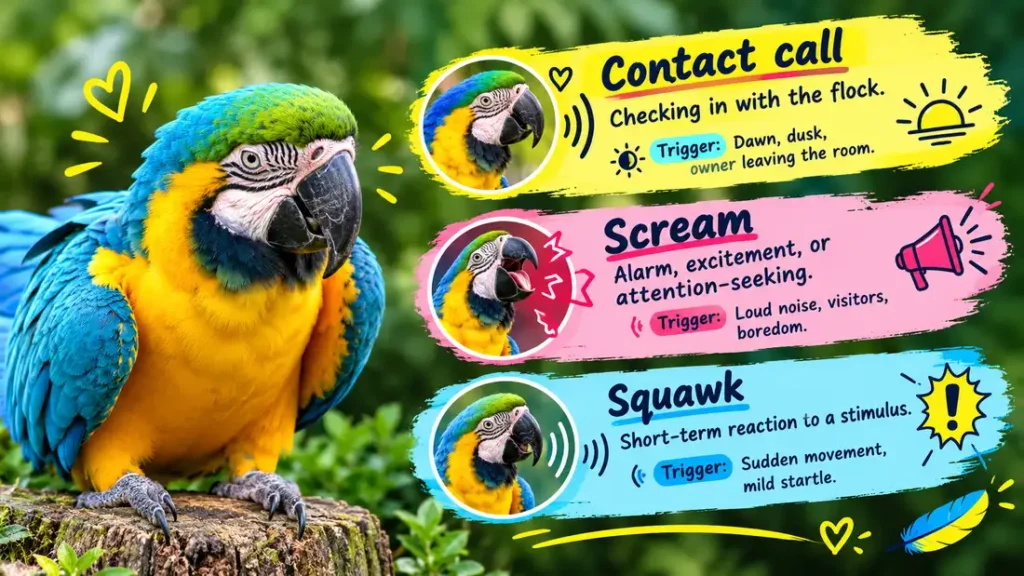
The table below breaks down the main categories of vocalizations this species produces and what each one usually signals.
| Sound Type | Typical Meaning | Common Trigger |
| Contact call | Checking in with the flock | Dawn, dusk, owner leaving the room |
| Scream | Alarm, excitement, or attention-seeking | Loud noise, visitors, boredom |
| Squawk | Short-term reaction to a stimulus | Sudden movement, mild startle |
| Growl or hiss | Warning to back off | Perceived threat, territorial mood |
| Chatter and mumbling | Contentment, low-level self-talk | Relaxed, settling in for evening |
| Mimicked words | Learned social bonding sound | Repeated exposure to a phrase |
Are Blue and Gold Macaws Loud
Few household pets generate the raw volume a large macaw can produce. Blue and gold macaw sounds have been measured at roughly 100 to 105 decibels during a full scream, a level close to a chainsaw or a low-flying aircraft.
Consistent exposure to sound above 85 decibels can contribute to hearing damage over time, according to the National Institute for Occupational Safety and Health (NIOSH), which matters for anyone sharing close quarters with a screaming bird. Short bursts of screaming are normal behavior for the species, though the volume still surprises many first-time owners. Individual personality plays a role too, since some macaws settle into a fairly quiet routine while others remain naturally more vocal throughout the day.
This table compares the volume of a macaw’s scream with a few familiar everyday sounds.
| Sound Source | Approximate Decibel Level |
| Normal conversation | 60 dB |
| City traffic | 85 dB |
| Blue and Gold Macaw scream | 100 to 105 dB |
| Chainsaw | 105 to 120 dB |
| Rock concert | 110 to 120 dB |
How Loud Are Blue and Gold Macaws
Blue and Gold Macaws can scream at roughly 100 to 105 decibels, loud enough to be heard through walls and across a backyard. This volume sits close to a chainsaw or a passing motorcycle, and short screaming bouts count as normal, healthy behavior rather than a sign of illness.
Why Do Blue and Gold Macaws Scream
Screaming rarely happens without a reason, even when the trigger isn’t obvious to an owner. Blue and gold macaw sounds spike in volume most often around dawn and dusk, mirroring the flock check-ins wild birds perform in the rainforest. Hormonal shifts during breeding season, hunger, boredom, and simple attention-seeking all push the volume higher as well. A macaw that gets a big reaction, even a negative one, quickly learns that screaming reliably gets a response.
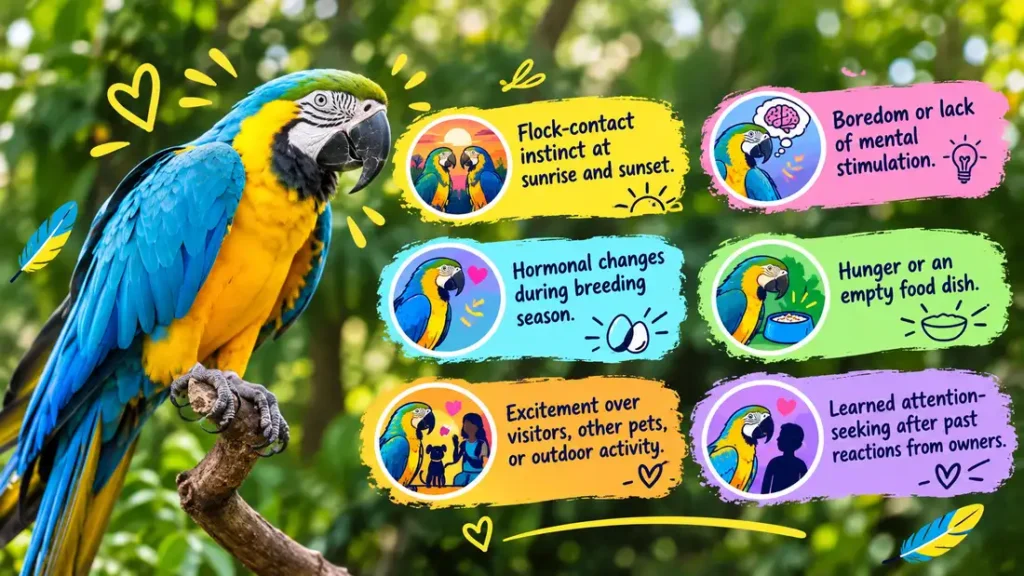
Common screaming triggers include:
- Flock-contact instinct at sunrise and sunset
- Boredom or lack of mental stimulation
- Hormonal changes during breeding season
- Hunger or an empty food dish
- Excitement over visitors, other pets, or outdoor activity
- Learned attention-seeking after past reactions from owners
Why Do Blue and Gold Macaws Squawk
Squawking tends to be shorter and sharper than a full scream, often lasting only a second or two. A sudden movement, an unfamiliar visitor, or a dropped object nearby can trigger a quick squawk as a startle response. Squawking also shows up during play, particularly when a macaw gets excited over a favorite toy or a game with its owner. Occasional squawking rarely signals distress on its own, unlike prolonged screaming.
What Is the Difference Between Macaw Screaming and Squawking
Squawking is a brief, sharp burst of sound lasting a second or two, usually caused by surprise or excitement. Screaming is sustained, louder, and often repeated, and it typically signals a deeper need such as hunger, boredom, or a bid for attention.
Can Blue and Gold Macaws Talk
Vocabulary size varies widely between individual birds, but a well-socialized macaw can typically learn anywhere from a handful of words up to 50 or more phrases with consistent practice. Clarity of speech tends to be raspier and less crisp than an African Grey’s, though plenty of owners report macaws that mimic laughs, doorbells, and phone ringtones with surprising accuracy. Repetition, short training sessions, and positive reinforcement during calm moments produce the best results.
Talking ability has no guaranteed timeline, since some birds start mimicking within months while others take a year or longer. Age at acquisition, the amount of one-on-one interaction offered, and even an individual bird’s personality all influence how quickly new words stick.
The table below compares a few well-known talking parrot species to show where this breed typically lands.
| Species | Average Vocabulary Potential | Speech Clarity |
| African Grey Parrot | 100+ words | Very clear |
| Blue and Gold Macaw | 10 to 50+ words and phrases | Moderate, somewhat raspy |
| Cockatiel | 10 to 20 words | Whistled tones, less clear |
| Budgerigar | Up to several hundred (rare) | Small but surprisingly clear |
What Do Blue and Gold Macaw Sounds Mean When a Macaw Mimics Words
Mimicked words are a social bonding behavior rather than genuine language use. When a macaw repeats a phrase it has heard often, it is copying a sound associated with attention, routine, or a strong emotional reaction from its owner, not communicating original thoughts.
How to Manage a Loud Blue and Gold Macaw’s Vocal Behavior
Reducing excessive noise starts with meeting the bird’s underlying needs rather than punishing the sound itself. Yelling back at a screaming macaw often backfires, since the bird can interpret shouting as a fellow flock member joining in. Rewarding quiet moments, keeping a predictable daily schedule, and offering enough mental stimulation address most of the root causes behind chronic screaming.
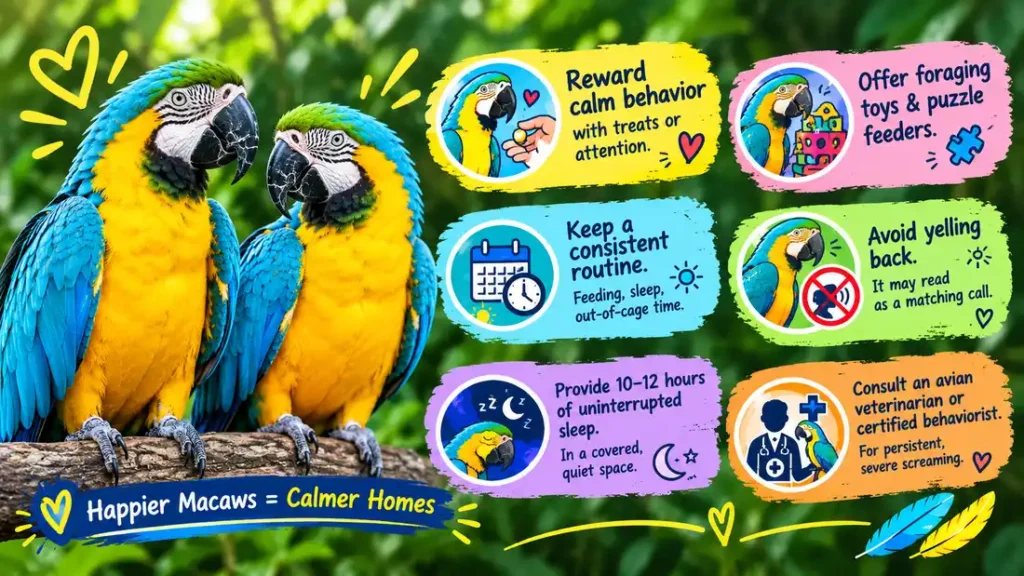
Practical steps that help include:
- Rewarding calm, quiet behavior with treats or attention rather than reacting only to noise
- Offering foraging toys and puzzle feeders to reduce boredom
- Keeping a consistent daily routine for feeding, sleep, and out-of-cage time
- Avoiding yelling back, since a macaw may read shouting as a matching call
- Providing 10 to 12 hours of uninterrupted sleep in a covered, quiet space nightly
- Consulting an avian veterinarian or certified parrot behaviorist for persistent, severe screaming
Living With a Vocal Blue and Gold Macaw: Housing and Family Fit
Apartment living and thin-walled housing rarely suit this species well, given the volume a single scream can reach. Detached homes with some distance from neighbors, or households already accustomed to loud environments, tend to work better long-term. Families with very young children should weigh the noise carefully, since sudden screams can startle toddlers or stress other pets.
The Association of Avian Veterinarians encourages prospective owners to evaluate a household’s noise tolerance honestly before committing to a large parrot species. Renters should also check lease terms and local noise ordinances in advance, since a surprised landlord or neighbor rarely reacts well to an unexpected scream.
Quick compatibility facts:
- Best suited to houses rather than apartments or shared walls
- Works better in households already comfortable with loud noise
- Requires a long-term commitment, since the species can live several decades in captivity
- May not suit homes with noise-sensitive neighbors or strict HOA rules
- Best matched with owners able to provide daily interaction and enrichment time
Understanding the Noise: A Quick Recap
Blue and Gold Macaw sounds cover a wide range, from soft contented chatter to full-volume screams loud enough to travel through walls, and the reasons behind each sound trace back to instincts inherited from wild flocks. Volume alone explains why this parrot isn’t a natural fit for apartments, since a single scream can reach levels close to a chainsaw.
Screaming usually points to a specific trigger such as hunger, boredom, hormones, or simple attention-seeking, while squawking tends to be a shorter, sharper reaction to sudden surprises. Talking ability adds another layer of charm, with many individuals picking up dozens of words and phrases through repetition and patient training. Managing excessive noise comes down to rewarding calm behavior, keeping a steady routine, and offering enough enrichment to occupy an intelligent mind throughout the day.
Families weighing whether this bird fits their household should think honestly about wall thickness, neighbors, and the decades-long commitment involved. Understanding these vocal patterns turns a confusing wall of noise into a readable, and even endearing, form of communication.
Frequently Asked Questions
How loud can a Blue and Gold Macaw scream?
A screaming Blue and Gold Macaw can reach roughly 100 to 105 decibels, a volume similar to a chainsaw or a passing motorcycle. Short screaming bouts are considered normal behavior for the species rather than a health concern.
Why does my Blue and Gold Macaw scream at the same time every day?
Screaming around dawn and dusk usually mirrors the flock check-in calls wild macaws perform in the rainforest. This pattern is instinctual and typically settles into a predictable daily rhythm rather than random noise.
Can Blue and Gold Macaws learn to talk?
Yes, many individuals learn anywhere from a handful of words up to 50 or more phrases with consistent, positive training. Speech tends to sound raspier than species like the African Grey, though clarity varies bird to bird.
Is it normal for macaws to squawk during play?
Short, excited squawks during play or over a favorite toy are typical and generally harmless. This differs from prolonged screaming, which more often signals an unmet need such as boredom or hunger.
Can training reduce how loud a Blue and Gold Macaw is?
Consistent training that rewards quiet behavior, paired with enough daily enrichment, can noticeably reduce excessive screaming over time. Complete silence isn’t realistic or healthy to expect, since vocalizing is a normal part of the species’ behavior.
Are Blue and Gold Macaws good pets for apartments?
Apartments and thin-walled housing are rarely a good match given the volume this species can reach. A detached house, or a household already comfortable with loud noise, tends to work far better long-term.