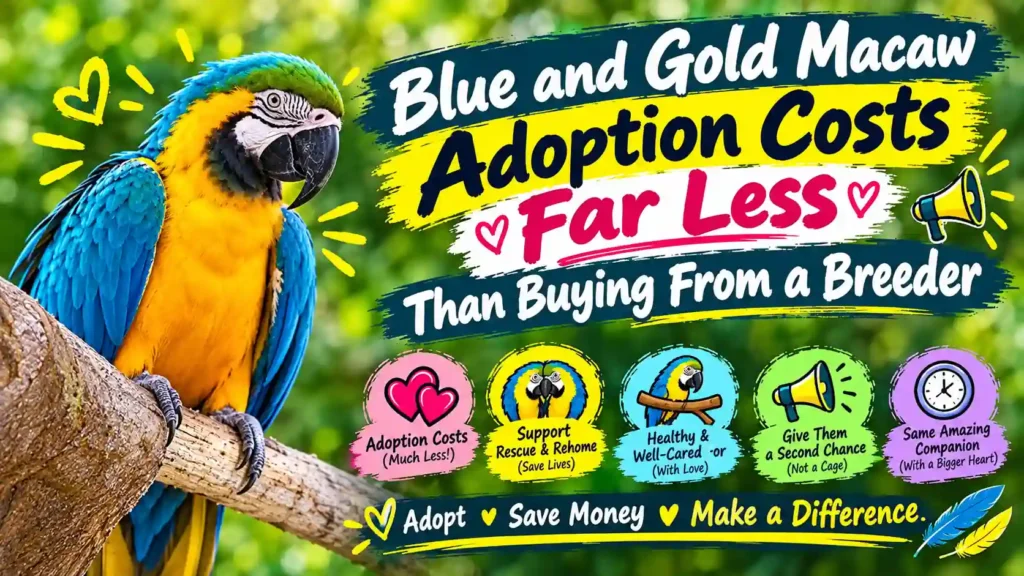
Blue and Gold Macaw adoption typically costs between $300 and $1,500, far less than buying a baby bird from a breeder, which can run $1,000 to $3,000 or more. The adoption fee usually helps cover the bird’s health check, care, housing, and other expenses the rescue incurred before finding it a new home. Rescue groups generally set these fees to recover part of their care costs rather than to make a profit.
When you choose Blue and Gold Macaw adoption, you may also avoid the long wait times associated with breeder waitlists, since many rescues already have birds ready for adoption. The exact fee varies depending on the bird’s age, health history, training, socialization, and what supplies or veterinary care are included.
Getting to Know the Blue and Gold Macaw Before Adoption
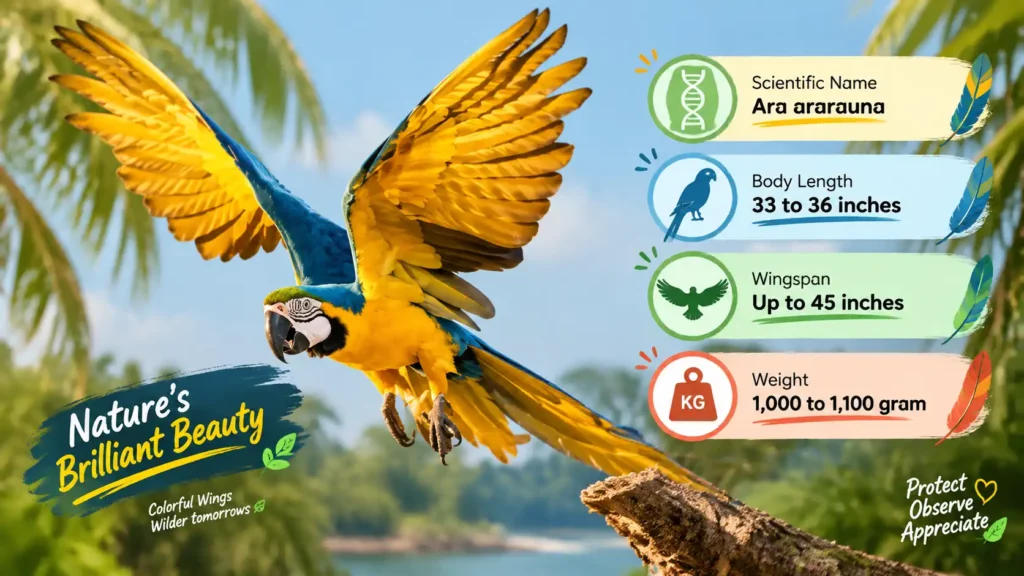
Cobalt blue feathers cover the back and wings of this bird, while a rich golden yellow spreads across the chest and belly. A bare white facial patch, lined with thin rows of tiny black feathers, sits below each eye and often flushes pink when the bird gets excited. Adult birds typically measure 33 to 36 inches from head to tail, with a wingspan that can reach 45 inches, yet the body itself weighs only around 1,000 to 1,100 grams. Native populations range across Panama, Colombia, Venezuela, Brazil, Peru, and Bolivia, where wild macaws favor rainforest edges, palm groves, and swampy lowlands near rivers.
Quick reference numbers help before committing to any large parrot.
| Trait | Typical Detail |
| Scientific Name | Ara ararauna |
| Body Length | 33 to 36 inches |
| Wingspan | Up to 45 inches |
| Weight | 1,000 to 1,100 grams |
| Native Range | Panama south through Brazil and Bolivia |
| Noise Level | Very loud; calls can exceed 100 decibels. |
| Typical Lifespan | 30 to 50+ years in captivity |
Temperament and Behavior Before You Commit
Playful, affectionate, and endlessly curious best describe a well-socialized Blue and Gold Macaw. Strong bonds often form with one favorite person, though a rescued bird may need weeks or months to trust a new household. Loud contact calls are part of the package, with volume that can exceed 100 decibels at close range during excited or startled moments. Powerful beaks were built to crack palm nuts in the wild, so unsupervised chewing on furniture, molding, and electrical cords is a real risk indoors.
Rescued birds sometimes carry behavioral baggage from a previous home, so patience matters more than quick results.
- Daily one-on-one interaction, not just cage time, keeps a macaw emotionally stable
- Sudden loud noises or fast hand movements can trigger fear-biting in a nervous rescue
- Feather plucking or screaming fits often signal boredom rather than aggression
- Positive reinforcement training works far better than scolding or physical correction
Diet and Nutrition for a Newly Adopted Macaw
Formulated pellets should form the base of a healthy diet, supplemented generously with fresh vegetables and a smaller portion of fruit. Higher fat tolerance sets macaws apart from smaller parrot species, so nuts like walnuts, almonds, and the occasional Brazil nut make a suitable treat rather than a staple. Cooked lean protein, such as plain chicken or boiled egg, can be offered a few times weekly for additional nutrition. Fresh water must be available at all times, and dishes should be washed daily to prevent bacterial growth.
A rough daily breakdown makes shopping and meal planning far easier.
| Food Type | Approximate Share of Diet |
| Formulated Pellets | 60 to 70 percent |
| Fresh Vegetables | 15 to 20 percent |
| Fresh Fruit | 5 to 10 percent |
| Nuts and Seeds | 5 to 10 percent |
| Cooked Lean Protein | A few small servings weekly |
Certain everyday foods are genuinely dangerous and should never reach the cage.
- Avocado, chocolate, caffeine, and alcohol are toxic to parrots
- Salty snacks and processed table food strain kidney function over time
- Onion and garlic in large amounts can damage red blood cells
- Fruit pits and apple seeds contain trace cyanide compounds
Housing, Cage Size, and Daily Enrichment
Floor space matters more than height when shopping for a cage, since a Blue and Gold Macaw needs room to stretch both wings fully without touching bars. A minimum footprint of 48 by 36 inches with a height around 60 inches is generally recommended, though larger is always better for such an active bird. Bar spacing should stay at one inch or less, and only stainless steel or heavy powder-coated metal withstands a mature beak over time. Placement in a high-traffic living area supports the social bonding this species needs.
- Three to four hours of supervised out-of-cage time daily is close to a minimum, not a luxury
- Rotating two or three chewable toys weekly prevents both boredom and cage aggression
- Foraging toys that hide food encourage natural problem-solving behavior
- A sturdy play stand near family activity gives a macaw a sense of inclusion
Lifespan and What Long-Term Commitment Really Means
Few pets ask for the kind of multi-decade promise that a macaw represents. Most Blue and Gold Macaws live between 30 and 50 years in captivity when given proper nutrition, veterinary care, and mental stimulation, and some well-documented individuals have reached 60 years or more. Estate planning sounds unusual for a bird, yet many longtime owners add a clause or trust naming a future caregiver in case the macaw outlives them. Rehoming later in life is genuinely traumatic for such an intelligent, bonded animal, so honest self-assessment before adoption matters enormously.
How Long Do Blue and Gold Macaws Live
A healthy Blue and Gold Macaw typically lives 30 to 50 years in captivity, and documented individuals have reached 60 years or beyond with excellent lifelong care.
Health and Common Problems in Rescued Birds
Feather plucking and self-mutilation appear more frequently in rescued macaws than in birds raised in one stable home from hatching. Macaw wasting syndrome, also called proventricular dilatation disease, damages the digestive tract and requires prompt diagnosis by a specialist. Overgrown beaks and nails are common in birds that lacked proper perches or chew toys in a previous home, though these are usually manageable with routine grooming. An initial wellness exam soon after adoption, ideally with a certified avian veterinarian, catches problems early and establishes a baseline for future care.
The Association of Avian Veterinarians publishes standards that many rescue groups and adopters use as a reference for routine avian wellness care.
- Feather plucking often points to stress, poor diet, or past neglect rather than a skin condition alone
- Respiratory clicking or tail-bobbing after light activity warrants a same-week vet visit
- Chronic egg-laying in unpaired hens can cause serious nutritional depletion
- Overgrown or flaky beak tissue may signal a liver or nutritional issue, not just a grooming gap
Blue and Gold Macaw Adoption Cost and What It Covers
Money saved upfront is one of the clearest advantages of choosing rescue over a breeder. Blue and Gold Macaw adoption fees at most nonprofit rescues generally fall between $300 and $1,500, compared with several thousand dollars for a young, hand-raised bird bought directly from a breeder. That adoption fee typically covers an initial veterinary exam, sometimes a health certificate, and staff time spent matching a bird’s personality with the right household. First-year extras such as a proper cage, toys, and a travel carrier commonly add another $1,000 to $3,000 on top of the fee itself, so budgeting matters just as much as the adoption cost.
A side-by-side look makes the total financial picture much clearer.
| Cost Item | Typical Range |
| Rescue Adoption Fee | $300 to $1,500 |
| Breeder Purchase Price | $1,300 to $5,500 |
| Initial Cage and Setup | $1,000 to $3,000 |
| Monthly Food and Supplies | $180 to $350 |
How Much Does Blue and Gold Macaw Adoption Cost
Blue and Gold Macaw adoption typically costs between $300 and $1,500 through a nonprofit rescue, plus several hundred to a few thousand dollars for a cage, toys, and initial veterinary care.
Blue and Gold Macaw Rescue Organizations and Adoption Centers
Regional parrot rescues and sanctuaries across the country regularly have Blue and Gold Macaws available, often surrendered rather than bred for sale.
The Gabriel Foundation, founded in 1995 and based in Colorado, is one of the longer-running nonprofit parrot welfare groups in the country and matches surrendered macaws with vetted adopters after a structured application process.
Home visits, reference checks, and sometimes an orientation class are standard practice at reputable rescue centers before any bird goes home. Petfinder and Adopt-a-Pet list current macaw listings by region, making it easy to compare several rescue centers at once.
- Ask directly about the bird’s surrender history and any known behavioral issues
- Request recent veterinary records, including weight trends and any diagnosed conditions
- Confirm whether the adoption fee includes a cage, carrier, or starter supplies
- Expect a waiting period; responsible rescues rarely allow same-day bird pickup
Is a Blue and Gold Macaw the Right Fit for Your Home
Beginners rarely make ideal first-time owners for this species, given the volume, mess, and lifespan involved compared with smaller parrots like cockatiels or conures. Homes with very young children can still work, provided interactions stay supervised, and the child understands that a macaw’s beak can cause real injury if provoked or startled. Small pets such as rodents, rabbits, or free-roaming birds generally do not mix safely with a large macaw’s strong prey drive and powerful beak.
International movement of these birds is regulated under CITES, since wild populations face ongoing habitat pressure across their South American range, so documentation matters even for a domestic adoption in some states.
Is a Blue and Gold Macaw a Good Pet for Beginners
A Blue and Gold Macaw is rarely a good first bird, since the noise, decades-long lifespan, and intense social needs suit experienced parrot owners far better than beginners.
Final Considerations Before You Adopt
Bright plumage and a genuinely affectionate personality explain why so many people fall for this species the moment they meet one in person. Getting to know the Blue and Gold Macaw means appreciating both the striking appearance and the rainforest instincts still present in every companion bird.
Temperament runs playful and loyal, though the volume and beak strength demand realistic expectations from day one. A diet built around quality pellets, fresh produce, and measured healthy fats keeps a rescued bird thriving for decades to come. Housing needs a genuinely large cage plus hours of daily interaction, since enrichment prevents most behavioral problems before they start.
Lifespan planning deserves honest thought, given that thirty to fifty years or more is a realistic expectation for this species. Health monitoring through a qualified avian vet, alongside a clear-eyed look at Blue and Gold Macaw adoption cost and the rescue organizations that make it possible, rounds out a responsible adoption decision. Matching the bird to the right home, rather than the home to the bird, tends to produce the best outcome for everyone involved.
Frequently Asked Questions
Is Blue and Gold Macaw adoption cheaper than buying from a breeder?
Yes, adoption fees at most nonprofit rescues fall between $300 and $1,500, while young hand-raised birds from breeders often start well above $2,000.
How much does adopting a Blue and Gold Macaw cost in total during the first year?
Beyond the adoption fee, a proper cage, toys, and initial vet care commonly add another $1,000 to $3,000 during the first year.
Where can I find reputable Blue and Gold Macaw rescue organizations?
Established nonprofit groups such as the Gabriel Foundation, along with regional listings on Petfinder and Adopt-a-Pet, are reliable starting points.
How long do Blue and Gold Macaws live once adopted?
Most live 30 to 50 years in captivity with proper care, and some well-documented individuals have reached 60 years or more.
Are Blue and Gold Macaws good pets for families with children?
They can work in homes with older, supervised children, but their beak strength and loud calls make them a poor match for households with very young kids or small pets.