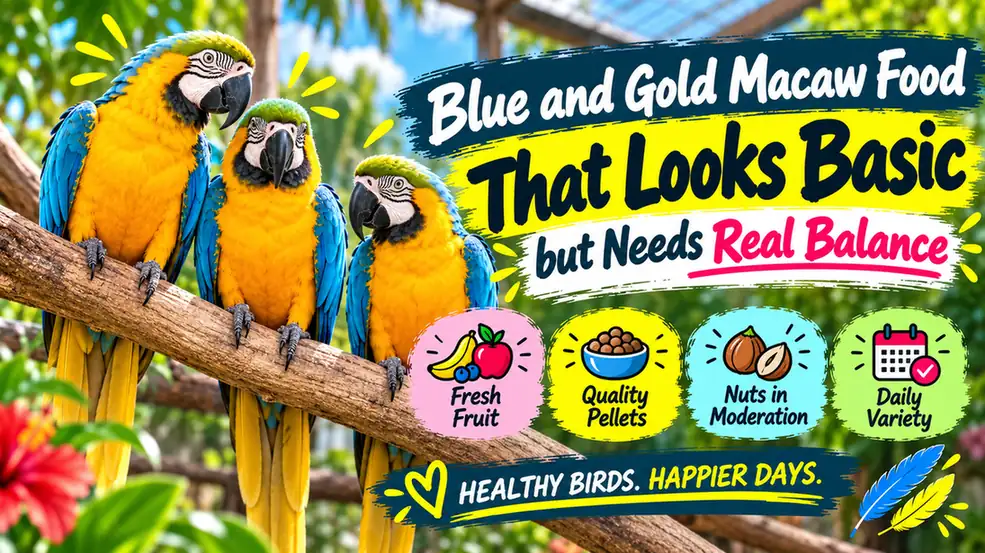
A healthy Blue and Gold Macaw food plan is built on roughly 70–75% high-quality pellets, with the rest split between fresh vegetables, limited fruit, and a small daily portion of nuts for healthy fats. Pellets provide balanced vitamins and minerals that seeds alone do not supply, and an all-seed diet is linked to obesity, fatty liver disease, and vitamin deficiencies. Fresh food should include dark leafy greens, bell peppers, carrots, and squash, offered daily in small chopped pieces.
Fruit should be given as a treat, not a staple; apples, berries, and mango are safe options, but avocado, chocolate, caffeine, and foods high in salt or sugar are toxic or harmful and must be avoided. Clean water must be available at all times, and food bowls need daily washing to prevent bacterial growth. This Blue and Gold Macaw food ratio supports strong bones, healthy feathers, and fewer avian vet visits.
Blue and Gold Macaw Food: What Do They Eat?
Wild Blue and Gold Macaws, known scientifically as Ara ararauna, forage across South American rainforests and palm groves, cracking open tough shells most animals can’t touch. Amazon basin habitats supply a shifting menu of fruit, nuts, seeds, and flowers depending on the season. Strong, hooked beaks let these birds process foods that would be far too hard for smaller parrots.
The World Parrot Trust, a respected parrot conservation and welfare organization, tracks wild macaw feeding behavior across South America to support habitat and conservation planning.
Captive macaws lose access to that natural variety, so owners need to recreate balance through deliberate meal planning. A diet built only around seeds or only around pellets falls short of what these birds actually need. Feather condition, energy levels, and even breeding success all trace back to the quality of the daily menu.
Key foods in a wild macaw’s diet include:
- Native palm fruits and nuts
- Seasonal wild fruits and berries
- Flowers and buds
- Clay from riverbank licks, for mineral intake
- Occasional insects and larvae
Blue and Gold Macaw Diet
Formulated pellets should anchor a captive Blue and Gold Macaw diet, since they deliver consistent vitamins and minerals that fresh food alone can’t guarantee. Fresh vegetables and a smaller portion of fruit round out daily meals, while nuts and seeds work best as occasional treats rather than a dietary base. Overfeeding fatty foods remains a leading cause of obesity and liver disease in pet macaws, based on veterinary literature covering companion parrot nutrition.
Many avian veterinarians suggest building each meal around the same rough framework, adjusted for the individual bird’s age, activity level, and health history. Consistency matters more than perfection, since sudden diet swings can cause digestive upset in macaws. Working out a reliable Blue and Gold Macaw food plan also means watching total daily calories, not just which ingredients make the list.
Quick Blue and Gold Macaw Food Chart
A simple starting framework helps translate general advice into an actual daily bowl, and the table below breaks down a commonly recommended proportion split, though an avian vet can fine-tune it for an individual bird’s age and health.
| Food Group | Recommended Daily Share | Examples |
| Pellets | 70-75% | Formulated macaw or large parrot pellets |
| Vegetables | 10-15% | Carrots, broccoli, leafy greens |
| Fruits | 5-10% | Papaya, berries, melon |
| Nuts and seeds | 5% or less | Walnuts, Brazil nuts, sunflower seeds |
Blue and Gold Macaw Pellets
Choosing the right Blue and Gold Macaw food starts with pellets, since loose seed mixes let birds pick out favorite bits and skip the rest, leaving major nutritional gaps. Formulated pellets solve that problem by locking vitamins, minerals, and protein into every bite, so selective eating can’t create deficiencies. Large parrot or macaw-specific pellet formulas suit the bigger beak and higher energy needs of this breed better than pellets sized for smaller birds.
The Association of Avian Veterinarians has long recommended formulated diets over seed-only feeding for companion parrots, citing decades of clinical nutrition research.
Switching an adult macaw from seeds to pellets takes patience, since older birds often resist unfamiliar textures. Gradual mixing of pellets into a familiar seed bowl over several weeks tends to work better than an abrupt swap.
Look for these qualities when choosing a pellet brand:
- Formulated specifically for large parrots or macaws
- Free from artificial dyes and preservatives
- Backed by a named manufacturer with clear feeding guidelines
- Stored in a cool, dry container to prevent mold
Blue and Gold Macaw Seeds
Seeds occupy a smaller, treat-sized role in a healthy macaw diet rather than serving as a main course. Sunflower and safflower seeds carry high fat content, which packs useful energy but adds up quickly in a bird that isn’t flying long distances daily. Pet macaws burn far fewer calories than their wild counterparts, so seed-heavy diets often lead to weight gain over time.
Sprouted seeds offer a lower-fat, nutrient-dense alternative that many bird nutritionists favor over dry seed mixes. Soaking and rinsing seeds before sprouting reduces the risk of bacterial growth, an important safety step given how quickly damp seed can spoil.
Common seeds fed in moderation include:
- Sunflower seeds, occasional and high in fat
- Safflower seeds
- Pumpkin seeds
- Flaxseed, in small amounts mixed into meals
What nuts do blue and gold macaws eat
Nuts supply concentrated fat and protein that wild macaws rely on for sustained energy between foraging stops. Brazil nuts stand out among nut choices because of their selenium content, an antioxidant mineral that supports immune function in birds. Shelled nuts double as enrichment items, since cracking the shell keeps a macaw’s powerful beak exercised and engaged.
Portion control matters more with nuts than almost any other food group, given how calorie-dense they are per bite. Two or three nuts a few times a week suits most adult macaws better than daily nut feeding. Peanuts carry a higher risk of aflatoxin mold contamination than tree nuts, so many owners skip them entirely or offer only fresh, human-grade peanuts in small amounts.
Nuts commonly offered to macaws include:
- Brazil nuts, one to two per week
- Walnuts
- Almonds, unsalted and unshelled preferred
- Pecans
Blue and Gold Macaw Fruits
Fruit adds natural sugars, hydration, and antioxidants that support a macaw’s immune system without overloading daily calories, provided portions stay modest. Papaya ranks among the most recommended options thanks to its enzyme content, which some owners use to support digestion. Rinsing every piece of fruit thoroughly removes pesticide residue that could otherwise irritate a sensitive digestive system.
Seeds and pits from stone fruits need to come out before serving, since several common fruit seeds contain compounds that convert to cyanide-like substances during digestion. Skin can usually stay on for organic produce, adding extra fiber to each meal.
What Fruits Can Blue and Gold Macaws Eat?
Safe fruit choices include papaya, mango, banana, apple with seeds removed, pear with seeds removed, melon, berries, pineapple, and kiwi. Citrus fruits like oranges work for most macaws in small amounts, though acidic fruit should stay occasional rather than daily. Grapes make a fine treat when cut in half to reduce choking risk from larger pieces.
A quick overview of common safe fruits and how to prepare them appears below.
| Fruit | Prep Notes | Serving Frequency |
| Papaya | Remove seeds, cube | 2-3 times weekly |
| Mango | Remove pit, peel | 2-3 times weekly |
| Banana | Peel, slice | Occasional treat |
| Berries | Rinse well | 2-3 times weekly |
| Apple | Remove seeds and core | Occasional |
| Melon | Remove rind and seeds | Occasional |
Blue and Gold Macaw Vegetables
Vegetables make up the largest fresh-food share of a balanced macaw diet, delivering fiber, vitamins, and antioxidants with far less sugar than most fruit. Dark leafy greens like kale and Swiss chard supply calcium and vitamin A, both nutrients tied to feather health and immune strength. Root vegetables such as carrots and sweet potato add beta-carotene, which the body converts into vitamin A as needed.
Steaming firmer vegetables like broccoli or sweet potato softens them for easier eating, especially for younger or older birds with less bite strength. Raw vegetables work fine too, provided pieces are cut to a manageable size for a macaw’s beak and tongue.
What Vegetables Can Blue and Gold Macaws Eat?
Safe vegetable choices include carrots, sweet potato, broccoli, bell peppers, zucchini, green beans, peas, and pumpkin. Leafy greens such as kale, spinach in moderation, and Swiss chard add valuable minerals when rotated rather than fed as a single daily staple. Corn on the cob doubles as a foraging activity, since gnawing kernels off the cob keeps a macaw occupied.
A short reference table of everyday safe vegetables makes meal planning easier.
| Vegetable | Prep Notes | Nutritional Highlight |
| Carrots | Raw or steamed, sliced | Beta-carotene |
| Sweet potato | Cooked, cubed | Vitamin A |
| Broccoli | Steamed florets | Vitamin C, calcium |
| Bell peppers | Raw, sliced | Vitamin C |
| Leafy greens | Rinsed, torn | Calcium, vitamin A |
Unsafe Blue and Gold Macaw Food to Avoid
Certain everyday kitchen items cross the line from harmless snack to genuine emergency for a pet macaw. Chocolate contains theobromine, a compound birds process far more slowly than humans do, which can trigger seizures and heart failure even in small amounts. Avocado carries persin, a toxin concentrated in the pit and skin that has been linked to sudden cardiac problems in several parrot species.
Caffeine and alcohol act on a macaw’s nervous system with outsized force given how small these birds are compared to a human body. Onion, garlic, and dried or undercooked beans round out the list of common household foods that belong nowhere near a macaw’s food bowl.
The ASPCA Animal Poison Control Center operates a 24-hour hotline for suspected pet poisoning cases, including toxic food ingestion in birds, and contacting an avian veterinarian immediately gives a macaw the best chance at a full recovery.
What Foods Can Blue and Gold Macaws Not Eat?
Never offer chocolate, caffeine, alcohol, avocado, onion, garlic, mushrooms, dairy products, salty snacks, or dried or raw beans to a pet macaw. Fruit pits and seeds from apples, cherries, peaches, and apricots also need to stay out of reach because of compounds that release cyanide during digestion. Xylitol, a sugar substitute found in some baked goods and gum, poses a serious risk and should never appear anywhere near a bird’s food dish.
A reference table of common toxic foods and their main risks appears below.
| Food | Why It Is Dangerous |
| Chocolate | Theobromine can cause seizures and heart failure. |
| Avocado | Persin toxin can damage the heart. |
| Caffeine | Overstimulates heart rate and nervous system |
| Alcohol | Depresses the nervous system; can be fatal |
| Onion and garlic | Linked to digestive and blood problems |
| Dried or raw beans | Contains toxins destroyed only by proper cooking |
Feeding Your Macaw for the Long Run
Blue and Gold Macaw food decisions ripple through every part of a bird’s health, from feather brightness to how many decades it spends by an owner’s side. Wild macaws forage across a shifting menu of fruit, nuts, and native plants, and recreating that variety indoors starts with understanding what these birds eat in their natural range. A well-planned macaw diet leans on formulated pellets as the daily foundation, filled out with fresh vegetables and smaller portions of fruit.
Pellets deserve their spot as the base of the bowl, since they close nutritional gaps that loose seed mixes tend to leave open. Seeds and nuts still belong in the routine, just scaled back to occasional treats rather than daily staples, given how calorie-dense both options are. Fruits bring hydration and antioxidants once pits and seeds get removed, while vegetables round out the plate with fiber and steady vitamin support.
Avoiding chocolate, avocado, caffeine, alcohol, and the rest of the unsafe food list protects a macaw from entirely preventable emergencies. Building meals around these principles gives a Blue and Gold Macaw a genuinely strong shot at a long, colorful, and healthy life.
Frequently Asked Questions
How much should a Blue and Gold Macaw eat per day?
Adult macaws often eat somewhere around a third to half a cup of pellets daily, plus fresh vegetables and fruit, though exact amounts vary by size, activity level, and what an avian vet recommends for the individual bird.
Can Blue and Gold Macaws eat human food?
Plain, unseasoned foods like cooked rice, pasta, or steamed vegetables work fine occasionally, but salty, sugary, or heavily processed foods should stay off the menu entirely.
How often should macaws get fruits and vegetables?
Fresh vegetables can be offered daily in modest portions, while fruit works best two to three times a week given its higher natural sugar content.
Are sunflower seeds bad for macaws?
Sunflower seeds aren’t inherently harmful, but their high fat content means they work best as an occasional treat rather than a daily staple.
What is the best pellet brand for Blue and Gold Macaws?
No single brand suits every bird, so choosing a pellet formulated for large parrots, free of artificial dyes, and approved by an avian veterinarian tends to work best.
Can macaws eat peanuts?
Peanuts carry a risk of aflatoxin mold contamination, so many owners avoid them entirely or offer only fresh, human-grade peanuts in small amounts.