

Senegal Parrot Weight typically ranges from 120 to 170 grams in healthy adult birds, with most falling around 130 to 150 grams at a stable, well-fed condition. This range depends on bone structure, sex, and genetics, so two healthy birds from the same clutch can still show a small difference in grams. A digital gram scale gives the most accurate reading, since regular kitchen scales often miss small but important changes.
Weighing your bird at the same time each week, ideally in the morning before feeding, removes food-related swings and shows a true baseline. Any drop of 10 grams or more within a short period is a signal to check for illness, stress, or diet issues right away. Tracking Senegal Parrot Weight over time, rather than checking once and forgetting about it, is what actually helps catch problems early.
Senegal Parrot Weight in Grams and Ounces Explained
Poicephalus senegalus, commonly called the Senegal Parrot, ranks among the smaller African parrot species kept as pets. Adult birds typically weigh between 120 and 170 grams, or roughly 4.2 to 6 ounces. Males and females look nearly identical in size, so weight alone rarely reveals gender.
Bone structure stays compact and dense compared to fluffier-looking species, which can make birds appear larger than they actually are. Tracking Senegal Parrot Weight over time, rather than relying on a single reading, gives the clearest picture of health. A digital kitchen or gram scale, accurate to one gram, works best for home monitoring.
The table below breaks down typical weight figures across common measurement units.
| Category | Grams | Ounces | Pounds |
| Minimum Healthy Weight | 120g | 4.2 oz | 0.26 lb |
| Average Adult Weight | 145g | 5.1 oz | 0.32 lb |
| Maximum Healthy Weight | 170g | 6.0 oz | 0.37 lb |
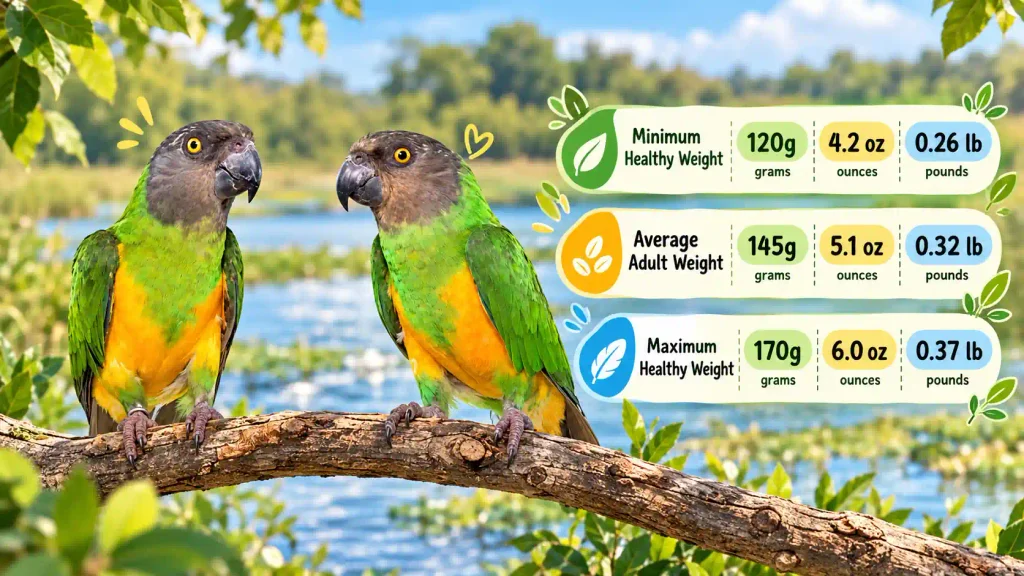
How Much Does A Senegal Parrot Weigh
Average Senegal Parrots weigh around 120 to 170 grams as fully grown adults. Weight depends on genetics, diet quality, activity level, and overall health. Most pet birds settle near 140 to 150 grams once fully mature. Anything far outside this range deserves a closer look from an avian vet.
Senegal Parrot Baby Weight During Growth Stages
Newly hatched Senegal Parrot chicks weigh only a few grams at birth, often less than 10 grams. Growth happens quickly during the first eight weeks, with chicks gaining weight daily under parental or hand-feeding care. Feather development and muscle growth demand enormous energy during this stage. Hand-fed chicks require close supervision, since formula temperature, feeding frequency, and portion size all influence how steadily weight climbs.
Breeders track daily weight gain closely to catch feeding problems or slow growth early. Fledging usually occurs around 8 to 10 weeks, by which point chicks approach near-adult weight. Weight gain should follow a steady, predictable curve rather than sudden jumps or drops.
- Week 1: roughly 8 to 15 grams
- Week 4: roughly 60 to 90 grams
- Week 8: roughly 110 to 140 grams
- Week 10 to 12: near full adult weight
Senegal Parrot Adult Weight and Healthy Ranges
Full maturity arrives around one year of age, though skeletal growth finishes earlier than sexual maturity. Adult birds settle into a stable weight range that should stay fairly consistent through life. Daily fluctuations of a few grams are completely normal and tied to food and water intake, digestion, or time of day.
Owners get the most accurate readings by weighing birds each morning before their first meal. A consistent weighing routine builds a reliable baseline for spotting real changes. Genetics play a role too, since some bloodlines run naturally leaner or stockier, which is why Senegal Parrot Weight varies slightly between individual birds. Seasonal changes in temperature and daylight hours can also nudge appetite and activity levels, causing small, harmless shifts on the scale throughout the year.
Senegal Parrot Weight Range At A Glance
Healthy adult Senegal Parrots generally weigh between 120 and 170 grams. Anything below 110 grams often signals illness, poor nutrition, or parasites. Weight above 180 grams may point toward obesity from a high-fat, seed-heavy diet. A trusted avian vet should evaluate any bird sitting well outside this window.
What Causes Unhealthy Weight Loss In Senegal Parrots
Sudden or gradual weight loss ranks among the most serious warning signs in pet parrots. Illness, parasites, poor appetite, and stress all commonly trigger noticeable drops. Respiratory infections, liver disease, and gastrointestinal problems often show weight loss before any other visible symptom.
Environmental stress, such as a new home, loud noises, or a missing companion, can also suppress appetite. Molting periods sometimes cause mild, temporary weight dips as energy shifts toward new feather growth. Ignoring a downward trend for too long turns a manageable problem into an emergency.
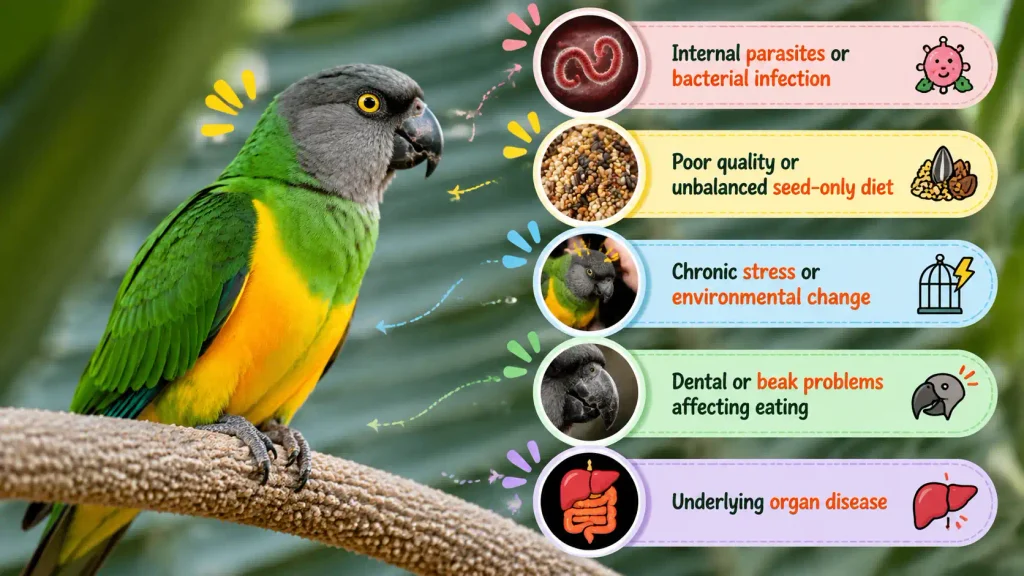
- Internal parasites or bacterial infection
- Poor quality or unbalanced seed-only diet
- Chronic stress or environmental change
- Dental or beak problems affecting eating
- Underlying organ disease
The Association of Avian Veterinarians recommends prompt veterinary evaluation whenever a pet bird loses more than 10 percent of its normal body weight within a short period.
Signs Of Unhealthy Weight Loss In Parrots
Warning signs include a prominent keel bone, fluffed feathers, reduced activity, and lighter droppings. Appetite often drops noticeably alongside visible lethargy. Weight loss exceeding 10 percent of normal body weight needs urgent veterinary attention. Waiting too long risks rapid health decline in small birds.
Managing Healthy Weight Gain In Senegal Parrots
Excess weight gain develops gradually, often from a seed-heavy diet combined with limited flight time or exercise. Pet birds kept in small cages without daily out-of-cage time burn fewer calories than active, wild counterparts. Fatty liver disease becomes a real risk once obesity sets in, especially in birds fed mostly sunflower seeds or peanuts.
A gradually rising weight trend over several weeks, rather than a single day, usually points toward diet or activity issues. Correcting the problem calls for slow, steady changes rather than sudden, drastic diet cuts.
- Swap seed mixes for pellets and fresh vegetables
- Offer one to two hours of supervised out-of-cage time daily
- Provide foraging toys to encourage natural movement
- Limit high-fat treats like nuts and seeds
- Recheck weight weekly to track progress
Diet And Nutrition That Support A Healthy Weight
Balanced nutrition forms the foundation of stable, healthy body weight throughout a Senegal Parrot’s life. High-quality pellets should make up most of the daily diet, supplemented with fresh vegetables, limited fruit, and occasional healthy seeds. Calcium and vitamin sources support bone density and overall organ function.
Fresh water must stay available at all times, since dehydration skews weight readings and harms overall health. Overfeeding fatty treats remains one of the most common and preventable causes of unhealthy weight gain. Introducing new foods gradually, alongside familiar favorites, helps picky eaters accept a wider, more balanced diet over time.
The table below outlines a simple daily feeding guide for maintaining a healthy adult weight.
| Food Type | Recommended Proportion | Examples |
| Pellets | 60-70% of diet | Formulated avian pellets |
| Vegetables | 15-20% of diet | Leafy greens, carrots, peppers |
| Fruit | 5-10% of diet | Apple, berries, melon (seedless) |
| Seeds and Nuts | 5% or less | Sunflower seed, almond (limited) |
Health Monitoring And When To See A Vet
Weekly weighing, ideally on the same scale and at the same time of day, builds the most reliable long-term record. Recording numbers in a simple notebook or phone app makes trends easy to spot over weeks and months. Any bird dropping or gaining more than 10 percent of baseline weight deserves professional attention. Sharing this weight log at each checkup gives the treating vet valuable context that a single visit alone cannot provide.
Certified avian veterinarians can run bloodwork, fecal tests, and physical exams to pinpoint underlying causes. The World Parrot Trust offers general guidance on recognizing illness signs in companion parrots, including unexplained weight changes. Regular checkups, even for seemingly healthy birds, catch problems that home monitoring alone might miss.
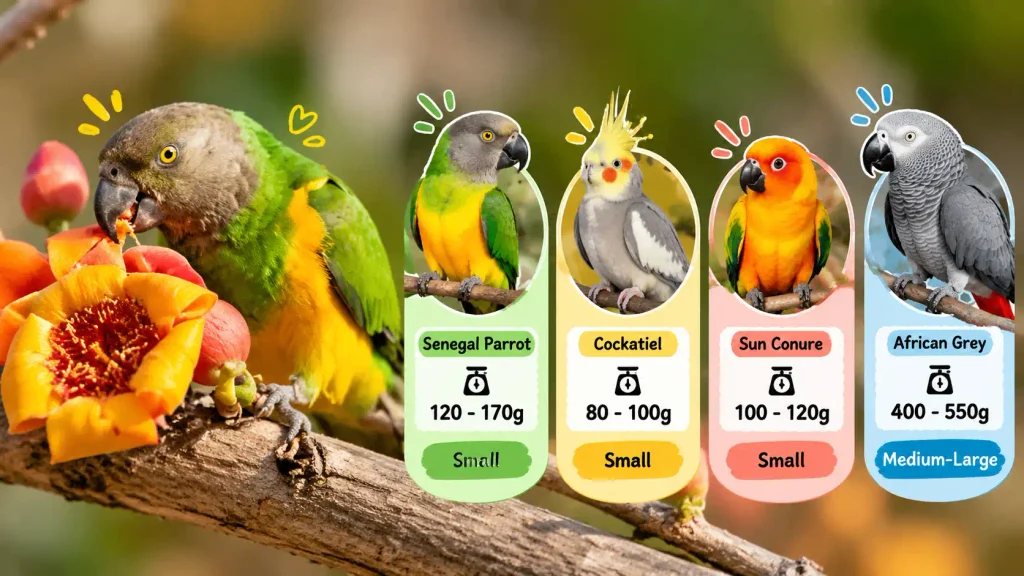
Comparing Senegal Parrots against a few other popular pet parrot species helps put their size into perspective.
| Species | Average Weight | Size Category |
| Senegal Parrot | 120-170g | Small |
| Cockatiel | 80-100g | Small |
| Sun Conure | 100-120g | Small |
| African Grey | 400-550g | Medium-Large |
| Blue and Gold Macaw | 900-1300g | Large |
Trade in wild-caught African parrots, including Senegal Parrots, falls under international oversight from CITES, which regulates cross-border movement to protect wild populations.
Suitable Environment And Ownership Considerations
Cage size, perch variety, and daily activity levels all influence long-term weight stability. Birds housed in cramped cages with little enrichment tend toward inactivity and gradual weight gain. Family households with children should supervise handling, since small parrots can bite when startled or stressed.
Compatibility with other pets, especially cats and dogs, requires careful, gradual introductions under supervision. Prospective owners should budget for routine vet visits, quality pellets, and enrichment toys as ongoing costs of responsible ownership. Adoption through a reputable breeder or a rescue organization also gives new owners a documented weight and health history to start from, which makes future tracking much easier.
Keeping Your Parrot on Track
Keeping track of Senegal Parrot Weight gives one of the simplest, most reliable windows into a bird’s overall health. Grams and ounces both matter less than consistency, since regular weekly checks reveal trends that a single reading never could. Baby weight climbs quickly during the first two months, while adult weight should stay steady across the following years.
Unexplained weight loss often points toward parasites, illness, or stress, while gradual weight gain usually traces back to diet and limited activity. A balanced diet built around pellets, vegetables, and modest treats supports steady, healthy numbers on the scale. Routine vet visits, alongside home monitoring, catch problems that feathers and behavior alone might hide.
Cage setup, family dynamics, and daily enrichment all play supporting roles in long-term wellbeing. Paying attention to these details helps any owner keep their bird thriving for years to come.
Frequently Asked Questions
What is the average Senegal Parrot Weight for an adult bird?
Adult Senegal Parrots typically weigh between 120 and 170 grams, with most birds settling near 140 to 150 grams once fully mature.
How much should a baby Senegal Parrot weigh at 8 weeks?
Chicks usually reach around 110 to 140 grams by 8 weeks old, approaching near-adult size just before fledging.
What causes sudden weight loss in Senegal Parrots?
Parasites, infections, poor diet, stress, and organ disease are common causes, and any loss over 10 percent of body weight needs vet attention.
How often should owners weigh their Senegal Parrot?
Weekly weighing, at the same time of day on the same scale, gives the most reliable trend data for spotting problems early.
Is 180 grams too heavy for a Senegal Parrot?
Weight above 180 grams often signals obesity risk, especially with a seed-heavy diet, and warrants a vet check plus diet adjustment.
What type of scale works best for weighing a small parrot?
A digital gram scale accurate to one gram gives the precision needed for a bird this small, far better than a standard household scale.