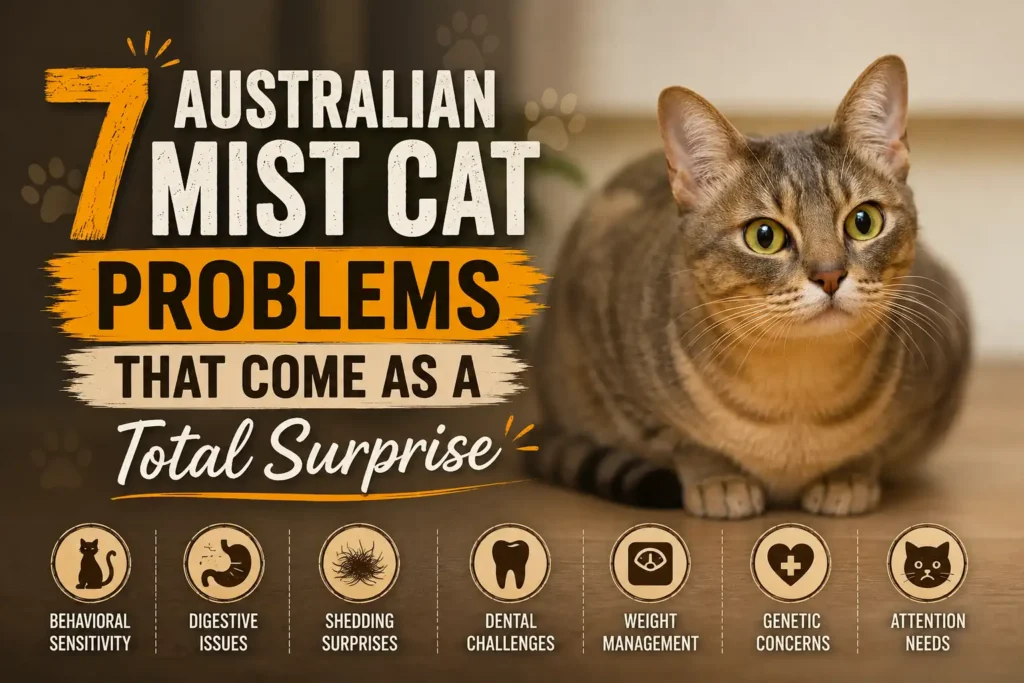
Australian Mist cat problems mainly involve dental disease, urinary tract issues, and weight gain after age seven. Gum inflammation can start by age two or three, so regular brushing and professional cleanings help prevent tooth loss. Urinary blockages are more urgent; a cat straining or crying in the litter box needs same-day vet care, since blockages can turn life-threatening within hours.
Weight gain often develops as older cats stay less active but eat the same amount, raising the risk of joint strain and diabetes. Catching these Australian Mist cat problems early, through regular vet checkups and attention to eating and litter box habits, keeps most cases manageable.
Common Australian Mist Cat Problems by Body System
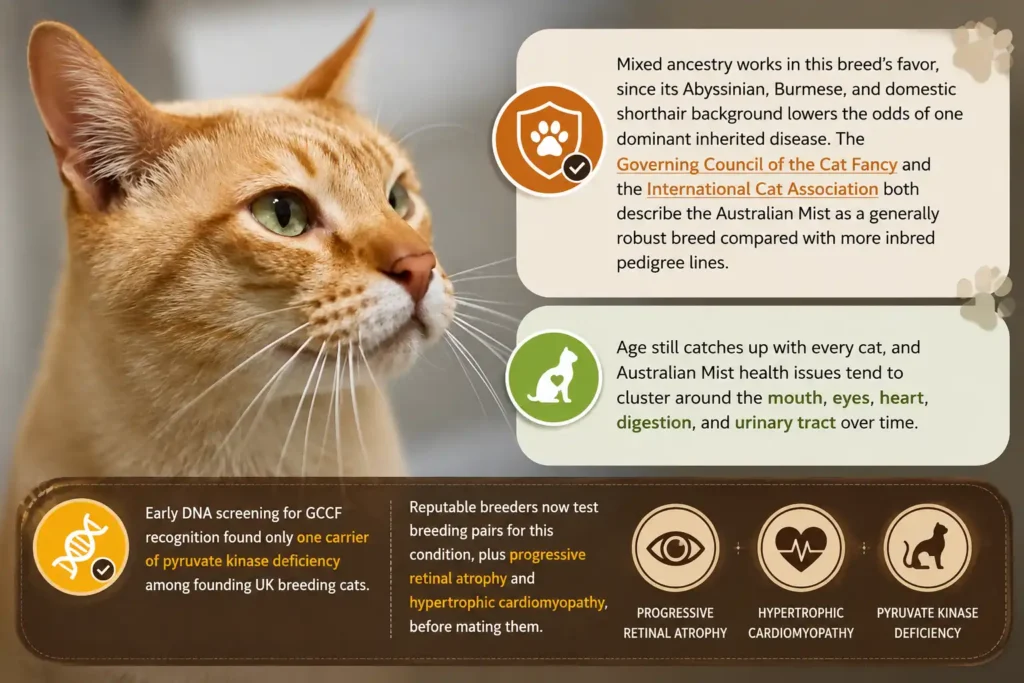
Mixed ancestry works in this breed’s favor, since its Abyssinian, Burmese, and domestic shorthair background lowers the odds of one dominant inherited disease. The Governing Council of the Cat Fancy and the International Cat Association both describe the Australian Mist as a generally robust breed compared with more inbred pedigree lines. Age still catches up with every cat, and Australian Mist health issues tend to cluster around the mouth, eyes, heart, digestion, and urinary tract over time.
Early DNA screening for GCCF recognition found only one carrier of pyruvate kinase deficiency among founding UK breeding cats. Reputable breeders now test breeding pairs for this condition, plus progressive retinal atrophy and hypertrophic cardiomyopathy, before mating them. Four body systems account for most owner complaints, each covered below.
Learn Everything You Need to Know About Australian Mist Cats. Read more in 7 Australian Mist Cat Facts, Including One Big Hypoallergenic Myth.
Dental, Eye, Heart, and Joint Problems in Australian Mist Cats
Periodontal disease ranks as the most common dental issue in this breed, largely due to its Burmese ancestry. Plaque can progress to gingivitis by age two or three without regular brushing, eventually causing tooth loss if ignored. Eye conditions appear less often, mainly progressive retinal atrophy and occasional conjunctivitis.
Hypertrophic cardiomyopathy, a thickening of the heart muscle linked to Burmese-descended lines, makes annual cardiac screening worthwhile past middle age. Mild arthritis and joint stiffness typically appear after age ten, often mistaken for slowing down. Bad breath, reluctance to chew, or new limping are the clearest early signs something needs attention.
The table below summarizes which body systems commonly cause Australian Mist health issues, along with the earliest signs to watch for.
| Body System | Common Issue | Early Sign |
| Mouth & Gums | Gingivitis, periodontal disease | Bad breath, red gums |
| Eyes | Progressive retinal atrophy, conjunctivitis | Cloudiness, squinting |
| Heart | Hypertrophic cardiomyopathy | Lethargy, rapid breathing |
| Joints | Mild arthritis (senior cats) | Stiffness, less jumping |
Digestive, Urinary, and Kidney Problems
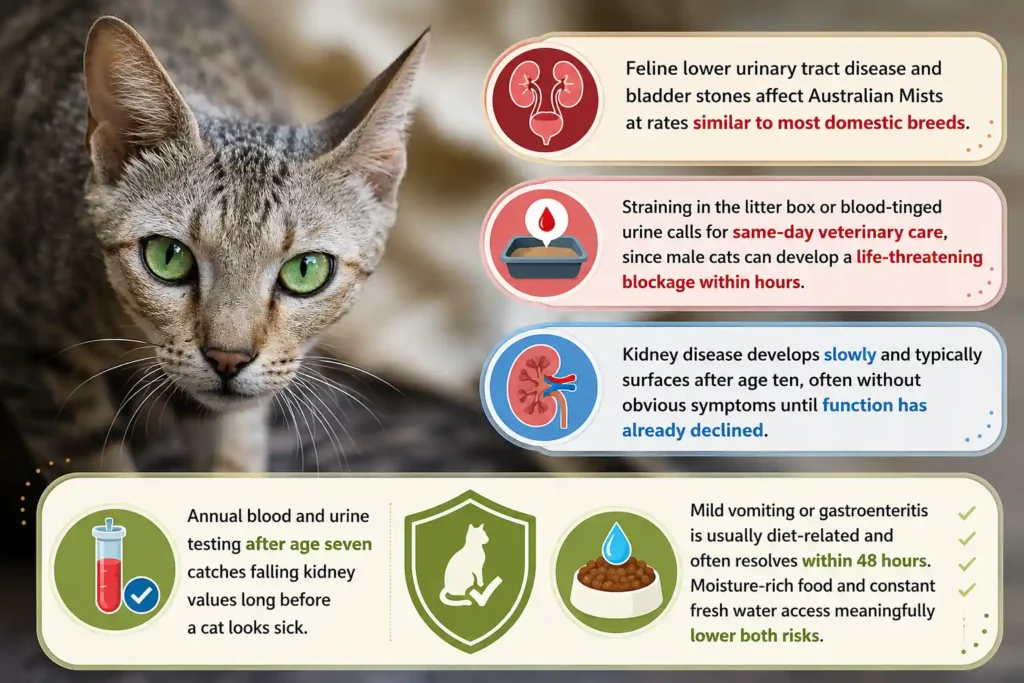
Feline lower urinary tract disease and bladder stones affect Australian Mists at rates similar to most domestic breeds. Straining in the litter box or blood-tinged urine calls for same-day veterinary care, since male cats can develop a life-threatening blockage within hours. Kidney disease develops slowly and typically surfaces after age ten, often without obvious symptoms until function has already declined.
Annual blood and urine testing after age seven catches falling kidney values long before a cat looks sick. Mild vomiting or gastroenteritis is usually diet-related and often resolves within 48 hours. Moisture-rich food and constant fresh water access meaningfully lower both risks.
Respiratory and Skin Problems
Sneezing and mild nasal discharge occasionally affect Australian Mists, usually tied to common feline viruses rather than anything breed-specific. Ringworm, a fungal skin infection, spreads easily through shared bedding in multi-cat households.
Short, sleek coats keep grooming needs low, though flea allergy dermatitis can still develop without year-round parasite prevention. Skin problems in this breed rarely trace back to genetics and almost always come from parasites or allergies. Routine flea and worming prevention keeps both systems in check.
Behavioral Problems in Australian Mist Cats
Behavior changes often signal stress or an underlying medical issue before physical symptoms become obvious. Bred as a calm, people-oriented indoor companion, the Australian Mist rarely develops the destructive scratching seen in more independent breeds. Boredom remains the biggest behavioral risk, since Mists thrive on interaction and struggle when left alone for long stretches.
Sudden changes in litter box habits or vocalization almost always have an identifiable cause. Neglected or under-stimulated Mists can develop anxiety-driven behaviors that closely resemble medical conditions.
Two behaviors account for most owner complaints, and both respond well to environmental changes.
Litter Box Issues
Avoiding the litter box typically traces back to a medical cause, a dirty box, or household stress rather than spite. Urinary tract infections, bladder stones, and constipation top the list of medical reasons a cat stops using its box. Competition for access sometimes triggers avoidance in multi-cat homes, particularly when only one box serves several cats.
General veterinary guidance recommends one box per cat plus one extra, placed in quiet, low-traffic areas. Switching litter or introducing a new pet can cause temporary avoidance. A vet visit should come first whenever avoidance lasts more than a day or two, ruling out FLUTD before addressing behavior.
Excessive Meowing and Scratching
Vocal by nature, the Australian Mist communicates often, and occasional chattiness is simply part of the breed’s personality. Sudden increases in nighttime meowing can point to hyperthyroidism or pain rather than attention-seeking, particularly in senior cats. Scratching is relatively rare in this breed, since Mists are known for being gentle with furniture.
Stress-related scratching still happens occasionally, usually from a lack of appropriate outlets like scratching posts. Interactive play sessions twice daily address both behaviors by burning off pent-up energy. Persistent new vocalization in a cat over age ten deserves a check, since it is an overlooked sign of thyroid disease.
Warning Signs and When to See a Vet
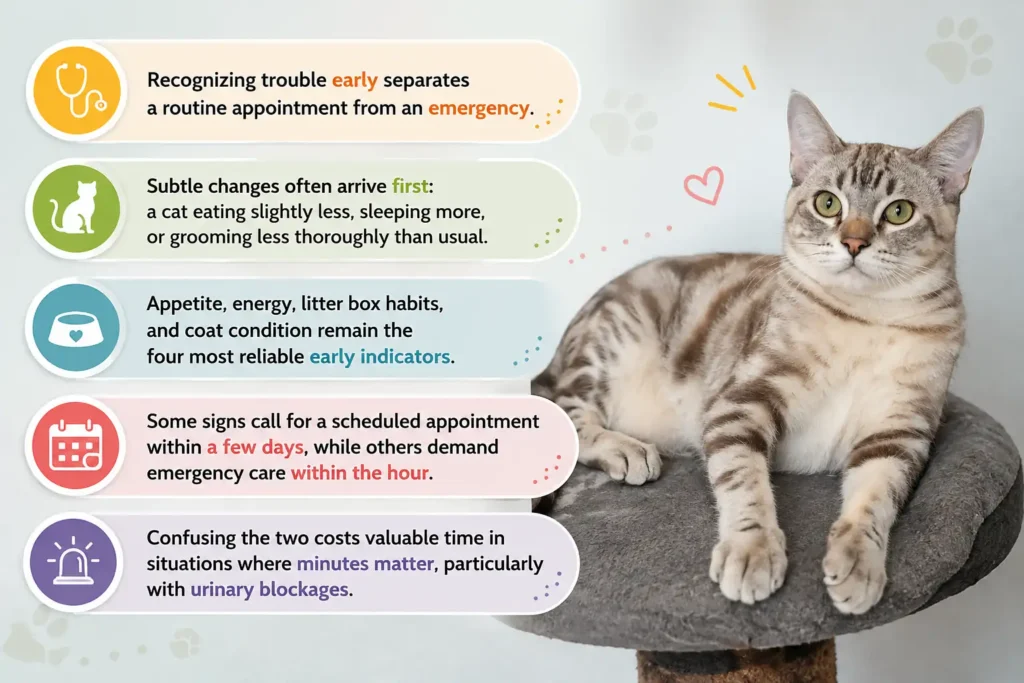
- Recognizing trouble early separates a routine appointment from an emergency.
- Subtle changes often arrive first: a cat eating slightly less, sleeping more, or grooming less thoroughly than usual.
- Appetite, energy, litter box habits, and coat condition remain the four most reliable early indicators.
- Some signs call for a scheduled appointment within a few days, while others demand emergency care within the hour.
- Confusing the two costs valuable time in situations where minutes matter, particularly with urinary blockages.
The two categories below make that distinction clear.
Symptoms to Watch For
Early symptoms worth tracking in an Australian Mist include reduced appetite, weight changes, bad breath, increased thirst, lethargy, and altered litter box habits. Coat quality often declines before other symptoms appear. Bad breath paired with reluctance to eat hard food usually signals dental disease rather than pickiness.
Increased thirst and urination together are classic early indicators of kidney disease or diabetes, particularly past age eight. Weight changes in either direction deserve attention, since both loss and gain point toward treatable conditions. Any symptom lasting beyond 48 hours justifies a veterinary appointment.
Emergency Signs
Certain symptoms require emergency veterinary care within the hour rather than a scheduled visit:
- Straining to urinate with little or no output
- Labored or open-mouth breathing
- Collapse, seizures, or sudden inability to stand
- Repeated vomiting combined with lethargy
- Pale or blue-tinged gums
- Sudden hind-leg pain or paralysis
Any single item on this list justifies an immediate call to an emergency animal hospital, even outside normal clinic hours.
Preventing Common Problems
Prevention costs far less than treatment, both financially and in terms of comfort. Genetics set a baseline, but daily habits around food, activity, and veterinary care determine how that baseline plays out over 14 to 18 years.
Weight management alone prevents a cascade of related problems, since excess weight strains joints and worsens diabetes risk. Consistency matters more than intensity: small daily habits outperform occasional bursts of attention.
Two areas of prevention do the heavy lifting for this breed, and both fit easily into a normal routine.
Diet, Exercise, and Weight Management
Adult Australian Mists typically weigh between 4.5 and 6 kilograms, or about 10 to 13 pounds, and portion control matters more than exercise volume for this moderately active breed. Senior cats generally need roughly 75 kilocalories per kilogram of body weight daily, though a veterinarian should confirm exact portions.
High-quality, high-protein food suited to the correct life stage is an important part of an Australian Mist diet. It supports lean muscle and helps reduce the risk of obesity-related diabetes. Interactive feeders and daily play sessions burn calories while satisfying this breed’s playful nature. Neutered cats face a higher obesity risk due to a slower metabolism, so adjust portions during the first year after the procedure. Monthly weigh-ins can also catch gradual weight gain early.
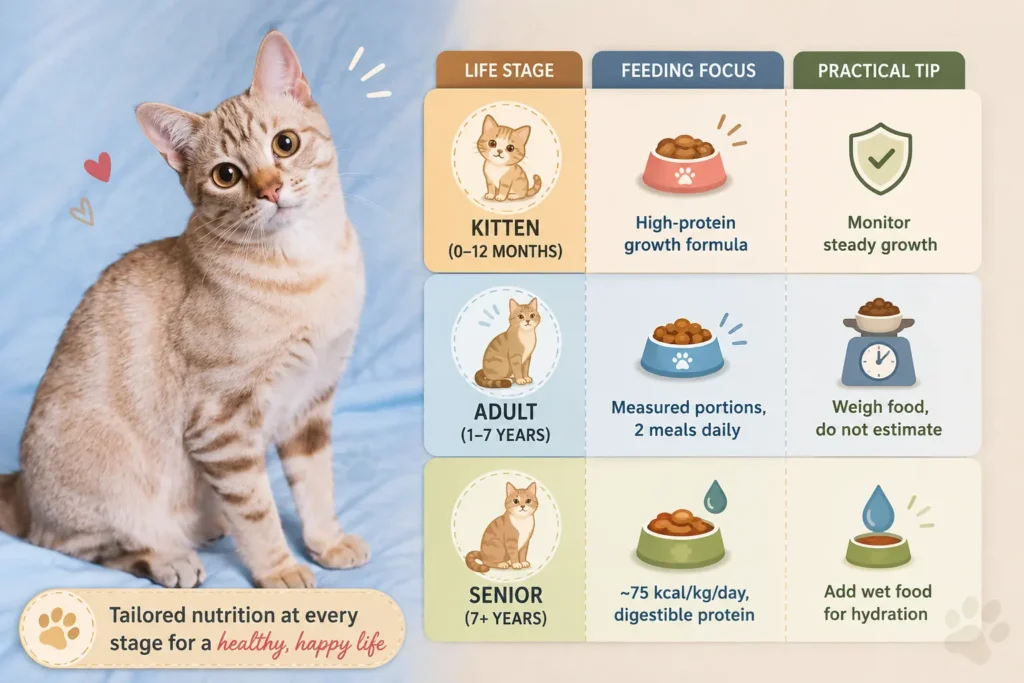
The feeding guide below offers a general starting point by life stage, though a veterinarian should tailor exact portions to each cat.
| Life Stage | Feeding Focus | Practical Tip |
| Kitten (0-12 months) | High-protein growth formula | Monitor steady growth |
| Adult (1-7 years) | Measured portions, 2 meals daily | Weigh food, do not estimate |
| Senior (7+ years) | ~75 kcal/kg/day, digestible protein | Add wet food for hydration |
Regular Vet and Dental Checkups
Annual veterinary exams catch most health problems in Australian Mist cats before they reach an expensive or painful stage. Dental checkups deserve particular attention given this breed’s tendency toward gingivitis, with most vets recommending professional cleaning every one to two years.
Home brushing two to three times weekly slows plaque buildup between cleanings. Bloodwork and urinalysis become increasingly valuable after age seven, catching kidney and thyroid changes before symptoms appear.
Vaccination and parasite schedules aligned with current guidance from bodies like the World Small Animal Veterinary Association remain essential regardless of how healthy a cat looks.
Spaying or neutering by six to twelve months further reduces reproductive cancer risk and certain behavioral issues.
Protecting Your Australian Mist for the Long Run
Australian Mist common health conditions span several areas: dental, eye, heart, and joint conditions; digestive, urinary, and kidney issues; occasional respiratory and skin concerns; and behavioral problems like litter box avoidance or excessive meowing and scratching.
Knowing the difference between routine symptoms and emergency warning signs helps you act at the right time. With consistent prevention, through proper diet, exercise, weight management, and regular vet and dental checkups, most Australian Mist cat problems stay manageable, letting your cat enjoy its full 14-to-18-year lifespan.
Frequently Asked Questions
What Are the Most Common Australian Mist Cat Problems?
The most common health risks involve dental disease, mild obesity, and urinary tract issues like FLUTD. Genetic conditions are rare in this breed, and most health complaints relate to age, diet, or dental hygiene rather than inherited disease.
Are Australian Mist Cats Generally Healthy?
Yes, the Australian Mist is widely considered one of the healthier pedigree cat breeds, with no single defining inherited disease. Routine screening for pyruvate kinase deficiency and hypertrophic cardiomyopathy among breeding cats keeps the gene pool comparatively clean.
Are Australian Mist Cats Prone to Obesity?
Obesity risk runs moderate to high in this breed, particularly after neutering, since Mists enjoy food and have only moderate exercise needs. Portion control, measured meals, and daily play sessions keep weight in a healthy range across the cat’s 14-to-18-year lifespan.