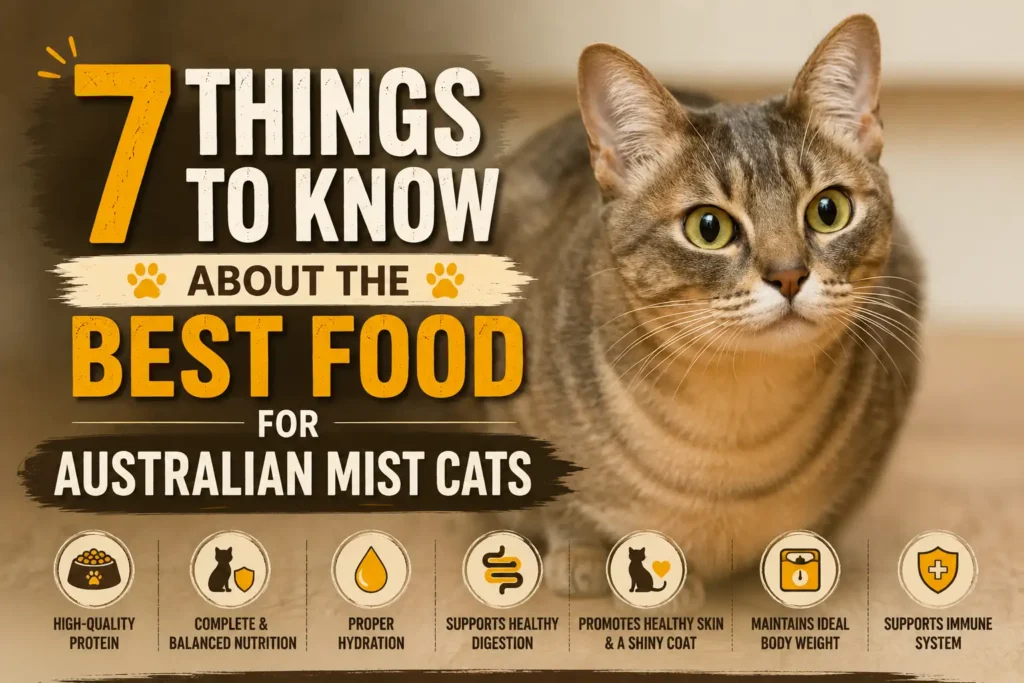
The best food for Australian Mist cats should provide 30 to 40 grams of protein per 1,000 calories, since this breed’s muscular body and high energy need lean meat as the first ingredient. Look for options that meet AAFCO standards for the cat’s life stage, whether kitten, adult, or senior, because nutrient needs change a lot with age. Wet food adds extra moisture, which supports kidney health and helps prevent the weight gain common in this breed after age five.
Portion control matters just as much as ingredient quality: a 10-pound adult needs about 200 to 250 calories a day, split into two or three meals to match this cat’s active, food-driven nature. In the end, the best food for Australian Mist cats combines high protein, controlled calories, and life-stage nutrition to keep the breed lean, energetic, and healthy for years.
Best Food for Australian Mist Cats: What Do They Eat?
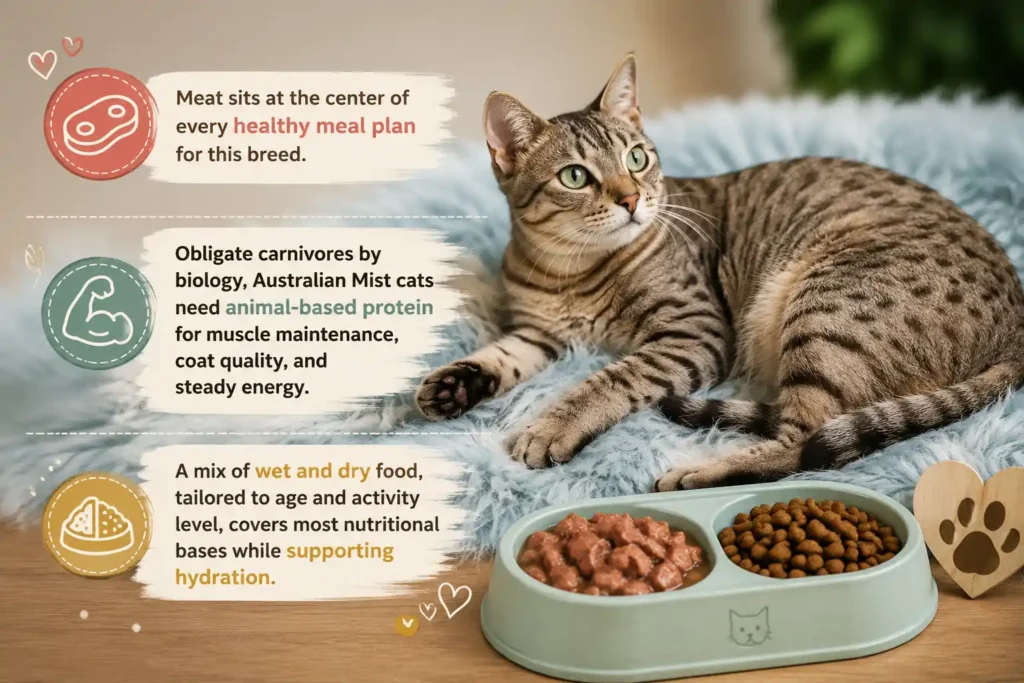
Meat sits at the center of every healthy meal plan for this breed. Obligate carnivores by biology, Australian Mist cats need animal-based protein for muscle maintenance, coat quality, and steady energy. A mix of wet and dry food, tailored to age and activity level, covers most nutritional bases while supporting hydration.
Dental issues and obesity rank among the breed’s more common concerns, so ingredient quality matters more than brand loyalty. Grain-inclusive or grain-free formulas matter less than the protein percentage and source on the label.
Find Out If the Australian Mist Cat Is Right for You. Read more in 7 Australian Mist Cat Facts, Including One Big Hypoallergenic Myth.
What Is the Best Food for Australian Mist Cats?
A complete, balanced formula built primarily from named animal proteins is the best food for Australian Mist cats, provided it meets AAFCO minimums and splits between wet and dry textures. Life-stage labeling matters more than any single ingredient trend, so kitten, adult, or senior formulas should match the cat’s actual age before price or flavor enters the decision.
Nutritional Needs
Forty-one distinct nutrients belong in a complete cat diet, and the right proportions shift with age and health status. Taurine deficiency counts among the more serious risks in poorly formulated food, since cats cannot make this amino acid themselves, and a shortage can eventually trigger heart failure or blindness. Arginine, arachidonic acid, and preformed vitamin A come exclusively from animal tissue, so a diet padded with plant fillers cannot meet an Australian Mist’s baseline needs.
Protein Requirements
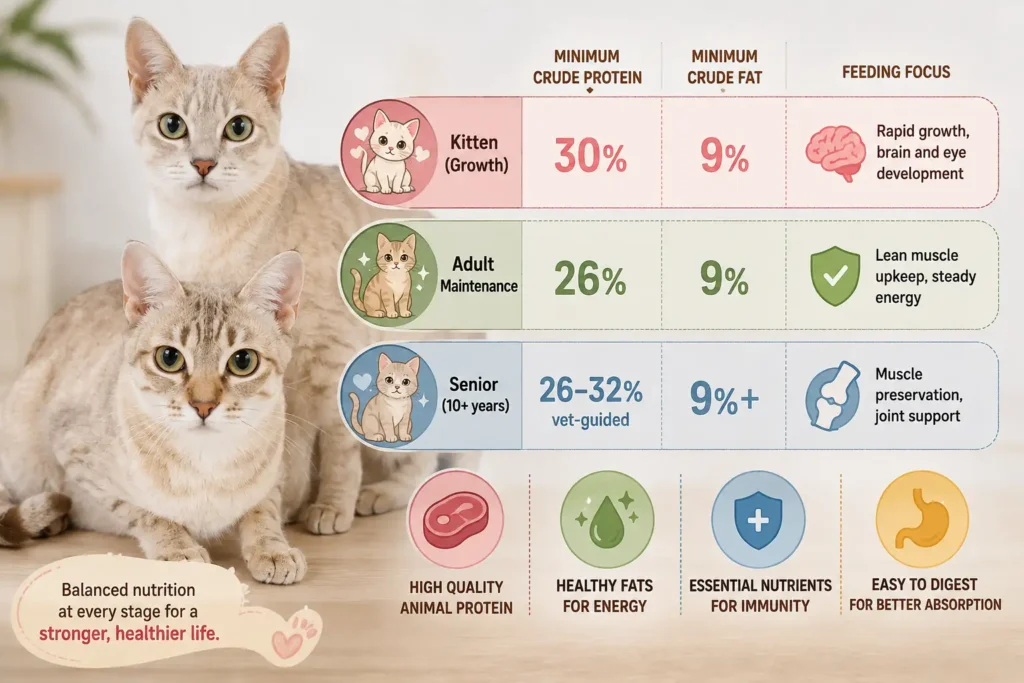
The Association of American Feed Control Officials (AAFCO) sets 26% crude protein, dry matter basis, as the minimum for adult maintenance, with kitten growth formulas requiring at least 30%. These numbers represent floors, not ideal targets. A mouse, a cat’s natural prey, typically contains 50% or more protein on a dry matter basis, which explains why many nutritionists favour foods positioned well above the bare legal minimum.
Comparing nutrient minimums side by side makes label reading far easier at the store shelf.
| Life Stage | Minimum Crude Protein | Minimum Crude Fat | Feeding Focus |
| Kitten (Growth) | 30% | 9% | Rapid growth, brain and eye development |
| Adult Maintenance | 26% | 9% | Lean muscle upkeep, steady energy |
| Senior (10+ years) | 26–32%, vet-guided | 9%+ | Muscle preservation, joint support |
Wet Food
Moisture content in canned or pouch food runs near 78%, supporting kidney and urinary health better than kibble alone. Palatability tends to run higher too, useful for a Pet recovering from illness or being fussy. Refrigeration after opening matters, and food left out past four hours should get tossed.
Dry Food
Kibble offers convenience, longer shelf life, and a modest dental-cleaning effect from chewing. Carbohydrate content in dry formulas runs noticeably higher than in wet food, so free-feeding kibble around the clock feeds the weight gain this breed is prone to. Splitting daily calories between a measured dry portion and a wet meal works better for most Mists.
Best Ingredients
Named meat sources such as chicken, turkey, salmon, or rabbit should appear first on any ingredient list under consideration. Animal-based fats supply linoleic and arachidonic acid, both essential for skin and coat condition in this short-coated breed. A formula listing corn or unnamed “meat meal” first generally signals lower quality.
Feeding Schedule and Portion Size
Meal timing shapes both digestion and behavior in a breed known for its healthy appetite. Two to three measured meals daily suit most adult Mists better than free-feeding. Free access to a full bowl makes overeating almost inevitable for a food-motivated cat like this one.
Kittens need more frequent meals to fuel rapid growth. Senior cats often do better on smaller, more frequent portions that are gentler on digestion. Body condition, not the number printed on a bag, should guide how much food actually lands in the bowl.
Portion Size
Package feeding charts offer a starting point only, since they assume an average cat rather than the specific one in front of you. A body condition score, checked by feeling for ribs under a thin layer of fat, gives a far more accurate read. Adjustments should happen gradually over one to two weeks rather than all at once.
Daily calorie needs shift across life stages, and this quick reference simplifies portion adjustments.
| Life Stage | Meals Per Day | Approx. Daily Calories | Food Split |
| Kitten (0–12 months) | 3–4 | 250–300 | Kitten wet + dry, higher fat |
| Adult (1–10 years) | 2–3 | 200–250 | Balanced wet/dry mix |
| Senior (10+ years) | 2–3 small | 180–220 | Softer, wet-heavy diet |
Kitten Diet
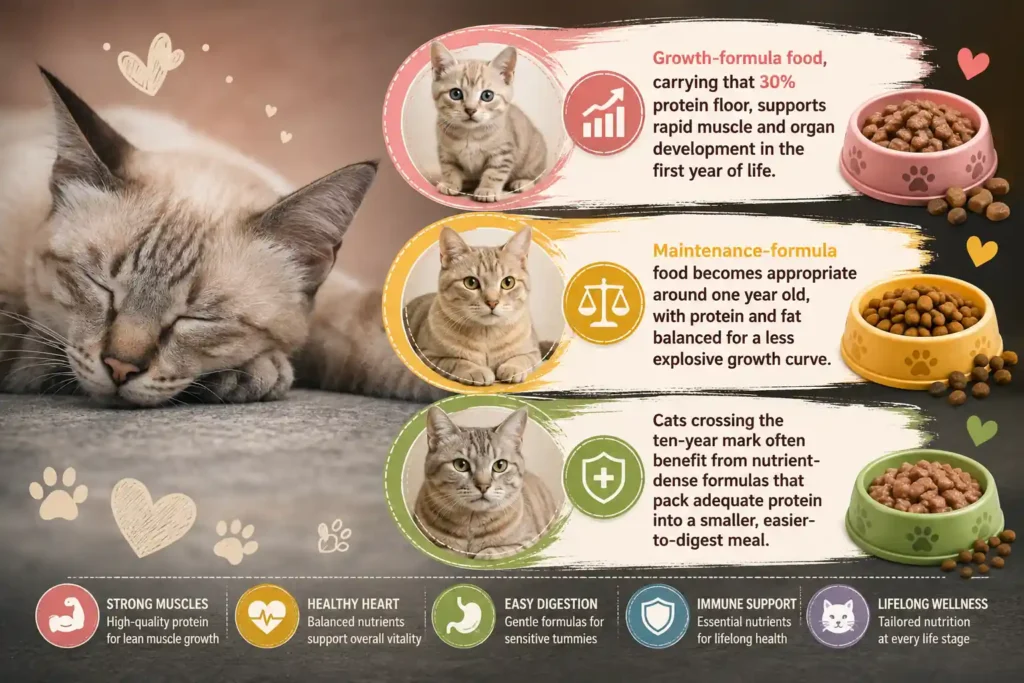
Growth-formula food, carrying that 30% protein floor, supports rapid muscle and organ development in the first year of life. Three to four small meals daily prevent blood sugar dips between larger meals. Weaning typically finishes around eight weeks, after which kitten-specific wet and dry food should carry the cat to roughly twelve months of age.
Adult Cat Food
Maintenance-formula food becomes appropriate around one year old, with protein and fat balanced for a less explosive growth curve. Two or three meals daily, portioned to actual body weight rather than a generic bag recommendation, help prevent gradual weight creep. Annual weigh-ins catch small shifts before they turn into a visible problem.
Senior Cat Diet
Cats crossing the ten-year mark often benefit from nutrient-dense formulas that pack adequate protein into a smaller, easier-to-digest meal. Joint-support ingredients such as glucosamine and omega-3 fatty acids offer real value for a less mobile cat. Kidney function deserves closer monitoring too, since phosphorus levels may need adjustment under veterinary guidance.
Healthy Treats and Foods to Avoid
For Australian Mist health, treats should make up less than 10% of a cat’s daily calorie intake. Veterinary nutrition guidance consistently recommends this limit. Freeze-dried meat, small portions of plain cooked chicken, and quality commercial treats without unnecessary fillers are suitable options when given in moderation.
Portion size matters as much as ingredient quality once treats enter the picture. Certain everyday human foods, meanwhile, carry genuine risk and belong nowhere near a Dog’s bowl.
Healthy Treats
Single-ingredient freeze-dried proteins, like chicken breast or salmon, offer flavor without the fillers found in many treat bags. Small training-sized pieces reinforce good behavior without tipping daily calorie totals out of balance. A teaspoon of plain, unseasoned canned pumpkin also makes a gentle, fiber-rich occasional treat.
What Foods Should Australian Mist Cats Avoid? (Quick Answer)
Onions, garlic, chocolate, grapes, raisins, raw fish fed regularly, and alcohol all pose genuine danger to Australian Mist cats. The ASPCA Animal Poison Control Center lists allium vegetables and chocolate among the most common sources of feline food poisoning. Any of these items warrants an immediate call to a veterinarian rather than a wait-and-see approach.
A quick-reference table makes it easier to spot risky ingredients hiding in everyday leftovers.
| Food | Why It’s Dangerous | Risk Level |
| Onion, garlic, leeks | Damages red blood cells, causes anemia | High |
| Chocolate, caffeine | Affects heart and nervous system | High |
| Grapes, raisins | Linked to kidney damage | Moderate–High |
| Raw fish, regular feeding | Destroys thiamine, causes neurological issues | Moderate |
| Cow’s milk, dairy | Most adult cats are lactose intolerant | Low–Moderate |
Hydration Needs and Weight Management
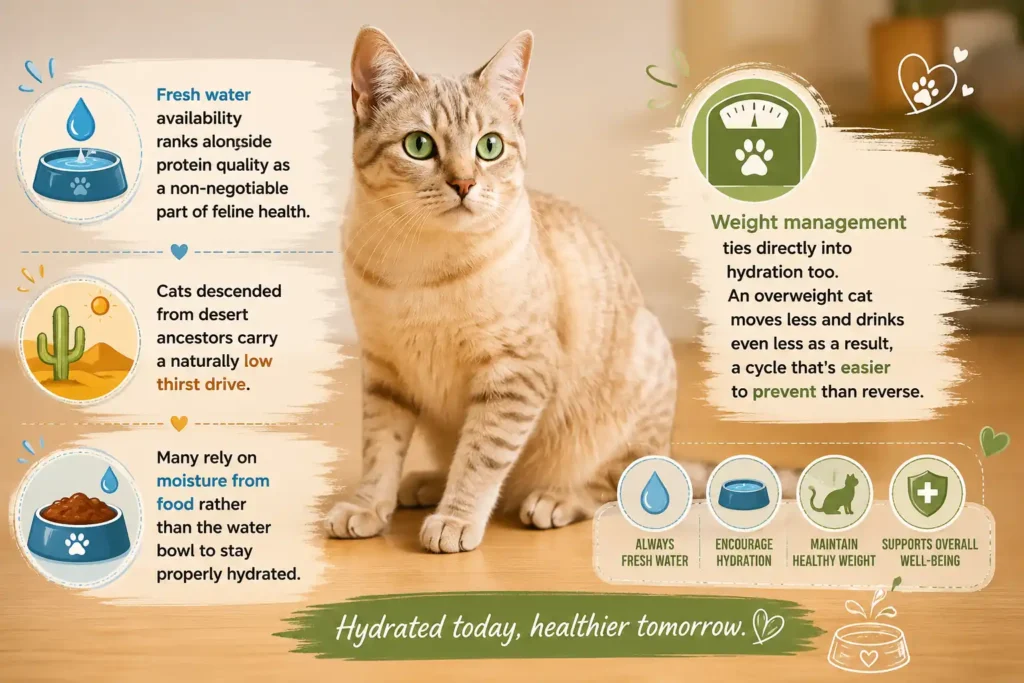
Fresh water availability ranks alongside protein quality as a non-negotiable part of feline health. Cats descended from desert ancestors carry a naturally low thirst drive. Many rely on moisture from food rather than the water bowl to stay properly hydrated.
Weight management ties directly into hydration too. An overweight Cat moves less and drinks even less as a result, a cycle that’s easier to prevent than reverse.
Hydration Needs
Wet food’s roughly 78% moisture content contributes far more to daily fluid intake than dry kibble’s 6 to 10%. Multiple water stations away from the food bowl, plus a fountain for cats drawn to moving water, both encourage more frequent drinking. Urinary tract issues become noticeably less common in cats consuming adequate fluid.
How Many Calories Does an Australian Mist Cat Need Daily? (Quick Answer)
An average adult Australian Mist requires approximately 200 to 250 calories daily, depending on activity level and body condition. Indoor cats with limited exercise generally sit toward the lower end of that range. A veterinarian can calculate a more precise target using current weight and body condition score.
Simple daily habits keep this breed’s naturally hearty appetite from tipping into steady weight gain:
- Weighing food portions with a kitchen scale instead of eyeballing a scoop
- Scheduling short play sessions to boost daily activity
- Switching treats to low-calorie, high-protein options
- Booking a body condition check every six months
How to Choose the Best Food for Australian Mist Cats
Choosing well comes down to matching label claims against actual ingredient quality and life stage. A statement confirming the food is “complete and balanced,” following AAFCO or an equivalent standard, should appear on every bag or can under consideration. Price offers a rough quality signal but isn’t absolute, since mid-range foods from reputable manufacturers often perform just as well as premium-priced competitors.
Feeding a healthy adult well typically costs an owner between $40 and $90 USD a month, depending on the wet-to-dry ratio chosen. Breed groups such as the Governing Council of the Cat Fancy (GCCF), which granted the Australian Mist full championship status in 2017, emphasize responsible ownership suited to the breed’s tendency toward weight gain. Checking for a named protein among the first two ingredients, along with confirmed life-stage compliance, covers the essentials before checkout.
Frequently Asked Questions
What is the best food for Australian Mist cats?
A complete, balanced diet with named animal protein first on the label, meeting AAFCO standards for the cat’s life stage and split between wet and dry textures, works best.
How many times a day should an Australian Mist cat eat?
Adults generally do best with two to three measured meals daily, while kittens need three to four smaller meals for faster growth.
Are Australian Mist cats prone to obesity?
Yes. This breed carries a healthy, pushy appetite, and portion control plus regular play helps prevent steady weight gain.
Can Australian Mist cats eat a grain-free diet?
Grain-free isn’t required; a high animal-protein content matters far more than the presence or absence of grain.
How much water does an Australian Mist cat need daily?
Most cats need roughly 3.5 to 4.5 ounces of water per 5 pounds of body weight daily, though wet food covers a good portion of that requirement.