The Australian Mist Diet centers on lean animal protein, moderate fat, and controlled portions that match this breed’s active but food-motivated nature. Adult cats of this breed thrive on two to three measured meals a day, using a high-quality wet or wet-dry combination food that lists real meat as the first ingredient. Because Australian Mists are prone to begging and overeating, portion control matters more than food type alone; most adults need around 250-280 calories daily, split across meals rather than left out all day.
Kittens need more frequent feeding, often three to four times daily, to support steady growth without overloading their smaller stomachs. Fresh water should sit near every feeding station, since this breed does not always drink enough on its own. A well-planned Australian Mist Diet keeps weight steady, energy levels consistent, and coat condition healthy through every stage of life.
Australian Mist Diet Nutritional Requirements
Every Australian Mist is an obligate carnivore, meaning animal protein forms the base of every meal. Cats need 41 distinct nutrients from their diet, including taurine, an amino acid they cannot produce in sufficient amounts alone. The Association of American Feed Control Officials (AAFCO) sets a minimum crude protein level of 26% for adult maintenance food and 30% for kitten growth formulas, both on a dry-matter basis.
Moderate fat and adequate moisture complete a well-rounded Australian Mist Diet, supporting lean muscle and steady energy. Arachidonic acid and vitamin A matter too, since cats cannot make these from plant sources. A food labeled complete and balanced for the correct life stage meets these standards reliably.
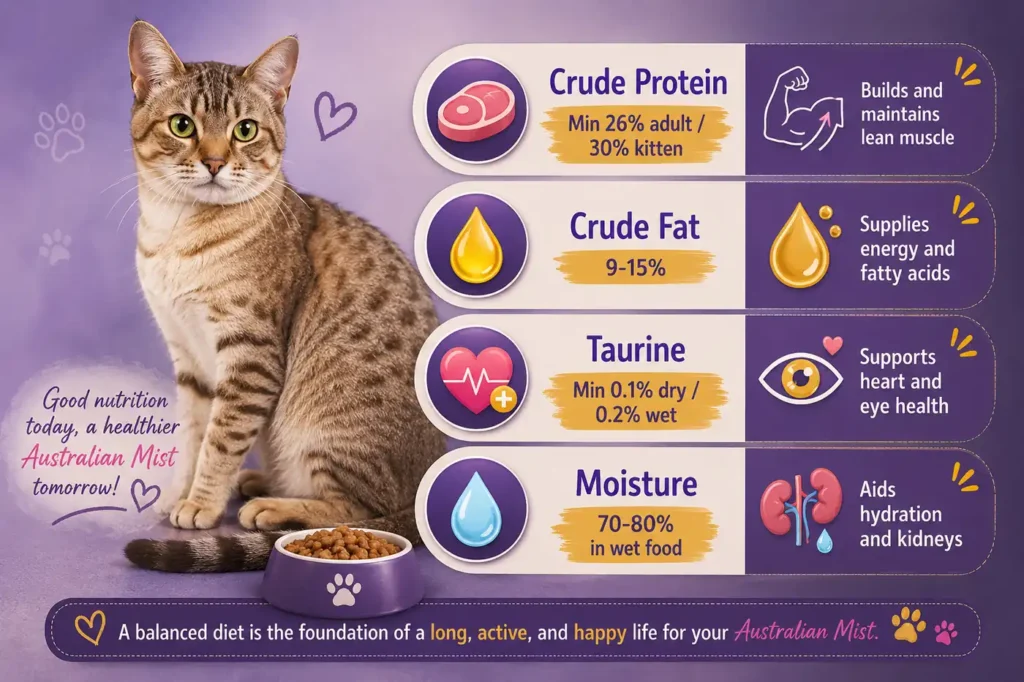
The table below breaks down core nutrient targets that vets and breed groups recommend.
| Nutrient | Recommended Level | Why It Matters |
| Crude Protein | Min 26% adult / 30% kitten | Builds and maintains lean muscle |
| Crude Fat | 9-15% | Supplies energy and fatty acids |
| Taurine | Min 0.1% dry / 0.2% wet | Supports heart and eye health |
| Moisture | 70-80% in wet food | Aids hydration and kidneys |
How Much Food Should an Australian Mist Eat?
Portion size depends on weight, age, and activity level, not a single fixed number. An adult Australian Mist weighing 4 to 7 kg, or 8 to 15 lb, generally needs 45 to 65 calories per kilogram daily, based on standard feline maintenance guidelines. A 5 kg, or 11 lb, cat with regular play typically does well on 250 to 280 calories a day, split across two or three meals. Checking the calorie count on the food label matters, since energy density varies between brands and formats. Weighing food with a kitchen scale, rather than eyeballing a scoop, catches the small overfeeding errors that add up over months.
How Much Should an Adult Australian Mist Eat Daily?
Most adults need 250 to 280 calories a day, split into two or three meals. Exact amounts depend on weight, age, and activity, with kittens needing more and senior cats often needing slightly less.
Australian Mist Feeding Schedule
Meal timing matters as much as meal size for this food-motivated breed. Kittens under 12 months burn calories fast and do best with three to four small meals a day. Adult cats between 1 and 10 years thrive on two to three meals spaced evenly through the day. Senior cats over 10 often benefit from smaller, more frequent meals that are gentler on aging kidneys. Consistent timing also curbs the food-obsessed behavior some Australian Mists develop when meals feel unpredictable.
The chart below offers a simple starting point for structuring meals by life stage.
| Life Stage | Meals Per Day | Feeding Focus |
| Kitten (0-12 months) | 3-4 | High protein and calories for growth |
| Adult (1-10 years) | 2-3 | Balanced protein and fat |
| Senior (10+ years) | 2-3 small meals | Lower calorie, added fiber |
Australian Mist Kitten Diet
Kittens need more protein and fat per pound than adults to fuel rapid growth. A growth formula meeting AAFCO’s 30% minimum protein standard supports this stage well. Three to four smaller meals daily, rather than one or two large ones, help young Australian Mists absorb nutrients steadily and avoid stomach upset. Fresh water alongside meals supports healthy kidney development from the start.
Adult Australian Mist Diet
Adult cats between one and ten years need balanced protein and moderate fat, adjusted to keep a lean, muscular body condition. Two to three measured meals a day work better than free feeding, since Australian Mists rarely self-regulate portions well. Neutered or spayed adults typically need 10 to 20% fewer calories than intact cats of the same weight. Regular weigh-ins catch small changes before they become bigger problems.
Senior Australian Mist Nutrition
Cats over 10 often need fewer calories but more digestible protein to preserve muscle as metabolism slows. A senior formula with added fiber supports digestion and helps manage mild kidney changes common with age. Softer textures or wet food help senior cats with dental discomfort keep eating enough. Twice-yearly vet checkups become especially valuable at this stage.
Wet Food vs. Dry Food for Australian Mist Cats
Neither format is automatically better, and each comes with real trade-offs. Wet food contains roughly 70 to 80% moisture, supporting hydration and urinary tract health, an area where indoor cats often fall short. Dry food offers convenience, a longer shelf life once opened, and can support dental health with the right kibble texture. Many owners use a mixed approach, combining both formats for hydration plus practicality.
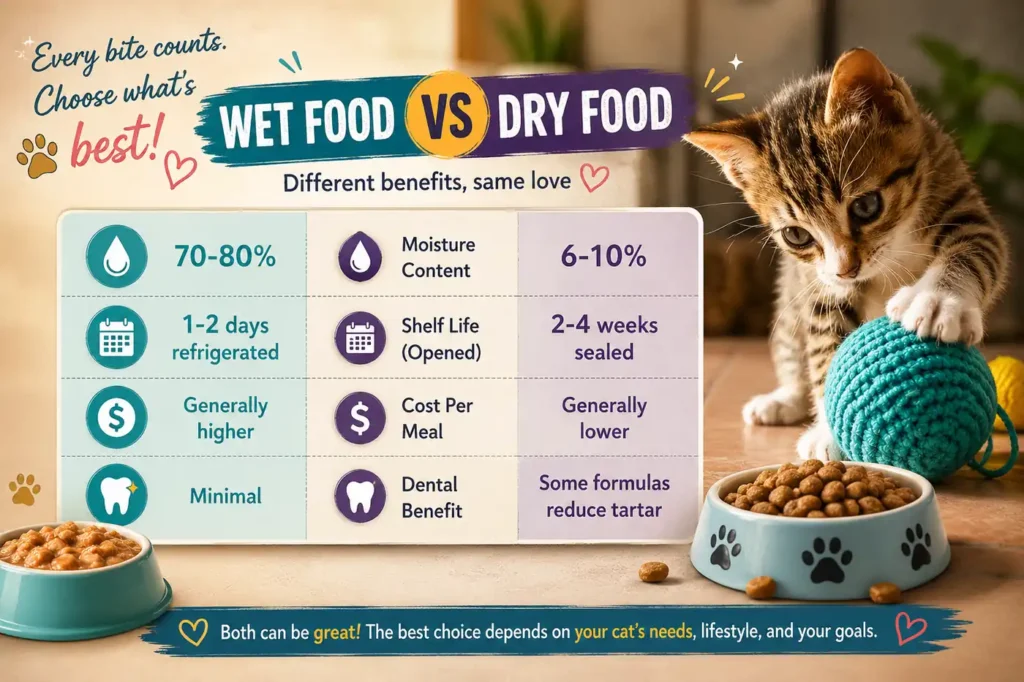
Here is a quick side-by-side look at how the two formats compare.
| Factor | Wet Food | Dry Food |
| Moisture Content | 70-80% | 6-10% |
| Shelf Life (Opened) | 1-2 days refrigerated | 2-4 weeks sealed |
| Cost Per Meal | Generally higher | Generally lower |
| Dental Benefit | Minimal | Some formulas reduce tartar |
Best Cat Food for Australian Mist Cats
A named animal protein, such as chicken, turkey, or fish, should sit first on the ingredient list, not a generic meat meal or by-product. A trustworthy Australian Mist Diet relies on formulas carrying an AAFCO or FEDIAF statement of nutritional adequacy for the cat’s life stage. Grain-free is not automatically better, since many cats digest moderate rice or oats without issue, so ingredient quality matters more than one excluded category. Rotating between two or three trusted brands also lowers the risk of sudden refusal.
What Should Be the First Ingredient in Australian Mist Cat Food?
A named animal protein, such as chicken, turkey, salmon, or beef, should always be first. Avoid foods listing a generic term like meat by-product meal or animal fat at the top, since these offer less predictable nutrition.
Healthy Treats for Australian Mist Cats
Treats work best as a small, occasional bonus, ideally under 10% of total daily calories. Freeze-dried meat, small pieces of cooked plain chicken, and treats formulated for the correct life stage all make suitable options. Vet-approved choices include:
- Freeze-dried chicken or salmon pieces
- Small amounts of plain, cooked lean meat
- Low-calorie dental treats for cats
- Occasional plain, unsalted pumpkin puree
Measuring treats into the daily calorie count, rather than adding them on top, keeps portions accurate.
Foods and Ingredients to Avoid
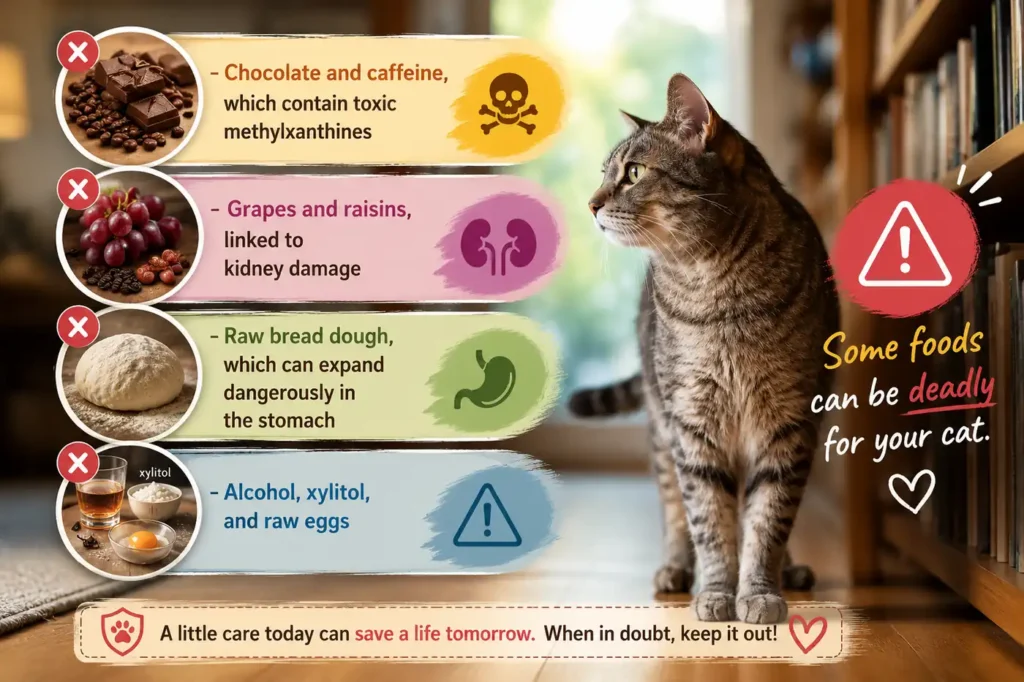
Several common household foods pose real danger to cats, including the Australian Mist. The ASPCA Animal Poison Control Center lists onions, garlic, chives, and leeks among the most common causes of feline red blood cell damage. Other foods to avoid include:
- Chocolate and caffeine, which contain toxic methylxanthines
- Grapes and raisins, linked to kidney damage
- Raw bread dough, which can expand dangerously in the stomach
- Alcohol, xylitol, and raw eggs
A veterinarian or the ASPCA Animal Poison Control Center should be contacted immediately after accidental ingestion.
Australian Mist Diet for Weight Management
Weight gain ranks among the most common health concerns for this breed, since Australian Mists are known for loving their food perhaps too much. Data from the Association for Pet Obesity Prevention shows around 61% of cats in the United States carry excess body weight, a trend that hits food-motivated breeds hard. Managing weight starts with measuring portions accurately, choosing moderate-fat food with controlled calorie density, and swapping some treats for play. A body condition check every few months, done by feel along the ribs, catches weight creep early.
Australian Mist Hydration Needs
Cats descend from desert-dwelling ancestors, leaving them with a naturally low thirst drive that works against indoor pets. The World Small Animal Veterinary Association suggests roughly 50 to 60 ml of water per kilogram of body weight daily, including moisture from food. A 5 kg, or 11 lb, Australian Mist should take in around 250 to 300 ml of total water daily. Wet food, multiple water bowls away from the litter box, and a pet fountain all encourage better drinking habits.
How Much Water Does an Australian Mist Need Daily?
An average 5 kg Australian Mist needs roughly 250 to 300 ml of total water per day, including moisture from food. Cats eating mostly dry food usually need to drink more to make up the difference.
Common Feeding Mistakes to Avoid
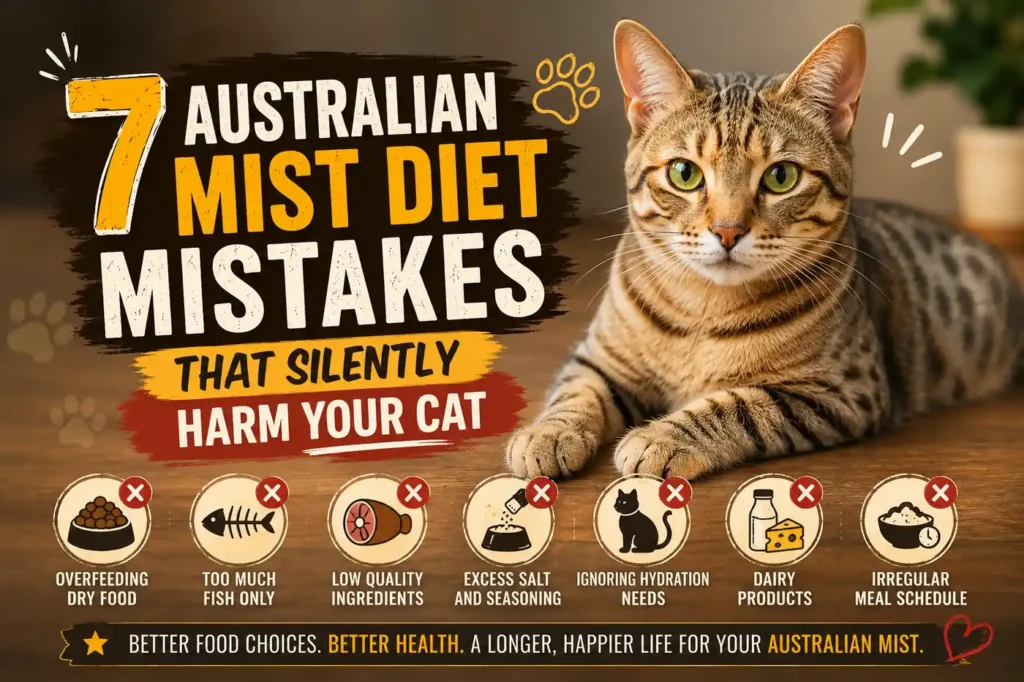
Small habits, repeated daily, often cause more harm than one unusual treat ever could. Free-feeding dry food around the clock removes the portion control that a well-planned Australian Mist Diet relies on, making overeating likely. Common mistakes include:
- Eyeballing portions instead of weighing food
- Feeding adult-formula food to a growing kitten
- Skipping regular weight checks between vet visits
- Using treats to manage boredom instead of play
Fixing even one or two of these habits often brings noticeable improvement within months.
Closing Notes on the Australian Mist Diet
Feeding an Australian Mist well comes down to a handful of consistent habits, not one perfect product. Meeting core nutritional requirements means prioritizing quality animal protein, taurine, and controlled fat and carbohydrate levels. Portion sizes should scale with weight and activity, while a steady feeding schedule supports kittens, adults, and seniors differently at each stage.
Choosing between wet and dry food often means a practical mix of both, paired with a trustworthy, life-stage-appropriate food. Treats stay small and occasional, and a firm list of foods to avoid protects long-term health, while weight and hydration management prevent two common problems. Avoiding repeated mistakes, like free-feeding or skipping weigh-ins, rounds out a solid Australian Mist Diet that supports a long, healthy life.
Australian Mist Diet FAQs
What is the best diet for an Australian Mist cat?
A balanced, high-protein food formulated for the correct life stage, fed in two to three measured meals a day, works well for most Australian Mist cats.
How much should an adult Australian Mist eat per day?
Most adults need around 250 to 280 calories daily, depending on weight, age, and activity level.
Can an Australian Mist eat a wet-food-only diet?
Yes, an all-wet diet works well and supports hydration, as long as the food is labeled complete and balanced.
Are Australian Mist cats prone to weight gain?
Yes, this breed has a strong appetite and a known tendency to overeat, making portion control important.
What human foods are dangerous for an Australian Mist?
Onions, garlic, chocolate, grapes, raisins, and raw bread dough are among the most dangerous and should never be offered.