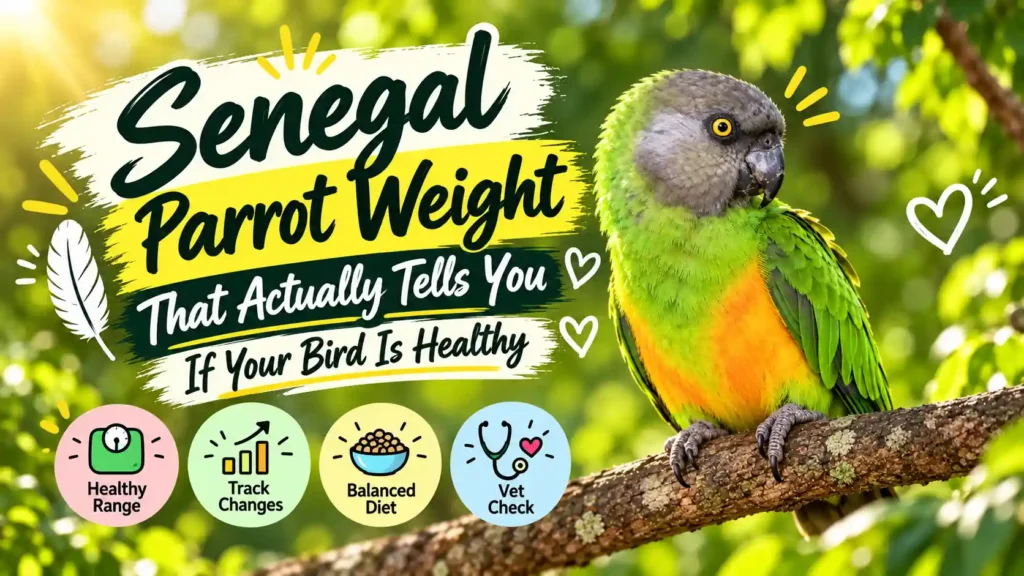
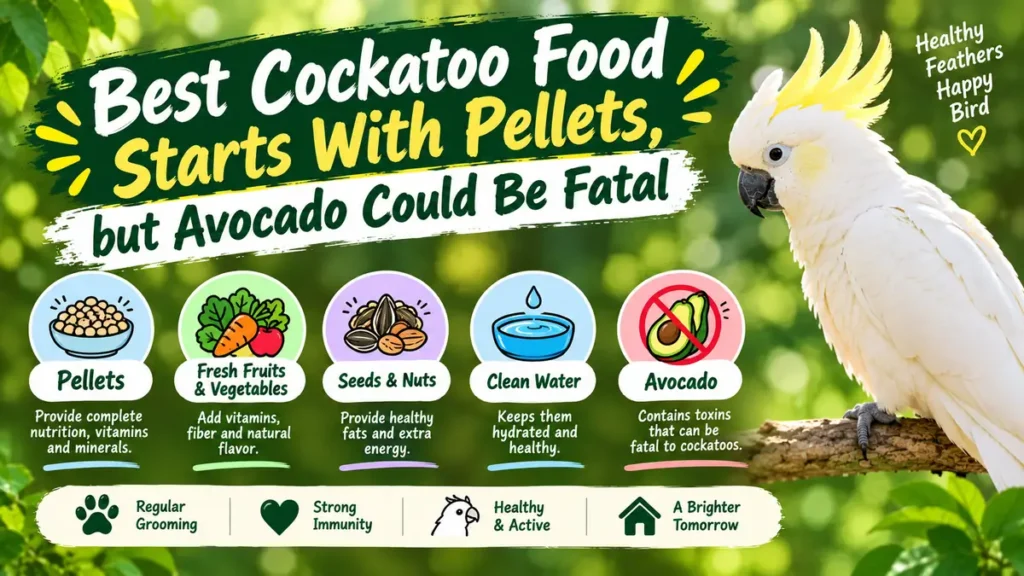
The best cockatoo food is a high-quality pellet mix that makes up most of the daily diet, along with fresh vegetables, a little fruit, and a few nuts. Pellets give the bird balanced vitamins and minerals that seeds alone do not provide, so an all-seed diet often leads to poor feathers, weak bones, and liver problems.
A good plate has pellets as the base, dark leafy greens, a small amount of fruit, and a few nuts as a treat. Fresh water should be changed every day, and leftover fresh food should be removed after a few hours. Choosing the best cockatoo food means building a varied plate that keeps the bird’s bones strong, feathers healthy, and energy steady for many years.
Best Cockatoo Food: Diet & Feeding Guide
Building the best cockatoo food routine starts with balance, not variety for its own sake. Formulated pellets form the backbone of a healthy cockatoo diet, typically making up 60% to 80% of daily intake according to guidance published by avian nutrition specialists. Fresh vegetables should follow close behind, offered daily rather than as an occasional add-on. Fruit belongs in the diet too, though only in small portions because of natural sugar content. A handful of unsalted nuts a few times a week rounds out the healthy fat and protein a cockatoo needs for strong, bright plumage.
The Association of Avian Veterinarians (AAV) publishes ongoing nutrition guidance for exactly this kind of feeding balance, and a certified avian vet remains the safest resource for adjusting a diet to an individual bird’s age, weight, and health history. Seed-only diets, once considered normal, are now linked directly to obesity, fatty liver disease, and vitamin A deficiency in captive parrots.
Best Pellets for Cockatoos
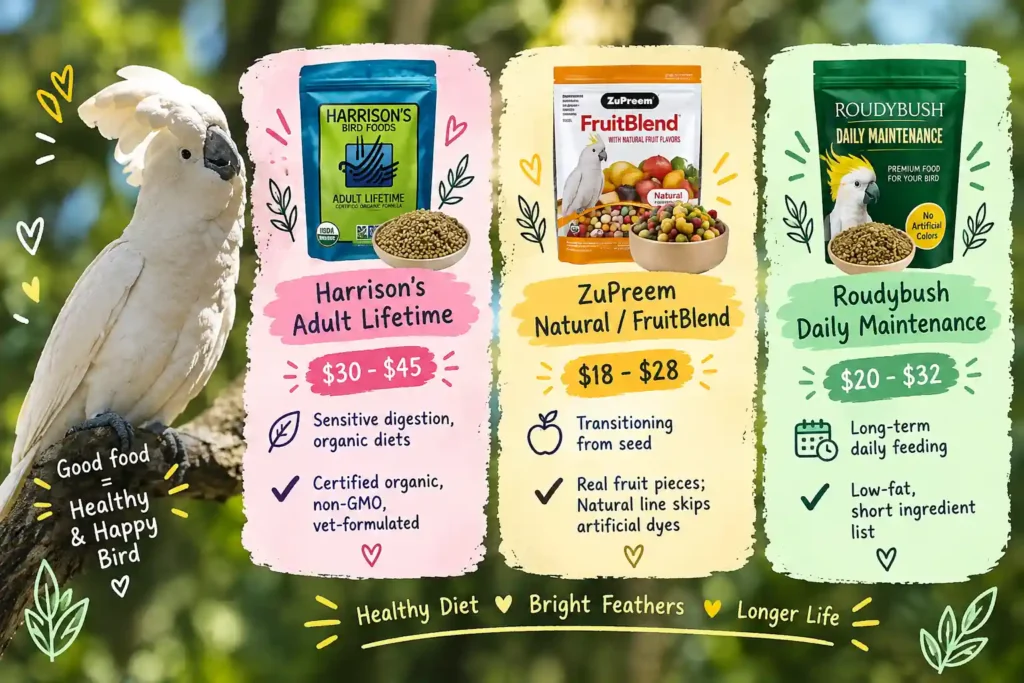
Pellet brands vary widely in ingredients, texture, and price, and the table below compares four options that avian vets frequently recommend for cockatoos.
| Brand | Best For | Approx. Price (5 lb, 2026) | Key Feature |
| Harrison’s Adult Lifetime | Sensitive digestion, organic diets | $30-$45 | Certified organic, non-GMO, vet-formulated |
| ZuPreem Natural / FruitBlend | Transitioning from seed | $18-$28 | Real fruit pieces; Natural line skips artificial dyes |
| Roudybush Daily Maintenance | Long-term daily feeding | $20-$32 | Low-fat, short ingredient list |
| Lafeber Premium Daily Diet | Skin and feather support | $16-$26 | Developed with an avian nutritionist, added omega fatty acids |
Pellet texture matters as much as brand loyalty, since cockatoos have strong beaks built for cracking large seeds and nuts, so coarse or nugget-style pellets usually hold their interest longer than fine, powder-style ones. Switching an adult bird onto the best cockatoo food option available takes patience, and most transitions run four to six weeks and go smoother when new pellets sit alongside familiar seed rather than replacing it overnight. Added dye and sugar in cheaper pellet lines can undo the benefit of switching in the first place, so reading the ingredient panel matters more than the marketing printed on the bag.
How Many Pellets Should a Cockatoo Eat Daily?
Feeding charts commonly used by pellet manufacturers call for roughly 1.5 to 5 tablespoons, or about 15 to 50 grams, of pellets per day for a cockatoo, with the exact amount depending on the bird’s body size and activity level. Fresh water and daily produce should accompany that portion, and uneaten pellets are best removed and replaced within 24 hours to prevent bacterial growth.
Fruits for Cockatoos
Sugar content separates the fruits that make healthy treats from the ones that should stay occasional. Berries, apple slices with seeds removed, melon, mango, and papaya all offer vitamins without overwhelming a cockatoo’s blood sugar when portions stay small. Citrus fruits are safe in moderation too, though their acidity means a few segments go further than a full slice. Two to three tablespoons of chopped fruit, offered two or three times a week, keeps sugar intake reasonable for a bird that doesn’t process sugar the way mammals do.
The table below sorts common fruits into safe daily options, occasional treats, and the parts that need removing before serving.
| Fruit | Feeding Note |
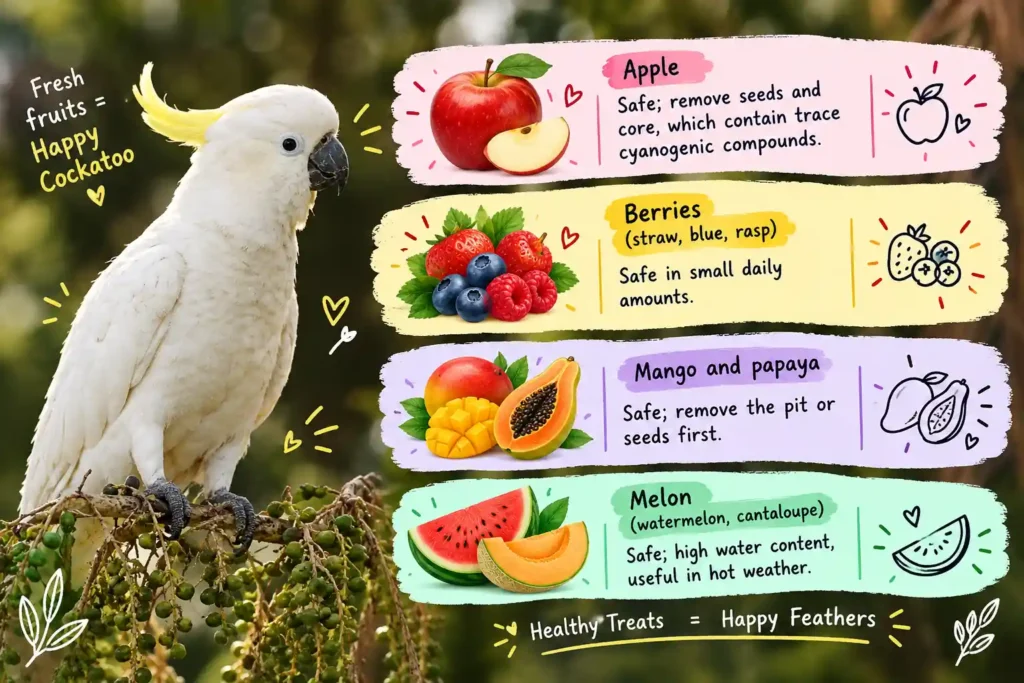
| Apple | Safe; remove seeds and core, which contain trace cyanogenic compounds |
| Berries (straw, blue, rasp) | Safe in small daily amounts |
| Mango and papaya | Safe; remove the pit or seeds first |
| Melon (watermelon, cantaloupe) | Safe; high water content, useful in hot weather |
| Grapes | Safe in moderation; halve them for larger cockatoos |
| Citrus (orange, mandarin) | Safe in small segments; excess acidity can upset digestion |
| Avocado | Never feed; contains persin, which is toxic to birds. |
Cherry, peach, apricot, and plum pits pose the same cyanogenic risk as apple seeds, so always remove them before serving.
Vegetables for Cockatoos
Vegetables should make up the bulk of a cockatoo’s fresh food each day, unlike fruit.
Dark leafy greens like kale, Swiss chard, and dandelion greens provide calcium and vitamin A that pellets may lack. Sweet potato, carrot, and butternut squash provide beta-carotene, which cockatoos efficiently convert into vitamin A.
Broccoli, bell peppers, and steamed green beans round out a varied plate without adding much sugar or fat. Spinach and beet greens are fine occasionally, but rotate greens to avoid excess oxalates and support calcium absorption. Cooked sweet potato and squash are popular choices for picky eaters.
Nuts for Cockatoos
Fat and protein needs make nuts a natural fit for cockatoos, provided portions stay small.
Unsalted almonds, walnuts, and pecans provide healthy fats for shiny feathers and healthy skin, while making great training rewards. Moldy macadamia nuts and other nuts should be avoided, as mold can produce aflatoxin, a liver toxin harmful to birds..
Shell-on nuts double as enrichment, giving a cockatoo’s powerful beak something productive to work on besides furniture and cage bars. Medium to large cockatoos can have 2–3 nuts a few times weekly; smaller species need less.
Foods to Avoid for Cockatoos
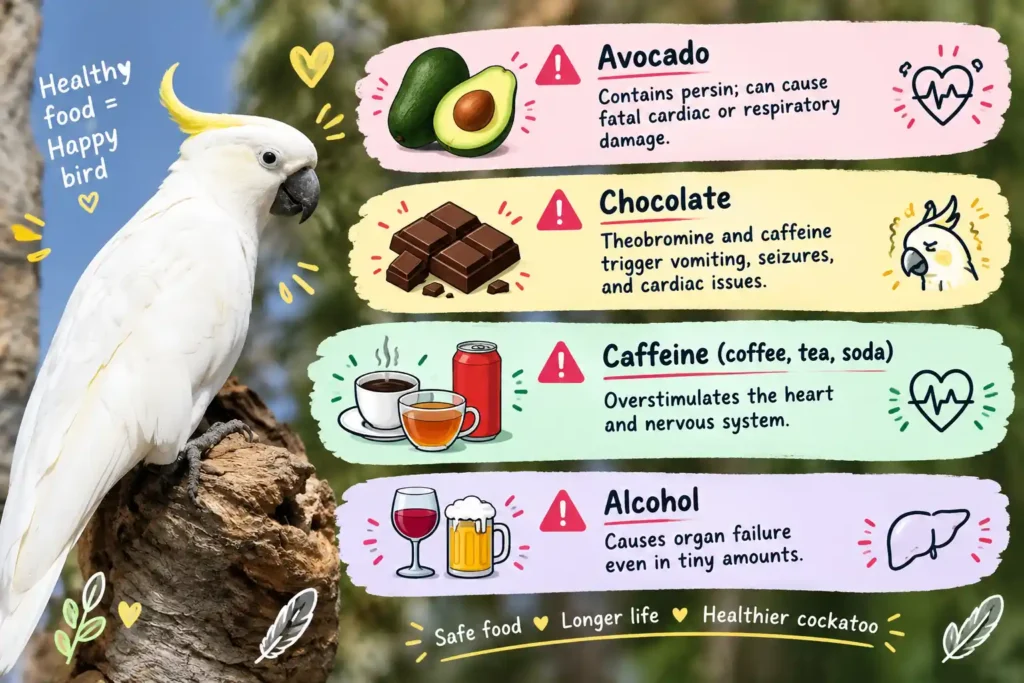
Common kitchen staples can be dangerous for cockatoo’s health, and the table below lists the most confusing ones for new owners.
| Food | Why It’s Dangerous |
| Avocado | Contains persin; can cause fatal cardiac or respiratory damage |
| Chocolate | Theobromine and caffeine trigger vomiting, seizures, and cardiac issues. |
| Caffeine (coffee, tea, soda) | Overstimulates the heart and nervous system |
| Alcohol | Causes organ failure even in tiny amounts |
| Onion and garlic | Damages red blood cells with repeated exposure |
| Salty processed snacks | Triggers dehydration and kidney strain quickly |
| Xylitol (sugar-free gum, some peanut butter) | Causes a rapid, dangerous blood sugar crash |
The ASPCA Animal Poison Control Center keeps an updated list of substances toxic to companion birds and takes emergency calls when a bird has eaten something questionable. The Merck Veterinary Manual, a reference used widely by veterinary professionals, lists dietary toxicity as one of the most preventable categories of avian emergency, which makes reading labels and double-checking table scraps worth the extra thirty seconds before sharing a snack.
What Foods Are Toxic to Cockatoos?
Avocado, chocolate, caffeine, alcohol, onion, garlic, and xylitol are highly toxic to cockatoos and can cause fatal organ damage. Even small amounts require immediate contact with an avian vet, without waiting for symptoms.
How Much Food Should a Cockatoo Eat?
Body weight offers a more reliable feeding guide than a fixed cup measurement, since cockatoo species range from the small Goffin’s cockatoo around 300 grams to the large Moluccan cockatoo near 900 grams or more. A general starting point for the best cockatoo food routine sits around 1.5 to 5 tablespoons of pellets daily, alongside 2 to 4 tablespoons of chopped vegetables and a smaller portion of fruit or nuts a few times a week.
Morning feeding tends to work best, since cockatoos are naturally hungriest after waking and more willing to try pellets before filling up on treats later in the day. Weighing a cockatoo weekly on a gram scale catches changes early, well before they become visible, and any drop or gain of more than 10% over a short period is worth a call to an avian vet.
Calcium needs climb during breeding season or egg-laying, so offering a cuttlebone or mineral block year-round gives a female cockatoo access to extra calcium exactly when her body needs it most.
How Often Should You Feed a Cockatoo?
Fresh pellets and water belong in the cage every single day, with vegetables offered once or twice daily and fruit or nuts limited to a few times a week. Removing uneaten fresh food after two to three hours prevents spoilage and bacterial growth, particularly in warm rooms.
What a Healthy Cockatoo Diet Really Looks Like
Choosing the best cockatoo food comes down to balance rather than chasing a single perfect product. Pellets from trusted brands like Harrison’s, ZuPreem, Roudybush, and Lafeber should anchor the daily diet, ideally making up 60% to 80% of intake.
Fresh vegetables belong in the bowl every day, while fruit and nuts work best as smaller, occasional additions given their sugar and fat content. Avocado, chocolate, caffeine, alcohol, onion, and garlic need to stay permanently off the menu, since even small amounts can turn into a veterinary emergency. Portion sizes should track a bird’s individual body weight, generally landing around 1.5 to 5 tablespoons of pellets and a few tablespoons of fresh produce daily.
Curious About Cockatoos? Find Out More About These Amazing Birds. Read more in Cockatoo Parrot Diet, Temperament, and the Commitment Few Expect.
Weekly weigh-ins and a cuttlebone for calcium round out a feeding routine built to support a cockatoo through a lifespan that can stretch past 40 years. When in doubt about a new food or a sudden change in appetite, a certified avian veterinarian remains the most reliable resource.
Best Cockatoo Food FAQs
What Is the Best Cockatoo Food?
A formulated pellet diet making up 60% to 80% of daily intake, combined with fresh vegetables, limited fruit, and occasional unsalted nuts, is what most avian veterinarians recommend for a cockatoo’s daily bowl. Brands like Harrison’s, ZuPreem, Roudybush, and Lafeber all offer vet-developed pellet options suited to cockatoos.
What Fruits Can Cockatoos Eat?
Berries, apple with seeds removed, mango, papaya, melon, and small citrus segments all work well as occasional treats, ideally kept to two or three servings a week given their natural sugar content.
What Vegetables Can Cockatoos Eat?
Dark leafy greens, sweet potato, carrot, broccoli, bell pepper, and squash should appear in the food bowl daily, offering vitamins and calcium that support feather and bone health.
Can Cockatoos Eat Seeds and Nuts?
Unsalted nuts like almonds and walnuts are fine in small amounts a few times a week, while seeds should stay a minor treat rather than a dietary staple, since seed-heavy diets are strongly linked to obesity and liver disease in captive parrots.