
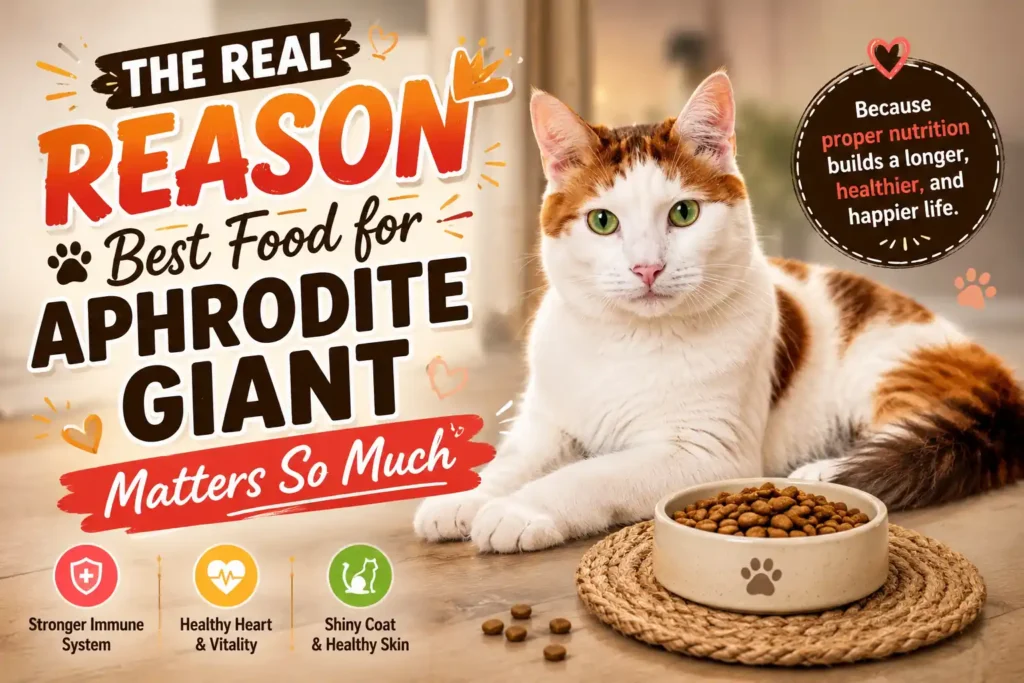
The best food for Aphrodite Giant cats should center on high-quality animal protein, since this large, muscular breed needs more fuel than an average house cat to keep its lean mass. Look for a formula that lists a named meat, like chicken or turkey, as the first ingredient, with a protein level around 35-40% on a dry matter basis, plus moderate fat for steady energy.
Because Aphrodite Giants grow slowly and do not reach full size until two or three years old, kittens do best on a large-breed kitten formula that supports joint development without pushing rapid weight gain. For adults, the best food for Aphrodite Giant cats also means controlled portions, since their sturdy frame can hide early weight gain until it becomes a real problem.
What Should an Aphrodite Giant Eat? Finding the Best Food for Aphrodite Giant Cats
At the core, an Aphrodite Giant needs the same building blocks every cat needs, just more of them. Look for a formula where a named animal protein, such as chicken, turkey, or salmon, sits at the top of the ingredient list, since cats are obligate carnivores and cannot thrive on plant-based fillers. Because this breed reaches full size slowly, often not maturing until age four or five, food that is calorie-dense but nutrient-balanced supports steady muscle growth without piling on excess fat.
Fat content matters too, so aim for around 15 to 20 percent to fuel their moderately active lifestyle without tipping them toward obesity, a condition vets flag as one of the breed’s main health risks. Taurine, an amino acid cats cannot produce on their own, should also be listed, since it protects heart and eye health over a long lifespan. Checking that a food meets guidelines set by the Association of American Feed Control Officials (AAFCO) is one of the simplest ways to confirm it is nutritionally complete.
What Is the Best Food for Aphrodite Giant Cats?
The best food for Aphrodite Giant cats is a high-protein, AAFCO-approved formula built around a named meat source, moderate fat between 15 and 20 percent, and taurine for heart health. Because the breed is large-boned and slow to mature, a large-breed or all-life-stages recipe usually fits better than a standard adult formula.
Discover Why Aphrodite Cats Are Known as Gentle Giants. Read more in Rare Aphrodite Giant Facts Most Cat Lovers Don’t Know.
Best Protein-Rich Foods for Aphrodite Giants
Protein is where this breed’s diet really earns its keep, and this is where the best food for Aphrodite Giant cats separates itself from generic options. A good rule of thumb is a minimum of 30 percent protein on a dry-matter basis for adults, and closer to 35 percent for growing kittens or very active cats.
Chicken, turkey, duck, and fish-based recipes all work well, and rotating between two or three protein sources can help prevent the pickiness some Aphrodite Giants develop over time. Grain-free is not automatically better; what matters more is protein quality, not the absence of grains.
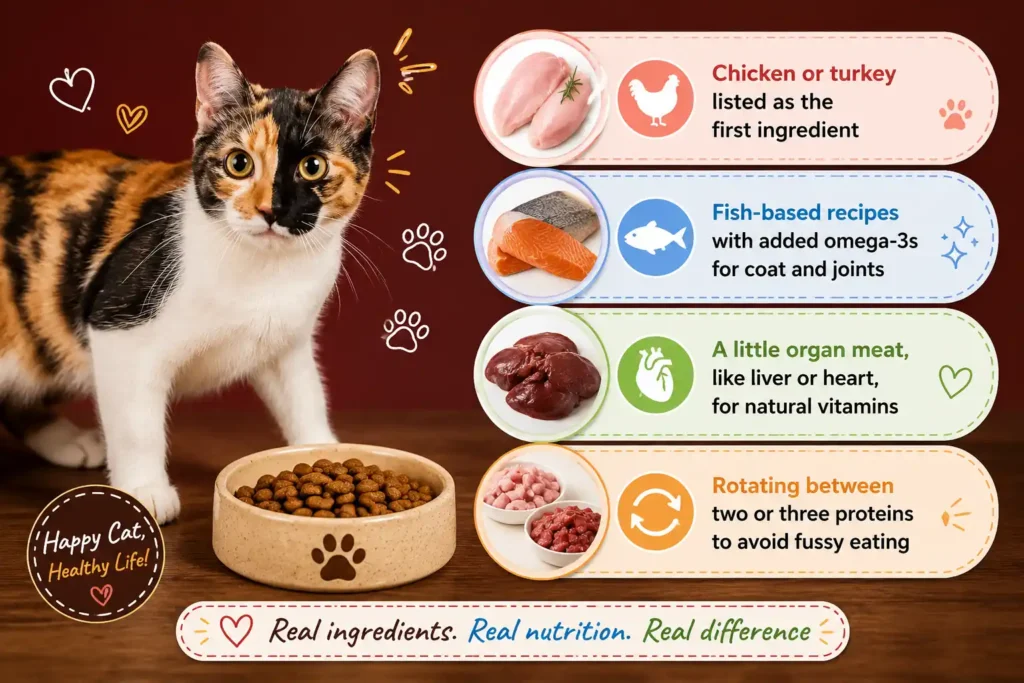
- Chicken or turkey listed as the first ingredient
- Fish-based recipes with added omega-3s for coat and joints
- A little organ meat, like liver or heart, for natural vitamins
- Rotating between two or three proteins to avoid fussy eating
Wet Food vs. Dry Food for Aphrodite Giants
Both wet and dry food have a place in an Aphrodite Giant’s bowl, and honestly, most vets recommend a mix rather than picking just one. Wet food’s higher moisture content supports kidney and urinary health, which matters more as these cats move past middle age.
Dry food, on the other hand, is easier to portion precisely and tends to be more budget-friendly for a cat this size, since an adult male can eat noticeably more than an average-sized cat. The table below breaks down where each option shines, so you can decide what balance suits your household.
| Factor | Wet Food | Dry Food |
| Moisture content | About 78% | About 10% |
| Hydration support | Excellent | Limited |
| Cost per day (approx.) | $1.50–$2.50 USD | $0.80–$1.30 USD |
| Dental benefit | Minimal | Some mechanical scraping |
| Best suited for | Seniors, low water drinkers | Budget-conscious owners |
How Much Food Does an Aphrodite Giant Need?
Because Aphrodite Giants range so widely in size, with males often reaching 18 to 24 pounds while females settle around 10 to 15, there is no single scoop measurement that works for every cat. Feeding amounts should scale with actual body weight, activity level, and whether the cat is still growing.
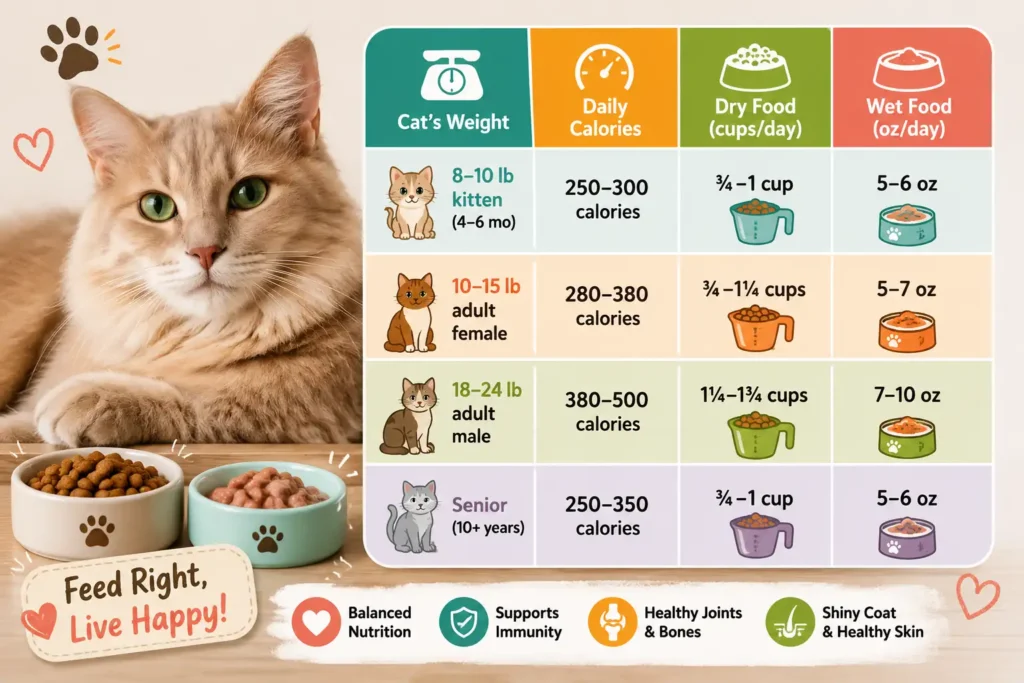
As a starting point, an average adult needs somewhere between 300 and 450 calories a day, though an active male at the top of the weight range can need closer to 500. The chart below gives a rough daily guide, but checking the calorie count on your food’s actual label is still the most reliable approach.
| Cat’s Weight | Daily Calories | Dry Food (cups/day) | Wet Food (oz/day) |
| 8–10 lb kitten (4–6 mo) | 250–300 | ¾–1 cup | 5–6 oz |
| 10–15 lb adult female | 280–380 | ¾–1¼ cups | 5–7 oz |
| 18–24 lb adult male | 380–500 | 1¼–1¾ cups | 7–10 oz |
| Senior (10+ years) | 250–350 | ¾–1 cup | 5–6 oz |
Figures are estimates only. Always check your food’s actual calorie density and confirm portions with your veterinarian.
How Much Should You Feed an Aphrodite Giant Cat?
Most adult Aphrodite Giants need 300 to 500 calories a day, roughly 1 to 1.75 cups of dry food or 7 to 10 ounces of wet food, depending on weight and activity level. Larger males at 18 to 24 pounds sit at the higher end, while smaller females and seniors typically need less.
How Often Should You Feed an Aphrodite Giant?
Two to three meals a day tends to work best for this breed, rather than leaving food out all day. Free-feeding might seem convenient, but given how food-motivated many Aphrodite Giants are, it is a fast track to the obesity vets warn about. Splitting meals also matches their natural feeding rhythm, since cats are designed to eat several small meals rather than one or two large ones.
Kittens under six months usually need three to four smaller meals to support their steady growth, tapering down to two meals once they hit adulthood around 12 months. If your household is often empty during the day, a timed feeder can help keep portions consistent when you are not around to measure them out.
Best Foods for Aphrodite Giant Kittens
Kittens of this breed grow slowly and do not reach full maturity until four or five years old, so their food needs to support that extended growth window without overloading them with calories too soon. Look for a kitten-specific or all-life-stages formula with roughly 35 to 40 percent protein and higher fat than an adult recipe, since growing bodies and brains need the extra energy.
DHA, an omega-3 fatty acid found in fish oil, supports healthy brain and vision development during those first months. Calcium and phosphorus should appear in a balanced ratio too, which matters for building the sturdy skeleton this large breed will carry as an adult. Because Aphrodite Giant kittens mature more slowly than average, many owners keep them on kitten food a little longer than the standard 12-month cutoff, closer to 15 or 18 months, though a vet’s input helps confirm the right timing.
Foods to Avoid for Aphrodite Giants
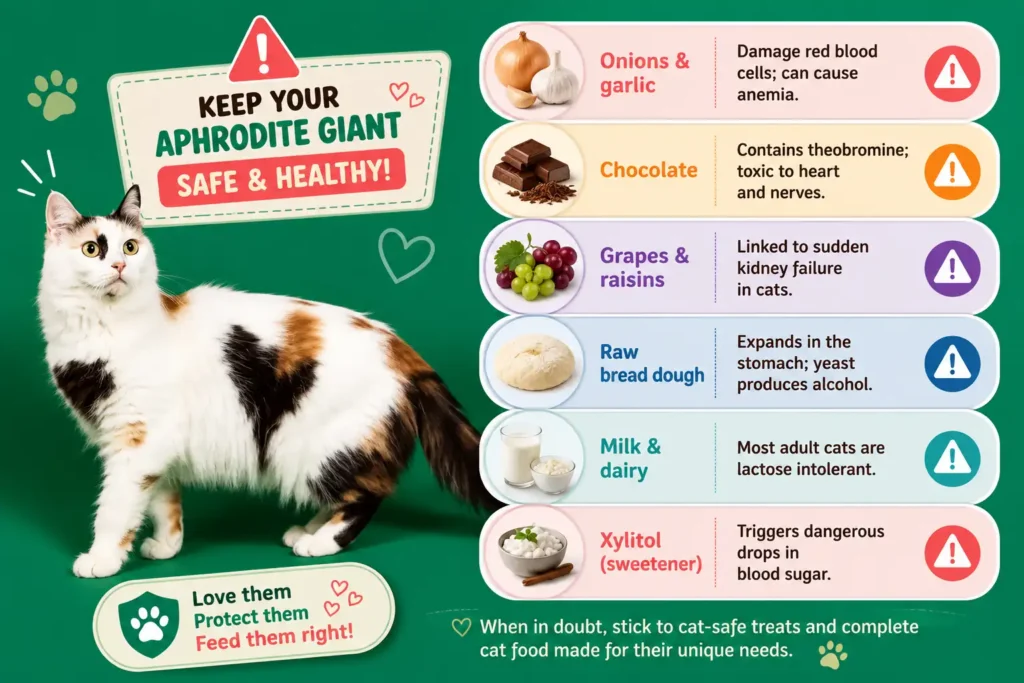
Some everyday human foods that seem harmless are genuinely dangerous for cats, and a curious, food-driven breed like the Aphrodite Giant is more likely than most to go after something it should not. The ASPCA Animal Poison Control Center keeps an updated list of foods that are toxic to cats, and it is worth bookmarking for any owner of this breed. The table below covers the most common offenders worth keeping well out of reach.
| Food | Why It’s Dangerous |
| Onions & garlic | Damage red blood cells; can cause anemia. |
| Chocolate | Contains theobromine; toxic to heart and nerves |
| Grapes & raisins | Linked to sudden kidney failure in cats |
| Raw bread dough | Expands in the stomach; yeast produces alcohol. |
| Milk & dairy | Most adult cats are lactose intolerant. |
| Xylitol (sweetener) | Triggers dangerous drops in blood sugar |
What Foods Are Toxic to Aphrodite Giant Cats?
Onions, garlic, chocolate, grapes, raisins, raw dough, and xylitol are all toxic to Aphrodite Giant cats, just as they are to any cat breed. Even small amounts can cause anemia, kidney damage, or dangerous drops in blood sugar, so these foods should stay completely out of reach.
Feeding Tips for a Healthy Aphrodite Giant
Pulling everything together, a few simple habits can make the biggest difference in keeping Aphrodite Giants at a healthy weight throughout their long lives. Since Aphrodite Giants are naturally food-motivated and may not always regulate their intake on their own, portion control needs to come from the owner rather than the cat’s appetite cues. Along with measured meals, regular exercise, weight checks, and a balanced diet are important Aphrodite Giants health tips that help prevent obesity and support healthy joints, muscles, and overall well-being.
- Weigh food rather than eyeballing portions, especially dry kibble
- Stick to a consistent schedule of two to three meals daily
- Introduce any new food gradually over 7 to 10 days
- Keep fresh water available at all times, even with wet food
- Book a weight check with your vet every six months
- Adjust portions seasonally, since indoor cats move less in cooler months
Small, consistent choices like these matter far more than any single perfect food, and they are what actually keep an Aphrodite Giant healthy across a decade or more.
Frequently Asked Questions
How much does it cost to feed an Aphrodite Giant cat each month?
Given their size, expect to spend roughly $40 to $70 USD a month on quality food, depending on whether you feed dry, wet, or a mix of both.
Can Aphrodite Giants eat raw food diets?
Some owners do feed raw, but it carries bacterial risks and requires careful nutrient balancing, so it is worth discussing with a vet before switching.
Do Aphrodite Giants need a special large-breed cat food?
Not strictly, but a large-breed or all-life-stages formula with higher calorie density and joint-support nutrients often suits their bigger frame better than a standard adult recipe.
At what age should I switch my Aphrodite Giant from kitten to adult food?
Because they mature slowly, many vets suggest waiting until 15 to 18 months rather than the usual 12-month mark.
Is grain-free food necessary for Aphrodite Giants?
No. Grain-free is not inherently healthier. What matters more is a high-quality named protein source and AAFCO-verified nutritional completeness.