
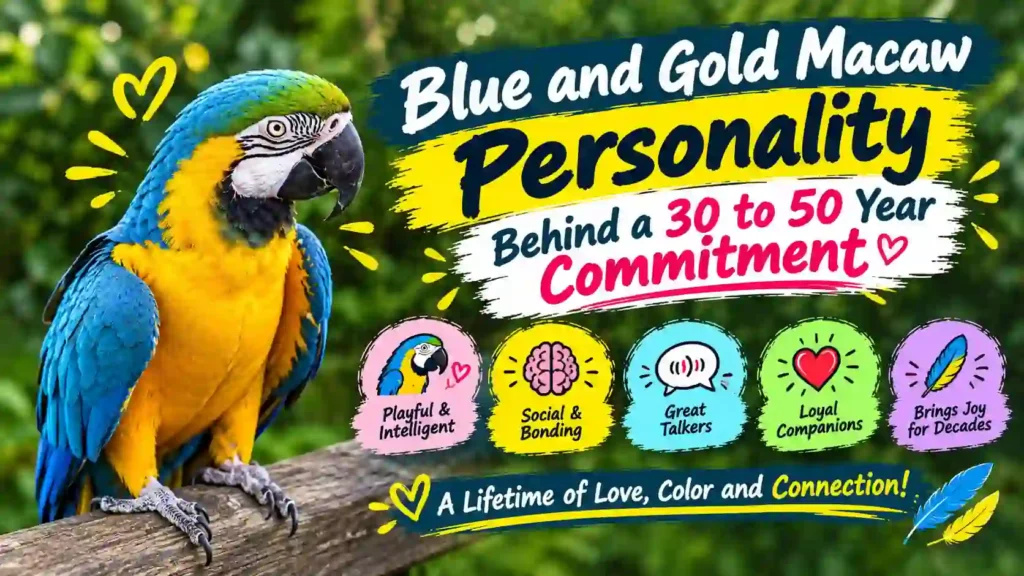
Blue and Gold Macaw Personality centers on high intelligence combined with strong emotional attachment to one or two favorite people in the household. These birds show clear signs of what they feel, using body language like feather fluffing, eye pinning, and tail fanning to express excitement, annoyance, or alarm. A defining part of Blue and Gold Macaw Personality is the need for daily interaction; without it, boredom quickly turns into destructive chewing, loud screaming, or feather plucking.
They also carry a playful, almost childlike curiosity that makes them explore objects with their beak and feet rather than just their eyes. This mix of affection, intelligence, and demand for attention is why these macaws thrive with owners who treat them as active family members, not decorative pets.
Blue and Gold Macaw Personality Traits That Define the Breed
Intelligence ranks as the standout trait among blue and gold macaws, with problem-solving skills often compared to those of a young child. Social bonding runs just as deep, since these parrots evolved living in flocks and instinctively treat their human household as a substitute flock. Playfulness rarely fades with age, and toy destruction usually signals healthy enrichment rather than bad behavior. Behavioral research from the World Parrot Trust highlights how strong flock instincts shape nearly every core macaw personality trait, from constant chatter to physical closeness with a chosen person.
- Highly intelligent: capable of learning words, tricks, and multi-step problem-solving tasks
- Strongly social: bonds tightly with a primary caregiver and thrives on routine
- Naturally vocal: uses screams, chatter, and mimicry to communicate needs and moods
- Playfully destructive: chews and shreds as a form of mental stimulation, not defiance
- Emotionally sensitive: reacts noticeably to stress, boredom, or sudden changes
Blue and Gold Macaw Personality Quick Facts
The table below sums up the core traits that shape day-to-day life with this parrot, along with the reasoning behind each one.
| Trait | What It Looks Like | Why It Happens |
| Intelligence | Problem-solving, mimicry, learning routines | Large brain-to-body ratio and flock survival instincts |
| Social bonding | Following owners, seeking physical contact | Flock species wired for constant companionship |
| Vocal behavior | Loud calls at dawn and dusk, frequent chatter | Wild contact calls used to locate flock mates |
| Playfulness | Chewing, tossing toys, acrobatics on perches | Natural curiosity and an ongoing need for enrichment |
| Sensitivity | Mood swings, feather ruffling, brief withdrawal | Response to stress, hormonal shifts, or boredom |
Blue and Gold Macaw Temperament and Emotional Needs
Daily interaction shapes a macaw’s temperament far more than genetics alone, since under-stimulated birds often develop anxiety or reactive behavior. Hormonal seasons, usually triggered by longer daylight hours, can temporarily turn an affectionate bird moody, possessive, or nippy for several weeks. Recognizing these shifts as biology rather than defiance helps owners respond with patience instead of frustration.
Blue and Gold Macaw Personality shows up most clearly in how a bird handles change, whether that is a rearranged room, an unfamiliar guest, or a new toy near the cage.
- Approaches the cage door calmly to greet familiar people
- Eats and preens normally rather than plucking or over-grooming feathers
- Vocalizes with variety instead of nonstop screaming
- Explores new toys and foraging challenges instead of ignoring them
- Settles down again after a brief startle rather than staying reactive
Are Blue and Gold Macaws Friendly?
Yes, blue and gold macaws are typically friendly when they are raised with regular, gentle handling and social interaction from a young age. Friendliness depends heavily on socialization, since a macaw left isolated for long stretches can become withdrawn or defensive over time. Most well-socialized individuals enjoy head scratches, shoulder time, and interactive play with people they trust. Friendliness toward strangers tends to be far less consistent than friendliness toward a bonded caregiver.
Blue and Gold Macaw Behavior and Communication
Morning and evening flock calls remain one of the most predictable behaviors in captive macaws, echoing a wild instinct to check in with the group. Preening between a bird and its favorite person mirrors natural mutual grooming and signals a real sense of trust.
Object play, including tossing, shredding, and working through foraging toys, keeps the mind engaged and reduces boredom-driven screaming. Everyday communication like this reveals Blue and Gold Macaw Personality just as clearly as any single trait ever could.
Blue and Gold Macaw Body Language
Reading body language correctly helps owners respond before small frustrations escalate into bigger behavior problems.
- Eye pinning (rapid pupil changes): excitement, intense focus, or rising agitation
- Feather fluffing: relaxation, though prolonged fluffing paired with lethargy can signal illness
- Tail fanning: heightened alertness or agitation
- Crouched stance with raised wings: an aggression warning before a lunge or bite
The quick reference table below connects common signals to what they usually mean and how to respond.
| Signal | Likely Meaning | Suggested Response |
| Eye pinning | Excitement, focus, sometimes rising agitation | Watch the surrounding context before approaching |
| Feather fluffing | Relaxed and content | No action needed |
| Tail fanning | Alert or agitated | Give space and reduce nearby stimulation |
| Growling or hissing | Warning before a bite | Step back and avoid forcing contact |
Are Blue and Gold Macaws Good Pets for Your Home
Long-term compatibility matters more than color or size when deciding whether a macaw fits a household. Owners should expect a multi-decade commitment, since blue and gold macaws commonly live 30 to 50 years in captivity, and some well-documented individuals have lived considerably longer. Daily noise is part of the package too, with contact calls loud enough to disturb close neighbors or thin apartment walls.
Purchase prices typically range from about $1,200 to $6,000 depending on age, breeder reputation, and documentation, and that figure does not include a cage, toys, or ongoing veterinary care. Wild populations are currently classified as Least Concern by the International Union for Conservation of Nature, though responsible buyers should still confirm a bird was captive-bred rather than wild-caught. Any honest look at Blue and Gold Macaw Personality suitability has to weigh that decades-long commitment against the daily time, noise, and space these birds genuinely need.
- Multi-decade lifespan of 30 to 50 years, sometimes longer
- Loud vocalizations that may not suit apartments or close neighbors
- Purchase cost typically between $1,200 and $6,000 depending on age and breeder
- Large cage and play-stand space, ideally in an active household area
Are Blue and Gold Macaws Good Pets?
Blue and gold macaws suit experienced owners ready for daily interaction, loud noise, and a multi-decade commitment. Their bold looks and strong personalities need real space and attention, which makes them a poor fit for first-time bird owners. Good pet potential comes down to whether an owner’s lifestyle actually matches the bird’s needs.
Blue and Gold Macaw Biting and Aggression Explained
Biting rarely happens without warning in a healthy macaw, since most individuals give clear body language cues before reaching that point. Fear, overstimulation, hormonal surges, and poor socialization rank among the most common triggers behind sudden nips or hard bites. Learning a bird’s specific warning signs, rather than reacting only after a bite occurs, prevents most repeat incidents.
Are Blue and Gold Macaws Aggressive?
Aggression in blue and gold macaws usually stems from specific triggers rather than a naturally hostile temperament. Territorial behavior around the cage, protectiveness over a favorite person, or fear of an unfamiliar object can all spark defensive lunging. Hormonal seasons intensify this tendency, sometimes turning an otherwise gentle bird possessive or snappy for several weeks at a time. Consistent, calm handling combined with predictable daily routines tends to reduce aggressive episodes considerably over time.
- Sudden movements or loud noises near the cage
- Forced handling attempted after the bird already showed warning signs
- Hormonal season mood shifts, often tied to daylight length
- Fear of unfamiliar people, objects, or new environments
Do Blue and Gold Macaws Bite?
Yes, blue and gold macaws can bite, and their powerful beak is capable of causing a serious injury when a bite does occur. Most bites follow a clear warning sequence that includes body stiffening, pinned eyes, or a raised foot before any contact happens. Bites become far less frequent in birds that receive consistent socialization and are never forced into unwanted handling. Wounds that break the skin or show signs of swelling deserve prompt attention, and groups like the Association of Avian Veterinarians can help owners locate a qualified avian vet for follow-up care.
How to Bond With a Blue and Gold Macaw
Trust-building with a macaw happens gradually, through short, low-pressure interactions rather than one dramatic bonding session. Food-based rewards, such as a favorite nut offered by hand, help a nervous bird associate a person with positive outcomes fairly quickly. Patience matters most of all, since forcing physical contact typically damages trust rather than building it over time.
- Offer favorite treats by hand during short, calm sessions
- Talk and sing throughout the day so the bird recognizes your voice
- Respect body language cues instead of forcing physical contact
- Keep a consistent daily schedule for feeding and out-of-cage time
- Rotate toys and foraging challenges to build shared, positive engagement
A simple comparison of helpful versus unhelpful bonding habits can make daily interactions far more productive.
| Do | Don’t |
| Approach slowly and let the bird choose contact | Reach in quickly or grab the bird |
| Reward calm behavior with praise or treats | Punish fear or biting with yelling |
| Keep training sessions short and positive. | Force long, unwanted handling sessions |
| Respect clear “no” body language signals | Ignore warning signs like pinned eyes |
The Takeaway for New Owners
Blue and Gold Macaw Personality really comes down to intelligence, loyalty, and an emotional depth that surprises many new owners. Core personality traits like curiosity, playfulness, and strong social bonding shape nearly everything about daily life with this bird. Temperament shifts with routine, hormones, and stimulation levels, so recognizing emotional needs early on prevents most behavior problems before they start.
Everyday behavior and body language, from eye pinning to tail fanning, offer a constant stream of information about mood and comfort. Whether this parrot counts as a good pet depends entirely on an owner’s readiness for decades of noise, space, and daily attention.
Biting and aggression usually trace back to fear, hormones, or poor socialization rather than any inherently hostile nature. Bonding takes patience, consistency, and genuine respect for a macaw’s boundaries, but the reward is a companion capable of real affection across a lifetime.
Frequently Asked Questions
How intelligent are blue and gold macaws?
Blue and gold macaws rank among the most intelligent parrot species, often compared to a young child in problem-solving ability. They learn words, routines, and simple tricks quickly, especially with consistent, reward-based training.
Are blue and gold macaws affectionate with children?
Well-socialized macaws can be affectionate around children, but their size, strength, and unpredictable beak pressure make close supervision essential. Direct interaction should always be guided by an adult familiar with the bird’s specific warning signs.
Why do blue and gold macaws scream?
Screaming usually signals boredom, a desire for attention, or an instinctive dawn-and-dusk contact call inherited from wild flock behavior. Consistent enrichment, daily interaction, and a predictable routine tend to reduce excessive screaming over time.
Can a blue and gold macaw’s personality change with age?
Personality can shift somewhat with age, socialization, and life changes, though core traits like intelligence and sociability generally remain stable. Hormonal maturity, usually reached around three to five years old, often brings a noticeable temperament shift for a period.
What is the best home environment for a blue and gold macaw?
An active household with consistent daily interaction, a large cage, and space for a dedicated play area suits this species best. Quiet apartments or homes with little time for daily engagement are rarely a good match for such a social, vocal bird.