
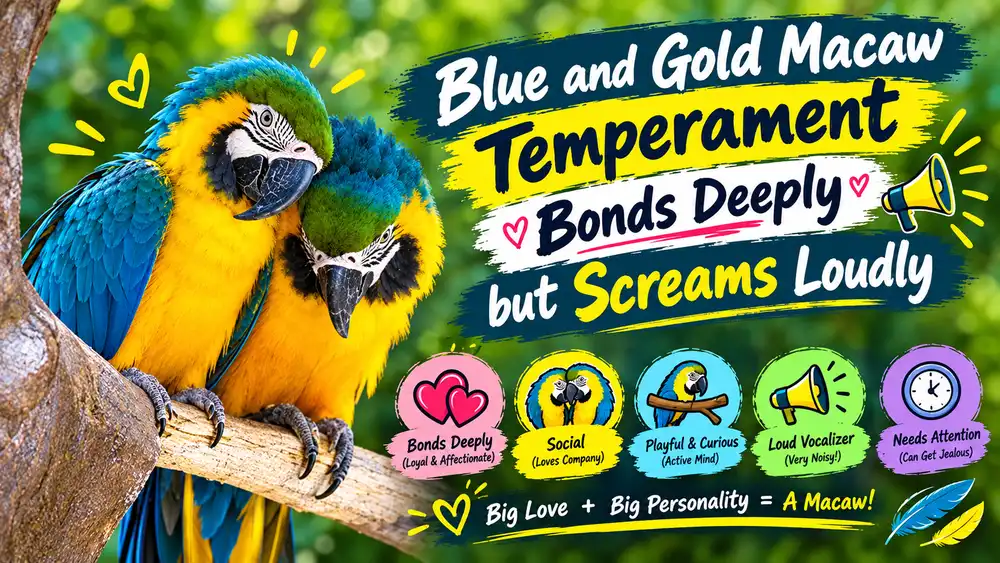
Blue and Gold Macaw Temperament centers on strong bonding, high intelligence, and loud daily vocalization. This bird usually attaches most closely to one or two people and shows this through cuddling, head bobs, and soft chatter. Screaming happens every day, especially at dawn and dusk, and can reach over 100 decibels.
Mood changes can happen fast; a calm bird may bite without warning, often due to hormones or handling it dislikes. Jealousy toward other pets or family members is common when attention is divided. Anyone researching Blue and Gold Macaw Temperament should know that affection and demanding behavior always come together in this species.
Blue and Gold Macaw Temperament: From Instinct to Daily Behavior
Wild flock life shapes nearly every behavioral trait seen in a pet macaw. Central and South American populations travel, forage, and roost in tight family groups, and a single pet bird treats its household as a substitute flock once trust develops. Constant vocal contact keeps a wild flock connected across dense forest canopy, which explains the loud calls heard from captive birds at sunrise and sunset. Physical closeness, mutual preening, and shared mealtimes carry directly from wild behavior into home life. A macaw denied this level of interaction typically develops anxiety-driven habits rather than becoming quiet and content.
Blue and Gold Macaw Temperament at a Glance
A quick snapshot below breaks down the core behavioral traits most new owners notice within the first month.
| Behavior Trait | What Owners Can Expect |
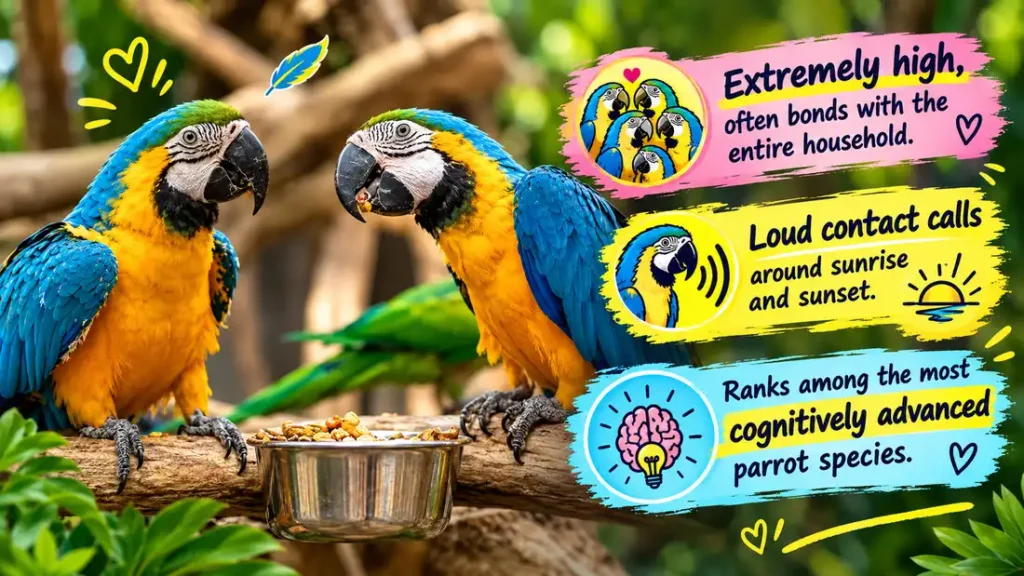
| Social Drive | Extremely high, often bonds with the entire household. |
| Vocal Habits | Loud contact calls around sunrise and sunset. |
| Intelligence | Ranks among the most cognitively advanced parrot species |
| Affection Level | Strong physical bonding, frequent cuddling once trust is earned. |
| Independence | Low; prolonged isolation often triggers stress behaviors. |
Blue and Gold Macaw Personality Traits and Everyday Behavior
Curiosity defines much of this parrot’s day-to-day personality, with new objects routinely investigated by beak, tongue, and foot. Food motivation runs high, making treat-based interaction one of the most reliable ways to build trust and cooperation. Hormonal seasons, usually tied to spring and early summer in the Northern Hemisphere, can bring temporary mood swings even in a well-socialized bird. Personality traits reported most consistently by owners and breeders include the following.
- Strong curiosity and constant investigation of new objects
- High food motivation, useful for training and enrichment
- Seasonal hormonal mood shifts, typically spring through early summer
- Enjoys shredding wood, cardboard, and paper for mental stimulation
- Forms clear preferences for specific people, toys, or routines
Are Blue and Gold Macaws Friendly, Social, and Affectionate
Friendliness in this species depends heavily on early socialization and the consistency of daily interaction. Hand-raised babies exposed to gentle handling, multiple household members, and varied experiences generally grow into affectionate, social adults. Rehomed or under-socialized birds may need months of patient, low-pressure interaction before trust develops fully.
Affection often shows up as head-lowering for scratches, soft chattering, or leaning into a shoulder during quiet moments. Social needs run deep enough that isolation for more than a few hours daily commonly damages the human-bird relationship over time.
Are Blue and Gold Macaws Friendly?
Yes, Blue and Gold Macaws are generally friendly and social birds when raised with consistent, gentle handling from an early age. Bonding tends to extend to the whole household rather than staying limited to one person. Friendliness can fade quickly, however, if daily interaction and mental stimulation drop off for extended periods.
Do Blue and Gold Macaws Bond With Owners and Like to Cuddle
Bonding happens quickly in most individuals, often within the first few weeks of consistent, positive handling. Cuddling preferences vary by bird, with some macaws seeking extended physical contact and others limiting affection to head scratches near the ear and neck. A bonded macaw frequently follows a favorite person from room to room and vocalizes when that person leaves the area.
Trust-based bonding differs from imprinting, since a well-socialized adult can still form new attachments later in life with patience. Body language offers the clearest signal of how much physical closeness a particular bird wants at any given moment.
The table below separates common signs of a securely bonded bird from signals that space is needed instead.
| Bonding Signal | What It Usually Means |
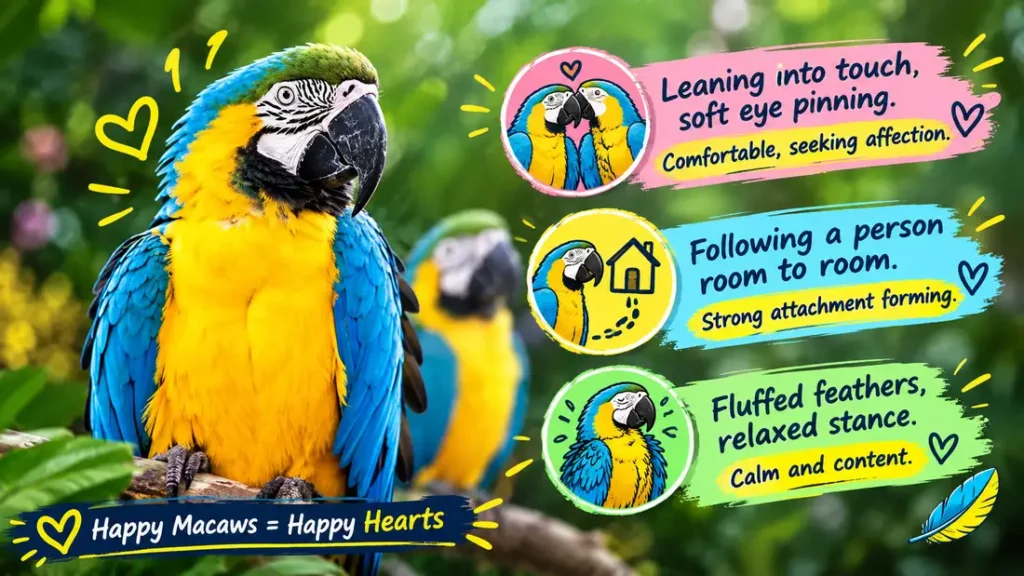
| Leaning into touch, soft eye pinning. | Comfortable, seeking affection |
| Following a person room to room | Strong attachment forming |
| Fluffed feathers, relaxed stance | Calm and content |
| Stepping back, feathers slicked tight. | Needs space, avoid forcing contact |
| Loud calling when a person leaves | Separation-related distress |
Are Blue and Gold Macaws Aggressive? Understanding Why They Bite
Aggression is not a fixed trait in this species, but situational triggers can produce a hard, painful bite from a bird that normally seems gentle. Fear, sudden movement, or unfamiliar objects near the cage frequently cause a defensive nip rather than genuine hostility. Hormonal periods sometimes bring territorial guarding of the cage or a favored person, a pattern widely documented in captive macaw behavior.
Pain or illness can also turn a calm bird defensive, which is why sudden behavior changes deserve a veterinary check rather than a training fix alone, a step often recommended by the Association of Avian Veterinarians (AAV). Early warning signs, such as pinning eyes, raised neck feathers, or an open beak, give an owner time to step back before a bite occurs.
Why Do Blue and Gold Macaws Bite?
Blue and Gold Macaws typically bite out of fear, territorial instinct, hormonal changes, or pain rather than random aggression. Sudden movements, unfamiliar people, or forced handling during a stressed moment commonly trigger a defensive nip. Reading body language, including feather position and eye pinning, helps owners avoid triggering a bite before it happens.
- Fear or startle response to sudden movement or noise
- Hormonal territorial behavior around the cage or a favorite person
- Overstimulation during extended handling sessions
- Pain or illness causing uncharacteristic defensiveness
- Forced physical contact after the bird has signaled it wants space
Blue and Gold Macaw Noise Level and Why This Parrot Is So Loud
Vocal communication ranks among the most defining traits of this species, with contact calls carrying well beyond typical household walls. Wild flocks rely on loud calls to stay connected across dense forest canopy, and that same instinct persists strongly in captivity. Morning and evening tend to bring the loudest natural vocalization periods, mirroring dawn and dusk flock communication in the wild.
Screaming becomes excessive, rather than normal contact calling, when boredom, attention-seeking, or anxiety drives the behavior instead of instinct. Apartment living or thin shared walls rarely suit this bird well, given how far and how often these calls travel, a concern echoed in welfare guidance published by the World Parrot Trust.
A quick comparison below puts this parrot’s volume into everyday perspective.
| Sound Source | Approximate Decibel Level |
| Normal conversation | 60 dB |
| Vacuum cleaner | 75 dB |
| Blue and Gold Macaw contact call | 100 to 105 dB |
| Chainsaw at close range | 110 dB |
Are Blue and Gold Macaws Loud?
Yes, Blue and Gold Macaws are considered one of the loudest common pet parrot species, with contact calls commonly reported in the 100 to 105 decibel range. Regular vocalization peaks occur around sunrise and sunset, mirroring wild flock behavior. Excessive or prolonged screaming outside these natural periods usually signals boredom, stress, or a need for more interaction.
Common Blue and Gold Macaw Behavior Problems
Boredom and insufficient mental stimulation sit behind most behavior problems reported in this species. Feather plucking, excessive screaming, and destructive chewing frequently develop within weeks of reduced enrichment or social interaction. Cage-guarding aggression can also emerge when a bird views its enclosure as territory rather than a resting spot. Left unaddressed, these habits tend to escalate rather than resolve on their own, so professional support is worth arranging once a problem persists beyond a few weeks of consistent effort at home.
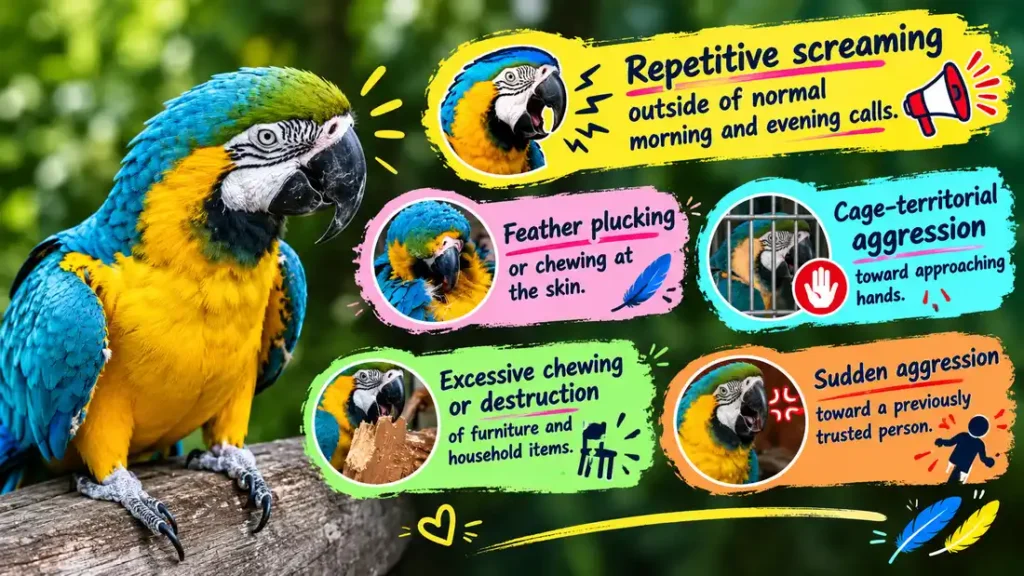
- Repetitive screaming outside of normal morning and evening calls
- Feather plucking or chewing at the skin
- Cage-territorial aggression toward approaching hands
- Excessive chewing or destruction of furniture and household items
- Sudden aggression toward a previously trusted person
How to Handle a Blue and Gold Macaw for Balanced Behavior
Consistency shapes Blue and Gold Macaw Temperament more effectively than any single training technique. Positive reinforcement using target sticks, favorite treats, and calm praise produces far better long-term results than dominance-based handling, which damages trust quickly in this species, an approach consistent with methods taught by professionals affiliated with the International Association of Animal Behavior Consultants (IAABC).
Daily out-of-cage time of at least two to four hours, paired with rotating toys, keeps boredom-driven behavior problems from taking hold. Short, predictable training sessions of ten to fifteen minutes build step-up reliability and reduce biting incidents over time. A stable daily routine, including consistent wake and sleep schedules, supports emotional stability in a species highly sensitive to disruption.
- Use positive reinforcement, never punishment or physical correction
- Offer at least two to four hours of daily out-of-cage time
- Rotate toys weekly to prevent boredom and destructive habits
- Keep training sessions short, consistent, and predictable
- Respect body language signals instead of forcing physical contact
Are Blue and Gold Macaws Good Pets for Families and Other Pets
Family compatibility depends heavily on household noise tolerance, available time, and realistic expectations about a multi-decade commitment. Supervision around young children matters given the bite force this species carries, even when the bird is generally gentle. Dogs and cats require careful, gradual introductions and should never be left unsupervised with a macaw due to predatory or defensive risk on either side. Experienced bird owners tend to see the most success with this species, while first-time owners are often steered toward smaller, quieter parrots instead.
Bringing It All Together
Blue and Gold Macaw Temperament ultimately comes down to a bird shaped by flock instincts, strong social needs, and a voice built to travel across a rainforest canopy. Personality traits like curiosity, food motivation, and seasonal mood shifts explain much of the day-to-day behavior new owners notice first.
Friendliness and social bonding come naturally with consistent handling, though cuddling preferences vary from one individual to the next. Bites usually trace back to fear, hormones, or pain rather than random aggression, and reading body language prevents most incidents before they happen. Noise level stands out as one of the biggest lifestyle factors to plan around, with calls that rival a chainsaw at close range.
Behavior problems like screaming, plucking, and cage aggression almost always trace back to boredom or insufficient interaction. Consistent, positive handling and several hours of daily out-of-cage time keep behavior balanced over the long run. Families willing to meet this bird’s social and time demands often find a loyal, deeply bonded companion on the other side of a properly managed Blue and Gold Macaw Temperament.
Frequently Asked Questions
Are Blue and Gold Macaws friendly?
Yes, most are friendly and social when raised with consistent, gentle handling, and bonding often extends to the whole household.
Are Blue and Gold Macaws aggressive?
Not inherently; aggression is usually situational and tied to fear, hormones, territorial guarding, or pain.
Do Blue and Gold Macaws bond with their owners?
Yes, bonding typically happens within a few weeks of consistent, positive interaction and can extend to multiple family members.
Are Blue and Gold Macaws loud?
Yes, contact calls are commonly reported in the 100 to 105 decibel range, loudest around sunrise and sunset.
Do Blue and Gold Macaws like to cuddle?
Many do, though it varies; some enjoy extended contact while others prefer head and neck scratches only.
Are Blue and Gold Macaws good pets for beginners?
Most avian professionals recommend against it as a first bird due to noise level, size, and lifespan commitment.
How can behavior problems be prevented in this species?
Consistent interaction, daily out-of-cage time, rotating enrichment, and early involvement of an avian vet help prevent most problems.