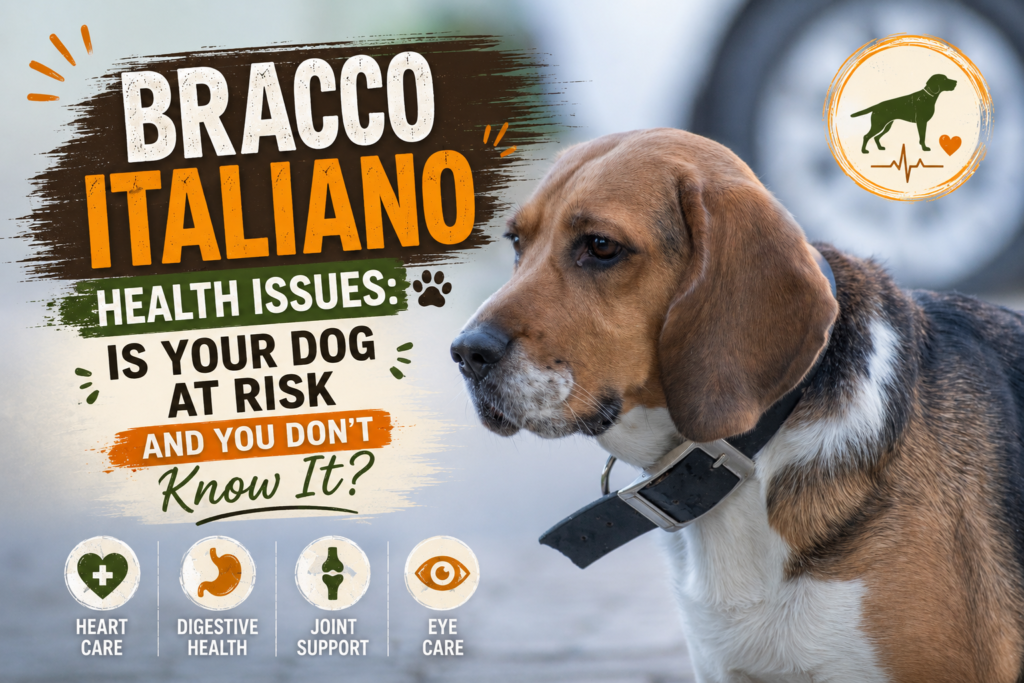
The Bracco Italiano is one of the oldest pointing dog breeds in Europe. It is known for its soulful eyes, droopy ears, and gentle nature. But like most purebred dogs, it can develop certain health problems. Knowing about Bracco Italiano health issues is important for every owner.
Early detection and proper care can greatly improve your dog’s quality of life. This guide will explain the most common Bracco Italiano health issues and give simple tips to help you spot warning signs early. With the right care, you can keep your dog healthy for years to come.
Are Bracco Italianos a Generally Healthy Breed?
The short answer is: mostly yes, with some important caveats. The Bracco Italiano is a sturdy, athletic dog built for endurance in the field. With a lifespan of around 12 to 13 years, they tend to age reasonably well. However, like many large and deep-chested breeds, they’re genetically predisposed to a handful of specific conditions. Responsible breeding and early screening have helped reduce the prevalence of some of these issues, but they haven’t disappeared entirely.
The breed typically stands 22 to 26 inches tall and weighs between 55 and 88 pounds, with males running noticeably larger than females. That size and frame matter a lot when it comes to joint health, cardiac function, and digestive risk, three areas where Braccos need the most attention.
The Truth About Bracco Italiano Health: Read more in Bracco Italiano Dog: The Rare Italian Breed Families Fall in Love With.
Hip Dysplasia: The Most Common Concern in the Breed
Hip dysplasia is one of the most discussed Bracco Italiano health concerns, and for good reason. It’s a hereditary condition where the hip joint develops abnormally, causing the ball and socket to fit poorly. Over time, this leads to joint instability, cartilage breakdown, and eventually arthritis. In working-line Braccos especially, the physical demand placed on their joints during fieldwork can accelerate the damage.
Symptoms to watch for include a reluctance to run or climb stairs, a swaying gait, difficulty rising after rest, and reduced activity. These can appear as early as 12 to 18 months, though some dogs don’t show signs until much later. Getting OFA (Orthopedic Foundation for Animals) hip clearances from both parents before purchasing a puppy is one of the most effective preventive steps available.
Protect Your Bracco Italiano from Hip Dysplasia: Read more in Hip Dysplasia in Bracco Italiano: Why Is Your Dog Slowing Down?.
The following table summarizes key facts about hip dysplasia in large breeds like the Bracco Italiano to help owners understand what they’re dealing with:
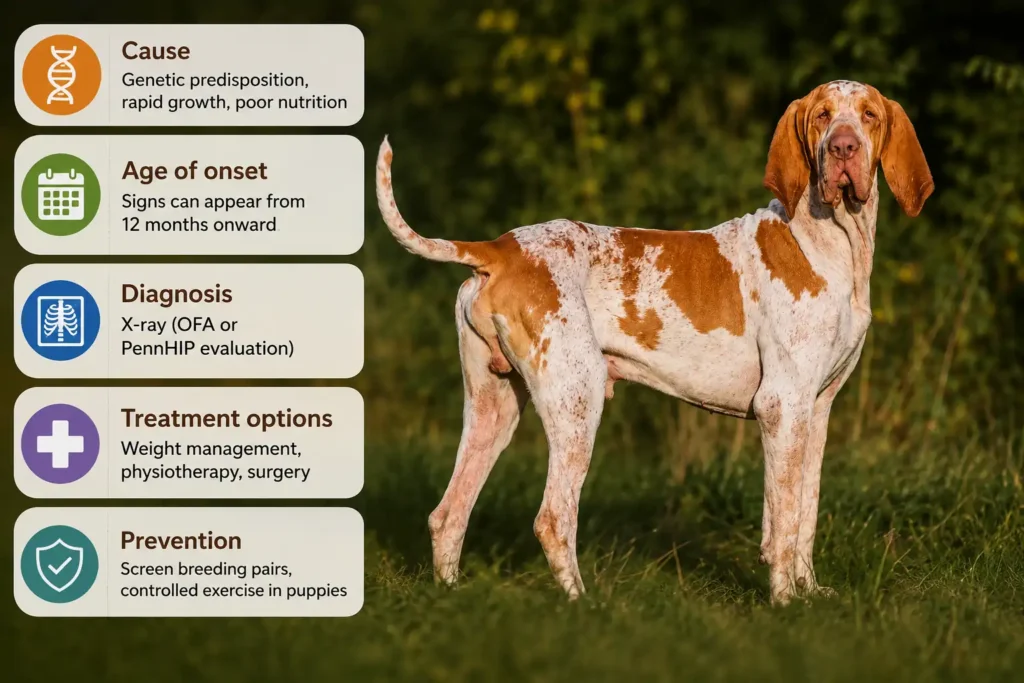
| Factor | Detail |
| Cause | Genetic predisposition, rapid growth, poor nutrition |
| Age of onset | Signs can appear from 12 months onward. |
| Diagnosis | X-ray (OFA or PennHIP evaluation) |
| Treatment options | Weight management, physiotherapy, surgery |
| Prevention | Screen breeding pairs, controlled exercise in puppies |
Ear Infections: A Side Effect of Those Beautiful Floppy Ears
Those long, pendulous ears are part of what makes the Bracco so distinctive, but they’re also a setup for recurring ear infections. The ear flap traps moisture and limits airflow to the ear canal, creating a warm, damp environment where yeast and bacteria thrive. Dogs that swim frequently or live in humid climates are at even higher risk.
Signs of an ear infection include head shaking, scratching at the ear, a dark or odorous discharge, and redness inside the ear flap. Left untreated, infections can move deeper into the canal and cause permanent hearing loss. Fortunately, routine ear care goes a long way. Checking and cleaning the ears weekly with a vet-approved solution is a straightforward habit that prevents most cases.
Keep Those Floppy Ears Healthy and Infection-Free: Read more in Bracco Italiano Ear Infections No One Warns You About.
Quick Answer: How Do You Prevent Ear Infections in a Bracco Italiano?
Clean your Bracco Italiano’s ears once a week using a veterinarian-recommended ear cleaning solution. Always dry the ears thoroughly after swimming or bathing, and schedule a vet check at the first sign of discharge, odor, or scratching. Early treatment prevents chronic infection.
Gastric Torsion (Bloat): What Every Owner Should Watch For
Bloat, or Gastric Dilatation-Volvulus (GDV), is a life-threatening emergency that affects deep-chested dogs disproportionately, and the Bracco Italiano fits that profile perfectly. The stomach fills with gas and can twist on itself, cutting off blood supply to vital organs. Without emergency surgery, GDV is fatal, often within hours.
The exact cause isn’t fully understood, but known risk factors include eating one large meal per day, exercising right after meals, drinking large amounts of water quickly, and having a first-degree relative who experienced bloat. The warning signs are subtle at first: a distended, hard belly, unproductive retching (trying to vomit without bringing anything up), restlessness, and excessive drooling.
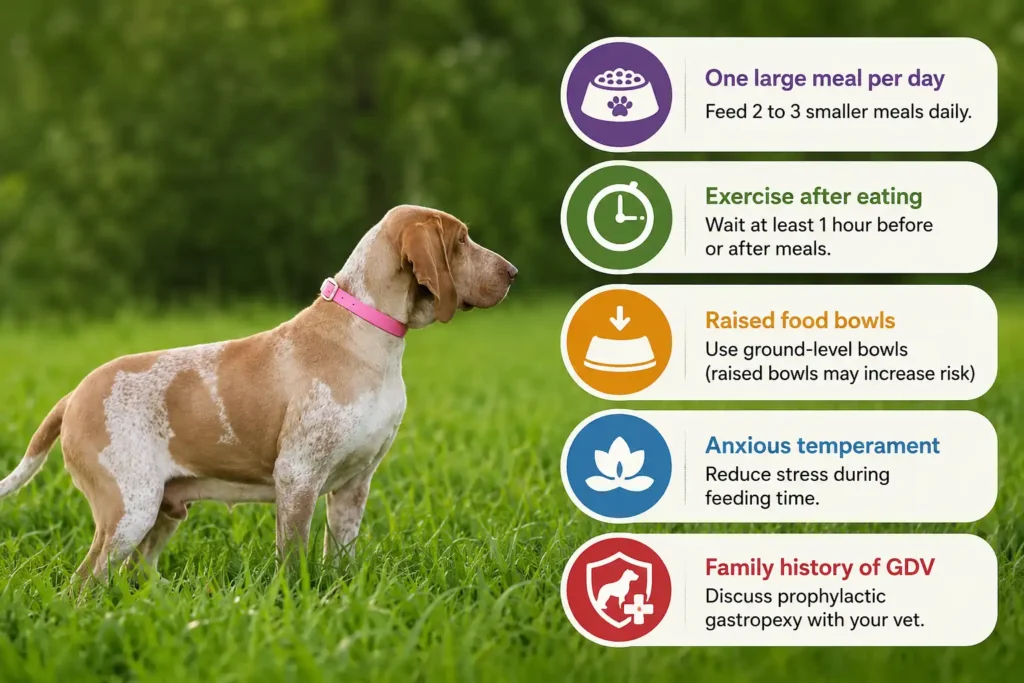
This table outlines the key risk factors and practical prevention strategies for GDV in susceptible breeds:
| Risk Factor | Preventive Measure |
| One large meal per day | Feed 2 to 3 smaller meals daily. |
| Exercise after eating | Wait at least 1 hour before or after meals. |
| Raised food bowls | Use ground-level bowls (raised bowls may increase risk) |
| Anxious temperament | Reduce stress during feeding time. |
| Family history of GDV | Discuss prophylactic gastropexy with your vet. |
Eye Problems: Entropion and Ectropion Explained
The Bracco’s loose, expressive facial skin can work against it when it comes to eye health. Two conditions are relatively common in the breed: entropion, where the eyelid rolls inward and causes the lashes to rub against the cornea, and ectropion, where the lower eyelid droops outward and exposes the inner membrane. Both conditions irritate, tear, and, if untreated, cause corneal damage or infection.
Entropion usually requires surgical correction, while mild ectropion is often managed with lubricating eye drops and regular cleaning. The American College of Veterinary Ophthalmologists (ACVO) recommends annual eye exams for breeds genetically predisposed to eyelid abnormalities. If your Bracco squints frequently, has excessive tearing, or keeps rubbing its face, get an eye check booked without delay.
Quick Answer: What Eye Conditions Are Common in Bracco Italianos?
Bracco Italianos are prone to entropion (inward-rolling eyelids) and ectropion (outward-drooping eyelids), both linked to the breed’s loose facial skin. Annual veterinary eye exams and prompt treatment of any tearing, squinting, or eye discharge are essential to protect your dog’s vision.
Cardiac Issues to Keep an Eye On
While not as widely documented as hip dysplasia or bloat, certain cardiac conditions have been noted in the breed, particularly dilated cardiomyopathy (DCM) and heart murmurs. DCM causes the heart muscle to weaken and enlarge, reducing its ability to pump blood efficiently. The condition can be silent for years before symptoms appear, which makes regular cardiac screening genuinely important.
Annual auscultation (listening to the heart with a stethoscope) should be part of every Bracco’s routine checkup. If your vet detects a murmur or abnormal rhythm, they’ll likely refer you to a veterinary cardiologist for an echocardiogram. The Bracco Italiano Club of America recommends cardiac evaluations as part of responsible breeding protocols for this reason.
Weight Management and Its Link to Joint Health
This one doesn’t get enough attention. Keeping a Bracco Italiano at a lean, healthy weight is one of the most impactful things you can do for their long-term health. Extra weight doesn’t just make them sluggish; it directly stresses the hips, elbows, and heart, worsening nearly every condition mentioned in this article.
Adult Braccos generally do best on a high-protein, moderate-fat diet formulated for large, active breeds. You should be able to feel, but not clearly see, their ribs. If you’re having to press hard to feel them, your dog is probably carrying too much weight. The World Small Animal Veterinary Association (WSAVA) provides body condition scoring charts that are freely available and genuinely useful for owners monitoring their dog’s weight at home.
The table below outlines ideal body condition ranges and what they mean for a Bracco Italiano of standard size:
| Body Condition | What It Looks Like | Action Needed |
| Underweight (1–3) | Ribs, spine, hip bones visible | Increase calories, vet check |
| Ideal (4–5) | Ribs easily felt, waist visible | Maintain current feeding |
| Overweight (6–7) | Ribs hard to feel, no waist visible | Reduce portions, increase exercise |
| Obese (8–9) | Fat deposits over ribs, tail base, neck | Vet-guided weight loss plan |
Signs That Mean It’s Time to Call the Vet
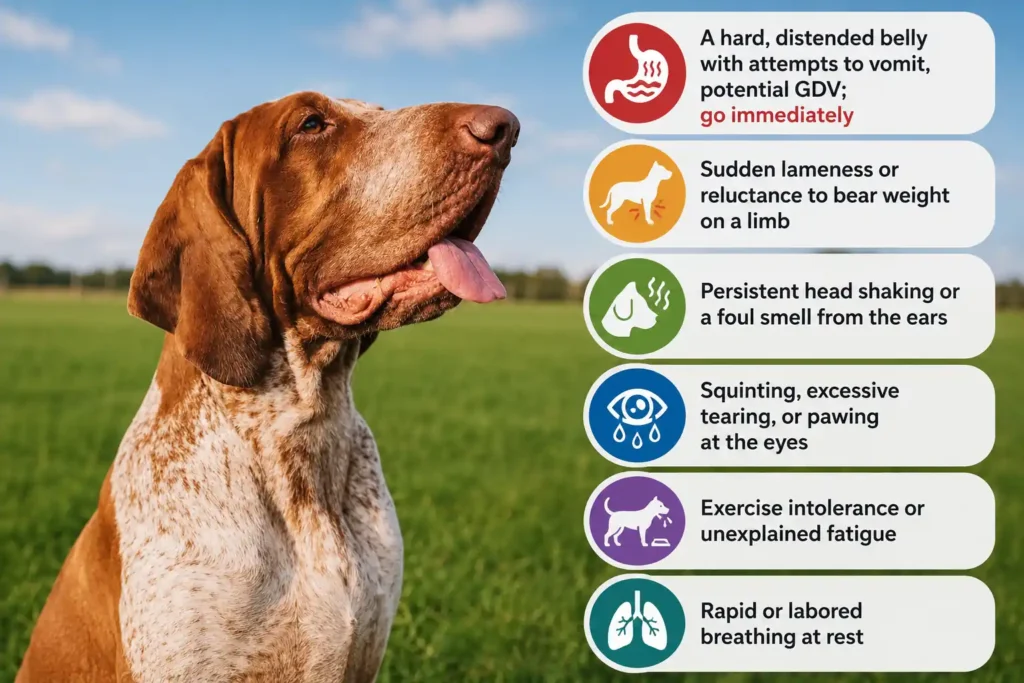
Don’t wait for something to get dramatically worse. These signs in a Bracco Italiano warrant a vet call the same day:
- A hard, distended belly with attempts to vomit, potential GDV; go immediately
- Sudden lameness or reluctance to bear weight on a limb
- Persistent head shaking or a foul smell from the ears
- Squinting, excessive tearing, or pawing at the eyes
- Exercise intolerance or unexplained fatigue
- Rapid or labored breathing at rest
Routine Checkups: How Often Your Bracco Really Needs Them
For most adult Braccos, annual vet visits cover the basics: physical exam, vaccinations, parasite prevention, and weight check. Once your dog hits seven years old, twice-yearly visits make more sense because age-related conditions can develop quickly in large breeds. Puppies need more frequent visits in the first year, roughly every 3 to 4 weeks until 16 weeks, then annually thereafter once the vaccine series is complete.
Alongside routine vet care, consider breed-specific screening: OFA hip and elbow evaluations, annual eye exams (CAER), and periodic cardiac auscultation. These aren’t mandatory, but they catch problems early, and early is always better.
Quick Answer: What Health Tests Does the Bracco Italiano Need?
The Bracco Italiano should receive OFA evaluations for hips and elbows, annual CAER eye exams for entropion and ectropion, and routine cardiac auscultation. These screenings are recommended by breed clubs and help detect hereditary conditions before symptoms become severe.
Keeping Your Bracco Happy and Healthy for Years
The Bracco Italiano is a remarkable breed, loyal, sensitive, athletic, and deeply attached to its family. Like any large breed, it comes with health considerations that deserve serious attention. But none of the Bracco Italiano health issues covered here are untreatable or unmanageable with the right knowledge and proactive vet care.
Start with a reputable breeder who health-tests their dogs. Maintain a healthy weight. Stay on top of ear and eye hygiene. And don’t ignore subtle changes in your dog’s behavior or movement. Braccos are stoic, and by the time they’re clearly uncomfortable, things have often been building for a while. Knowledge is the best tool you have.
Frequently Asked Questions
What are the most common health problems in Bracco Italianos?
The most common health issues include hip dysplasia, ear infections, gastric torsion (GDV), entropion and ectropion (eyelid conditions), and cardiac concerns such as heart murmurs and dilated cardiomyopathy.
How long do Bracco Italianos live?
Bracco Italianos typically live between 12 and 13 years. With good nutrition, regular vet care, and appropriate exercise, some dogs reach 14 years.
Is the Bracco Italiano prone to bloat?
Yes. As a deep-chested breed, the Bracco Italiano has a higher-than-average risk of gastric torsion (GDV). Feeding multiple small meals, avoiding exercise right after eating, and discussing prophylactic gastropexy with your vet can significantly reduce the risk.
Are Bracco Italianos good for first-time dog owners?
They can be, with the right preparation. Braccos are sensitive, trainable, and eager to please, but they need consistent mental and physical stimulation. Their health screening requirements and potential for breed-specific conditions mean first-time owners should research the breed thoroughly beforehand.
How often should a Bracco Italiano see a vet?
Adult Braccos should have annual vet checkups. Once they reach seven years of age, twice-yearly visits are advisable. Puppies need visits every 3 to 4 weeks during the first few months for vaccinations and health monitoring.