
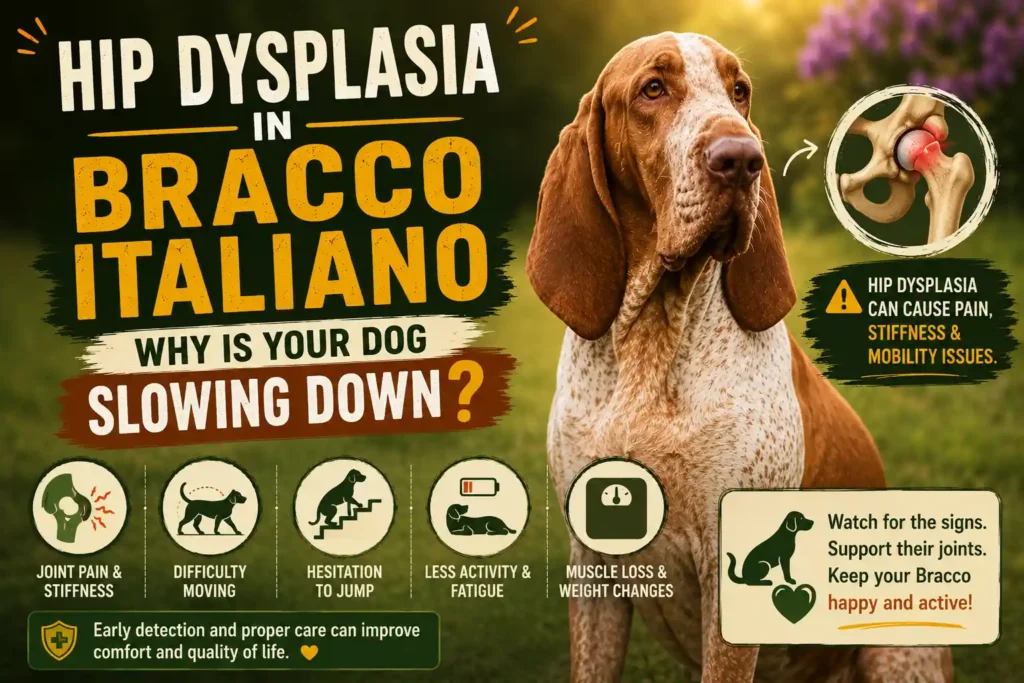
When a Bracco Italiano starts slowing down on the trail, skipping the morning sprint, or struggling to get up from a nap, most owners chalk it up to a bad day. But if it keeps happening, hip dysplasia in Bracco Italiano could be the real cause, and it’s more common in this breed than many people realize.
Hip dysplasia in Bracco Italiano develops when the hip joint doesn’t fit together properly, leading to pain, stiffness, and long-term loss of mobility. Catching it early is everything.
What Is Hip Dysplasia? (Quick Context for Bracco Owners)
Hip dysplasia is a developmental condition where the ball of the femur doesn’t sit properly in the hip socket. Over time, that poor fit causes cartilage to wear down, inflammation to build up, and eventually arthritis to develop. It’s not just an old-dog problem; it can start showing up in puppies as young as 4 to 6 months in severely affected cases.
The condition is graded from mild to severe, and how it progresses depends heavily on genetics, growth rate, diet, and how much strain is placed on the joint during development.
Why Bracco Italiano Is Prone to Hip Dysplasia
Not every breed carries the same risk. Braccos are large, athletic gun dogs, a combination that puts real pressure on joint development. The breed’s history as a working pointer and retriever in rugged Italian terrain means they’re built for endurance, but that same build creates vulnerability.
Why Hip Dysplasia Is a Common Concern for Bracco Italianos: Read more in Bracco Italiano Health Issues: Is Your Dog at Risk and You Don’t Know It?.
Large, Fast-Growing Build of the Breed
The Bracco Italiano is a large breed, typically weighing between 55 and 88 pounds at maturity. Males stand 23 to 26.5 inches tall. Large breeds grow fast, and when growth outpaces proper joint formation, problems follow. The hip socket may be too shallow or the femoral head slightly malformed, and in a dog this size, that structural mismatch adds up quickly.
Genetics play a major role here, which is why responsible breeders screen breeding pairs using OFA (Orthopedic Foundation for Animals) or PennHIP certification before pairing.
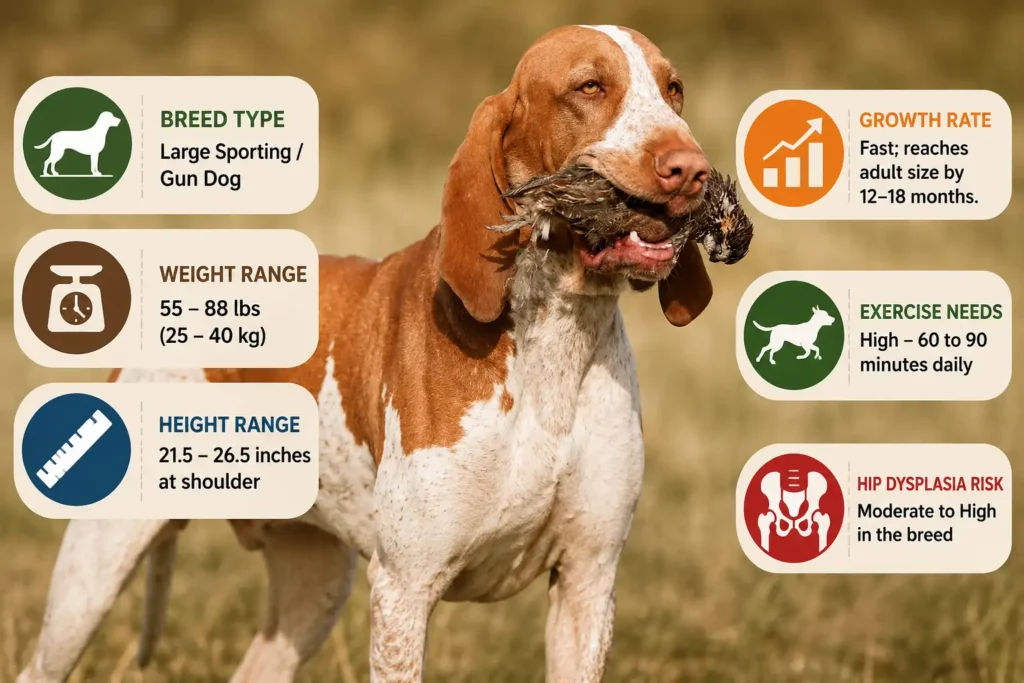
The table below summarizes key Bracco Italiano breed characteristics relevant to understanding their joint health risk.
| Characteristic | Detail |
| Breed Type | Large Sporting / Gun Dog |
| Weight Range | 55 – 88 lbs (25 – 40 kg) |
| Height Range | 21.5 – 26.5 inches at shoulder |
| Growth Rate | Fast; reaches adult size by 12–18 months. |
| Exercise Needs | High – 60 to 90 minutes daily |
| Hip Dysplasia Risk | Moderate to High in the breed |
Signs and Symptoms in Bracco Italiano
This is where things get tricky. Braccos are stoic, working dogs. They often push through discomfort longer than a typical companion breed would. By the time symptoms become obvious, the joint damage is usually already there.
The “Bunny Hopping” Gait in Braccos
One of the most recognizable early signs is the bunny hop, a movement where the dog pushes off both back legs together rather than alternating them. It’s most visible when the dog is running or going up stairs. In Braccos, who are built for fluid, athletic movement, this gait change is often the first real tip-off that something’s wrong in the hindquarters.
At What Age Bracco Puppies Start Showing Symptoms
Mild cases may not show clear symptoms until a dog is 1 to 2 years old, but severe cases can surface as early as 4 to 6 months. Puppies that seem stiff after rest, reluctant to play, or noticeably wobbly in their back end deserve a vet check sooner rather than later. Early diagnosis dramatically improves outcomes.
Limping, Weakness, and Reluctance to Climb Stairs
Progressive signs include intermittent or persistent limping on one or both hind legs, muscle wasting in the hindquarters, and a clear reluctance to jump, climb stairs, or get into a vehicle. Some dogs also show behavioral changes, becoming less playful, more irritable, or simply quieter than usual.
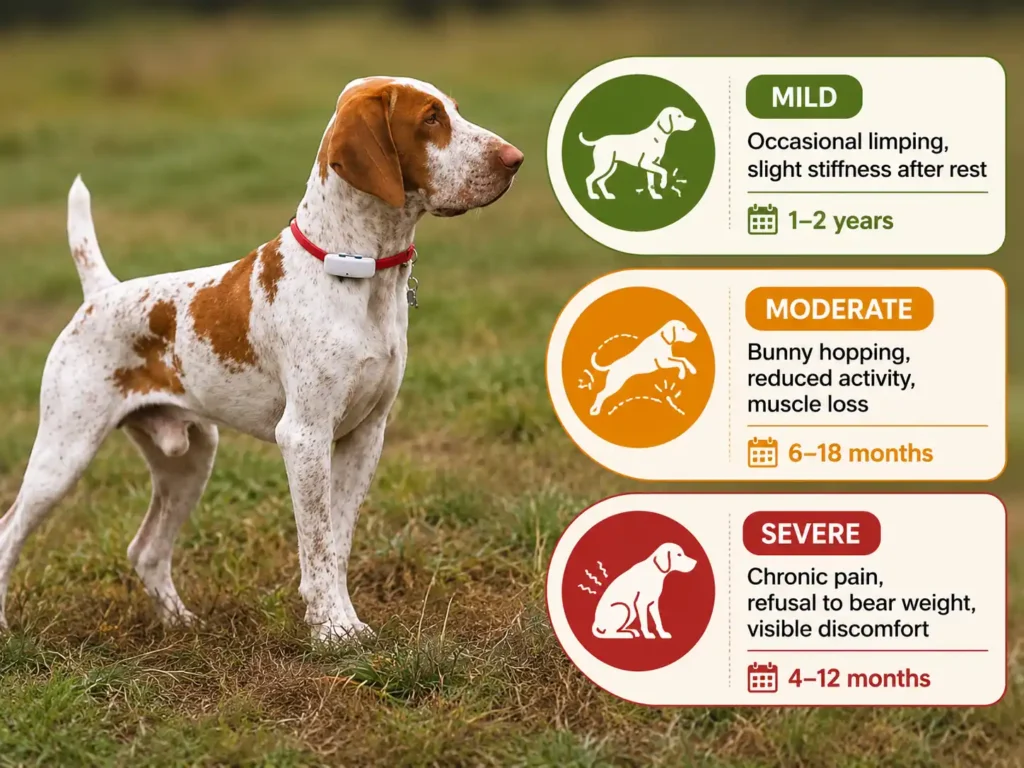
The following table outlines common hip dysplasia symptoms in Bracco Italiano dogs by severity level.
| Severity | Common Symptoms | Typical Onset |
| Mild | Occasional limping, slight stiffness after rest | 1–2 years |
| Moderate | Bunny hopping, reduced activity, muscle loss | 6–18 months |
| Severe | Chronic pain, refusal to bear weight, visible discomfort | 4–12 months |
What Causes Hip Dysplasia in Bracco Italiano
There’s rarely one single cause. It’s almost always a combination of genetics and environment, especially during the puppy growth phase.
Genetic Predisposition in the Breed
Hip dysplasia has a heritable component, meaning affected dogs can pass the condition to offspring. In the Bracco Italiano, as with most large breeds, both parents should be cleared through OFA or PennHIP screening before breeding. The
Orthopedic Foundation for Animals (OFA) maintains a public database of hip evaluations that responsible breeders and buyers can check before committing to a puppy.
Overfeeding and Rapid Growth Risk in Bracco Puppies
This one surprises many owners. Feeding a Bracco puppy too much, especially high-calorie puppy food meant for smaller breeds, can accelerate bone growth faster than joint cartilage can keep up. Research consistently links excess calcium and rapid weight gain in large-breed puppies to higher rates of hip and elbow dysplasia.
Large-breed-specific puppy food with controlled calcium levels is strongly recommended for Bracco puppies during their first 12 to 18 months.
Diagnosing Hip Dysplasia in Bracco Italiano
Diagnosis starts with a physical examination; a vet will manipulate the hip joint, checking for looseness, pain response, and range of motion. X-rays under sedation confirm the diagnosis and show the degree of joint malformation or degeneration.
Recommended Age for First Hip Checkup
Most vets recommend a baseline hip evaluation between 12 and 18 months of age for large breeds like the Bracco Italiano. For dogs intended for breeding, formal OFA certification requires evaluation at 24 months minimum. The American Veterinary Medical Association (AVMA) advises early orthopedic screening for working and large breeds to catch issues before significant damage occurs.
Treatment Options for Bracco Italiano with Hip Dysplasia
The right treatment depends on the dog’s age, weight, severity of the condition, and overall health. There’s no universal answer, but there are well-established options.
Non-Surgical Management
For mild to moderate cases, non-surgical approaches can significantly improve quality of life. These typically include:
- Joint supplements, glucosamine and chondroitin sulfate remain among the most widely used, with research supporting their role in slowing cartilage breakdown
- NSAIDs (non-steroidal anti-inflammatory drugs), prescribed by a vet to manage pain and inflammation
- Controlled, low-impact exercise, swimming and leash walking are preferred over running and jumping
- Weight management, keeping the Bracco at a lean, healthy body weight reduces joint load significantly
- Physical therapy and hydrotherapy, increasingly common and effective for maintaining muscle strength around the joint
When Surgery Becomes Necessary
In more severe cases, or when quality of life is significantly affected despite conservative management, surgery may be recommended. Options include Triple Pelvic Osteotomy (TPO) for young dogs before arthritis sets in, Total Hip Replacement (THR), and Femoral Head and Neck Excision (FHO) as a salvage option for smaller or older dogs.
A board-certified veterinary orthopedic surgeon should assess the dog before any surgical decision is made. The American College of Veterinary Surgeons (ACVS) provides a searchable directory to locate qualified specialists.
Managing Hip Dysplasia in an Active Breed Like Bracco Italiano
Here’s the real challenge with Braccos: they want to run. They were bred to cover ground for hours. Slowing them down, even for their own good, goes against every instinct they have. Management in this breed requires more strategy than it does in lower-energy dogs.
Weight Control and Exercise Adjustments for a Hunting Breed
Keeping a Bracco at the lean end of its healthy weight range is probably the single most impactful thing an owner can do. Every pound of extra weight increases pressure on already-compromised hip joints. For an active hunting breed, the goal isn’t to eliminate exercise but to modify it.
Swap high-impact activities like jumping and hard retrieving for swimming, leash walks on even terrain, and shorter but more frequent movement sessions. Off-season conditioning with controlled hydrotherapy keeps the muscles strong, and muscle mass around the hip is a major factor in how well the joint functions.
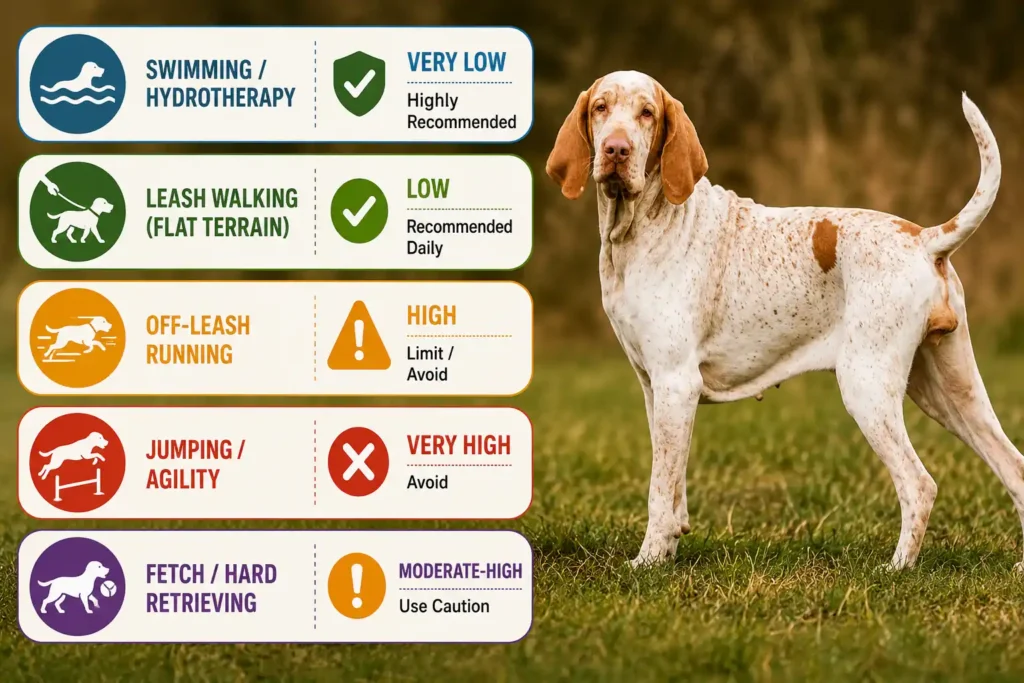
The table below compares exercise options for Bracco Italiano dogs with hip dysplasia, rated by joint impact.
| Activity | Joint Impact | Recommended? |
| Swimming / Hydrotherapy | Very Low | Highly Recommended |
| Leash Walking (flat terrain) | Low | Recommended Daily |
| Off-leash Running | High | Limit / Avoid |
| Jumping / Agility | Very High | Avoid |
| Fetch / Hard Retrieving | Moderate-High | Use Caution |
Can a Bracco Italiano Still Live an Active, Happy Life?
Yes, genuinely. Hip dysplasia is manageable, especially when caught early and handled consistently. Many Braccos with diagnosed hip dysplasia continue to work, hunt in limited capacity, and live full, engaged lives well into their senior years with proper care.
The prognosis is best when treatment starts early, weight is kept in check, and the owner commits to an adjusted but still meaningful activity routine. It takes effort, but Braccos are resilient dogs, and they respond well to structured, thoughtful management.
Simple Ways to Keep Your Bracco Italiano Happy and Energeti: Read more in Bracco Italiano Dog: The Rare Italian Breed Families Fall in Love With.
Conclusion: Key Takeaways for Bracco Owners
Hip dysplasia in Bracco Italiano is a real risk for the breed, but it’s not a death sentence for an active life. Know the signs: the bunny hop, the reluctance to climb, the post-rest stiffness. Get hip evaluations done early, especially if you’re planning to breed. Feed large-breed-appropriate puppy food, keep weight lean, and work with a vet you trust.
Catching hip dysplasia in Bracco Italiano dogs early and responding with the right combination of exercise modification, joint support, and veterinary care makes a measurable difference in outcomes. Your Bracco deserves nothing less.
FAQs
Is hip dysplasia common in Bracco Italiano dogs?
Yes, it’s a known health concern in the breed due to their large size and fast growth rate. Responsible breeders screen for it using OFA or PennHIP evaluations.
At what age does hip dysplasia show up in Bracco Italiano puppies?
Mild cases may not appear until 1 to 2 years of age, but severe cases can show symptoms as early as 4 to 6 months. Early vet evaluation is strongly recommended for large-breed puppies.
Can a Bracco Italiano with hip dysplasia still hunt or be active?
Many can, with appropriate management. Activity needs to be modified to low-impact exercises like swimming and controlled walks, but plenty of Braccos continue to live active, engaged lives with proper treatment.
What’s the best non-surgical treatment for Bracco Italiano hip dysplasia?
A combination of joint supplements (glucosamine and chondroitin), vet-prescribed anti-inflammatory medication, weight control, and hydrotherapy is widely considered the most effective conservative management approach.
How can I reduce my Bracco puppy’s risk of developing hip dysplasia?
Feed a large-breed-specific puppy formula with controlled calcium, avoid overfeeding, limit high-impact activities during the first 18 months, and choose a breeder who screens breeding stock with certified hip evaluations.