
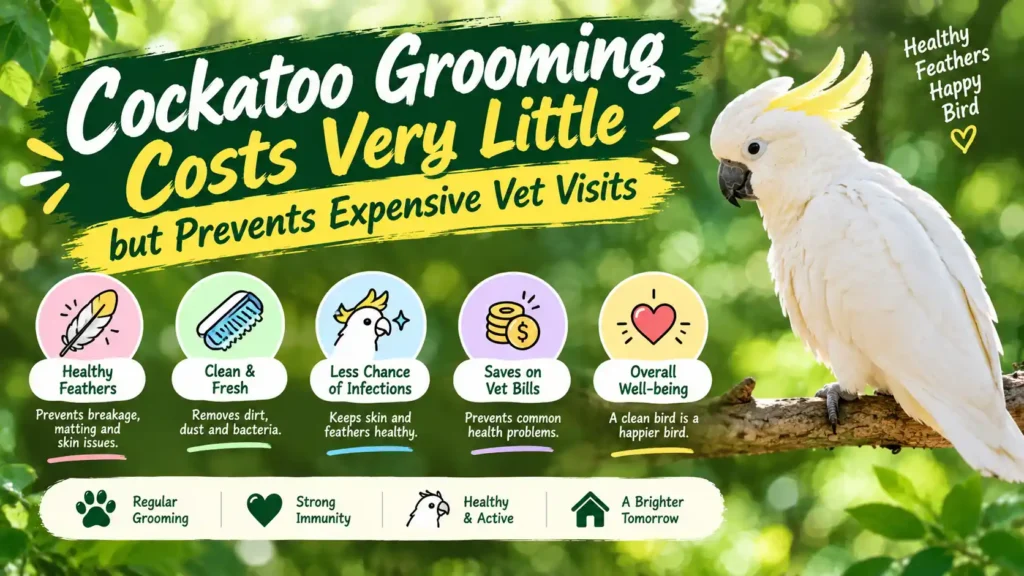
Cockatoo grooming focuses on three areas: nails, beak, and feathers. Nails need regular trimming because long nails curl, catch on cage bars, and throw off the bird’s balance while climbing. The beak usually stays in good shape on its own, since chewing on wood and cuttlebone wears it down naturally, so manual trimming is only needed if it grows unevenly or too fast.
Feathers require close attention during molting season, when new pin feathers come in and old ones fall out, since dust and debris can build up around the nares and affect breathing. Done correctly, cockatoo grooming keeps the bird steady on its feet, comfortable, and free from the small problems that turn into bigger health issues over time.
Cockatoo Grooming
Four fundamentals make up a complete routine: nail length, beak condition, feather health, and skin cleanliness. Regular attention to each area lowers the risk of injury, infection, and stress-related feather plucking. Wild cockatoos wear down their nails and beaks naturally through climbing, foraging, and chewing bark, but captive birds rarely get enough rough surfaces to do the same.
Indoor perches, soft foods, and limited flight space all slow down that natural wear, which is why home grooming exists in the first place. Owners who understand these needs early tend to catch problems, like a cracked beak tip or a sore nail bed, long before they need emergency care. Routine matters more than any single trimming session, since consistency is what actually prevents injury over the long run.
Explore the Fascinating World of Cockatoo Parrots. Read more in Cockatoo Parrot Diet, Temperament, and the Commitment Few Expect.
What Does a Full Grooming Routine Include?
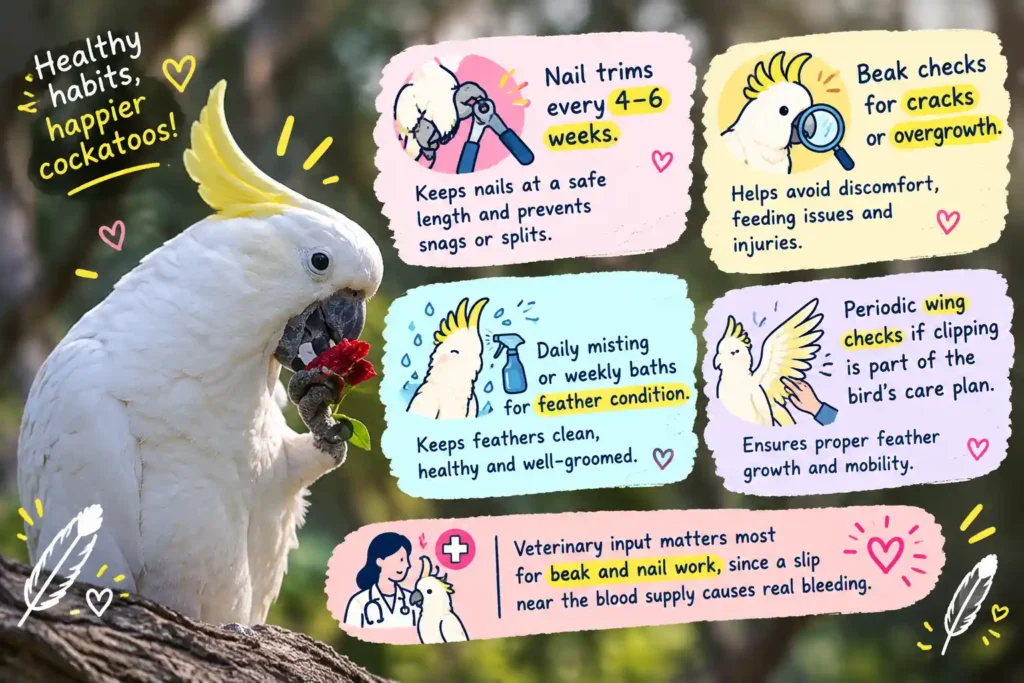
A full grooming routine includes four regular tasks: nail trims every four to six weeks, beak checks for cracks or overgrowth, daily misting or weekly baths for feather condition, and periodic wing checks if clipping is part of the bird’s care plan. Veterinary input matters most for beak and nail work, since a slip near the blood supply causes real bleeding. Owners typically handle feather misting and basic wing checks at home, saving vet visits for anything structural or unusual.
How to Groom a Cockatoo
A calm, well-prepped bird handles grooming sessions far better than a stressed one, so setup and timing matter as much as technique. Short sessions spread across several days beat one long forced session that exhausts both bird and handler. Towel-wrapping works well for nail trims and beak checks, securing the body while keeping the head gently supported. Positive reinforcement, such as a favorite treat after each step, builds tolerance faster than repeated restraint ever does. Two people make the process smoother for larger cockatoos.
Technique tips worth following every session:
- Trim nails in bright, natural light to spot the blood vessel, called the quick, clearly
- Stop immediately and apply styptic powder if bleeding starts
- Offer a treat break every two to three nails to keep stress low
- Never attempt beak reshaping at home; leave structural corrections to an avian vet
The table below breaks down the basic tools most home groomers need, along with typical U.S. pricing.
Basic Grooming Supplies & Average Cost (USD)
| Supply | Purpose | Average Cost (USD) |
| Bird-safe nail clippers | Routine nail trims | $8-$15 |
| Styptic powder | Stops bleeding from nail quicks | $5-$10 |
| Fine-mist spray bottle | Daily feather misting | $6-$12 |
| Textured grooming perch | Natural nail wear between trims | $12-$25 |
| Professional vet or groomer visit | Nail, beak, and wing check | $15-$45 per session |
Cockatoo Nail Trimming
Nail length affects grip, balance, and even foot health over time, since overly long nails force birds to walk on the sides of their feet. Active cockatoos with access to rope perches, concrete perches, and foraging toys often need trims less often than birds confined to smooth wooden dowels.
Four to six weeks is a common trimming window for most companion cockatoos, though individual growth rates vary by age, diet, and activity level. Curling nails, nails that catch on cage bars or clothing, or visible clicking on hard floors all signal that a trim is overdue.
The quick, a blood vessel running through the center of each nail, sits farther forward in birds with untrimmed nails, which raises the risk if trims are delayed too long and then rushed. Filing between full trims keeps nails blunt without requiring a full clipping session every time.
How Do You Trim a Cockatoo’s Nails Safely?
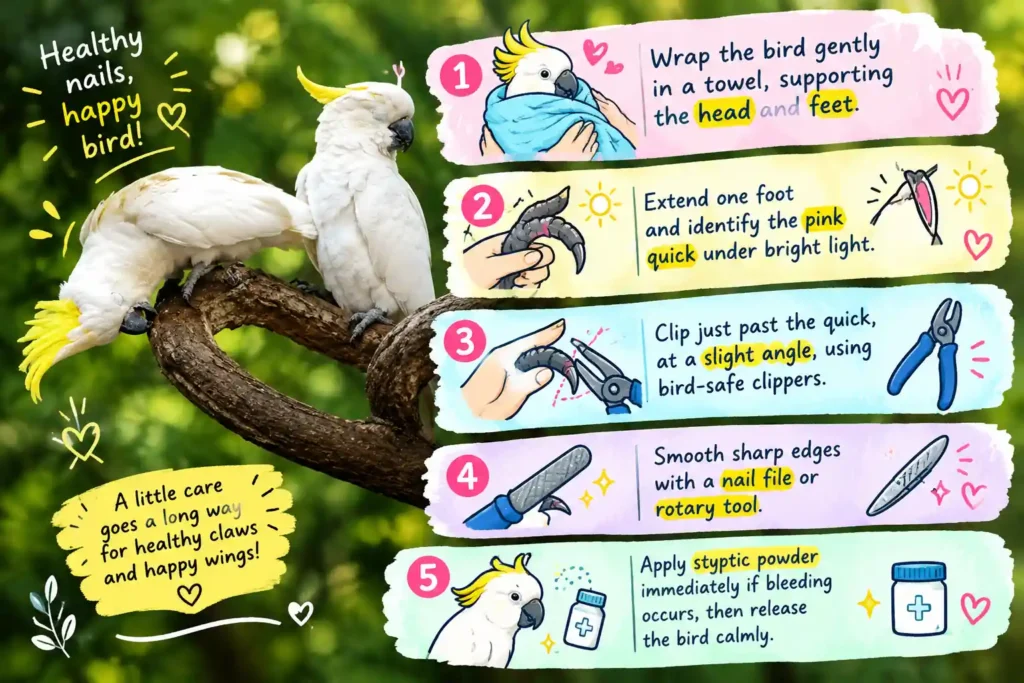
Safe nail trimming follows a short, repeatable sequence:
- Wrap the bird gently in a towel, supporting the head and feet.
- Extend one foot and identify the pink quick under bright light.
- Clip just past the quick, at a slight angle, using bird-safe clippers.
- Smooth sharp edges with a nail file or rotary tool.
- Apply styptic powder immediately if bleeding occurs, then release the bird calmly.
Cockatoo Beak Care
Beak growth continues throughout a cockatoo’s life, much like human fingernails, and normal wear usually keeps pace with that growth through chewing wood, cardboard, and mineral perches. Overgrown beaks, uneven wear, or flaking often point to insufficient chew opportunities rather than a structural problem.
Cracks, dark discoloration, or a beak that grows unevenly on one side need veterinary attention rather than home filing, since these signs sometimes indicate liver disease or an old injury affecting the beak’s growth plate. The Association of Avian Veterinarians recommends a full physical exam at least once a year for adult parrots, which typically includes a beak and nail assessment alongside bloodwork.
Home beak care mostly means providing enough safe chew material, not attempting to reshape the beak with tools not designed for it. Wood blocks, coconut shells, and palm leaves give a cockatoo’s powerful beak the resistance it needs to wear down naturally between checkups.
Cockatoo Feather Care
Feather condition reflects overall health more directly than almost any other visible trait, making regular observation part of good grooming. Daily preening keeps feathers aligned and coated in a light layer of preen oil, which helps with waterproofing and insulation. Molting cycles for cockatoos typically run once or twice a year, lasting several weeks as old feathers loosen and new ones grow in through visible blood feathers.
Blood feathers, still connected to a live blood supply, bleed heavily if broken, so cages and play areas should stay free of sharp edges during heavy molts. The World Parrot Trust notes that stress, poor nutrition, and low humidity all contribute to feather-damaging behavior, including over-preening and plucking, in captive parrots.
Misting two to three times a week supports feather condition and reduces static-related irritation, especially in dry indoor climates. Nutrition plays a role too, since a diet heavy in seeds and low in vitamin A tends to show up first in dull, brittle feathers.
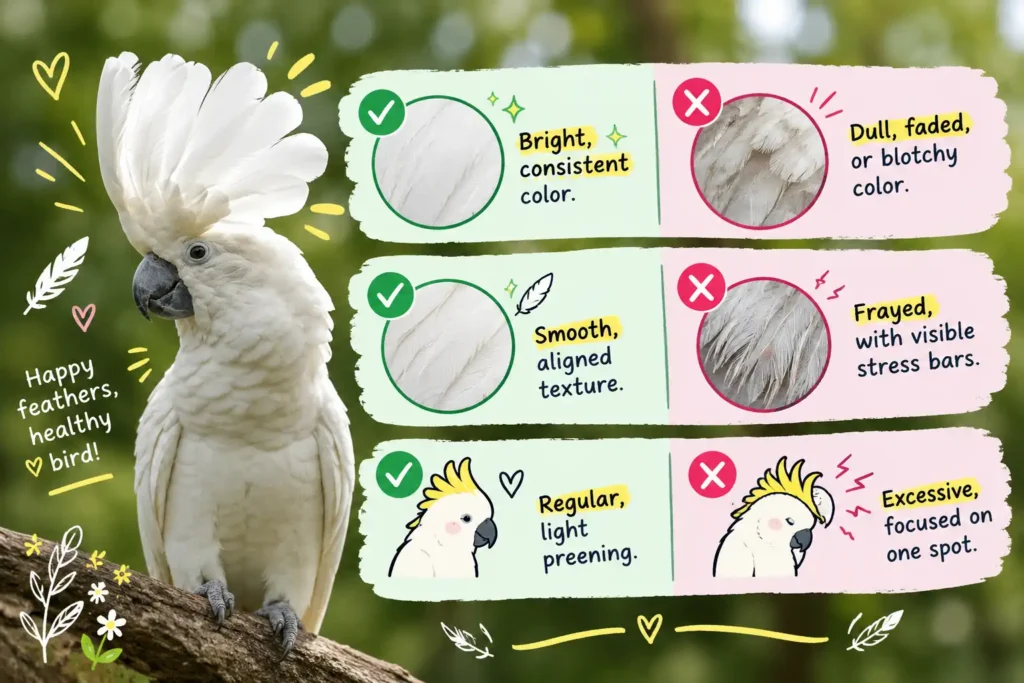
The comparison below makes it easier to spot early feather trouble before it becomes a bigger problem.
| Sign | Healthy | Unhealthy |
| Color | Bright, consistent | Dull, faded, or blotchy |
| Texture | Smooth, aligned | Frayed, with visible stress bars |
| Preening | Regular, light | Excessive, focused on one spot |
| New growth | Straight, bloodless feathers | Bent, broken, or bleeding shafts |
How Often Should You Groom a Cockatoo?
Grooming frequency depends on activity level, perch variety, and individual growth rate more than a single fixed rule. Nail trims generally fall every four to six weeks, beak checks happen at each vet visit or monthly at home, and feather misting works best two to three times weekly. Cockatoo grooming schedules should flex around molting season, since heavy feather loss changes bathing needs and handling risk temporarily.
Wing checks, for owners who clip, typically happen every two to three months as new flight feathers grow in after a molt. A consistent routine, tracked on a calendar or simple app reminder, catches problems earlier than grooming done only when something looks obviously wrong.
A quick-reference schedule below shows how often each grooming task typically needs attention.
| Task | Frequency | Who Usually Does It |
| Nail trim | Every 4-6 weeks | Owner or avian vet |
| Beak check | Monthly at home; every vet visit | Owner and avian vet |
| Feather misting | 2-3 times per week | Owner |
| Full bath | Weekly | Owner |
| Wing check (if clipped) | Every 2-3 months | Avian vet |
How Long Does a Full Grooming Session Take?
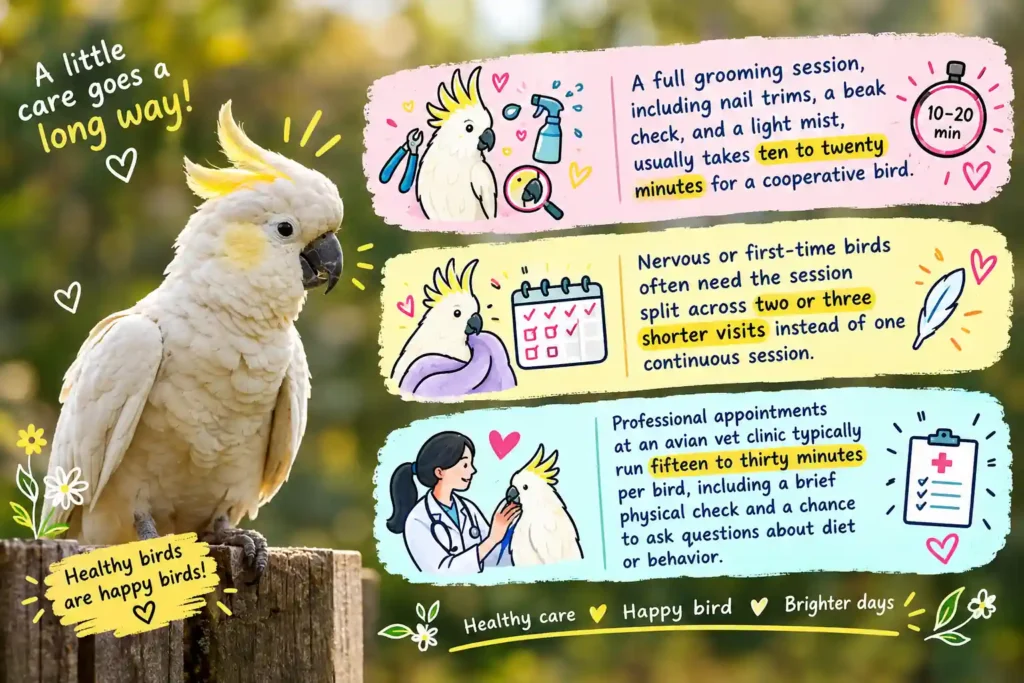
A full grooming session, including nail trims, a beak check, and a light mist, usually takes ten to twenty minutes for a cooperative bird. Nervous or first-time birds often need the session split across two or three shorter visits instead of one continuous session. Professional appointments at an avian vet clinic typically run fifteen to thirty minutes per bird, including a brief physical check and a chance to ask questions about diet or behavior.
Cockatoo Bathing
Bathing supports feather condition, skin health, and even respiratory function by reducing dust buildup in the air a bird breathes. Misting with a fine spray bottle works well for daily or near-daily use, while a shallow dish or shower perch suits birds that enjoy fuller soaking sessions. Room temperature water prevents shock, and morning baths give feathers enough time to dry fully before evening temperature drops. Soap, shampoo, or any cleaning product marketed for humans should never touch a bird’s feathers, since these strip natural oils and irritate skin.
Sunlight or a full-spectrum UVB bulb after bathing helps feather drying and supports vitamin D synthesis, which plays a role in calcium metabolism and bone health. The American Veterinary Medical Association lists proper bathing access and humidity control among basic welfare needs for companion birds, alongside nutrition, safe housing, and enrichment. Birds that resist full baths can still benefit from light misting held at a distance.
Keeping Your Cockatoo Comfortable, Long-Term
Cockatoo grooming touches every part of a bird’s daily comfort, from how it grips a perch to how well it breathes around feather dust. A complete routine covers nail length, keeping trims on a four-to-six-week rhythm to protect against overgrowth and injury. Beak care mostly means offering enough chew material, saving structural work for an avian vet when cracks or uneven growth appear.
Feather health depends on regular preening, weekly misting or bathing, and extra caution during molting when blood feathers are present. Frequency guidelines help build a realistic schedule, though individual birds vary based on activity level and perch setup. Bathing supports skin, feathers, and even respiratory comfort, provided plain water replaces any soap or shampoo. Supplies stay simple and affordable, with most home tools costing under $25 USD. Consistency, more than any single technique, keeps a companion cockatoo comfortable, healthy, and confident during handling.
Cockatoo Grooming FAQs
Is Cockatoo Grooming Necessary?
Grooming keeps nails, beak, and feathers in condition that supports safe movement and reduces injury risk. Neglecting these tasks over months can lead to overgrown nails that catch on fabric, beak cracks, or feather damage from poor preening conditions. Most companion birds need consistent attention rather than occasional emergency fixes, since small issues are far easier to correct early.
How Often Should You Bathe a Cockatoo?
Misting two to three times weekly keeps feathers in good condition for most cockatoos, with a full bath or shower session offered weekly. Birds housed in dry climates or heated homes often benefit from more frequent misting to offset low humidity indoors.
Do Cockatoos Need Their Nails Trimmed?
Nails typically need trimming every four to six weeks, though active birds with textured perches may go longer between sessions. Signs like clicking on hard floors or nails curling under the foot signal that a trim is due sooner rather than later.
Do Cockatoos Need Their Beaks Trimmed?
Beaks rarely need trimming if birds get enough safe chew material like wood, cardboard, and mineral blocks, since normal wear keeps pace with growth. Uneven wear, cracks, or overgrowth should be checked by an avian vet rather than filed at home, since misjudging the shape can cause lasting damage.