
If you’ve got a Labrador, you already know, they love mud, water, and anything that smells terrible. So the question of how to bathe and brush a Labrador Retriever properly comes up a lot. And honestly, most owners either do it too often or not enough. Getting this routine right matters more than people think.
When you bathe and brush a Labrador Retriever on the right schedule, you reduce shedding, avoid skin issues, and keep your dog genuinely comfortable, not just clean.
Why Regular Bathing and Brushing Matters for Labradors
Labs have a double coat, a soft, dense undercoat, and a shorter, water-resistant outer layer. That combination is great for swimming and cold weather, but it’s a disaster if you skip grooming. Dead hair builds up, moisture gets trapped close to the skin, and you end up with a dog that smells like a wet sock even when dry.
Regular brushing also spreads natural oils through the coat, which actually keeps their fur healthy without needing extra products. And because Labs are prone to ear infections and weight-related skin fold issues, grooming time gives you a chance to catch problems early.
Understanding a Labrador Retriever’s Coat Type
According to the American Kennel Club (AKC), Labrador Retrievers have a short, dense double coat that’s water-resistant by design. The outer coat repels dirt and light moisture, while the undercoat acts as insulation. This means Labs don’t need frequent baths, but they do need consistent brushing, especially during shedding season.
How Often Should You Bathe a Labrador Retriever?
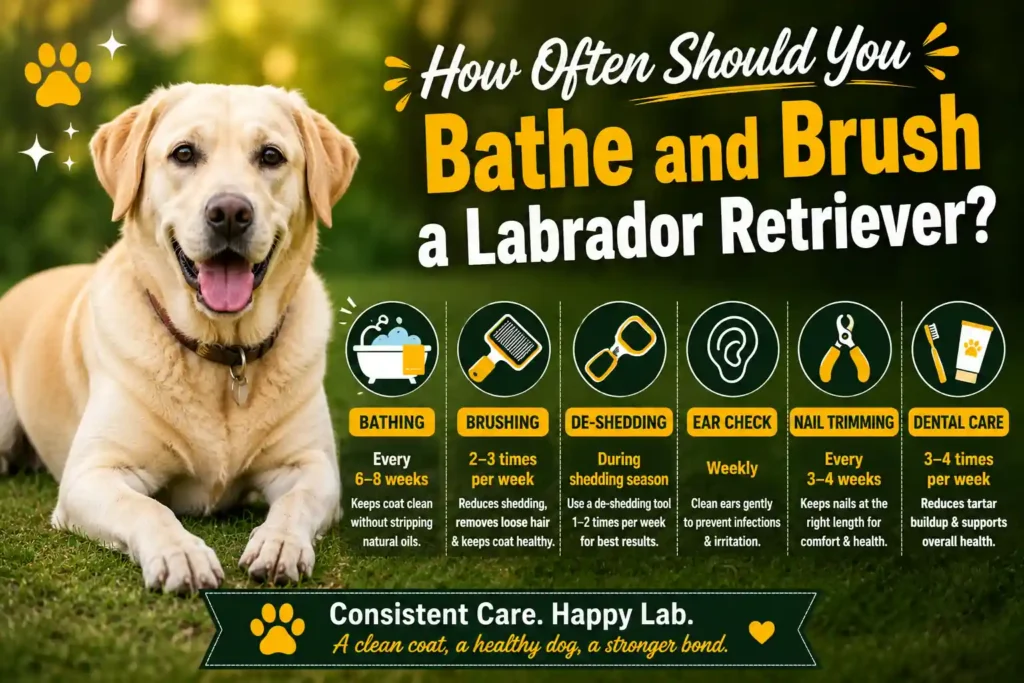
For most Labs, a bath every 4 to 6 weeks is the sweet spot. If your dog is mostly indoors and not rolling in things constantly, you can stretch it to 8 weeks without any problems. The goal is to clean without stripping the coat of its natural oils.
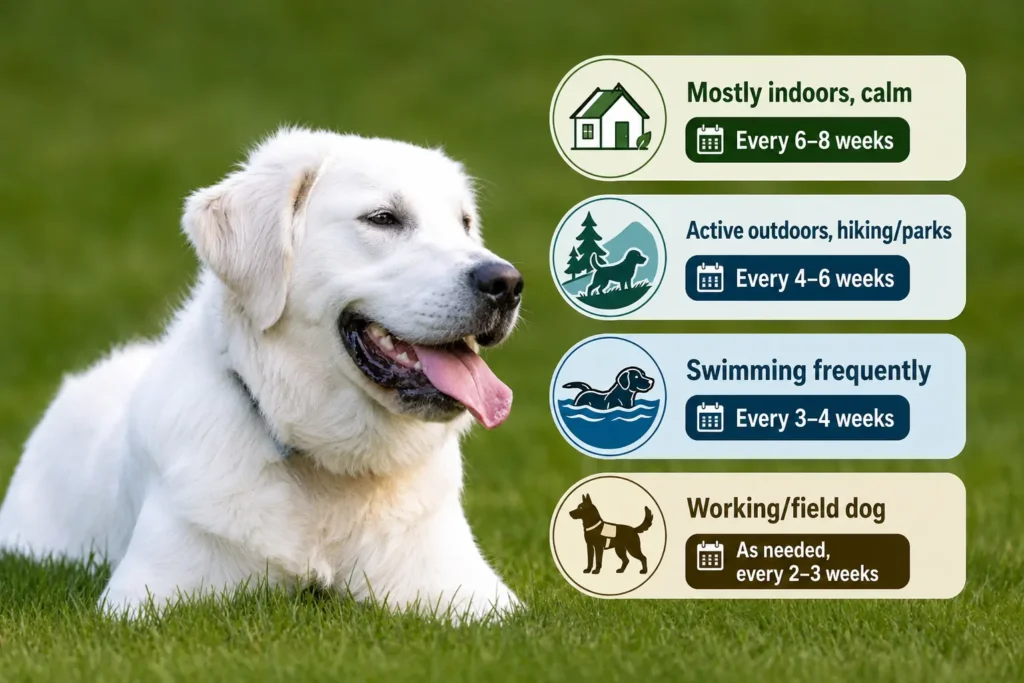
Here’s a quick breakdown based on lifestyle. Use this to find the right bath frequency for your Lab:
| Lifestyle / Activity Level | Recommended Bath Frequency |
| Mostly indoors, calm | Every 6–8 weeks |
| Active outdoors, hiking/parks | Every 4–6 weeks |
| Swimming frequently | Every 3–4 weeks |
| Working/field dog | As needed, every 2–3 weeks |
Signs Your Labrador Actually Needs a Bath
Instead of going by the calendar alone, watch for these signs:
- A noticeable doggy odor that doesn’t go away after brushing
- Visible dirt or mud stuck in the coat
- Greasy or dull-looking fur
- Excessive scratching that isn’t allergy-related
Can You Bathe a Labrador Too Often?
Yes, and it’s a real problem. Bathing more than once every 3 weeks can strip the natural oils from a Lab’s coat, leaving the skin dry and flaky. Over time, this leads to irritation and can actually make your dog smell worse because the sebaceous glands overcompensate by producing more oil. Stick to the schedule unless there’s a real reason to deviate.
How Often Should You Brush a Labrador Retriever?
Two to three times a week is the baseline for brushing a healthy Lab. During shedding season, typically spring and fall, you’ll want to bump that up to daily brushing. It sounds like a lot, but each session only takes 10 to 15 minutes with the right brush.
This table shows what tools work best for each coat condition:
| Brush Type | Best For | Frequency |
| Rubber curry brush | Daily maintenance, loosening dirt | 2–3x weekly |
| Slicker brush | Removing loose fur, smoothing coat | 2–3x weekly |
| Deshedding tool (e.g., FURminator) | Heavy shedding periods | Daily during shedding |
| Bristle brush | Final polish, coat shine | After other brushing |
Brushing Routine for Normal Days
On regular days, start with a rubber curry brush to loosen any surface dirt, then follow up with a slicker brush to remove loose hair. Work in the direction of hair growth, and don’t press too hard; you’re moving fur, not scrubbing skin. The whole thing takes about 10 minutes.
What Changes During Shedding Season?
During spring and fall, Labs blow their undercoat, which basically means they shed massive amounts of fur over 2 to 4 weeks. Switch to a deshedding tool like the FURminator and brush daily. A 2019 study in the Journal of Veterinary Behavior found that consistent brushing during shedding periods significantly reduces household allergen load, so it’s not just about appearance.
Step-by-Step: The Right Way to Bathe a Labrador
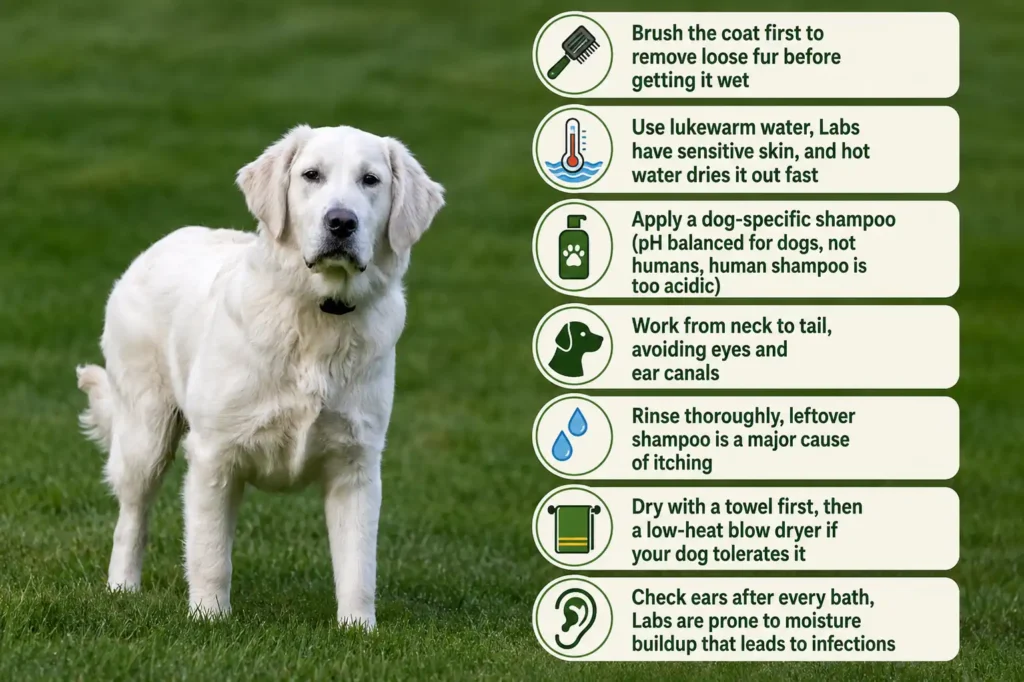
Follow these steps every time:
- Brush the coat first to remove loose fur before getting it wet
- Use lukewarm water, Labs have sensitive skin, and hot water dries it out fast
- Apply a dog-specific shampoo (pH balanced for dogs, not humans, human shampoo is too acidic)
- Work from neck to tail, avoiding eyes and ear canals
- Rinse thoroughly, leftover shampoo is a major cause of itching
- Dry with a towel first, then a low-heat blow dryer if your dog tolerates it
- Check ears after every bath, Labs are prone to moisture buildup that leads to infections
Step-by-Step: How to Brush a Labrador Without Causing Discomfort
A dog that hates being brushed is usually one that had a bad early experience. Keep sessions short and positive:
- Start when they’re calm, not right after a walk or play session
- Begin with gentle strokes using the rubber brus, this feels like a massage
- Work section by section: neck, back, sides, belly, legs, tail
- Use treats to create a positive association, especially with puppies
- Never yank through tangles, Labs rarely mat, but check behind the ears just in case
Common Bathing and Brushing Mistakes to Avoid
Even experienced dog owners make these, so it’s worth knowing:
- Using human shampoo: the pH is wrong for dogs and causes skin irritation
- Skipping the brush before a bath: wet fur mats and is harder to clean properly
- Not drying the ears: moisture trapped in the ear canal causes yeast infections
- Brushing a dirty, dry coat: this causes static and can snap the outer coat hairs
- Bathing too frequently: strips oils and leads to a dry, dull coat
Extra Grooming Habits That Keep a Labrador Healthy
How often to trim labrador nails
Trim nails every 3 to 4 weeks. If you can hear clicking on the floor when your Lab walks, they’re overdue. Long nails shift a dog’s posture and put stress on joints, especially important for larger breeds like Labs who already have a predisposition to hip dysplasia.
How to clean Labrador’s ears
Clean ears every 2 to 3 weeks using a vet-recommended ear cleaning solution. Apply to a cotton ball, never a cotton swab inside the canal. Labs’ floppy ears limit airflow, making them significantly more prone to ear infections than upright-eared breeds.
Dental Care
Brush teeth 2 to 3 times a week with dog-specific toothpaste. According to the American Veterinary Dental College, over 80% of dogs show signs of dental disease by age 3. It’s one of the most overlooked parts of grooming, and one of the most important.
Simple Weekly Grooming Schedule for a Labrador Retriever
Here’s a practical weekly grooming routine you can actually stick to:
| Day | Grooming Task | Time Needed |
| Monday | Full brush (slicker + rubber) | 10–12 min |
| Wednesday | Quick brush + check ears/paws | 8–10 min |
| Friday | Full brush + teeth brushing | 12–15 min |
| Weekend (Monthly) | Full bath + nail trim + ear cleaning | 30–45 min |
Simple Weekly Grooming Schedule for a Labrador Retriever: Read more in Stop Guessing: Here’s the Labrador Retriever Grooming Routine That Actually Works.
Final Thoughts: Finding the Right Routine for Your Labrador
There’s no single perfect answer that fits every dog. But for most Labs, bathing every 4 to 6 weeks, brushing 2 to 3 times a week, and ramping up during shedding season covers 90% of what they need. Once you get into the rhythm of it, grooming stops feeling like a chore, and your Lab will actually start enjoying it.
The most important thing is consistency. A quick 10-minute brush a few times a week does more for your dog’s coat and skin than one marathon grooming session once a month.
The Truth About Labrador Retrievers: Read more in Labrador Retriever Personality and Care Guide for First-Time Owners.
FAQs: Bathing and Brushing a Labrador Retriever
How often should I bathe my Labrador Retriever?
Every 4 to 6 weeks for most Labs. Active or outdoor dogs may need a bath every 3 to 4 weeks.
What brush is best for a Labrador’s coat?
A rubber curry brush for daily use and a deshedding tool like the FURminator during shedding season. A slicker brush works well for regular maintenance.
Can I use human shampoo on my Lab?
No. Human shampoo has a different pH level that can dry out a dog’s skin and cause irritation. Always use a dog-specific shampoo.
How do I reduce Labrador shedding?
Brush daily during shedding season (spring and fall), use a deshedding tool, and make sure your Lab gets enough omega-3 fatty acids in their diet, this directly supports coat health.
Is it okay to bathe a Labrador once a week?
Generally no. Bathing more than once every 3 weeks strips natural oils and leads to dry, irritated skin. Stick to every 4 to 6 weeks unless there’s a specific reason.