
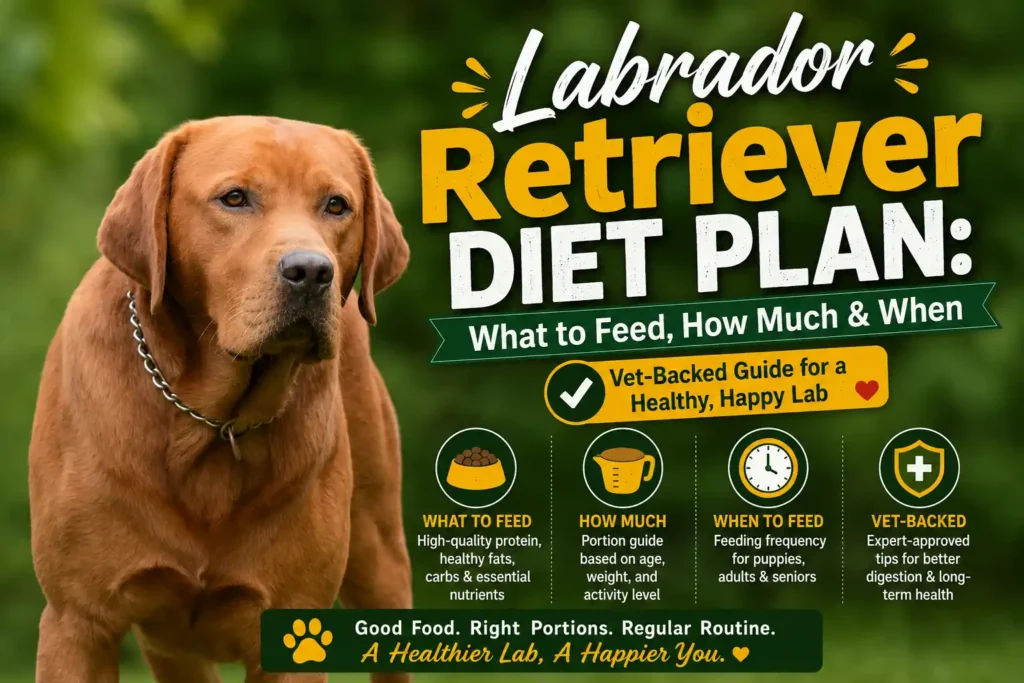
If you own a Lab, you already know, these dogs will eat anything. And that’s exactly why getting your Labrador Retriever diet plan right matters so much. Labs are genetically wired to overeat. In fact, a 2016 study from the University of Cambridge found that a variant of the POMC gene, common in Labs, directly reduces the feeling of fullness.
So no, your Lab isn’t just greedy. There’s actual science behind it. Getting your Labrador Retriever’s diet plan dialed in protects them from obesity, joint problems, and a shorter life. Let’s make it simple.
Understanding a Labrador Retriever’s Nutritional Needs
Labs are active, muscular dogs. They need a solid balance of protein, fat, and carbohydrates, plus the right micronutrients to protect their joints and coat.
- Protein (25–30%): Supports muscle mass and energy. Look for chicken, beef, or salmon as the first ingredient.
- Fat (12–16%): Fuels that famous Lab energy. Omega-3 and Omega-6 fatty acids also keep their coat shiny.
- Carbohydrates: Should come from wholesome sources like sweet potato or brown rice, not corn syrup or fillers.
- Calcium & Phosphorus: Essential for joint health, especially in large-breed puppies.
One thing I’ve noticed, talking to Lab owners, a lot of them skip checking the AAFCO nutritional adequacy statement on the bag. That tiny label tells you whether the food was actually tested for your dog’s life stage. Always check it.
Learn How Labrador Retrievers Think and Behave: Read more in Labrador Retriever Personality and Care Guide for First-Time Owners.
How Much Should a Labrador Retriever Eat?
Feeding amounts depend on age, weight, and activity level. A working Lab needs more than a couch potato Lab (and yes, those exist).
Here’s a quick snapshot of daily feeding guidelines to use as your starting point:
| Lab Weight | Daily Food (cups) | Meals Per Day |
| 20–30 lbs (puppy) | 1.5 – 2 cups | 3 meals |
| 30–50 lbs (young adult) | 2 – 2.5 cups | 2 meals |
| 50–70 lbs (adult) | 2.5 – 3 cups | 2 meals |
| 70–90 lbs (large adult) | 3 – 3.5 cups | 2 meals |
| Senior (any weight) | Reduce by 10–20% | 2 meals |
*Based on a 350–400 calorie-per-cup dry kibble. Always adjust for your specific brand.
Best Food Options for Labrador Retrievers
Dry Food vs Wet Food
Dry kibble is the go-to for most Lab owners; it’s convenient, affordable, and helps with dental health. Wet food can work well for picky eaters or seniors who need extra hydration. Many owners mix both, which is totally fine.
- Dry kibble: Better for teeth, easier to portion, longer shelf life.
- Wet food: Higher moisture content, more palatable for older or sick dogs.
- Raw diet: Gaining popularity, but needs careful planning; always consult your vet first.
For dry food, look for brands with AAFCO-certified formulas for large breeds. Royal Canin Labrador Retriever breed-specific formula and Hill’s Science Diet Large Breed are two solid, commonly recommended options.
Homemade Diet vs Commercial Dog Food
Homemade diets can be wonderful, but they’re risky without proper guidance. Most home-cooked meals miss key micronutrients like zinc, vitamin D, and calcium. If you want to go this route, work with a board-certified veterinary nutritionist. It’s worth the extra step.
Labrador Retriever Diet Plan by Age
Puppy Diet Plan (8 Weeks – 12 Months)
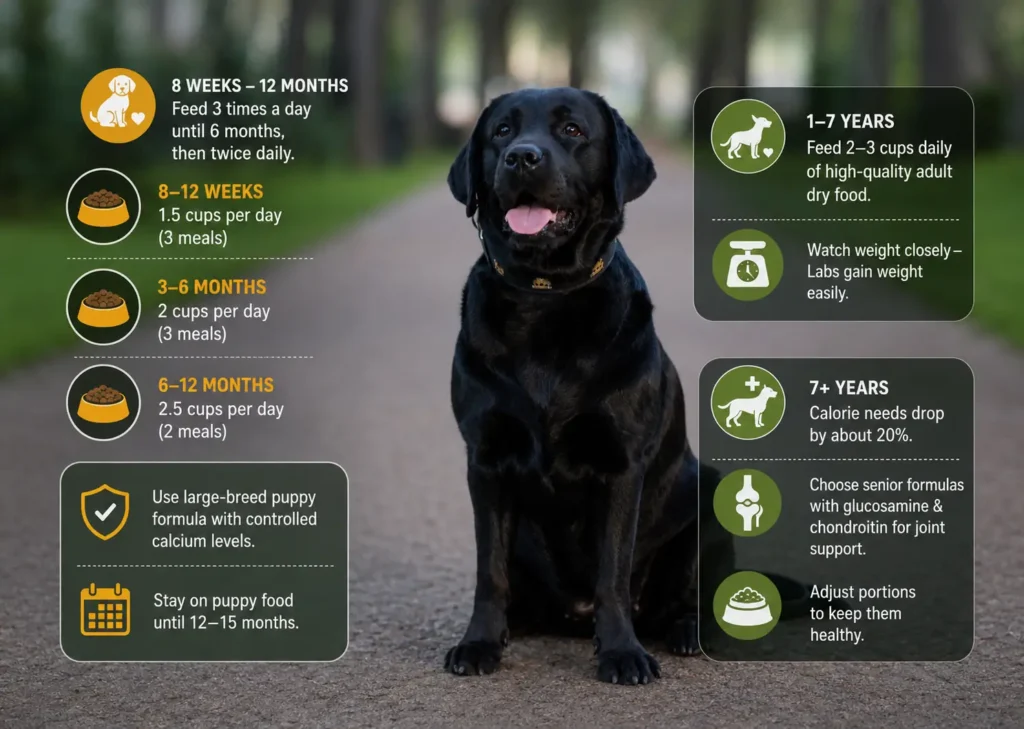
Lab puppies grow fast, almost too fast. Overfeeding during this stage can stress their developing joints. Use a large-breed puppy formula with controlled calcium levels. Feed 3 times a day until 6 months, then shift to twice daily.
- 8–12 weeks: 1.5 cups per day, split into 3 meals
- 3–6 months: 2 cups per day, 3 meals
- 6–12 months: 2.5 cups per day, 2 meals
Don’t rush to switch to adult food. Most Labs should stay on puppy food until 12–15 months.
Adult Labrador Diet Plan (1–7 Years)
This is the sweet spot. Labs are active, healthy, and (hopefully) well-trained by now. Stick to 2–3 cups of high-quality adult dry food daily. Watch weight closely because this is when Labs start padding on extra pounds without obvious signs.
Senior Labrador Diet Plan (7+ Years)
Senior Labs slow down. Calorie needs drop by about 20%. Look for senior formulas with added glucosamine and chondroitin for joint support. Wet food can be a great addition if chewing becomes harder.
Quick Answer: How Often Should You Feed a Labrador?
Adult Labradors should eat twice a day, morning and evening. Puppies under 6 months need 3 meals daily. Senior Labs do well on 2 smaller meals. Avoid free-feeding; it almost always leads to obesity in Labs.
Foods Labrador Retrievers Can Eat
Here are some safe, healthy additions you can mix into your Lab’s diet:
- Cooked chicken or turkey (boneless)
- Plain boiled rice or oatmeal
- Carrots, green beans, pumpkin (great for digestion)
- Blueberries and watermelon (without seeds)
- Plain cooked eggs, a great protein boost
Foods to Avoid Feeding Your Labrador Retriever
This section could honestly save your dog’s life. Some foods that seem harmless are genuinely dangerous for Labs.
- Grapes and raisins: linked to acute kidney failure in dogs
- Chocolate: Theobromine is toxic, especially in dark chocolate
- Onions and garlic: damage red blood cells even in small amounts
- Xylitol (sweetener in gum, peanut butter, baked goods): causes rapid blood sugar drop
- Macadamia nuts: cause weakness, vomiting, tremors
- Alcohol and caffeine: both are toxic to dogs at any dose
- Cooked bones: can splinter and cause internal damage
Quick Answer: What Is the Best Diet for a Labrador Retriever?
The best diet for a Labrador Retriever is a large-breed dry kibble with 25–30% protein, 12–16% fat, and no artificial preservatives. Look for AAFCO-certified formulas with real meat as the first ingredient. Feed twice daily and adjust portions based on your Lab’s weight, age, and activity level.
Managing Weight and Preventing Obesity in Labradors
Obesity is the #1 health issue for Labs. Studies from the
The Association for Pet Obesity Prevention (APOP) estimates that over 55% of dogs in the US are overweight. Labs top the list of affected breeds. A few extra pounds on a Lab increases the risk of hip dysplasia, diabetes, and heart disease. So this really matters.
How to tell if your Lab is overweight:
- You should be able to feel their ribs easily, not see them, but feel them
- From above, a healthy Lab has a visible waist
- From the side, their belly tucks upward slightly behind the ribcage
If you can’t feel those ribs, cut back on food by 10% and increase walks. Simple but effective.
Healthy Treat Ideas for Labrador Retrievers
Treats should make up no more than 10% of your Lab’s daily calories. That’s roughly 30–50 calories from treats for a 70 lb Lab. Baby carrots, plain air-popped popcorn, and small pieces of apple (no seeds) are all great low-calorie options.
Honestly, most Labs will lose their minds over a baby carrot like it’s filet mignon. Try it.
Quick Answer: How Many Calories Does a Labrador Need Per Day?
A typical adult Labrador (60–70 lbs) needs about 1,200–1,700 calories per day. Active or working Labs may need up to 2,000 calories. Senior Labs need around 1,000–1,200 calories. Always calculate based on your specific dog’s weight and activity, not just breed averages.
Common Feeding Mistakes Labrador Owners Make
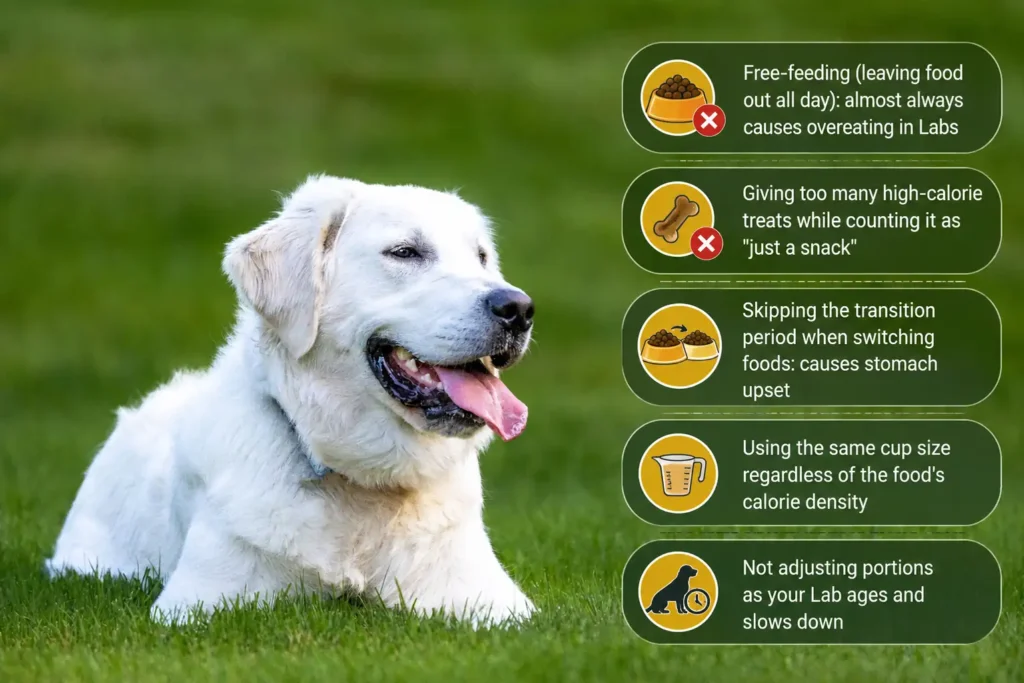
- Free-feeding (leaving food out all day): almost always causes overeating in Labs
- Giving too many high-calorie treats while counting it as ‘just a snack’
- Skipping the transition period when switching foods: causes stomach upset
- Using the same cup size regardless of the food’s calorie density
- Not adjusting portions as your Lab ages and slows down
I’ve seen this happen with a friend’s yellow Lab: they kept feeding the same amount from age 2 to age 8. By the time they realized, the dog had put on 18 extra pounds. Took almost a year to get it off safely. Slow and steady weight loss for dogs, always.
Sample Daily Feeding Schedule for a Labrador Retriever
Here’s a simple daily feeding schedule for an adult Lab (65 lbs, moderately active):
| Time | Meal / Activity | Notes |
| 7:00 AM | 1.25 – 1.5 cups dry kibble | Morning meal after a short walk |
| 12:00 PM | Optional: 1–2 carrot sticks | Low-calorie midday treat |
| 5:30 PM | 1.25 – 1.5 cups dry kibble | Evening meal |
| 8:00 PM | Optional: a small apple slice | Avoid food 2 hrs before bedtime |
Dry Food vs Wet Food vs Raw Diet: Quick Comparison
Use this table to pick the best feeding style for your Lab’s lifestyle and budget:
| Diet Type | Cost | Convenience | Best For |
| Dry Kibble | Low–Medium | Very High | Most adult Labs |
| Wet Food | Medium–High | Medium | Seniors, picky eaters |
| Raw Diet (BARF) | High | Low | Owners with time & vet guidance |
| Home-cooked | Medium | Low | Dogs with allergies (vet supervised) |
Final Thoughts: Feed Your Labrador for a Longer, Healthier Life
A well-planned Labrador Retriever diet plan is one of the best gifts you can give your dog. Feed the right amount, choose quality ingredients, watch their weight, and adjust as they age.
Labs are loyal, energetic, and loving; they deserve food that matches that energy. When in doubt, your vet is always your best resource. Don’t skip that annual check-up.
Frequently Asked Questions (FAQs)
How much should I feed my Labrador Retriever per day?
Most adult Labs need 2–3 cups of dry kibble daily, split into 2 meals. Adjust based on your dog’s weight, activity level, and the specific food’s calorie density.
What is the best food for a Labrador Retriever?
Look for a large-breed dry kibble with real meat as the first ingredient, 25–30% protein, and an AAFCO certification for your Lab’s life stage. Hill’s Science Diet Large Breed and Royal Canin Labrador formula are popular vet-recommended choices.
Can Labrador Retrievers eat rice?
Yes. Plain cooked white or brown rice is safe and easy on a Lab’s stomach. It’s often recommended during digestive upset. Don’t add salt or butter.
Why is my Labrador always hungry?
Labs carry a POMC gene variant that reduces their sense of fullness, proven by a 2016 University of Cambridge study. It’s genetic, not greed. Proper portion control and scheduled meals (not free-feeding) are key.
How do I help my overweight Labrador lose weight?
Reduce daily food by 10–15%, eliminate high-calorie treats, increase daily exercise to 45–60 minutes, and schedule a vet visit to rule out thyroid issues. Never crash-diet a dog; a slow, steady loss of 0.5–1 lb per week is safe.
At what age should I switch my Lab from puppy food to adult food?
Most Labs should transition to adult food between 12 and 15 months. Large-breed puppies grow more slowly and benefit from staying on puppy food longer than smaller breeds.