
Labradors are incredibly smart, energetic dogs, but that doesn’t mean they come pre-trained. Labrador Retriever training tips can transform an energetic puppy into a calm, obedient companion. Watching your Lab sprint across the yard, ignore every command, and then look back without a hint of guilt is something many owners know all too well. The good news? Labrador Retriever training tips don’t have to be complicated.
Labs are one of the most trainable breeds in the world; they just need the right approach from the start. These Labrador Retriever training tips will help you build a well-behaved, happy dog without turning every session into a battle of wills.
Why Early Training Makes a Big Difference for Labradors
Labs grow fast. A 10-week-old puppy that jumps on guests is cute. A 70-pound adult doing the same thing? Not so much. According to the American Kennel Club (AKC), starting obedience training between 7 and 16 weeks gives dogs the best foundation for lifelong good behavior. Early habits stick, and bad habits stick just as hard, which is why waiting until problems appear is always a bigger headache.
Understand Your Labrador’s Personality Before Training
Not every Lab is the same. Some are high-energy, food-driven, and ready to work. Others are more laid-back and get distracted easily. Before you start any training plan, spend a week just observing your dog, what excites them, what calms them, and what makes them anxious. This isn’t wasted time. It’ll save you weeks of frustration later because you’ll know exactly which rewards and techniques click for your specific dog.

The Truth About Labrador Retrievers: Read more in Labrador Retriever Personality and Care Guide for First-Time Owners.
Start With Basic Commands First
Before anything else, master the four core commands. These form the base of everything you’ll teach later.
Sit
Hold a treat close to your dog’s nose and slowly move your hand up. Their bottom naturally drops. The moment it hits the ground, say ‘sit,’ reward, and repeat. Most Labs get this in 3–5 sessions.
Stay
Ask your Lab to sit first, then open your palm in front of you and say ‘stay.’ Take one step back. If they hold, come back and reward. Add distance gradually. Don’t rush this one; it builds impulse control, which Labs desperately need.
Come
Crouch down, open your arms, and say ‘come’ in an excited voice. Never use ‘come’ when you’re about to do something they dislike (baths, nail trims). You want this command to mean good things, always.
Leave It
Hold a treat in your closed fist. When they sniff and eventually pull away, reward them with the other hand. This one is probably the most useful command you’ll ever teach a Labrador.
Here’s how long basic commands typically take to train with daily 10-minute sessions:
| Command | Average Time to Learn | Difficulty Level |
| Sit | 3–5 days | Easy |
| Stay | 1–2 weeks | Moderate |
| Come | 1–2 weeks | Moderate |
| Leave It | 2–3 weeks | Hard |
Use Positive Reinforcement Instead of Punishment
Labs respond extremely well to reward-based training. A 2021 study published in Applied Animal Behaviour Science found that dogs trained using positive reinforcement showed fewer anxiety-related behaviors and learned commands faster than those trained with punishment-based methods. Use small, high-value treats (chicken, cheese, or commercial training treats), and reward the moment, not three seconds later. Timing is everything with dogs.
Keep sessions short: 10–15 minutes max, twice a day. Labs have energy for days, but their focus drifts. End on a win, always finish with something they already know, so the session closes on a positive note.
What Is the Best Training Method for Labrador Retrievers?
The most effective method for training Labrador Retrievers is positive reinforcement, rewarding desired behaviors with treats, praise, or play immediately after they happen. Labs are highly food-motivated and respond poorly to punishment-based methods. Short sessions (10–15 minutes) twice daily, starting from 7–8 weeks of age, produce the fastest and most lasting results.
Create a Simple Daily Training Routine
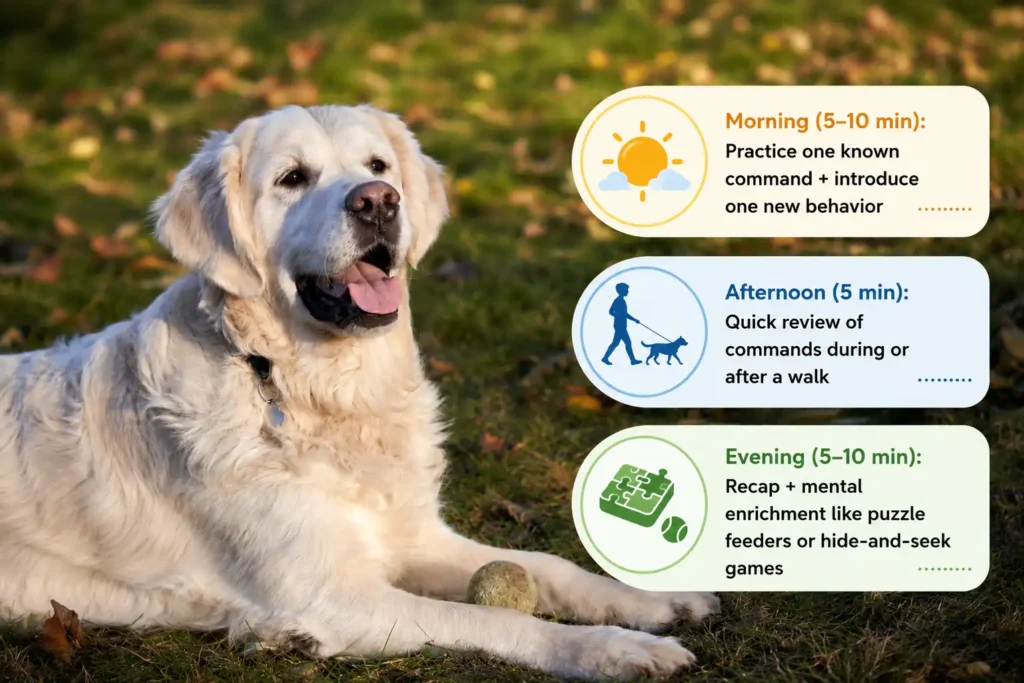
Consistency matters more than intensity. A daily 15-minute routine beats a two-hour weekend session every time. Here’s a simple structure that actually works:
- Morning (5–10 min): Practice one known command + introduce one new behavior
- Afternoon (5 min): Quick review of commands during or after a walk
- Evening (5–10 min): Recap + mental enrichment like puzzle feeders or hide-and-seek games
The key is making training feel like play, not school. Labs don’t know the difference between a game and a lesson, so use that to your advantage.
Potty Training Tips for Labrador Puppies
Potty training a Lab puppy usually takes 4–6 months with consistent effort. Take them out first thing in the morning, after every meal, after naps, and before bed. Pick one spot outside and always go there; the scent helps them understand the purpose. When they go in the right place, celebrate like it’s the greatest thing that’s ever happened.
Accidents happen. Clean them up without reacting; scolding after the fact only confuses dogs. If you catch them mid-accident, calmly say ‘outside’ and move them immediately.
A daily potty schedule for Lab puppies based on age and bladder control:
| Puppy Age | Max Bladder Hold Time | Potty Breaks Per Day |
| 8–10 weeks | 1–2 hours | 8–10 times |
| 10–12 weeks | 2–3 hours | 6–8 times |
| 3–4 months | 3–4 hours | 5–6 times |
| 5–6 months | 4–5 hours | 4–5 times |
Teach Proper Leash Walking From the Beginning
Leash pulling is the number one complaint from Lab owners, and it makes sense. These dogs are built to retrieve, not stroll. Start leash training indoors with no distractions. When they pull, stop. Don’t move until the leash is loose. The moment they return to your side, reward and keep walking. It’s slow at first, but Labs catch on fast when they realize pulling gets them nowhere.
Use a front-clip harness if pulling is severe. Tools like the PetSafe Easy Walk Harness redirect a dog’s momentum without causing pain, making loose-leash walking easier to achieve in less time.
How Do You Stop a Labrador From Pulling on the Leash?
Stop walking the moment your Labrador pulls. Stand still, call them back to your side, reward, and resume walking. Repeat every single time. Over 2–3 weeks of consistent practice, most Labs learn that a loose leash means forward movement and pulling doesn’t. A front-clip harness can speed up the process significantly.
Socializing Your Labrador With People and Other Dogs
Labs are naturally social dogs, but good socialization still needs to happen intentionally. Between 3 and 14 weeks, expose your puppy to as many different sounds, people, environments, and other animals as possible. After the 14-week socialization window closes, it’s harder (not impossible) to help them adapt to new situations without anxiety.
Puppy classes are genuinely worth it, not just for the training, but for the controlled social environment they offer. Look for classes that use reward-based methods and keep group sizes small.
Stop Common Labrador Behavior Problems Early
Jumping on People
Turn your back and cross your arms when they jump. No eye contact, no pushing down, no talking. Only give attention when all four paws are on the floor. Ask everyone in your household to do the same; inconsistency is what keeps this behavior alive.
Excessive Chewing
Labs chew because they’re bored, teething, or anxious, not to spite you. Give them appropriate outlets: Kong toys stuffed with peanut butter, bully sticks, or nylon chews. If they pick up something off-limits, trade it for a toy, and reward the swap. Scolding alone doesn’t fix chewing; redirection does.
Pulling During Walks
Already covered above, but worth repeating: stop and stand still every single time the leash goes taut. No exceptions. If you allow pulling when you’re in a hurry, you’re training them that pulling sometimes works, and sometimes is enough for a dog to keep trying.
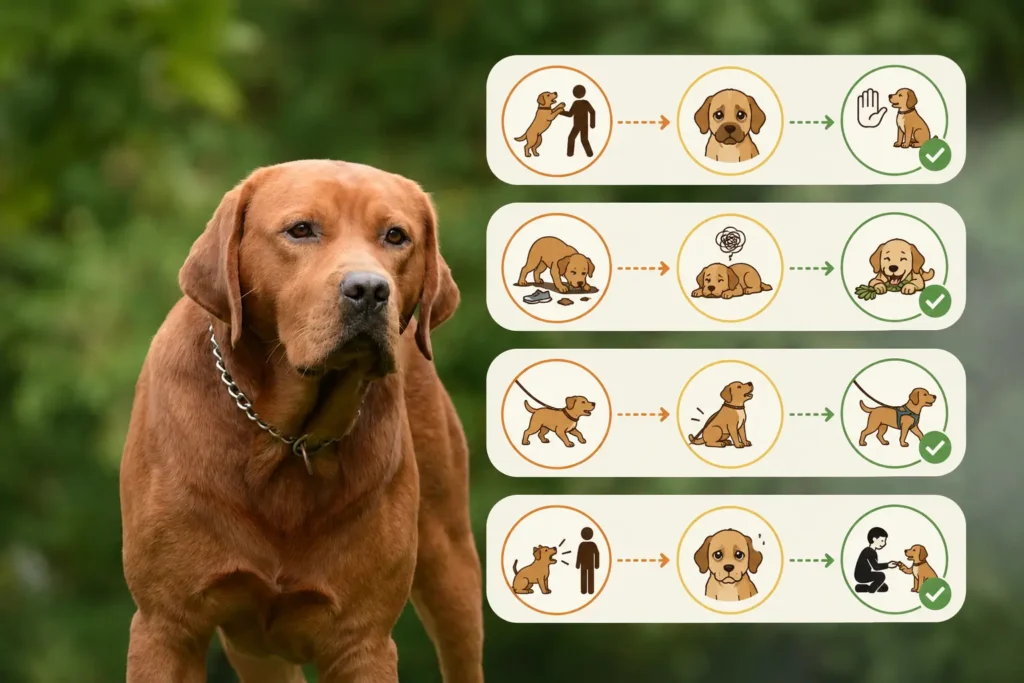
Quick reference for common Lab behavior problems and the fixes that work:
| Behavior Problem | Root Cause | Effective Fix |
| Jumping on people | Seeking attention | Ignore until 4 paws down, reward calm greeting |
| Excessive chewing | Boredom or teething | Redirect to chew toys, increase exercise |
| Pulling on a leash | High energy, no training | Stop-and-wait method + front-clip harness |
| Barking at strangers | Lack of socialization | Controlled exposure + counter-conditioning |
Mental Stimulation and Training Games for Labradors
A tired Lab is a well-behaved Lab, and mental exhaustion is just as powerful as physical exercise. Try these activities between training sessions:
- Nose work: hide treats around the house and let them find them
- Puzzle feeders: Use a Licki Mat or Kong instead of a regular bowl
- ‘Which hand?’ game: hide a treat in one hand, let them sniff and choose
- Fetch with a twist: ask for a ‘sit’ or ‘stay’ before each throw
Training Mistakes Labrador Owners Should Avoid
Even well-meaning owners accidentally undo their own progress. The most common mistakes include:
- Training too long: anything over 15 minutes, and a Lab’s attention starts drifting
- Inconsistent commands: saying ‘down’ sometimes and ‘off’ other times confuses them
- Rewarding the wrong moment: if you treat too late, you’re rewarding whatever they did last
- Skipping the boring stuff: most owners practice ‘sit’ endlessly, but skip ‘stay’ and ‘leave it,’ which are genuinely more useful
How Long Does It Take to Train a Labrador Retriever?
Basic commands: 2–4 weeks. Solid leash manners: 1–3 months. Full obedience: 4–6 months. These are realistic timelines for owners who train daily, not once a week. Every dog is different, and some Labs (especially those adopted as adults with no prior training) may take longer. That’s completely fine. Progress, not perfection, is the goal.
Consistency Is the Secret to a Well-Trained Labrador
The best Labrador Retriever training tips all come back to the same thing: show up every day, keep it positive, and don’t expect overnight results. Labs want to please you; they just need clear signals about what pleases you. Start early, stay consistent, and celebrate small wins. You’ll have a well-trained companion faster than you think.
Frequently Asked Questions
At what age should I start training my Labrador?
Start as early as 7–8 weeks old. Puppies can begin learning simple commands like sit and come almost immediately. The earlier you start, the easier it is to build good habits before bad ones develop.
How many training sessions should a Labrador have per day?
Two sessions per day of 10–15 minutes each is ideal. Short and frequent beats long and infrequent every time with Labs.
Is it hard to train a Labrador Retriever?
Not at all, Labradors consistently rank among the top 10 most trainable dog breeds according to canine behaviorist Stanley Coren’s research. They’re eager to please and highly food-motivated, which makes positive reinforcement very effective.
Can I train an older Labrador, or is it too late?
It’s never too late. Adult Labs can learn new commands just as well as puppies; it may just take a little more repetition, especially if they’ve had inconsistent training before. Many rescue Labs go on to become excellent, obedient dogs with patient training.
What treats work best for Labrador training?
Small, smelly, high-value treats work best: cooked chicken, small cheese cubes, hot dog slices, or commercial training treats like Zuke’s Mini Naturals. Keep treats small (pea-sized) so you can reward frequently without overfeeding.