
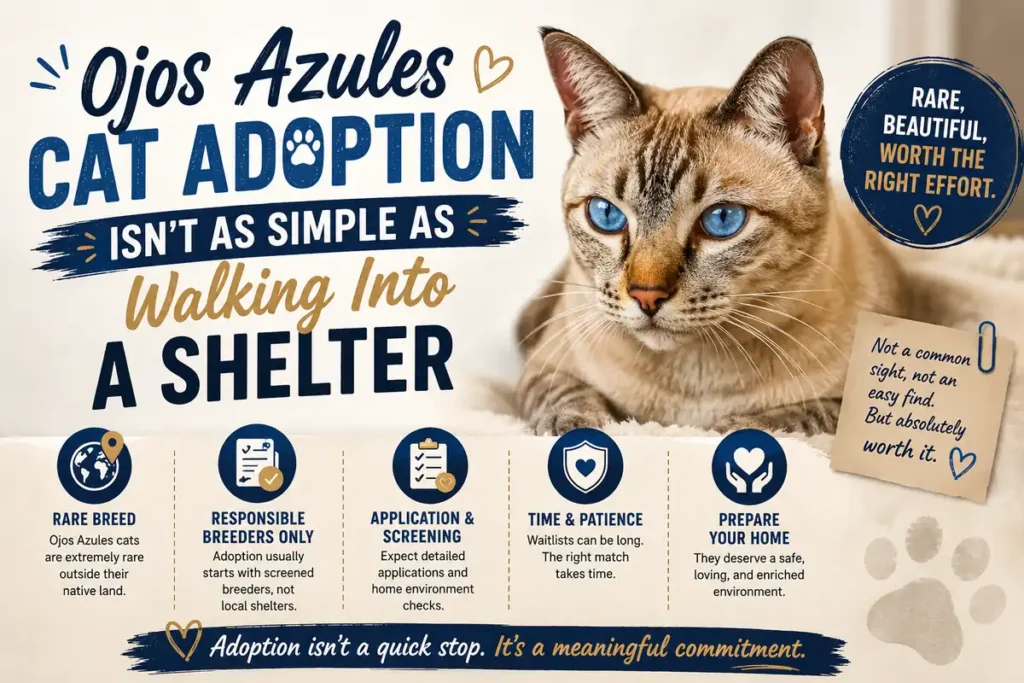
Ojos azules cats first appeared in New Mexico in 1984, when a tortoiseshell cat named Cornflower gave birth to kittens with deep blue eyes and no white fur, a combination rarely seen in nature. This makes ojos azules cat adoption different from adopting other blue-eyed breeds, because the gene causing the eye color is not linked to deafness the way it is in white cats.
However, breeders soon found that kittens with two copies of the gene often developed serious skull and health problems, so ethical ojos azules cat adoption today focuses only on heterozygous cats carrying a single copy of the gene. This history is exactly why the breed stayed so rare for over 40 years, with fewer than a hundred confirmed cats existing worldwide even now.
Ojos Azules Cat Adoption: Physical Characteristics
Ojos Azules cats are medium-sized, with a graceful, well-proportioned body that’s neither bulky nor overly slender, and a build suited for climbing and quick, playful movement.
Their standout feature is the eyes: a deep sapphire to lavender-blue, sometimes appearing in an odd-eyed combination where one eye is blue and the other green, gold, or amber. Almost any coat color is allowed except pure solid white, and coats can be short or long, always soft and silky to the touch.
Below is a quick snapshot of the breed’s core physical traits, since this kind of at-a-glance summary tends to answer the exact question most people are typing into Google.
| Trait | Ojos Azules Detail |
| Weight | 8-12 lbs (3.6-5.4 kg) |
| Coat length | Short or long, soft and silky |
| Coat colors | Any color/pattern except solid white |
| Eye color | Deep blue, blue-gray, or odd-eyed |
| Lifespan | 12-16 years (estimated, similar to related shorthair breeds) |
| Body type | Medium, athletic, slightly arched neck |
Personality and Temperament
Because so few Ojos Azules cats have ever been studied, breed-specific temperament data is limited. That said, owners and breeders who have worked with the cats consistently describe them as affectionate, social, and playful lap cats.
They tend to enjoy human company and don’t like being left alone for long stretches, so this isn’t a breed suited to owners who travel constantly. Many are also described as intelligent and curious, often following their favorite person from room to room. Since there’s no large population to conclude from, treat any personality claim as a general tendency rather than a guarantee.
Everything You Need to Know About Ojos Azules Cat Temperament. Read more in Ojos Azules Cat Temperament Proves Looks Can Be Deceiving.
Is the Ojos Azules Cat a Good Family Pet?
For families who do manage to find one, the Ojos Azules is generally reported to be gentle and adaptable, which makes it reasonably good with calm, respectful children. They typically get along fine with other pets when introduced properly, and their social nature makes them a decent fit for apartments with enough play and enrichment.
Because these cats are so valuable and rare, most reputable sources caution against homes with very young children or a chaotic environment, simply to reduce the risk of injury to an irreplaceable, one-of-a-kind pet.
Ojos Azules Cat Health and Lifespan
This is the part of Ojos Azules cat adoption research that deserves the most attention. The gene responsible for the breed’s blue eyes is linked to serious health risks when two copies are inherited. Breeding two blue-eyed Ojos Azules together can cause cranial malformations and stillbirths, which is why breeders pair a blue-eyed cat with a non-blue-eyed cat, typically producing a litter that’s roughly 50 percent blue-eyed kittens without the lethal double-gene combination.
Unlike Siamese-type blue eyes, the Ojos Azules gene doesn’t appear to cause deafness, crossed eyes, or squinting on its own. Still, ask about health testing and lineage, and choose a breeder who avoids pairing two blue-eyed parents.
Discover How Long Ojos Azules Cats Can Live. Read more in Ojos Azules Cat Lifespan Hides a Genetic Risk Few Talk About.
Grooming and Daily Care
Grooming needs depend mostly on coat length rather than the blue-eye trait itself. Short-haired Ojos Azules need a light brushing once a week, while the long-haired variety benefits from two to three sessions weekly to prevent mats and tangles.
Routine care should also include regular nail trims, ear checks, and dental care, following the same general guidelines the American Veterinary Medical Association (AVMA) recommends for any domestic shorthair or longhair cat. Because the breed is so rare, it’s worth finding a vet comfortable researching unusual genetic conditions tied to the dominant blue-eye gene.
Learn How to Keep Your Ojos Azules Healthy and Well-Groomed. Read more in Ojos Azules Cat Grooming That Looks Complex but Stays Simple.
Diet and Nutrition Needs
The Ojos Azules doesn’t have any documented breed-specific dietary requirement, so standard, high-quality feline nutrition guidelines apply. A balanced, life-stage diet, fresh water, and AAFCO-approved food provide a safe nutritional foundation.
- Kittens generally need more frequent, calorie-dense meals to support growth.
- Adult cats typically do well on two measured meals a day, split to avoid overeating.
- Senior cats may need adjusted protein and calorie levels, so a vet check-in around age 7 is wise.
Because these cats are expensive and hard to replace, avoiding obesity through proper portion control is especially important for long-term health.
Ojos Azules Cat Adoption Guide
If you’re serious about pursuing ojos azules cat adoption, patience is going to be your biggest asset. This isn’t a breed you can casually pick up from a local shelter on a weekend, and rushing the process usually leads to disappointment or, worse, a scam.
Start by connecting with TICA-registered breeders who specifically work with the Ojos Azules line, and ask for documentation proving the cat’s lineage traces back to verified blue-eye genetics. Reputable breeders are transparent about health screening and willing to answer detailed questions. Because so few of these cats exist, waiting lists are common, and treating any listing that seems too easy or too cheap with real skepticism is wise.
Where to Adopt an Ojos Azules Cat
Genuine, documented Ojos Azules cats are rarely found in general shelters, since the breed is registration-only and extremely limited. Most leads come through specialty cat breed registries or dedicated breed enthusiasts.
A more realistic option is adopting a cat with striking blue eyes through the ASPCA, local rescues, or breed-specific shelters. Cat adoption search tools and TICA breeder directories are usually more productive than a general pet store or classifieds search.
Things to Know Before Adopting an Ojos Azules Cat
Before committing to ojos azules cat adoption, it helps to go in with clear eyes about what this actually involves, both financially and practically.
- Verified pedigree cats can carry a significant price tag due to extreme rarity.
- Health testing and lineage documentation should be non-negotiable.
- Waiting lists may run for months or years, not days.
- Scam listings exist, so always verify a breeder’s TICA registration directly.
- Pet insurance can help offset unexpected costs tied to genetic health monitoring.
What makes Ojos Azules unique?
The Ojos Azules is unique because its deep blue eye color is not tied to a pale or colorpoint coat, unlike Siamese-type breeds. This means a solid black, tortoiseshell, or tabby cat can still have brilliant blue eyes, a combination rarely seen elsewhere in the cat world.
How rare is the Ojos Azules cat breed?
The Ojos Azules is considered one of the rarest cat breeds on record. Only about ten confirmed cats existed in 1992, and because of the health risks tied to breeding two blue-eyed cats together, the population has stayed extremely small, with TICA maintaining it as registration-only rather than a fully developed breed.
Learn Why Ojos Azules Cats Captured So Much Attention. Read more in Ojos Azules Cats With Eyes That Break Every Rule.
How much are Ojos Azules cats?
Exact, verified pricing is hard to pin down because so few legitimate breeders exist today. Ojos Azules cats can cost from several hundred to a few thousand dollars, with prices often higher due to their rarity.
Can You Find Ojos Azules Cats in Shelters?
Realistically, no. Purebred Ojos Azules cats are seldom seen in shelters or general rescue organizations, since the breed was never widespread and formal breeding remains tightly limited.
That said, blue-eyed cats resembling the breed sometimes turn up in shelters without documentation. Using shelter search tools like Petfinder and filtering for blue-eyed cats can occasionally surface a lookalike. If genuine lineage matters, ask the shelter for proof, as breed authenticity is hard to confirm without registered breeder paperwork.
Ojos Azules Cat vs Other Blue-Eyed Cat Breeds
It’s easy to confuse the Ojos Azules with other blue-eyed cats, but the genetics behind the eye color differ between breeds. The table below lays out the key differences at a glance.
| Breed | Eye Color Cause | Typical Coat | Rarity |
| Ojos Azules | Dominant blue-eye (DBE) gene | Any color except solid white | Extremely rare |
| Siamese | Colorpoint (albinism-related) gene | Pale body, dark points | Common |
| Ragdoll | Colorpoint gene | Pale body, dark points | Common |
| White cats (general) | Dominant white gene (unrelated to DBE) | Solid white | Common, but often linked to deafness |
Ojos Azules eye color isn’t tied to a pale coat or deafness risk, making it genetically unique among blue-eyed cats.
Final Thoughts on Ojos Azules Cat Adoption
Pursuing ojos azules cat adoption isn’t like adopting a typical housecat. It’s a long game that requires patience, careful vetting of breeders, and realistic expectations about cost and availability. Love the breed’s history, but consider adopting a healthy shelter cat blue eyes or not. If you have the time to research, TICA-registered sources offer the best chance of finding a legitimate, healthy companion.
Frequently Asked Questions
Q: Is the Ojos Azules cat still recognized by TICA?
A: Yes, but only in a limited registration-only status rather than as an actively developed championship breed.
Q: Can two Ojos Azules cats be bred together safely?
A: Breeding two blue-eyed Ojos Azules cats can cause cranial deformities and stillbirths. Responsible breeders pair them with a non-blue-eyed cat.
Q: Do Ojos Azules cats have health problems related to their eyes?
A: The dominant blue-eye gene isn’t linked to deafness or vision problems, but a vet should still verify the cat’s lineage.
Q: Where can I verify a breeder is legitimate?
A: Check directly with TICA’s breeder registry and ask for documented lineage tracing back to verified blue-eye genetics before paying any deposit.