
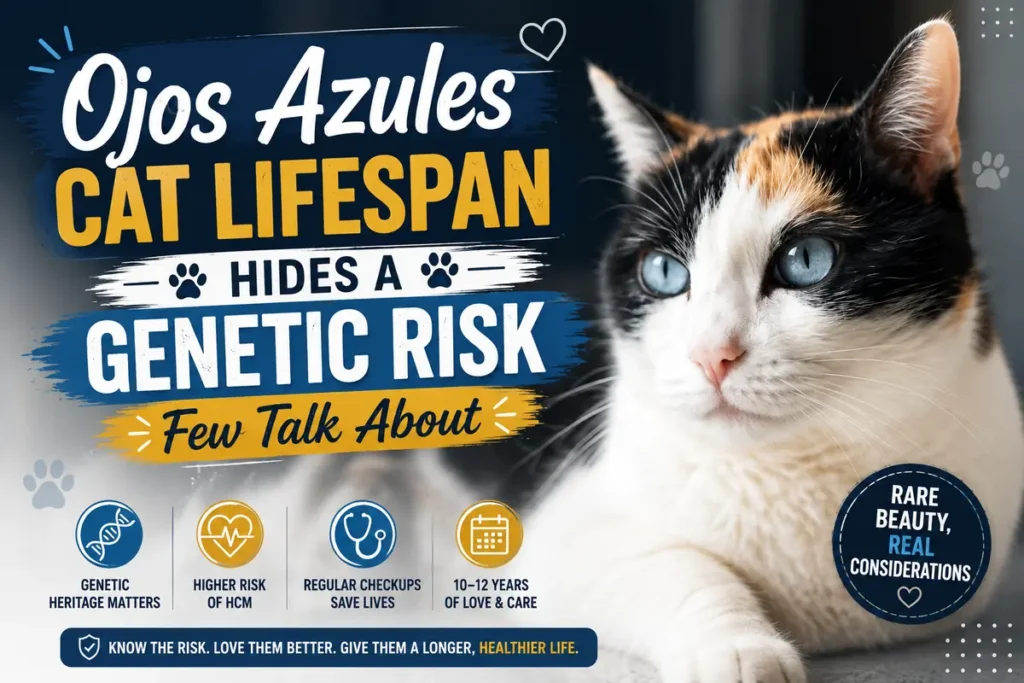
The Ojos Azules cat lifespan averages 10 to 15 years, similar to many other rare purebred cats. This range depends on whether a cat carries one or two copies of the breed’s signature blue-eye gene, since two copies often bring skull and health defects that can shorten life.
Cats with just one copy tend to stay healthy and reach the upper end of the Ojos Azules cat lifespan, especially with good food, regular vet visits, and a safe indoor home. Breeders now avoid pairing two Ojos Azules cats together for this exact reason, which helps protect both the kittens’ health and the breed’s long-term future.
What Is the Average Ojos Azules Cat Lifespan?
Most sources agree the Ojos azules cat lifespan sits somewhere between 10 and 12 years, though some well-cared-for individuals have reportedly reached 15. That range isn’t unusual for a medium-sized shorthair cat, honestly. Because the breed is so rare, though, there isn’t a large enough population to run the kind of long-term studies that give us tight numbers for breeds like the Siamese or the Maine Coon.
Vets and breed enthusiasts mostly rely on scattered case reports and anecdotal tracking instead. Still, a decade-plus lifespan puts the Ojos Azules roughly in line with the average domestic shorthair. Genetics plays the biggest role here, but everyday factors like nutrition and preventive vet visits matter just as much in practice.
How Long Do Ojos Azules Cats Live?
The Ojos azules cat lifespan averages 10 to 12 years, with some individuals living to around 15 years when kept indoors, fed a balanced diet, and given regular veterinary screening for inherited defects.
Factors That Affect the Ojos Azules Cat Lifespan
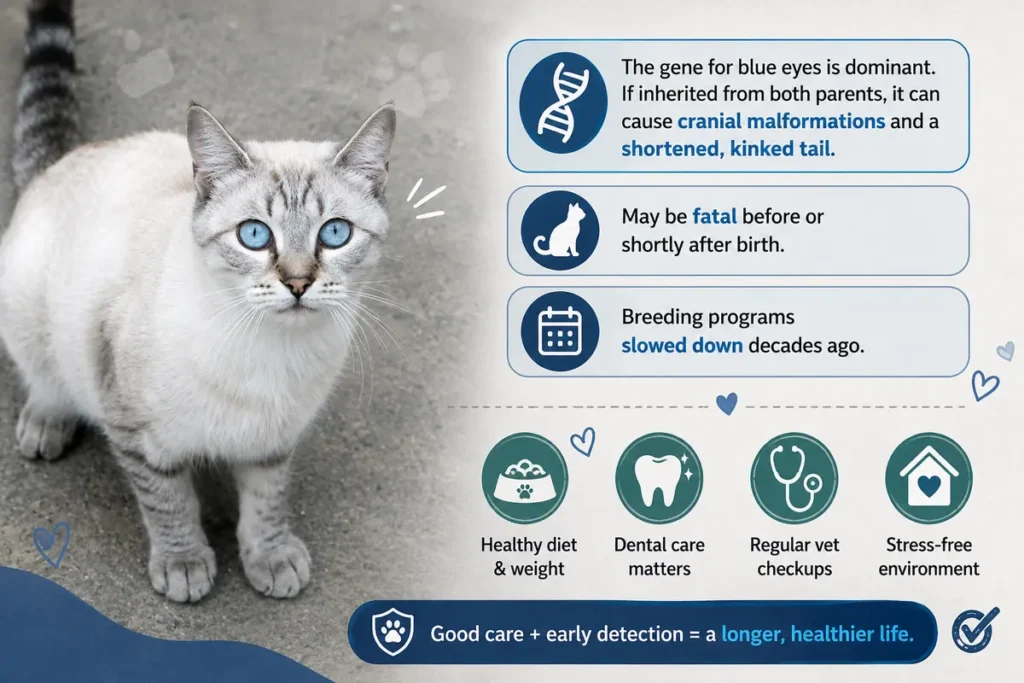
Genetics top the list. The gene behind those striking blue eyes is dominant, but if a kitten inherits it from both parents, it can cause cranial malformations and a shortened, kinked tail, sometimes fatal before or shortly after birth. That’s why breeding programs slowed down decades ago.
Beyond genetics, the usual factors apply: diet, weight, dental care, and early detection of health issues. Regular vet checkups help catch problems early, and a stress-free environment keeps a cat healthier long-term.
Indoor vs Outdoor Ojos Azules Cat Lifespan
This isn’t unique to Ojos Azules, but the gap is real. Indoor cats live significantly longer since they avoid traffic, predators, parasites, and fights. For a breed this rare and genetically fragile, staying indoors is less a preference and more a survival strategy.
An outdoor Ojos Azules faces all the usual risks on top of its existing genetic vulnerabilities. Since the population is already so small, most owners keep their cats strictly indoors, sometimes with a secure catio or leash walks. This protects both the cat and, in a small way, the breed’s future.
Common Health Issues That Can Affect Lifespan
The breed’s biggest health risk ties directly to its signature trait. When the blue-eye gene is inherited from both parents (homozygous), kittens can develop skull malformations, curled or shortened tails, and in some cases, stillbirth. Cats with just one copy of the gene (heterozygous) usually stay healthy and show no such issues.
Unlike solid white blue-eyed cats, Ojos Azules aren’t typically prone to congenital deafness, a common risk in other blue-eyed breeds. Beyond genetics, they face the usual shorthair concerns: dental disease, obesity, and age-related kidney issues.
Help Your Ojos Azules Live a Longer, Healthier Life. Read more in Ojos Azules Cats Health Problems That Come With Those Famous Blue Eyes.
Below is a quick reference for the traits that most directly shape the Ojos Azules cat lifespan.
| Trait | Detail |
| Origin | New Mexico, United States, 1984 |
| Recognition | TICA, 1991 |
| Weight | 9-12 lbs |
| Height | 8-10 inches |
| Coat length | Short or long, breed dependent. |
| Eye color | Deep sapphire blue |
| Average lifespan | 10-12 years, up to 15 with care |
| Main health risk | Cranial defects (homozygous gene only) |
Best Diet for a Longer Ojos Azules Cat Lifespan
Diet doesn’t get enough credit when it comes to cat longevity, yet it’s one of the few things an owner fully controls. Since cats are obligate carnivores, a high-quality diet built around real animal protein (not fillers or heavy grains) supports lean muscle, healthy organs, and steady energy.
Portion control matters too; extra weight strains joints and the heart over time. Fresh, filtered water supports kidney function. When choosing commercial food, look for one meeting veterinary nutrition standards, not just marketing claims.
- Choose foods listing real meat or fish as the first ingredient
- Avoid free-feeding to prevent gradual weight gain
- Offer wet food regularly to boost hydration
- Limit treats to roughly 10% of daily calories
Discover the Foods Your Ojos Azules Will Love. Read more in Best Food for Ojos Azules Cats That Actually Matches Their Rare Genetics.
How to Help Your Ojos Azules Cat Live Longer
A few habits genuinely add up: annual (later biannual) vet visits catch problems early, especially important given this breed’s genetic risk. Keeping your cat indoors removes most preventable dangers, while regular play and climbing keeps their active mind and body engaged. Dental care prevents chronic infections that quietly shorten lifespan in older cats. And honestly, just paying attention, noticing when something seems off, matters most of all.
- Schedule wellness exams at least once a year
- Keep vaccinations and parasite prevention current
- Maintain a lean, healthy body weight
- Provide enrichment through toys, cat trees, and puzzle feeders
Senior Ojos Azules Cat Care and Aging Signs
Cats are typically considered senior around age 11, and this breed is no exception. Aging often brings subtler symptoms than people expect, so it helps to know what to watch for before it becomes urgent.
Here’s a snapshot of common aging signs by life stage, useful for tracking changes over time.
| Life stage | Approx. age | Signs to watch for |
| Mature adult | 7-10 years | Slight weight gain, less activity |
| Senior | 11-14 years | Stiffness, dental wear, coat changes |
| Geriatric | 15+ years | Reduced appetite, vision or hearing loss |
Weight loss, increased thirst, or sudden behavior changes in an older cat should always prompt a vet visit rather than a wait-and-see approach. The American Association of Feline Practitioners recommends senior cats receive veterinary exams twice yearly, since health can shift quickly in later life stages. Comfortable bedding, easy litter box access, and shorter but more frequent play sessions all help senior Ojos Azules cats stay comfortable and engaged well into old age.
What Colour Eyes Does an Ojos Azules Cat Have?
The name says it all, more or less. “Ojos Azules” translates from Spanish to “blue eyes,” and this breed’s defining feature is a deep, saturated sapphire-blue eye color that shows up regardless of coat pattern or color. That’s actually the unusual part. Most blue-eyed cats, like the Siamese, only carry blue eyes alongside specific coat genes.
The Ojos Azules gene, though, operates independently, meaning you can see those piercing blue eyes on a tabby, a tortoiseshell, or a solid black cat alike. The only coat color it doesn’t appear with is solid white, since that combination hasn’t been documented in the breed.
Meet the Rare Cat Famous for Its Extraordinary Eyes. Read more in Ojos Azules Cat Eyes That Look Unreal but Are Natural.
What Color Are Ojos Azules Cat Eyes?
Ojos Azules cats have deep sapphire-blue eyes caused by a dominant gene unrelated to coat color, meaning the trait can appear on almost any coat pattern except solid white.
How Rare Is the Ojos Azules Cat Breed?
Genuinely, almost impossibly rare. The breed traces back to a single tortoiseshell feral cat named Cornflower, discovered in a New Mexico colony in 1984. When Cornflower was bred to unrelated males, her kittens inherited the same striking blue eyes, proving the trait was dominant and heritable. The International Cat Association (TICA) officially recognized Ojos Azules in 1991, but breeding slowed dramatically after the homozygous gene problems came to light.
By 1992, only around ten known individuals existed, and current population estimates remain essentially unknown. Interestingly, a cat with the same trait later turned up in New South Wales, Australia, with no connection to the original bloodline, suggesting the mutation can arise independently rather than only through direct lineage.
See What Makes the Ojos Azules Breed So Rare and Fascinating. Read more in Ojos Azules Cat History Starting From a Single Stray in Mexico.
How Rare Is the Ojos Azules Cat?
The Ojos Azules is one of the rarest recognized cat breeds in the world, with roughly ten known individuals documented in the early 1990s and no reliable population estimate available since.
Rare Ojos Azules Cat: What Makes It Unique?
Beyond their striking eyes and rarity, Ojos Azules cats surprise people with their warmth. Owners describe them as affectionate, loyal, and playful well into adulthood, with strong climbing skills and a natural hunting instinct, so tall cat trees and interactive toys are a must.
Since so few exist, most knowledge comes from dedicated owners rather than formal studies, and finding one is genuinely difficult. If you do come across one, expect a long waitlist rather than a quick adoption.
Ojos Azules Cat Lifespan Compared to Other Cat Breeds
Seeing the numbers side by side helps put the Ojos Azules cat lifespan in perspective against more familiar breeds.
| Breed | Average lifespan |
| Ojos Azules | 10-15 years |
| Siamese | 12-15 years |
| Maine Coon | 12-14 years |
| Domestic Shorthair | 12-15 years |
| Sphynx | 9-13 years |
As the table shows, the Ojos Azules cat lifespan lands comfortably within normal feline range, neither unusually short nor exceptionally long. That’s somewhat reassuring, since it suggests the breed’s genetic quirks affect specific kittens rather than shortening the species-wide average. Cats that avoid the homozygous gene combination tend to age at a pace similar to any healthy shorthair breed.
Ojos Azules Cat Lifespan: What It All Comes Down To
The Ojos Azules cat lifespan, roughly 10 to 15 years, largely comes down to genetics and everyday care working together. As long as breeders avoid pairing two carriers of the blue-eye gene, these cats tend to live full, healthy lives comparable to any other shorthair breed. With regular vet visits, a quality diet, an indoor lifestyle, and a bit of attentive care, owners lucky enough to share their home with this rare breed can help their Ojos Azules thrive well into their senior years.
Explore the History, Traits, and Rarity of Ojos Azules. Read more in Ojos Azules Cats With Eyes That Break Every Rule.
FAQs About Ojos Azules Cat
How long do Ojos Azules cats typically live?
Most Ojos Azules cats live between 10 and 12 years, with some reaching 15 years under excellent care.
Why is the Ojos Azules cat lifespan hard to pin down exactly?
Because the breed is extremely rare, there isn’t a large enough population for researchers to gather solid long-term statistics.
Does the blue-eye gene shorten the Ojos Azules cat lifespan?
Only when inherited from both parents. A single copy of the gene doesn’t appear to affect lifespan or general health.
Are Ojos Azules cats prone to deafness like other blue-eyed cats?
No. Unlike solid white blue-eyed cats, Ojos Azules cats don’t typically experience congenital deafness.
What is the biggest factor in helping an Ojos Azules cat live longer?
Consistent veterinary care combined with an indoor lifestyle and a high-quality, protein-rich diet.
How rare is the Ojos Azules cat breed today?
Extremely rare. Only about ten individuals were documented in 1992, and no reliable current population figures exist.
Do Ojos Azules cats come in different coat colors?
Yes, virtually any coat color or pattern except solid white can appear alongside the breed’s signature blue eyes.