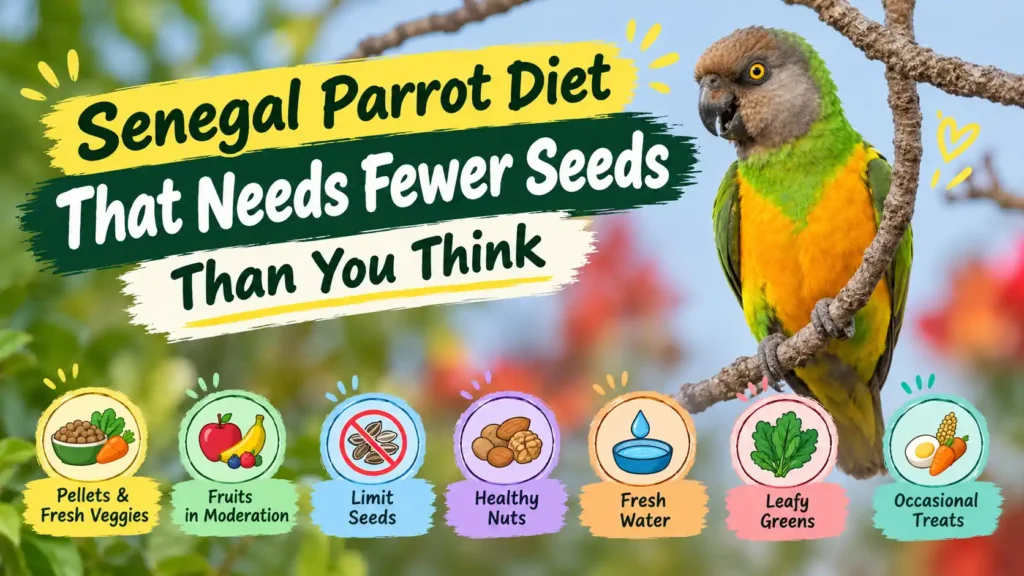
A healthy Senegal Parrot Diet should be about 60 to 70 percent high-quality pellets, 20 to 30 percent fresh vegetables with a little fruit, and only 5 to 10 percent seeds and nuts. Pellets provide balanced vitamins and minerals in every bite. Seeds are high in fat, so when they fill most of the bowl, they can cause obesity, low vitamin A, and liver problems. Dark leafy greens, carrots, sweet potato, bell peppers, and broccoli add fiber and natural color to the bowl. Fruits like apples, mango, and berries are best in small portions because of their sugar.
Change the water every day, and offer fresh food twice a day, removing any wet items after a few hours so they do not spoil. Avocado, chocolate, caffeine, onion, garlic, alcohol, salty snacks, and apple seeds are toxic or unsafe, so keep them away from your bird. If you follow this Senegal Parrot Diet plan and switch foods slowly over one to two weeks, your parrot can enjoy stronger feathers, steady energy, and a longer life.
Senegal Parrot Diet: What Do Senegal Parrots Eat?
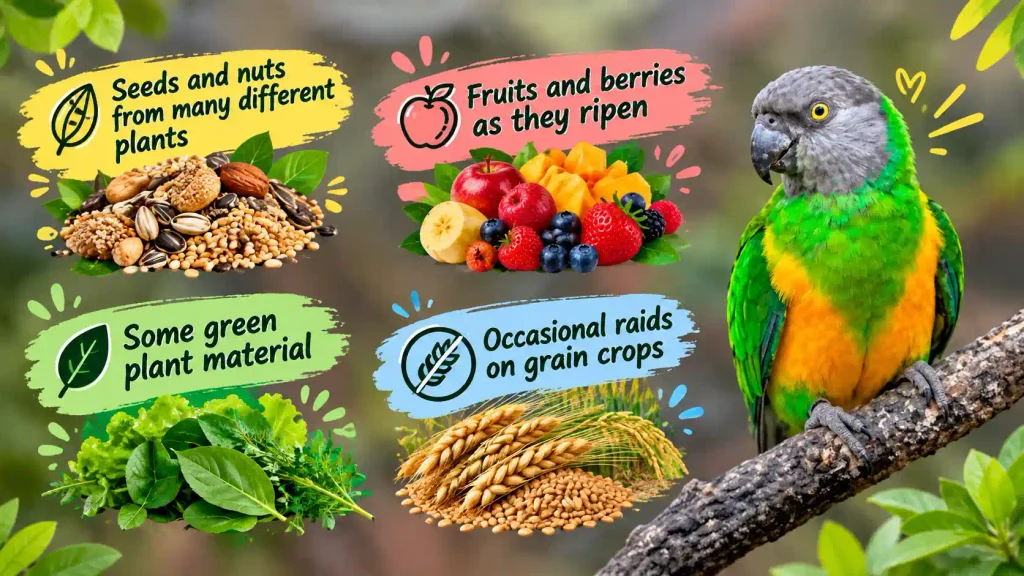
Wild Senegal parrots live in the open woodland and savanna of West Africa, where the menu shifts with the seasons. Most meals come from a short list of natural foods:
- Seeds and nuts from many different plants
- Fruits and berries as they ripen
- Some green plant material
- Occasional raids on grain crops
Captive birds cannot copy that foraging exactly. Commercial seed mixes usually hold only two to five seed types, while wild birds sample many kinds as different plants come into season. Pet birds also fly far less, so rich foods add weight quickly.
Senegal Parrot Diet
Pellets as the base, fresh produce on top, and seeds as a small extra form the plan most avian vets recommend. Individual birds differ, so a vet visit helps fine-tune the amounts.
The table below shows how a healthy daily menu usually splits up.
| Food group | Share of daily menu | Notes |
| Formulated pellets | 60% to 70% (minimum) | Ideal base for most birds |
| Vegetables, greens, and fruit | 20% to 40% | Fruit stays under 10% |
| Seeds and nuts | Small extra | One nut type per day |
| Fresh water | Always available | Changed every day |
Senegal Parrot Food
Good feeding depends as much on routine as on ingredients. Fresh water, a pellet dish, and a separate dish of chopped produce should be ready every day. Separate dishes make it easy to see what actually gets eaten, and they stop picky birds from digging out only their favorites.
What Is the Best Food for a Senegal Parrot?
The best food for a Senegal parrot is a high-quality formulated pellet making up about 60 to 70 percent of the menu, plus fresh vegetables, leafy greens, a little fruit, and only a small serving of seeds or nuts. Clean water must always be available.
A simple daily routine keeps things safe and stress-free:
- Offer pellets in one dish and fresh produce in another.
- Wash produce well and cut it into small pieces, with skins left on.
- Remove uneaten fresh food after a few hours so it cannot spoil.
- Clean food and water dishes with soap and water every day.
- Watch daily intake, because sudden appetite changes can signal illness.
Grit is unnecessary as well. Senegal parrots remove the shell before swallowing the seed kernel, and too much grit can cause problems of its own.
Senegal Parrot Pellets
Formulated pellets deliver balanced vitamins, minerals, and protein in every bite. VCA Animal Hospitals calls pellets the ideal diet for most birds and suggests a minimum of 60 to 70 percent of the menu. A Senegal Parrot Diet without them often develops nutritional gaps, because seeds alone lack calcium and vitamin A.
Pellets also stop selective eating. Every piece carries the same nutrients, so nothing gets left behind like the unloved seeds in a mix.
Smart pellet shopping is simple:
- Choose a complete adult formula from a reputable maker and follow the feeding label.
- Check the expiry date and store the bag sealed, cool, and dry.
- Skip vitamin powders unless an avian vet recommends them, since birds eating pellets plus vegetables often need none.
How Do You Switch a Senegal Parrot From Seeds to Pellets?
Patience matters most, because conversion can take days, weeks, or even months.
- Offer pellets in a separate bowl first thing in the morning, when hunger peaks.
- Cut back on seeds slowly over a few weeks while pellets stay available.
- Never mix seeds and pellets, since birds simply pick out the seeds.
- Crush pellets over moist food at first, then crush them less each time.
- Weigh the bird at least once a week, and call an avian vet if weight drops.
Senegal Parrot Seeds
Seeds are the favorite food of most Senegal parrots and, sadly, the easiest route to poor health. Sunflower seeds and peanuts are high in fat and low in calcium and vitamin A. Given a mix, birds usually pick one or two favorites, which invites malnutrition.
Seeds still earn a place as a small part of the menu. Only one type of nut should be offered per day, because heavy fat intake can raise cholesterol and harm the arteries over time.
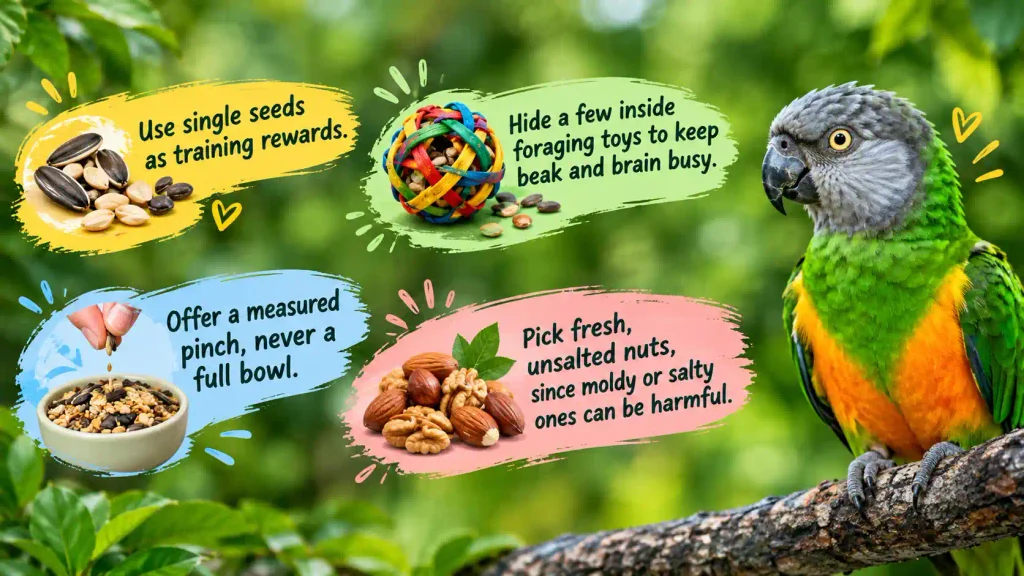
Seeds work best as tools rather than meals:
- Use single seeds as training rewards.
- Hide a few inside foraging toys to keep beak and brain busy.
- Offer a measured pinch, never a full bowl.
- Pick fresh, unsalted nuts, since moldy or salty ones can be harmful.
Senegal Parrot Fruits
Fruit brings vitamins, fiber, and welcome variety, yet natural sugar adds up fast. Veterinary guidance keeps fruit at no more than about 10 percent of a Senegal parrot’s daily intake.
Popular choices include:
- Apples, with seeds and cores removed, since apple seeds are reported to be toxic
- Grapes and berries
- Bananas and melons
- Stone fruits, with pits removed
A few habits make fruit safer:
- Wash all fruit to remove chemicals and bacteria.
- Serve bite-sized pieces in a separate dish.
- Cut back on a favorite fruit if the bird ignores everything else.
Senegal Parrot Vegetables
Vegetables deserve the largest share of fresh food, since they carry vitamins without much sugar. Dark leafy greens and colorful vegetables such as carrots are nutritional stars, while pale, watery choices like iceberg lettuce and celery offer very little.
Variety helps, and so does persistence:
- Rotate several vegetables through the week.
- Try raw and lightly steamed versions to find favorites.
- Offer a rejected food again another day, since a bird that refuses broccoli today may accept it next week.
A quick guide below pairs popular vegetables and fruits with easy serving ideas.
| Food | Type | Serving idea |
| Carrot | Vegetable | Grated or thin slices, raw or lightly steamed |
| Broccoli | Vegetable | Small florets, raw or steamed |
| Collard greens | Leafy green | Washed leaves, chopped small |
| Green beans | Vegetable | Short pieces, raw or lightly cooked |
| Peas | Vegetable | Fresh or thawed, never salted |
| Apple | Fruit | Thin slices with seeds removed |
Senegal Parrot Treats
Treats build trust and make training smoother, yet the best ones look a lot like healthy food. A cooked whole grain, a bite of fruit, or a single nut can motivate a bird as well as any sugary snack. A sensible Senegal Parrot Diet always leaves room for these rewards without letting them crowd out pellets.
A few extra points keep treats healthy:
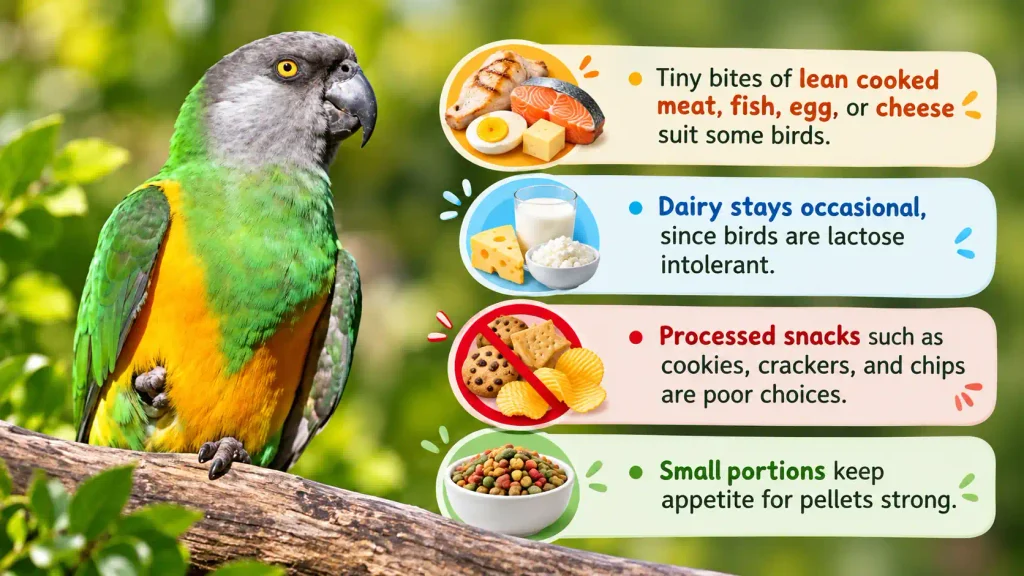
- Tiny bites of lean cooked meat, fish, egg, or cheese suit some birds.
- Dairy stays occasional, since birds are lactose intolerant.
- Processed snacks such as cookies, crackers, and chips are poor choices.
- Small portions keep appetite for pellets strong.
The table below keeps treat portions realistic.
| Treat | Serving idea | Note |
| Fruit piece | Bite-sized cube | Counts toward the 10% fruit limit |
| Single nut | Shelled and unsalted | One nut type per day |
| Cooked rice or pasta | Plain, cooled, small spoonful | No salt, butter, or sauce |
| Egg or lean meat | Tiny cooked crumb | Only now and then |
| Millet spray | Short piece | Calorie-rich, so keep it brief |
Senegal Parrot Foods to Avoid
Some human foods turn dangerous for parrots even in tiny amounts. The ASPCA highlights avocado as a particular problem for birds, and chocolate, caffeine, and alcohol carry serious risks as well.
Which Foods Are Toxic to Senegal Parrots?
Avocado, chocolate, caffeine, alcohol, onions, and apple seeds are the main foods to keep away from a Senegal parrot. Salty, sugary, and heavily processed snacks are unhealthy too, so fresh bird-safe foods are always the better pick.
Here is why the worst offenders matter:
- Avocado can cause breathing trouble and fluid buildup around the heart in birds.
- Chocolate and caffeine can trigger heart rhythm problems, tremors, and seizures.
- Alcohol depresses the nervous system, and even small sips are risky.
- Onions and garlic can damage red blood cells.
- Iceberg lettuce and celery are not toxic, but they are nutritionally poor.
A suspected poisoning is an emergency. Calling an avian vet or an animal poison hotline right away is safer than waiting for symptoms.
Senegal Parrot Diet for Babies
Baby Senegal parrots begin life on a liquid diet, fed by parents in the nest or by an experienced person using a commercial hand-feeding formula. Very young birds have special nutritional needs, so guessing is risky.
Hand-feeding mistakes can lead to aspiration, crop problems, or slow growth. Beginners should learn the technique in person from an avian vet or experienced breeder, and the Association of Avian Veterinarians offers a way to find a qualified vet.
Chicks usually leave the nest at around nine weeks and become independent at about twelve weeks, so weaning often follows a similar window, although each bird sets its own pace.
- Mix formula exactly as the label directs, and skip the microwave, since hot spots can burn the crop.
- Offer pellets and soft chopped vegetables as interest grows, and let formula amounts fall naturally.
- Hand-raised babies are generally the easiest birds to start on pellets.
- Weigh chicks regularly and contact a vet if weight stalls or drops.
Final Thoughts on Feeding Your Senegal Parrot
Wild Senegal parrots eat seeds, nuts, fruits, and plants, and that variety guides every healthy bowl at home. A steady food routine with separate dishes, fresh water, and daily cleaning keeps mealtimes safe. Pellets form the base of the menu, while seeds stay a small extra.
Fruits bring color and vitamins as long as they stay near a tenth of the daily total, and vegetables and greens deserve the biggest fresh share. Treats work best when small and healthy, and avocado, chocolate, caffeine, and alcohol must stay far away. Young chicks need expert feeding and slow weaning, guided by a vet who knows birds. A consistent Senegal Parrot Diet built on these habits supports a longer, brighter life.
Frequently Asked Questions
Can Senegal parrots live on seeds alone?
No. Seed-only menus are high in fat and low in calcium and vitamin A, which can lead to malnutrition and a shorter lifespan. Pellets and fresh vegetables should form the core of every meal.
What fruits can Senegal parrots eat?
Apples without seeds, grapes, bananas, melons, and berries are common choices. Fruit should stay below roughly 10 percent of daily food and be served in small, washed pieces.
Can Senegal parrots eat bread, rice, or pasta?
Small amounts of plain cooked rice, pasta, or multigrain bread work as occasional treats. Salt, butter, and sauces should always be left out.
Do Senegal parrots need vitamin supplements?
Birds eating pellets and a moderate amount of fresh vegetables usually need no extra supplements. Calcium may help during egg-laying if a vet finds a deficiency, so professional advice comes first.
Can Senegal parrots eat peanuts?
Fresh, unsalted peanuts work in small amounts, but nuts are high in fat. Only one nut type per day is advised, and moldy nuts must be thrown away.