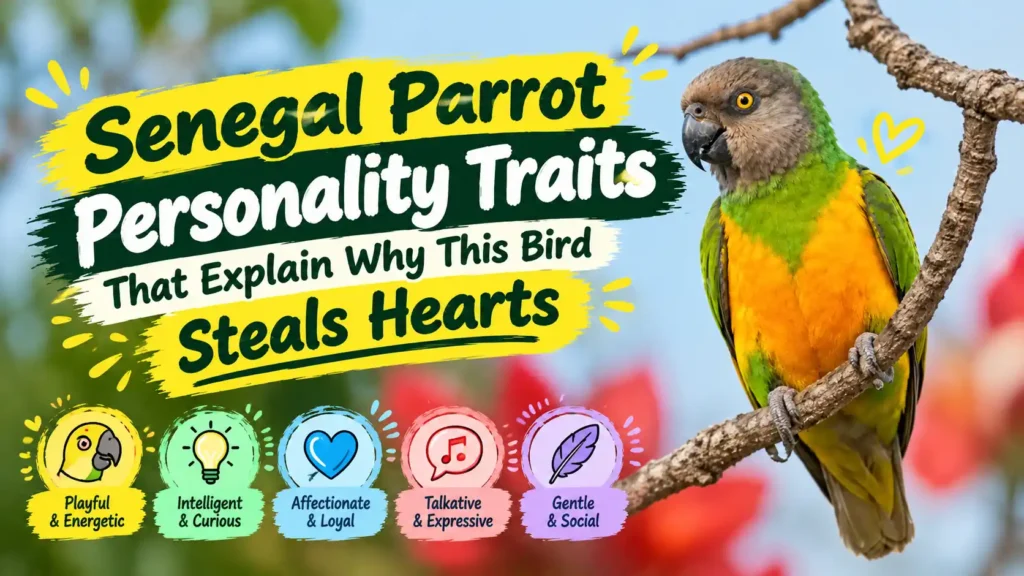
Senegal Parrot Personality is best known for one trait above all: intense loyalty to a single chosen person. These small African parrots bond deeply with their favorite human, often becoming clingy, cuddly, and protective around them, while staying reserved or even nippy with strangers. Alongside this loyalty, Senegal Parrots are highly intelligent and can get bored fast, so they need toys, training, and daily interaction to stay well-behaved.
Compared to bigger parrots, their personality also has a quieter, more independent side, meaning they enjoy affection but are equally happy playing alone for stretches. This mix of devotion, smarts, and occasional stubbornness is what makes Senegal Parrot Personality traits stand out among pet birds.
Senegal Parrot Personality Explained
Native to West Africa, the Senegal Parrot carries a reputation for being bold, opinionated, and surprisingly strong-willed for a bird under nine inches long. Weight rarely exceeds four ounces, yet confidence and attitude fill the gap that size leaves behind. Owners often describe the personality as a mix of comedian, guard dog, and toddler, all wrapped into feathers.
Popularity as a companion parrot has grown steadily over recent decades, largely because the species offers big personality without the space or noise demands of larger birds. Apartment dwellers and first-time exotic pet owners frequently gravitate toward this species for exactly that reason. Even so, a compact size never equals a low-maintenance temperament, since daily interaction and mental engagement remain non-negotiable.
Curiosity drives much of what this species does during a typical day. Toys get investigated, dismantled, and sometimes hurled across the room within minutes of arrival. Mood swings are common too, since a Senegal Parrot can seem cuddly one moment and standoffish the next, without much warning.
A quick overview helps before diving into specific behaviors, moods, and daily habits.
Senegal Parrot Personality Quick Facts
The table below offers a simple snapshot of common personality traits reported by owners and avian behavior specialists.
| Trait | Typical Pattern |
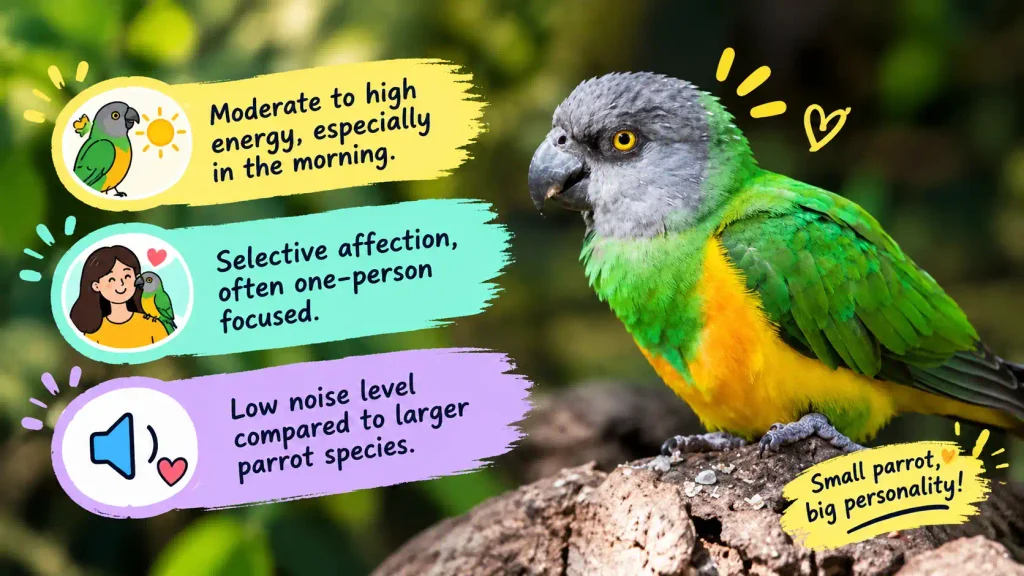
| Energy Level | Moderate to high, especially in the morning |
| Affection Style | Selective, often one-person focused |
| Noise Level | Low compared to larger parrot species |
| Independence | High, enjoys solo play |
| Trainability | Good, responds well to consistency |
| Mood Stability | Can shift quickly, especially during hormonal periods |
Senegal Parrot Temperament
Temperament in this species leans toward confident and a little stubborn. A Senegal Parrot rarely backs down from a perceived challenge, whether that challenge is a new toy, a strange noise, or an unfamiliar guest. Consistency in daily routine tends to keep temperament steady and predictable.
Sudden changes to the environment or schedule often trigger irritability. Cage location, feeding times, and sleep schedules matter more to this species than many new owners expect. A calm, structured household usually produces a calmer bird overall.
Several traits define a typical temperament profile:
- Strong opinions about handling and touch
- Preference for routine over spontaneity
- Quick recovery from startling events
- Tendency toward possessiveness over favorite people or toys
Senegal Parrot Behavior
Daily behavior includes chewing, climbing, vocalizing softly, and interacting with household members on its own terms. Destructive chewing is normal, since beak conditioning serves a biological need rather than a behavioral problem. Providing safe wood and cardboard toys usually redirects this instinct away from furniture.
Morning and early evening tend to bring the highest activity levels, mirroring natural wild patterns of foraging and social interaction. Midday often brings a quieter, more relaxed stretch, sometimes including naps on a favorite perch. Recognizing these natural rhythms helps owners plan training and play sessions around times when the bird is genuinely receptive.
Vocal behavior stays relatively quiet compared to larger parrots like macaws or cockatoos, which makes apartment living realistic for many owners. Some individuals learn to mimic a handful of words or household sounds, though speech ability varies widely between birds.
Are Senegal Parrots Affectionate?
Yes, Senegal Parrots can be deeply affectionate, though usually toward a small circle of trusted people rather than everyone in a household. Head scratches, cuddling under a shirt collar, and quiet preening sessions are common signs of a bonded bird. Affection tends to build gradually through daily interaction rather than appearing immediately after adoption.
Are Senegal Parrots Friendly?
Friendliness depends heavily on socialization during the first year of life. A well-socialized Senegal Parrot often greets familiar visitors with curiosity rather than fear. Limited early exposure to new people, however, can produce a bird that stays wary or defensive around anyone outside its immediate circle.
Are Senegal Parrots Aggressive?
Aggression is not a defining trait, but territorial behavior around cages, favorite perches, or a bonded person appears fairly often. Hormonal surges during breeding season can intensify biting, lunging, or growling-like vocalizations for a few weeks each year. Most aggression softens once the hormonal period passes and routine returns.
Are Senegal Parrots One-Person Birds?
Many Senegal Parrots do form an especially strong attachment to one household member, earning them a reputation as a one-person bird. This preference often develops naturally when one person handles feeding, training, and playtime more consistently than others. Other family members can still build friendly relationships, though the bond rarely feels as intense.
Rotating caregiving duties early in a bird’s life reduces the odds of extreme single-person bonding. Multiple people offering treats, gentle handling, and out-of-cage time helps distribute trust across the household. Waiting too long to introduce this variety often locks in a strong preference that becomes difficult to shift later.
Do Senegal Parrots Bond With One Person?
Bonding with a single person happens frequently in this species, partly due to instincts favoring a single flock partner. Jealous behavior toward other household members sometimes follows once this bond solidifies. Encouraging shared responsibilities from a young age remains the most reliable way to prevent overly exclusive attachment.
Senegal Parrot Biting
Biting ranks among the most common concerns raised by new owners, and understanding triggers makes prevention far easier. Fear, overstimulation, hormonal changes, and territorial guarding account for most biting incidents reported by bird owners and veterinary behaviorists. Reading body language before an interaction escalates prevents many bites entirely.
Common biting triggers include:
- Sudden hand movements near the face or feet
- Forced handling when the bird signals discomfort
- Hormonal aggression during breeding season
- Overtiredness or overstimulation after long play sessions
- Guarding a cage, perch, or favorite toy
Why Does My Senegal Parrot Bite?
Biting usually communicates a boundary rather than random malice. A bird that bites after prolonged handling may simply need alone time to decompress. Consistent, gentle training paired with clear warning signs from the bird itself tends to reduce biting frequency significantly over time.
Senegal Parrot Jealousy
Jealousy shows up as blocking access to a favorite person, lunging at a partner or child who approaches too closely, or displaying agitated body language when attention shifts elsewhere. This behavior connects directly to the strong one-person bonding tendency described earlier. Left unaddressed, jealousy can escalate into more frequent biting or territorial aggression.
Reducing jealous behavior involves spreading attention across the household rather than reinforcing exclusive bonding. Short, structured sessions with multiple family members help normalize sharing attention over time. Professional guidance from an avian behavior consultant can help with more severe or persistent cases.
Recognizing early warning signs, such as stiff posture near a rival for attention, allows an owner to redirect focus before a lunge or bite occurs.
Senegal Parrot Intelligence
Cognitive ability in this species ranks quite high among companion parrots, comparable in many ways to species several times its size. Problem-solving toys, foraging puzzles, and basic training exercises tend to hold attention far longer than simple perches or mirrors. Boredom from insufficient mental stimulation often shows up as feather plucking, screaming, or destructive chewing.
Training sessions work best when kept short, positive, and consistent. Target training, simple tricks, and recall exercises build both intelligence and trust simultaneously. Reward-based methods using favorite treats or praise outperform punishment-based approaches by a wide margin, according to general avian behavior guidance.
Mental stimulation shapes the Senegal Parrot Personality just as much as genetics does, since an under-stimulated bird often becomes withdrawn or destructive. Rotating puzzle feeders, teaching new tricks, and varying daily routines keep a sharp mind satisfied. Owners who invest time in training generally report calmer, more predictable companions.
Are Senegal Parrots Playful?
Playfulness runs high in Senegal Parrots, especially with foot toys, bells, and items that can be shredded or tossed. Solo play often satisfies much of this need, unlike species that demand constant interactive engagement. Rotating toys weekly keeps novelty fresh and prevents boredom from setting in.
Senegal Parrot Socialization
Early socialization shapes adult temperament more than almost any other single factor. Gentle handling, exposure to different people, and gradual introduction to new sounds during the first several months build confidence that lasts a lifetime. Skipping this window often produces a nervous or defensive adult bird.
Ongoing socialization matters just as much as early exposure. Weekly interaction with visitors, occasional outings in a secure carrier, and varied handling routines keep social skills sharp throughout adulthood. Isolation, even unintentional, tends to increase fearfulness and territorial behavior over time.
Multi-pet households require extra care during socialization, since dogs, cats, and other birds can trigger stress if introductions happen too quickly. Supervised, gradual exposure tends to produce calmer long-term relationships between species.
Senegal Parrot Body Language
Reading body language accurately prevents most unwanted bites and helps owners respond appropriately to mood shifts. Feather position, eye pinning, and posture all communicate specific emotional states well before vocalization occurs. Learning these cues offers one of the clearest windows into the real Senegal Parrot Personality behind the feathers, since posture often reveals mood faster than sound does.
The table below breaks down common signals and what they typically mean.
| Signal | Likely Meaning |
| Eye pinning with raised feathers. | Excitement or agitation |
| Fluffed feathers, relaxed posture | Contentment |
| Flattened feathers, crouched body | Fear or defensiveness |
| Beak grinding | Relaxation, often before sleep |
| Tail fanning | Possible aggression warning |
| Wings held slightly out. | Overheating or stretching, context-dependent. |
Are Senegal Parrots Good Pets?
Companionship value runs high for owners willing to invest time in training, socialization, and daily interaction. Longevity also stands out, since a well-cared-for Senegal Parrot can live twenty-five years or longer with proper diet and veterinary care. This long commitment deserves serious consideration before adoption.
Housing needs remain modest compared to larger parrot species, though a spacious cage with horizontal bars for climbing still matters. According to the American Veterinary Medical Association, prospective bird owners should research species-specific needs thoroughly before adoption to ensure a good long-term match. Diet, enrichment, and social time all factor heavily into overall well-being.
A quick comparison helps clarify how this species fits against other popular beginner parrots.
| Factor | Senegal Parrot | Budgerigar | Cockatiel |
| Noise Level | Low | Low | Moderate |
| Lifespan | 25+ years | 5-10 years | 15-20 years |
| Bonding Style | Often one-person | Flock-oriented | Flexible |
| Space Needed | Moderate | Small | Small to moderate |
| Beginner Suitability | Moderate | High | High |
Are Senegal Parrots Good for Beginners?
Senegal Parrots suit patient beginners more than casual first-time owners, since the species demands consistent socialization and behavioral awareness. Prior small-parrot experience, or a willingness to research thoroughly, makes the transition much smoother. Impulse adoption without preparation often leads to behavioral problems that could otherwise have been prevented.
Rescue organizations and reputable breeders recognized by groups such as the World Parrot Trust can offer guidance on temperament and history before adoption. Adoption fees and purchase prices for Senegal Parrots typically range from $300 to $900 depending on age, region, and source. Veterinary checkups from an avian specialist remain essential regardless of where a bird comes from, and the Association of Avian Veterinarians offers directories to help locate qualified professionals.
Final Insights Into Senegal Parrot Personality
Bringing a Senegal Parrot home means preparing for a bird with big opinions in a small body. Senegal Parrot Temperament tends to stay confident and routine-driven, while Senegal Parrot Behavior includes plenty of chewing, climbing, and selective affection. Whether these birds feel affectionate or aggressive often depends on socialization, and many do become true one-person birds who bond intensely with a single favorite person.
Biting and jealousy usually trace back to fear, hormones, or insufficient attention-sharing rather than genuine hostility. High intelligence keeps this species playful and eager for mental challenges, while early and ongoing socialization shapes lifelong body language and trust. Reading body language closely helps prevent conflict, and understanding the full Senegal Parrot Personality before adoption leads to a far better match between bird and owner. Good pet potential remains strong for beginners who commit to patience, structure, and long-term care.
Frequently Asked Questions
Do Senegal Parrots like to cuddle?
Many do enjoy cuddling with a trusted person, though preferences vary widely between individual birds.
How long do Senegal Parrots live?
A well-cared-for Senegal Parrot typically lives twenty-five years or longer with proper diet and veterinary attention.
Are Senegal Parrots loud?
Noise levels stay relatively low compared to larger parrot species, making them suitable for apartment living.
Can Senegal Parrots talk?
Some individuals learn a handful of words or sounds, though speech ability varies and is never guaranteed.
Do Senegal Parrots get jealous easily?
Jealousy appears fairly often, especially in birds that have bonded strongly with one household member.
What triggers Senegal Parrot biting the most?
Fear, hormonal changes, overstimulation, and territorial guarding rank among the most common biting triggers.