

Senegal Parrot size averages 9 to 10 inches from head to tail, making it one of the smaller parrot species kept as pets. An adult bird typically weighs between 120 and 170 grams, roughly the same as a deck of playing cards, with males often falling on the heavier end of that range.
The wingspan stretches close to 15 inches, which gives this small bird surprisingly strong and steady flight. Body shape plays a big role in Senegal Parrot size too, since the short tail and stocky, round build make the bird look even more compact than its length suggests. This small frame reaches full adult size by around one year of age, though the deep green, grey, and orange feather colors may take a bit longer to fully develop.
Senegal Parrot Size and Weight
Adult Senegal parrots measure roughly 9 to 9.5 inches from beak to tail tip, making them one of the more compact members of the Poicephalus genus. Weight typically ranges between 120 and 170 grams, with most healthy adults settling around 140 to 160 grams. A relatively large head and thick beak give the bird a stockier look than its modest length suggests. Short, broad tail feathers add to a compact, rounded silhouette rather than the long tapering tail seen on conures or macaws. Bone structure stays dense and muscular, which is one reason the species feels surprisingly heavy when it perches on a hand.
Several factors shape final measurements more than owners often expect:
- Genetics from parent birds, which sets the baseline range for length and frame
- Diet quality during the first year, especially protein and calcium intake
- Daily exercise and flight time, which builds lean muscle rather than fat
- General health, since chronic illness or parasites can stunt normal growth

Senegal Parrot Size Quick Facts
The table below gathers the core measurements new owners search for most often, pulled from established aviculture references.
| Trait | Typical Range |
| Length | 9 to 9.5 inches (23 cm) |
| Weight | 120 to 170 grams (4.2 to 6.0 oz) |
| Wingspan | Around 6 inches when folded against the body |
| Lifespan | 25 to 30 years, up to 50 in well kept captivity |
| Sexual maturity | Around 2 to 4 years of age |
Senegal Parrot Length
Beak to tail length stays fairly consistent across the species, with most birds falling between 9 and 9.5 inches. Genetics plays the largest role in final length, though nutrition during the first year also shapes overall body proportions. Breeders and rescue organizations rarely see dramatic length differences between individual birds once they reach maturity. A tape measure run from the top of the head to the tip of the longest tail feather gives the most accurate home reading.
Senegal Parrot Weight
Healthy weight depends on diet, activity level, and genetics rather than length alone. A bird eating a balanced pellet and vegetable diet tends to sit near the middle of the 120 to 170 gram range. Obesity remains a real risk for parrots kept in small cages without daily exercise, so tracking weight on a kitchen scale every few weeks helps catch gradual changes early.
The Association of Avian Veterinarians recommends regular weigh-ins as part of routine home health checks for pet parrots. A sudden drop or spike of ten grams or more is worth mentioning to an avian veterinarian rather than waiting out the next scheduled visit.
Senegal Parrot Wingspan
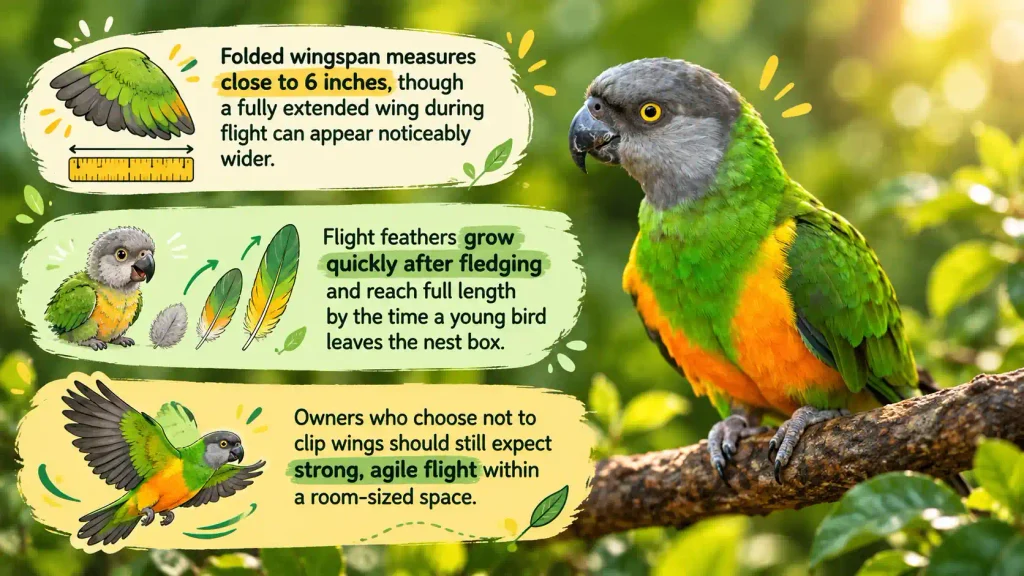
Folded wingspan measures close to 6 inches, though a fully extended wing during flight can appear noticeably wider. Flight feathers grow quickly after fledging and reach full length by the time a young bird leaves the nest box. Owners who choose not to clip wings should still expect strong, agile flight within a room-sized space. Regular flight time supports healthy muscle tone and helps keep body weight within a normal range.
How Big Is a Senegal Parrot?
A Senegal parrot reaches about 9 to 9.5 inches in length and weighs between 120 and 170 grams as an adult. That places the species firmly in the small to medium parrot category, similar in scale to a large cockatiel but noticeably stockier through the chest and head.
How Big Do Senegal Parrots Get
Hatchlings emerge blind, featherless, and weighing only a few grams, growing rapidly under parental care inside a tree cavity nest. Feathers begin filling in around three to four weeks of age, and most chicks fledge the nest by eight to nine weeks old. Full adult length and weight generally arrive within the first year, though bone density and muscle tone keep developing through early adulthood. Sexual maturity typically follows between two and four years, marking the point where hormonal behavior and full adult coloring both settle in. Growth speed can vary slightly between hand-fed and parent-raised chicks, though final adult dimensions stay nearly identical either way.
Typical growth milestones look like this:
- Week 1: blind, featherless, entirely dependent on feeding
- Week 3 to 4: pin feathers emerge across the body
- Week 8 to 9: fledging, resembling a small adult in shape
- Month 6 to 12: adult length and weight range reached
- Year 2 to 4: full hormonal and behavioral maturity
How Much Does a Senegal Parrot Weigh?
A healthy adult Senegal parrot weighs between 120 and 170 grams, roughly the weight of a smartphone. Males average slightly heavier at around 150 to 160 grams, while females often settle closer to 130 to 140 grams.
How Senegal Parrots Compare to Other Popular Pet Parrots
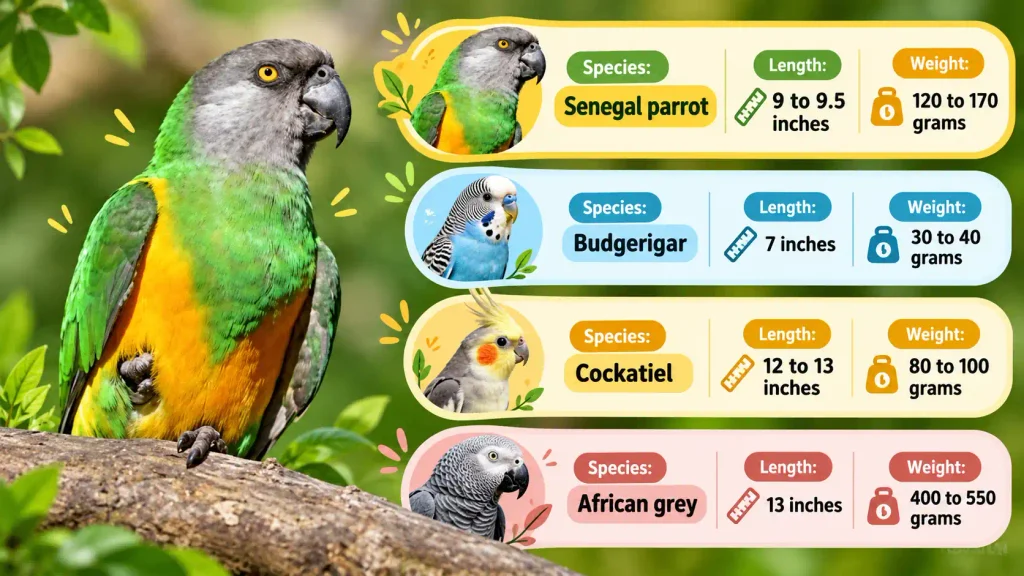
Placing this species next to more familiar birds helps put Senegal Parrot size into real-world perspective for anyone comparing pets before adoption. Budgies weigh far less and measure only about 7 inches, making a Senegal noticeably heavier and stockier despite a similar overall footprint. African greys and Amazon parrots dwarf the Senegal in both length and weight, often tripling its body mass. Cockatiels come closest in overall length but carry a much lighter, slimmer frame with a long tapered tail.
The World Parrot Trust notes that Poicephalus species like the Senegal are often chosen precisely because their compact frame suits apartment living better than larger African or South American parrots. The chart below lines up several common species side by side for a quick visual comparison.
| Species | Length | Weight |
| Senegal parrot | 9 to 9.5 inches | 120 to 170 grams |
| Budgerigar | 7 inches | 30 to 40 grams |
| Cockatiel | 12 to 13 inches | 80 to 100 grams |
| African grey | 13 inches | 400 to 550 grams |
| Sun conure | 12 inches | 100 to 140 grams |
Reasons owners often weigh size into their decision include:
- Cage footprint, since smaller birds need less floor and flight space
- Bite strength, which generally scales with beak and body size
- Noise level, though this depends more on species than sheer size
- Handling ease for households with children or limited experience
Do Male and Female Senegal Parrots Differ in Size
Visual sexing remains difficult in this species because males and females share nearly identical plumage and body shape. Senegal Parrot size does shift slightly by sex on average, with males typically outweighing females by ten to twenty grams. Females often display a slightly longer green V-shaped marking down the chest, though this trait varies enough that it cannot confirm gender alone. DNA testing or surgical sexing through an avian veterinarian remains the only reliable method for confirming a bird’s sex. Breeders relying on size alone risk pairing two same sex birds together by mistake, which can delay breeding programs for months.
| Measure | Average Male | Average Female |
| Weight | 150 to 160 grams | 130 to 140 grams |
| Length | 9 to 9.5 inches | 9 to 9.5 inches |
| Chest marking | Shorter green V shape | Slightly longer green V shape |
Senegal Parrot Growth Stages by Age
Newly hatched chicks weigh only a handful of grams and depend entirely on parents or hand feeders for warmth and nutrition. By four weeks, pin feathers cover most of the body and weight climbs toward the lower end of the adult range. Fledglings leaving the nest around eight to nine weeks already resemble miniature adults in shape, though flight muscles and coordination still need practice.
Weight and length stabilize within the adult range by roughly six months to a year, while full sexual and behavioral maturity arrives later at two to four years old. Owners raising a chick from a breeder should expect steady, visible changes week to week for the first two months, followed by a much slower pace of change afterward. Tracking Senegal Parrot size at each of these stages, rather than relying on memory, makes it much easier to spot a genuine growth problem early.
When Is a Senegal Parrot Fully Grown
Physical growth finishes earlier than most new owners expect, with skeletal length and weight reaching adult range well before the first birthday. Feather coloring continues refining slightly through the first molt, giving young birds a marginally duller appearance than seasoned adults. Behavioral and hormonal maturity lags well behind physical growth, arriving gradually between the second and fourth year of life. A bird that looks fully grown at six months may still be a year or more away from adult hormonal behavior and full confidence.
The American Veterinary Medical Association encourages annual wellness exams for pet birds, which gives owners a reliable way to track growth and catch developmental issues early.
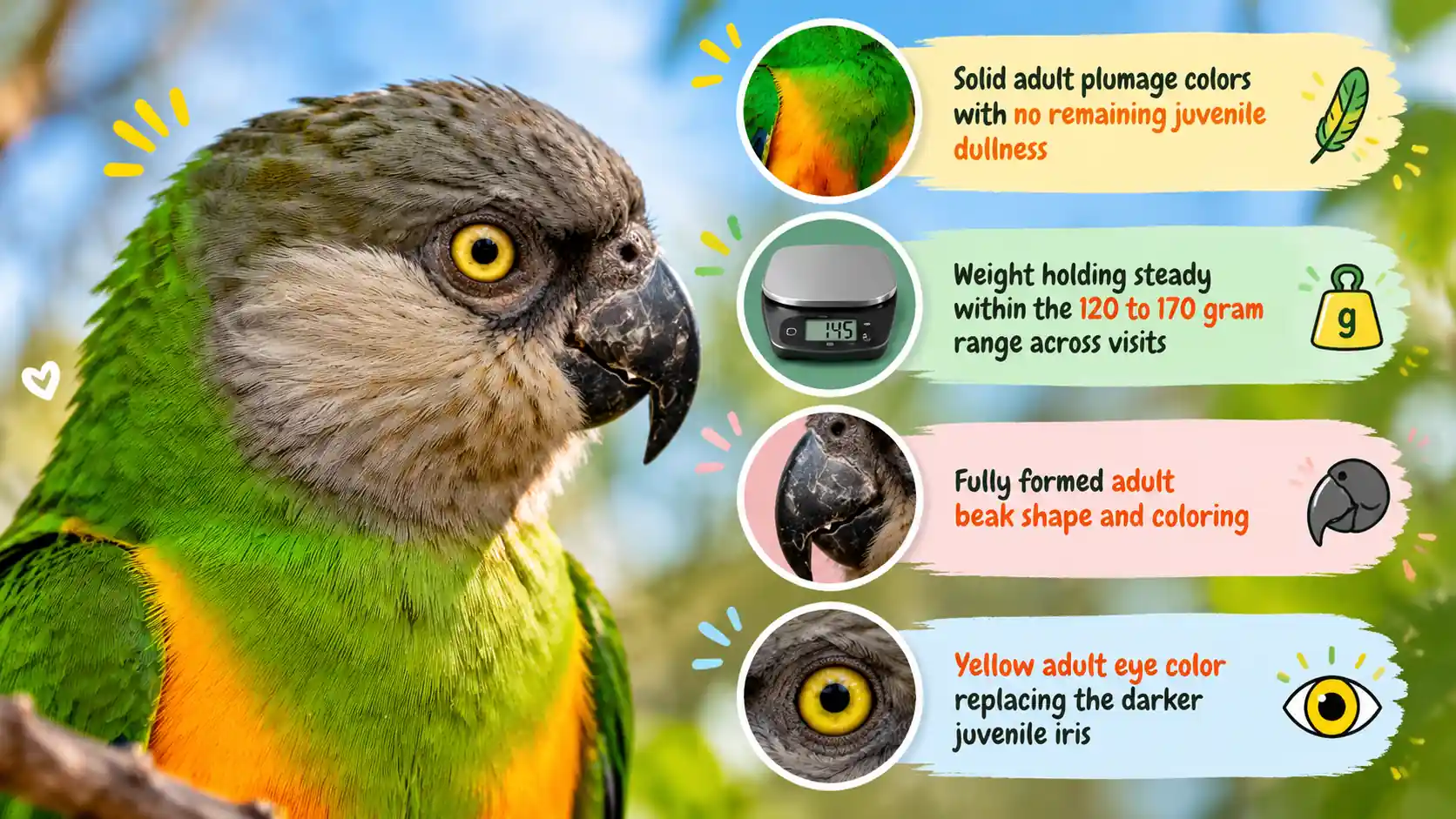
Signs a Senegal parrot has reached full physical maturity include:
- Solid adult plumage colors with no remaining juvenile dullness
- Weight holding steady within the 120 to 170 gram range across visits
- Fully formed adult beak shape and coloring
- Yellow adult eye color replacing the darker juvenile iris
Is a Senegal Parrot a Small or Medium Parrot?
Aviculture references generally classify the Senegal parrot as a small to medium-sized bird within the Poicephalus genus. Its compact 9-inch length places it near the smaller end of that range, while its stocky build and large beak give it a presence closer to a medium-sized species.
Final Thoughts: What to Take Away About Senegal Parrot Size
Senegal Parrot size tells only part of the story behind a bird that behaves far larger than its 9-inch frame and 150 gram average weight suggest. Length and weight stay remarkably consistent across the species, giving new owners a reliable benchmark before bringing a chick home. Growth moves quickly from a blind hatchling to a fledgling within nine weeks, though full hormonal maturity takes another two to four years to settle in. Placed beside budgies, cockatiels, and African greys, the Senegal sits in a comfortable middle ground, heavier than the smallest species yet far lighter than the giants.
Males and females share nearly identical size, separated mainly by a modest weight gap and subtle chest markings rather than obvious visual cues. Whether the goal is choosing the right cage, tracking healthy weight, or simply knowing what to expect, these measurements give every owner a solid starting point. Reputable breeders, rescue groups, and avian veterinarians remain the best resources for confirming a specific bird’s health and growth pattern.
Frequently Asked Questions
How Big Is a Senegal Parrot?
An adult Senegal parrot measures about 9 to 9.5 inches long and weighs between 120 and 170 grams, placing it among the smaller Poicephalus species.
How Much Does a Senegal Parrot Weigh?
Most healthy adults weigh between 120 and 170 grams, with males averaging slightly heavier than females on a standard kitchen scale.
How Long Is a Senegal Parrot?
Beak-to-tail length typically falls between 9 and 9.5 inches, roughly the length of a standard dinner fork.
What Is the Senegal Parrot Wingspan?
Folded wingspan measures approximately 6 inches, with a noticeably wider span once the wings extend fully during flight.
When Is a Senegal Parrot Fully Grown?
Physical size reaches adult range within the first year, though full hormonal and behavioral maturity arrives closer to two to four years of age.
Is a Senegal Parrot a Small or Medium Parrot?
Most aviculture sources classify it as a small to medium parrot, sitting between tiny species like budgies and larger birds like African greys.