

If you share your life with a Lab, you already know how special these dogs are: loyal, goofy, endlessly enthusiastic about everything from fetch to food. But here’s the truth: Labrador Retriever health problems are real, and they’re more common than most first-time owners expect.
Labs consistently rank as the number one most popular dog breed in the US, according to the American Kennel Club, but that popularity comes with a well-documented set of genetic and lifestyle health risks. Understanding Labrador Retriever health problems early can genuinely extend your dog’s life and save you serious heartbreak down the road.
Why Labrador Retriever Health Needs Extra Attention
Labradors were bred as active working gun dogs, but that heritage also comes with genetic vulnerabilities that can lead to health problems later in life, including joint issues. They are also highly food-driven due to a POMC gene mutation identified by researchers at Cambridge University in 2016, which affects hunger signals and increases their risk of obesity and related diseases.

What Every Labrador Retriever Owner Should Know About Health Care? Read more in Labrador Retriever Personality and Care Guide for First-Time Owners.
Common Labrador Retriever Health Problems
Hip Dysplasia in Labradors
This is probably the most talked-about Lab health issue, and for good reason. Hip dysplasia happens when the hip joint doesn’t develop properly, leading to painful grinding and eventual arthritis. The Orthopedic Foundation for Animals (OFA) reports that roughly 12% of Labs are affected, a significant number when you consider how many Labs are alive worldwide.
Early signs include a reluctance to climb stairs, a swaying “bunny hop” gait, or obvious stiffness after rest. X-rays at 24 months can confirm the diagnosis, and many reputable breeders now provide OFA hip certifications for breeding pairs.
Elbow Dysplasia and Joint Issues
Less discussed but equally painful, elbow dysplasia involves abnormal cartilage development in the elbow joint. Labs are actually one of the breeds most predisposed to this condition. Symptoms often appear between 4 and 10 months, such as front leg lameness, swelling around the elbow, or a puppy that just seems off. Treatment ranges from pain management to corrective surgery, depending on severity.
Obesity and Weight-Related Problems in Labradors
Obesity is the most preventable health problem in Labradors. Around 25% of Labs carry a POMC gene mutation that makes them feel hungry more often, leading to begging and overeating. Excess weight increases the risk of joint problems, heart disease, and cancer. A healthy Lab should have a visible waist and easily felt ribs.
Ear Infections in Labrador Retrievers
Those beautiful floppy ears trap moisture like little cups, especially after swimming. Labs are chronic ear infection candidates, and some owners deal with recurring infections year-round. You’ll notice head shaking, scratching at the ear, a bad smell, or dark discharge. Keeping ears dry after swims and cleaning them gently every 1–2 weeks makes a massive difference.
Eye Problems and Vision Conditions
Progressive Retinal Atrophy (PRA) is the big one to know. It’s a genetic condition that causes gradual blindness; unfortunately, there’s no cure. The good news is that DNA testing can now identify carriers before breeding. Reputable breeders should provide eye clearance certificates. Cataracts are also seen in older Labs, particularly those over 8 years.
Skin Allergies and Coat Issues
Environmental and food allergies are surprisingly common in Labs. Symptoms show up as itchy paws, recurring ear infections, hot spots, or hair loss along the flanks. Many Labs are reactive to common proteins like chicken or beef, which is why limited-ingredient diets sometimes help. A good veterinary dermatologist can do patch testing to identify specific triggers.
Exercise-Induced Collapse (EIC)
This one catches a lot of owners off guard. EIC is a genetic condition, most common in yellow Labs, where intense exercise triggers sudden muscle weakness or collapse. The dog seems fine, but after 5–20 minutes of vigorous activity, it can’t walk properly. Episodes usually resolve within 30 minutes, but they’re scary to witness. A simple DNA test can confirm if your Lab carries the EIC gene.
Bloat and Digestive Concerns
Gastric dilatation-volvulus (GDV), or bloat, is a life-threatening emergency where the stomach twists on itself. Large, deep-chested dogs like Labs are at higher risk. Classic signs include a distended abdomen, unproductive retching, and sudden extreme distress. If you see these symptoms, don’t wait; this needs emergency surgery within hours. Feeding two smaller meals instead of one large daily meal is one of the most effective prevention strategies.
Heart Conditions Seen in Labradors
Tricuspid Valve Dysplasia (TVD) is the most breed-specific cardiac issue in Labs. It’s a malformation of the heart valve present from birth, and some Labs also develop dilated cardiomyopathy later in life. Annual cardiac screening becomes especially important after age 7. Symptoms of heart trouble, coughing, lethargy, and exercise intolerance are easy to miss or attribute to aging.
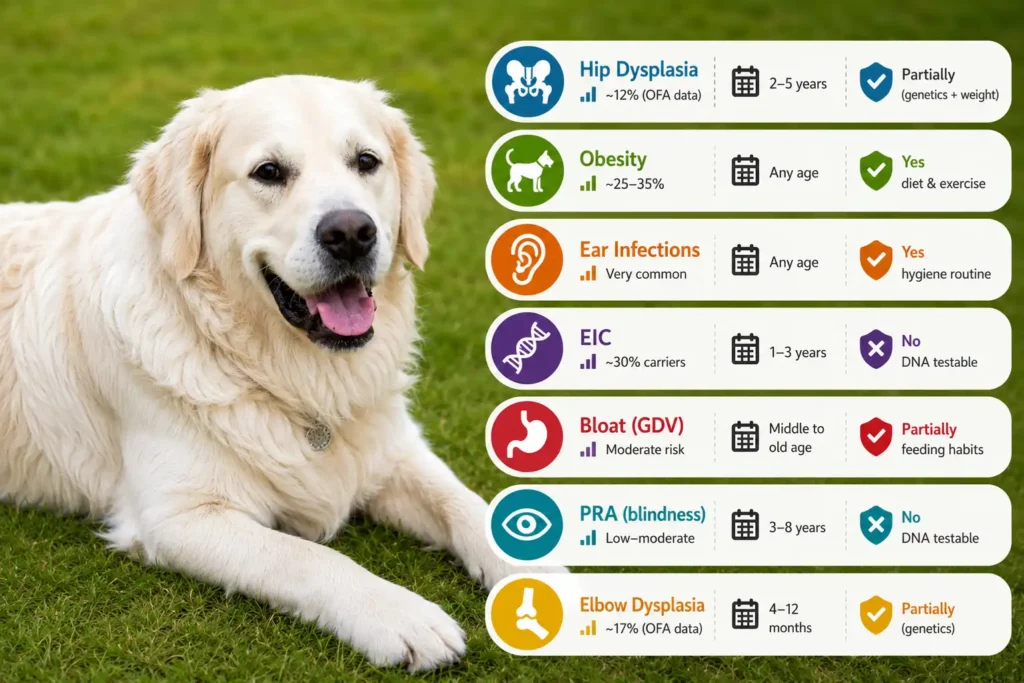
Overview of major Labrador health conditions at a glance:
| Health Condition | Prevalence in Labs | Typical Onset Age | Preventable? |
| Hip Dysplasia | ~12% (OFA data) | 2–5 years | Partially (genetics + weight) |
| Obesity | ~25–35% | Any age | Yes, diet & exercise |
| Ear Infections | Very common | Any age | Yes, hygiene routine |
| EIC | ~30% carriers | 1–3 years | No, DNA testable |
| Bloat (GDV) | Moderate risk | Middle to old age | Partially, feeding habits |
| PRA (blindness) | Low–moderate | 3–8 years | No, DNA testable |
| Elbow Dysplasia | ~17% (OFA data) | 4–12 months | Partially (genetics) |
What Are the Most Common Health Problems in Labrador Retrievers?
The most common Labrador health problems include hip and elbow dysplasia, obesity, ear infections, skin allergies, EIC, eye diseases, bloat, and heart conditions. Obesity is the most common and preventable issue in the breed.
Early Warning Signs You Should Never Ignore
Labs are stoic dogs. They often hide pain surprisingly well, which makes it easy to miss warning signs until a condition is more advanced. These are the red flags worth taking seriously:
- Limping or stiffness after rest, especially in the morning
- Sudden weight gain despite no change in feeding
- Recurring ear scratching or head shaking more than once a month
- Collapse or weakness during or after normal exercise
- Distended belly, restlessness, or retching without producing vomit
- Cloudiness in the eyes or bumping into objects in low light
- Excessive licking of paws or red, inflamed skin patches
- Persistent coughing or tiring quickly on walks
How to Prevent Health Problems in Labrador Retrievers
Healthy Diet and Portion Control
This is non-negotiable with Labs. Don’t free-feed; measure every meal. Look for foods with a named meat protein as the first ingredient, limited fillers, and appropriate fat levels for your dog’s activity level. Senior Labs (7+) often do better on formulas with reduced phosphorus and added joint support like glucosamine and chondroitin.
Exercise Without Overdoing It
Adult Labs need 60–90 minutes of moderate activity daily, but puppies under 18 months shouldn’t do high-impact jumping or long runs; their growth plates are still developing. A good rule: 5 minutes of exercise per month of age, twice daily, for puppies. Swimming is genuinely one of the best options because it builds muscle without stressing joints.
Help Your Labrador Retriever Stay Fit with the Right Exercise: Read more in Labrador Retriever Exercise Needs: How Much Activity Does Your Lab Really Need?.
Regular Vet Checkups and Screenings
Labs under 3 years: annual exams. Labs over 7: every 6 months, with bloodwork and cardiac assessment. Ask your vet about OFA hip and elbow screening if you have a young dog, and DNA testing for EIC and PRA is a one-time test worth doing before 2 years old.
Grooming Habits That Support Better Health
Labs shed a lot; their double coat needs brushing 2–3 times weekly to reduce skin issues. Clean ears weekly (don’t skip after swimming), trim nails monthly to avoid gait problems, and check between toes for redness or swelling that could signal allergies.
Recommended preventive care schedule for Labrador Retrievers:
| Life Stage | Key Health Actions | Frequency |
| Puppy (0–12 months) | Vaccinations, parasite control, and a nutrition plan | Every 3–4 weeks initially |
| Young adult (1–3 yrs) | Hip/elbow X-rays, DNA testing (EIC/PRA), baseline bloodwork | Annually |
| Adult (3–7 yrs) | Full physical, dental cleaning, and weight monitoring | Annually |
| Senior (7+ yrs) | Bloodwork, cardiac check, thyroid panel, joint assessment | Every 6 months |
How Can I Tell If My Labrador Has Hip Dysplasia?
Signs of hip dysplasia in Labradors include limping, stiffness, difficulty climbing stairs or jumping, a bunny-hop gait, and reduced activity. A vet can confirm the condition with X-rays, usually around 24 months of age.
When to Take Your Labrador to the Vet
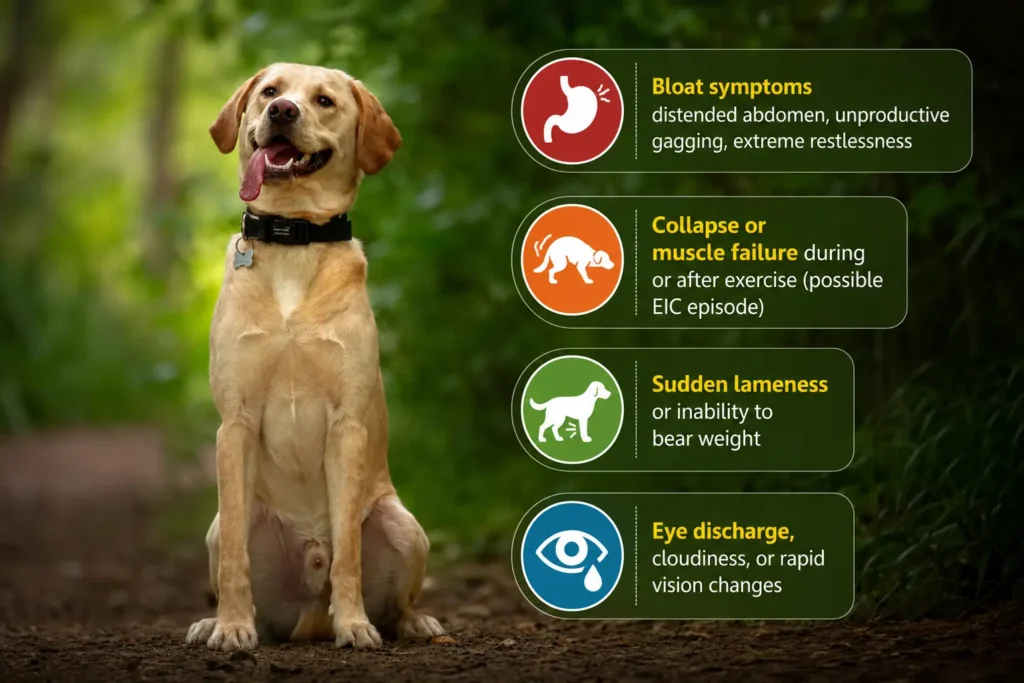
Some situations call for same-day or emergency care. Don’t wait if you notice:
- Bloat symptoms, distended abdomen, unproductive gagging, extreme restlessness
- Collapse or muscle failure during or after exercise (possible EIC episode)
- Sudden lameness or inability to bear weight
- Eye discharge, cloudiness, or rapid vision changes
- Persistent vomiting or diarrhea lasting more than 24 hours
- Breathing difficulties or blue-tinged gums
For non-urgent concerns, persistent itching, weight gain, recurring ear issues, a scheduled appointment is fine, but do make one. These things don’t fix themselves.
Helping Your Labrador Live a Longer, Healthier Life
The average Labrador lives 10–12 years, but plenty of well-cared-for Labs reach 14 or 15. The difference usually comes down to weight management, consistent vet care, appropriate exercise, and catching problems early. It’s not complicated, but it does require staying engaged.
One thing that genuinely helps, and something most owners underestimate, is building a relationship with a vet who actually knows your specific dog. A vet who sees your Lab every 6–12 months will notice subtle changes that aren’t obvious to you at home. That relationship can literally add years to your dog’s life.
What Is the Average Lifespan of a Labrador Retriever?
Labrador Retrievers typically live 10–12 years, but with a healthy weight, regular vet care, and proper exercise, many can reach 14–15 years. Obesity is the biggest factor that can shorten their lifespan.
Final Thoughts: Keeping Your Labrador Healthy for a Lifetime
Owning a Lab is one of life’s great joys. These dogs are kind, enthusiastic, and built for companionship. But they do need owners who take their health seriously, not just when something goes wrong, but proactively, every day.
Understanding Labrador Retriever health problems before they become crises is the single most valuable thing you can do for your dog. Whether that means scheduling a vet check you’ve been putting off, finally getting the hip X-rays done, or just measuring portions instead of eyeballing, small, consistent habits are what protect these dogs over the long run.
Your Lab would do anything for you. Keeping them healthy is how you return the favor.
Frequently Asked Questions (FAQs)
Q: Are Labrador Retrievers prone to a lot of health problems?
A: Compared to many breeds, Labs do have a notable list of genetic predispositions, including hip dysplasia, EIC, obesity, and eye conditions. However, many of these can be managed or prevented with proper nutrition, exercise, and regular vet care.
Q: At what age do Labs start having health problems?
A: It varies by condition. Joint issues like elbow dysplasia can appear as early as 4 months. Hip dysplasia symptoms often emerge around 2–5 years. Obesity can develop at any age, and conditions like PRA or heart disease tend to appear in middle to senior years (5–9 years).
Q: How often should I take my Labrador to the vet?
A: Once yearly for healthy adult Labs under 7, and every 6 months for seniors. Puppies need more frequent visits in their first year for vaccinations and parasite control.
Q: What food is best for a Labrador Retriever’s health?
A: Look for a high-quality kibble with a named protein source (chicken, salmon, lamb) as the first ingredient, no artificial preservatives, and calorie levels appropriate for your dog’s weight and activity level. Consult your vet before switching foods significantly.
Q: Can Labrador health problems be prevented with DNA testing?
A: Some can. DNA testing can identify carriers of EIC, PRA, and other genetic conditions. This doesn’t prevent illness, but it helps owners plan, take early action, and avoid unknowingly breeding affected dogs.
Q: Is hip dysplasia a death sentence for a Labrador?
A: Not at all. Many Labs with hip dysplasia live comfortable, happy lives with appropriate weight management, pain control, physical therapy, or surgery. Early diagnosis significantly improves outcomes.