

Labradors are famous for their huge appetites and will happily eat almost anything they can get their paws on. While that enthusiasm is part of their lovable personality, it also puts them at greater risk of eating something dangerous.
Many Labrador foods to avoid are common household items that most owners never think twice about. Knowing which foods are unsafe can protect your dog from serious health problems and even prevent an emergency trip to the vet.
Why Labradors Need Extra Care With Food
Labradors are one of the most food-motivated dog breeds in the world. A 2016 study published in Cell Metabolism found that many Labradors carry a gene variant (POMC) that affects how they process hunger signals, meaning they feel hungry almost constantly. This makes them more likely to scavenge, beg, or eat things they really shouldn’t.
Their appetite doesn’t mean they can eat everything. Their digestive system reacts badly to quite a few human foods, some of which cause mild discomfort, and others that can be genuinely fatal.

Why Diet Plays a Bigger Role in Labrador Health: Read more in Labrador Retriever Diet Plan: What to Feed, How Much & When (Vet-Backed).
Chocolate Can Be Dangerous for Labradors
This one most people know, but it’s worth repeating because it’s the most common cause of food poisoning in dogs. Chocolate contains theobromine and caffeine, both of which dogs metabolize far more slowly than humans. Dark chocolate and baking chocolate are the worst; even a small amount can cause vomiting, tremors, seizures, or worse.
A 30kg Labrador can show toxic symptoms from as little as 200g of dark chocolate, according to the ASPCA Animal Poison Control Center. Keep all chocolate, including cocoa powder and hot cocoa mix, completely out of reach.
Are grapes bad for labradors?
Yes. Grapes are toxic to Labradors and can cause kidney failure. Never feed grapes or raisins to your dog.
Grapes and Raisins Are a Serious Risk
Grapes and raisins are surprisingly dangerous for dogs, and the scary part is that vets still don’t know exactly why. What they do know is that even a small amount can cause sudden kidney failure in some dogs. The toxic dose varies; some dogs have eaten a handful with no effects, while others have had severe reactions to just a few.
The safest approach? Treat grapes and raisins like poison. Don’t feed them, don’t leave them on counters, and check ingredient labels on baked goods and trail mix.
Here’s a quick look at which fruits are safe and which ones to skip completely:
| Fruit | Safe for Labradors? | Notes |
| Apple (no seeds) | Yes | Remove the core and seeds |
| Blueberries | Yes | Great antioxidant snack |
| Watermelon (no rind) | Yes | Remove seeds first |
| Grapes | No | Can cause kidney failure |
| Raisins | No | Even small amounts are toxic |
| Cherries (no pit) | Caution | Pits contain cyanide |
Onions and Garlic: Hidden Ingredients to Watch For
Onions, garlic, leeks, and chives all belong to the Allium family, and all of them are toxic to dogs. They damage red blood cells, which can lead to hemolytic anemia. The tricky part is that garlic and onion powder are far more concentrated than the raw version, and they turn up in all kinds of foods, soups, broths, baby food, and seasoned meat.
Symptoms often appear 3–5 days after ingestion, so by the time you notice something’s wrong, your Labrador may have already eaten quite a bit.
Xylitol (Artificial Sweetener) and Why It’s Toxic to Dogs
Xylitol is probably the most underrated danger on this list. It’s a sugar substitute found in sugar-free gum, peanut butter, toothpaste, baked goods, and increasingly in protein bars and vitamins. In dogs, it triggers a rapid release of insulin, causing blood sugar to crash within 10 to 60 minutes of ingestion.
The FDA has issued multiple warnings about xylitol toxicity in dogs, noting that even very small amounts, like a stick or two of xylitol-sweetened gum, can cause liver failure in medium to large breeds like Labradors. Always check labels before sharing any “sugar-free” product with your dog.
Quick Answer: What Foods Are Most Toxic to Labradors?
The most toxic foods for Labradors are: xylitol (artificial sweetener), grapes and raisins, chocolate (especially dark), onions and garlic, macadamia nuts, raw yeast dough, and caffeine. Any of these can cause serious health issues or be fatal if eaten in significant amounts. Call your vet immediately if your dog eats any of them.
Avoid Feeding Avocado to Your Labrador
Avocado contains a compound called persin, found in the skin, pit, and flesh. While it’s most toxic in birds and small animals, large amounts can still cause vomiting and diarrhea in dogs. The pit is a separate concern; it’s a choking hazard and can cause intestinal blockage.
Guacamole is doubly problematic since it also contains onion and garlic. Best to skip avocado entirely.
Cooked Bones Can Cause More Harm Than Good
Raw bones are a much-debated topic, but cooked bones are genuinely risky. When bones are cooked, they become brittle and splinter into sharp fragments that can puncture your dog’s throat, stomach, or intestines.
- Chicken bones (cooked), splinter easily, choking hazard
- Pork rib bones, often too small and sharp
- Fish bones, tiny and hard to see if swallowed

If you want to give your Labrador something to chew, look for vet-approved dental chews or raw bones designed specifically for dogs.
Fatty and Fried Foods That Upset a Labrador’s Stomach
Labradors are already prone to weight gain, and fatty food makes things worse. More importantly, high-fat foods, especially in large amounts, can trigger pancreatitis, which is a painful and sometimes life-threatening inflammation of the pancreas. Foods to avoid include:
- Bacon and processed deli meats
- Deep-fried chicken or chips
- Fatty meat trimmings and skin
- Butter and cream-based sauces
Even a one-off large fatty meal after a period of normal eating can be enough to trigger a pancreatitis episode.
Dairy Products: Not Every Labrador Digests Them Well
Most adult dogs are lactose intolerant to some degree. A little plain yogurt or a small piece of cheese usually isn’t a crisis, but larger amounts of milk, cream, or ice cream can cause gas, bloating, and diarrhea. It varies from dog to dog; some Labs handle a bit of cheese fine, while others are very sensitive.
The safest approach is to keep dairy to a minimum and observe how your dog reacts.
Nuts That Are Unsafe for Labradors
Not all nuts are equal. Walnuts and pecans can carry mold toxins (mycotoxins) that cause neurological symptoms. Almonds aren’t toxic but are a choking hazard for dogs. Macadamia nuts deserve their own mention.
Why Macadamia Nuts Are Especially Dangerous
Macadamia nuts are uniquely toxic to dogs. Even a small amount, around 2.4g per kg of body weight, can cause weakness, hyperthermia, vomiting, and tremors. Symptoms usually appear within 12 hours and can last up to 48 hours. Since Labradors are larger dogs, they’d need more nuts to show severe effects, but it’s still not worth the risk.
Quick reference for common nuts and their safety level for Labradors:
| Nut | Toxicity Level | Main Risk |
| Macadamia nuts | High | Neurological symptoms, hyperthermia |
| Walnuts | Medium | Mold toxins, if old or moldy |
| Almonds | Low/Caution | Choking hazard, digestive upset |
| Peanuts (unsalted, plain) | Generally safe | Avoid salted or flavored versions |
| Cashews (plain) | Occasional only | High fat content |
Raw Dough and Yeast-Based Foods to Avoid
If your dog gets into raw bread dough, that’s a genuine emergency. Yeast ferments in the warm environment of the stomach, producing alcohol and carbon dioxide. The dough expands inside the dog, causing bloating and potentially dangerous alcohol toxicosis. Symptoms include disorientation, vomiting, and weakness.
This is rarer, but worth knowing, especially if you bake at home and your Labrador tends to investigate the kitchen.
What Are the First Signs That a Labrador Ate Something Toxic?
Common early signs include: vomiting (especially repeated), diarrhea, excessive drooling, lethargy or weakness, loss of coordination, muscle tremors, pale gums, and loss of appetite. Some signs, like kidney damage from grapes, may not appear for 24–72 hours. When in doubt, contact your vet or the ASPCA Poison Control Hotline (888-426-4435) right away.
Caffeine and Energy Drinks Are Not Dog-Friendly
Coffee, tea, energy drinks, and cola all contain methylxanthines that are toxic to dogs. Symptoms of caffeine toxicity include restlessness, rapid breathing, muscle tremors, and, in severe cases, seizures. A large Labrador would need a significant amount of caffeine to reach dangerous levels, but it’s still not something to test.
Salty Snacks and Processed Human Foods
Crisps, pretzels, soy sauce, and pickles are all very high in sodium. A large amount of salt causes sodium ion poisoning in dogs, leading to excessive thirst, urination, and in severe cases, neurological problems. Given how much Labs love to beg for table scraps, it’s easy for this to build up over time without you realizing it.
Can Labradors Eat Fruits Safely? Foods to Double-Check
Some fruits are completely fine for Labradors, while others need careful preparation, and a few should be avoided entirely. Always remove pits, seeds, and rinds. The seeds in apples contain trace amounts of cyanide, not dangerous in tiny quantities, but worth removing anyway.
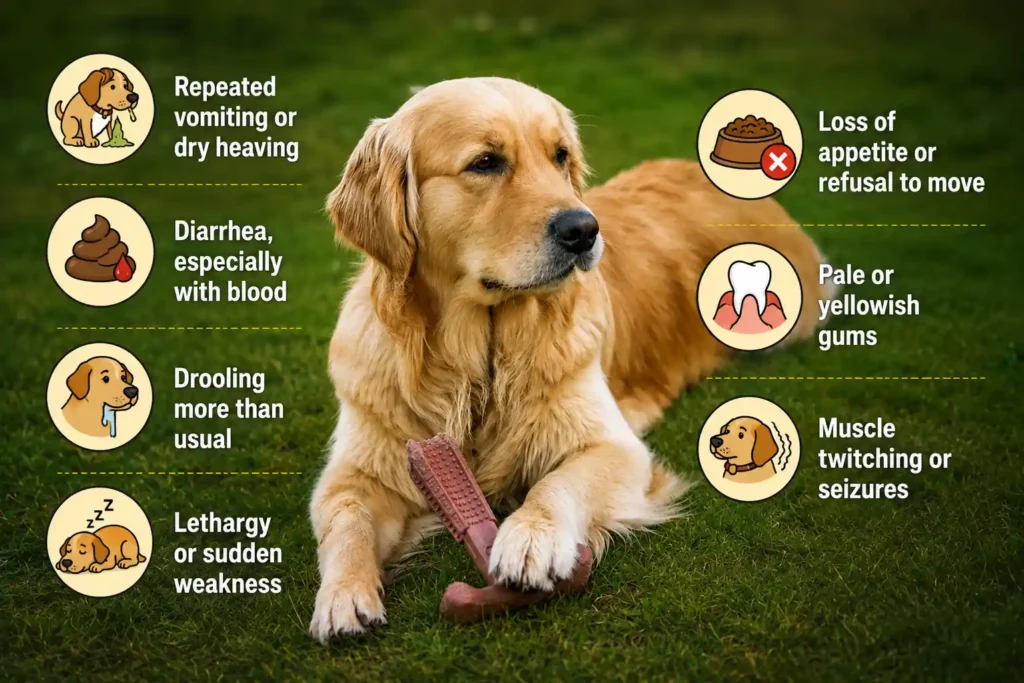
Signs Your Labrador Ate Something Unsafe
- Repeated vomiting or dry heaving
- Diarrhea, especially with blood
- Drooling more than usual
- Lethargy or sudden weakness
- Loss of appetite or refusal to move
- Pale or yellowish gums
- Muscle twitching or seizures
What to Do Immediately If Your Labrador Eats Toxic Food
First, don’t panic, but do act fast. Note the time your dog ate the food and estimate how much. Then call your vet or, if it’s out of hours, an emergency animal clinic. In the US, you can also call the ASPCA Animal Poison Control Center at 888-426-4435 (a consultation fee may apply).
Do NOT try to make your dog vomit at home unless specifically told to by a vet. Some substances cause more damage coming back up.
This table summarizes the right response based on what your Labrador ate:
| Food Eaten | Urgency | Action to Take |
| Chocolate (small amount) | Medium | Monitor closely, call the vet if symptoms appear |
| Grapes or raisins (any amount) | High | Call the vet immediately, even if no symptoms |
| Xylitol product | High, Emergency | Go to the emergency vet right away |
| Onion/garlic (small amount) | Medium | Monitor, call the vet within a few hours |
| Cooked bones (swallowed) | Medium-High | Watch for choking, call the vet to assess |
| Macadamia nuts | High | Contact the vet immediately |
Safe Treat Alternatives for Labrador Retrievers
Keeping your Lab happy doesn’t mean giving them human food. There are plenty of dog-safe snacks that are both healthy and satisfying:
- Carrot sticks: great for teeth and very low-calorie
- Plain cooked chicken or turkey: no seasoning
- Blueberries or watermelon chunks (no seeds)
- Cucumber slices: Labs often love the crunch
- Plain rice cakes: small pieces as occasional treats
- Frozen plain pumpkin cubes: good for digestion too
Which Foods Are Safe for Labradors as Everyday Treats?
The safest everyday treats for Labradors include plain cooked chicken or turkey, carrot sticks, blueberries, cucumber slices, and small pieces of apple (seeds removed). These are low in calories and free from the toxins found in many human snacks. Always introduce new foods gradually and in small amounts to see how your dog responds.
What Every Labrador Retriever Owner Should Understand: Read more in Labrador Retriever Personality and Care Guide for First-Time Owners.
Keeping Your Labrador Safe Starts With Their Diet
The good news is that a dog-safe diet isn’t complicated. The foods that cause problems are mostly things we eat for ourselves, processed snacks, sweetened products, and rich leftovers. Knowing which Labrador foods to avoid gives you the confidence to share mealtimes safely without second-guessing every bite.
When in doubt, ask your vet. And if your Lab somehow gets into something they shouldn’t, which, let’s be honest, is pretty likely at some point, contact your vet quickly and don’t wait to see if symptoms improve on their own.
FAQs: Labrador Foods to Avoid
Q: Can Labradors eat peanut butter?
A: Yes, plain unsalted peanut butter is generally safe for Labradors in small amounts. But always check the label, many brands now use xylitol as a sweetener, which is extremely toxic to dogs.
Q: Is cheese bad for Labradors?
A: Small amounts of low-fat cheese are usually fine as an occasional treat. However, many dogs are lactose intolerant, so watch for digestive upset. Avoid large quantities or high-fat cheeses.
Q: Can Labradors eat eggs?
A: Plain cooked eggs, or boiled with no seasoning, are a safe and nutritious treat for Labradors. Raw eggs are generally discouraged due to the risk of salmonella and avidin, which blocks biotin absorption.
Q: What fruit can Labradors eat?
A: Labradors can safely eat apples (no seeds), blueberries, watermelon (no seeds or rind), and bananas in small amounts. Avoid grapes, raisins, and cherries with pits.
Q: How much chocolate is dangerous for a Labrador?
A: For a 30kg Labrador, as little as 200g of dark chocolate can cause toxic symptoms. Milk chocolate requires larger amounts, but any chocolate intake should be taken seriously and reported to a vet.
Q: Can Labradors eat rice?
A: Yes, plain cooked white or brown rice is safe for Labradors. It’s often recommended by vets for dogs with upset stomachs as part of a bland diet.