
An Aphrodite Giant cat lifespan usually falls between 12 and 15 years, and some of these gentle giants live well past 18 when they’re cared for properly. It’s one of the first things people ask before bringing one of these Cyprus-born felines home. Because the Aphrodite Giant cat lifespan can swing so much from one cat to the next, it really helps to know what pushes that number up or drags it down. Genetics matter, sure, but so do diet, veterinary care, and whether your cat spends its days indoors or out. Let’s dig into what actually shapes how long these cats stick around.
Aphrodite Giant Cat Lifespan: How Long Do They Really Live?
Most Aphrodite Giants live between 12 and 15 years, based on breed profiles gathered from feline registries and cat-care researchers. Some individuals, especially those kept indoors with steady vet care, reach 18 years or beyond. That puts the breed solidly ahead of many other cats, since the average domestic cat typically lives around 13 to 17 years depending on lifestyle.
Because the Aphrodite Giant developed naturally in the mountains of Cyprus rather than through heavy selective breeding, it tends to carry fewer inherited problems than many modern designer breeds. That natural background is likely part of why the numbers hold up so well. Even so, a long life isn’t automatic, and daily habits matter just as much as genetics.
Meet the Majestic Gentle Giant from Cyprus. Read more in Rare Aphrodite Giant Facts Most Cat Lovers Don’t Know.
Aphrodite Giant Cat Lifespan at a Glance
For a quick answer, here’s the Aphrodite Giant Cat Lifespan broken down into the numbers that matter most:
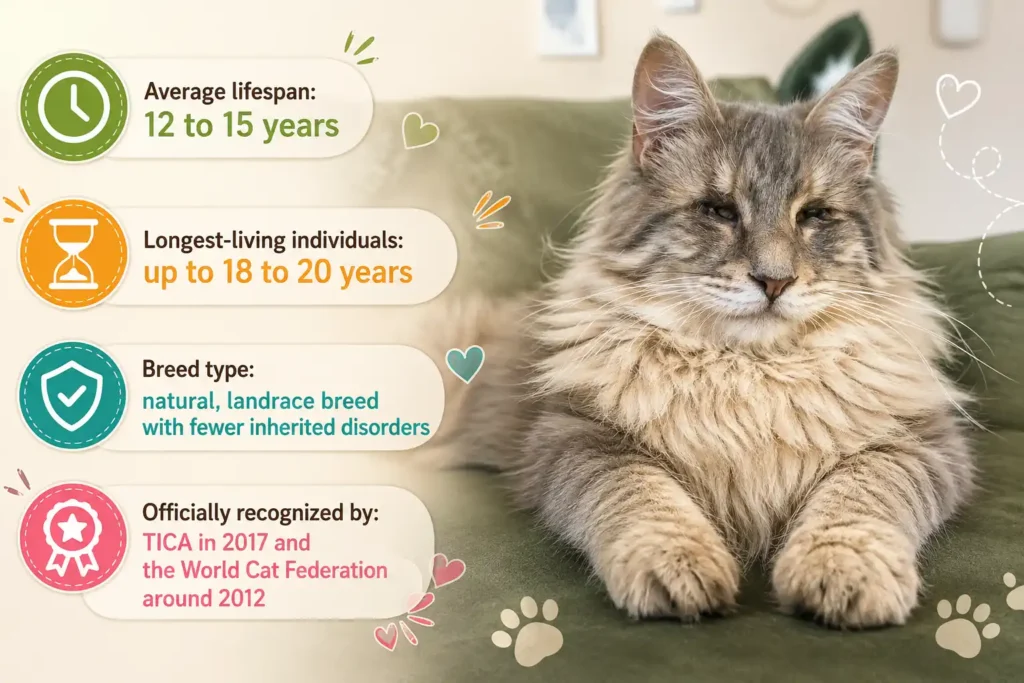
- Average lifespan: 12 to 15 years
- Longest-living individuals: up to 18 to 20 years
- Breed type: natural, landrace breed with fewer inherited disorders
- Officially recognized by: TICA in 2017 and the World Cat Federation around 2012
What Is the Average Lifespan of an Aphrodite Giant Cat?
The table below lays out typical lifespan ranges for the Aphrodite Giant so you can see roughly where your own cat might land.
| Category | Typical Range |
| Average lifespan | 12 to 15 years |
| Well-cared-for cats | Up to 18 years |
| Indoor-only cats | 12 to 18 years |
| Outdoor or free-roaming cats | 2 to 5 years (general feline average) |
| Age considered “senior” | 10 years and up |
On average, an Aphrodite Giant that stays indoors, eats a balanced diet, and sees a vet regularly tends to land near the top of that range. Genetics set the baseline, but everyday choices, like weight management and dental care, decide whether a cat reaches the higher end.
Because this is still a relatively young breed in terms of formal recognition, long-term lifespan data is limited compared with older established breeds. Owners should treat 12 to 15 years as a realistic baseline and 18-plus as an achievable stretch goal with excellent care.
Do Male and Female Aphrodite Giant Cats Have Different Lifespans?
Female cats, across most breeds, tend to live slightly longer than males on average, and there’s no strong evidence the Aphrodite Giant breaks that pattern. Part of this comes down to size: male Aphrodite Giants typically weigh 15 to 24 pounds, noticeably more than females at roughly 10 to 15 pounds, and carrying that extra bulk can add strain to joints and the heart over time.
Unneutered males also tend to roam and fight more, which raises the risk of injury and infection. Spaying or neutering, according to data collected by veterinary hospital networks, is consistently linked with longer average lifespans in both sexes. So sex alone isn’t decisive, but it does interact with body size and behavior.
What Factors Affect an Aphrodite Giant Cat’s Lifespan?
Several things combine to determine how long any individual cat actually lives, and genetics is only the starting point. Here’s a quick rundown before we look at the biggest ones in more detail:
- Genetics and breed background
- Spay or neuter status
- Diet quality and body weight
- Indoor versus outdoor lifestyle
- Preventive veterinary care and screenings
- Dental hygiene
- Mental stimulation and stress levels
Each one plays a real role, and none of them work in isolation.
Common Health Problems That Can Affect Their Lifespan
Here’s a quick look at the health issues that tend to show up most often in large, active cats like this one, and what typically helps.
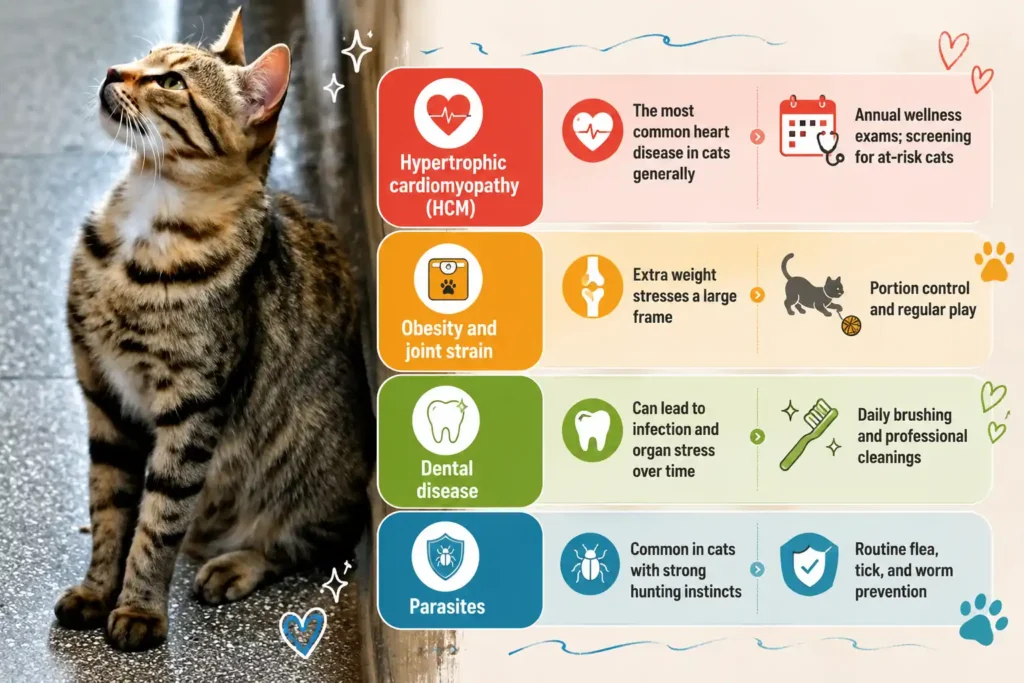
| Health Concern | Why It Matters | What Helps |
| Hypertrophic cardiomyopathy (HCM) | The most common heart disease in cats generally | Annual wellness exams; screening for at-risk cats |
| Obesity and joint strain | Extra weight stresses a large frame | Portion control and regular play |
| Dental disease | Can lead to infection and organ stress over time | Daily brushing and professional cleanings |
| Parasites | Common in cats with strong hunting instincts | Routine flea, tick, and worm prevention |
According to the Cornell Feline Health Center, hypertrophic cardiomyopathy remains the single most common heart condition diagnosed in cats of any breed, which is why routine cardiac screening matters even for a naturally healthy breed. The American Association of Feline Practitioners recommends annual wellness visits for adult cats and twice-yearly visits once a cat passes ten years old.
Because Aphrodite Giants are large and slow to mature, joint and weight monitoring should start earlier than owners might expect. Dental disease is also worth watching closely, since it’s one of the most under-treated issues in cats overall. None of these problems are unique to the breed, but a big body means small issues can escalate faster.
How Diet Affects an Aphrodite Giant Cat’s Health and Lifespan
Nutrition plays a major role in Aphrodite Giant cat health and lifespan, especially because this breed can take three to five years to reach full physical maturity. Because of this extended growth period, many Aphrodite Giant cats may benefit from staying on a large-breed kitten or growth formula longer than smaller breeds, with the diet adjusted under a veterinarian’s guidance.
Portion control matters just as much once a cat reaches adulthood, since these cats are big-boned and can pack on excess weight without looking obviously overweight at first glance. Measured meals, rather than free-feeding, tend to keep body condition in check far more reliably. Fresh water, a protein-forward diet, and limiting empty-calorie treats round out the basics. A lean, well-fed Aphrodite Giant is simply built to last longer than an overweight one.
Does Indoor Living Help Aphrodite Giant Cats Live Longer?
Yes, and the difference is significant rather than minor. Cats kept exclusively indoors typically live well into their teens, while outdoor and free-roaming cats face constant exposure to traffic, predators, disease, and fights that shorten their odds considerably. For a large, confident breed like the Aphrodite Giant, supervised outdoor time on a leash or in a secure catio offers a safer middle ground. Indoor life also makes it far easier to control diet, spot early symptoms, and stick to a consistent vet schedule.
Do Indoor Cats Really Live Longer Than Outdoor Cats?
Yes. Indoor cats typically live around 10 to 18 years, while outdoor and free-roaming cats often average only 2 to 5 years. The gap comes mainly from traffic accidents, predators, disease exposure, and fights, according to veterinary and animal welfare organizations.
How to Help Your Aphrodite Giant Cat Live a Longer, Healthier Life
A few consistent habits make a bigger difference than any single product or supplement ever could:
- Feed a balanced, portion-controlled diet suited to a large breed
- Schedule annual vet visits, moving to twice yearly after age ten
- Spay or neuter unless you’re a screened, responsible breeder
- Brush teeth regularly and stay current on dental cleanings
- Keep your cat mostly indoors or in a secure outdoor space
- Provide daily play and puzzle toys for mental stimulation
- Stay current on vaccines and parasite prevention
None of this is complicated, but consistency matters more than perfection. Feeding your Aphrodite Giant cat the best food and providing proper care most of the time can give them a genuinely strong chance of reaching the longer end of their lifespan.
Aphrodite Giant Cat Lifespan Compared With Other Cat Breeds
Wondering how the Aphrodite Giant Cat Lifespan stacks up against other well-known large or naturally occurring breeds? Here’s a side-by-side comparison.
| Breed | Average Lifespan |
| Aphrodite Giant | 12 to 15 years (up to 18) |
| Maine Coon | 12 to 15 years |
| Norwegian Forest Cat | 14 to 16 years |
| Siberian | 11 to 18 years |
| Average domestic cat | 13 to 17 years |
The Aphrodite Giant holds its own against other large, naturally developed breeds, and its numbers line up closely with the Maine Coon and Norwegian Forest Cat. That’s a meaningful comparison, since all three developed in demanding climates without much human interference in their early history. The World Cat Federation, which first acknowledged the breed around 2012, notes its natural, landrace origins as a defining trait.
Compared with many purpose-bred designer breeds, natural breeds like this one often carry fewer inherited disorders simply because they weren’t shaped by narrow gene pools. That’s not a guarantee of a longer life, but it’s a reasonable advantage on paper.
Signs of Aging in an Aphrodite Giant Cat
Aging in cats tends to creep in gradually, so it helps to know what to watch for as your Aphrodite Giant moves into its senior years. Reduced mobility or stiffness after naps is often one of the earliest signs, especially in a breed carrying this much muscle and bone mass. Weight changes in either direction, along with a duller or thinner coat, are also common markers worth mentioning to your vet.
Many senior cats sleep more, show less interest in play, and become pickier eaters as smell and taste dull slightly with age. Vision and hearing can decline too. Litter box accidents or increased thirst can point to kidney or thyroid issues, both common in older cats generally. Catching these changes early, through regular senior wellness exams, gives your vet the best chance to manage them well.
Frequently Asked Questions About Aphrodite Giant Cat Lifespan
What is the average Aphrodite Giant Cat Lifespan?
Most Aphrodite Giant cats live between 12 and 15 years, with some reaching 18 years or more when kept indoors and given consistent veterinary care.
Do Aphrodite Giant cats live longer indoors?
Yes. Indoor cats generally live significantly longer than outdoor cats, since they avoid traffic, predators, and disease exposure that shorten outdoor lifespans.
What is the oldest an Aphrodite Giant cat can live?
Some well-cared-for individuals reach 18 to 20 years, though this is on the higher end and not the typical outcome.
Are Aphrodite Giant cats prone to health problems?
As a natural breed, they tend to have fewer inherited disorders than many designer breeds, though they can still develop common feline issues like heart disease, obesity, and dental disease.
Do male or female Aphrodite Giants live longer?
Females may have a slight statistical edge, partly because males are larger and unneutered males face higher injury risks, but the difference is usually small.
How can I help my Aphrodite Giant cat live longer?
Focus on a balanced diet, regular vet checkups, spaying or neutering, dental care, indoor living, and daily mental and physical stimulation.