
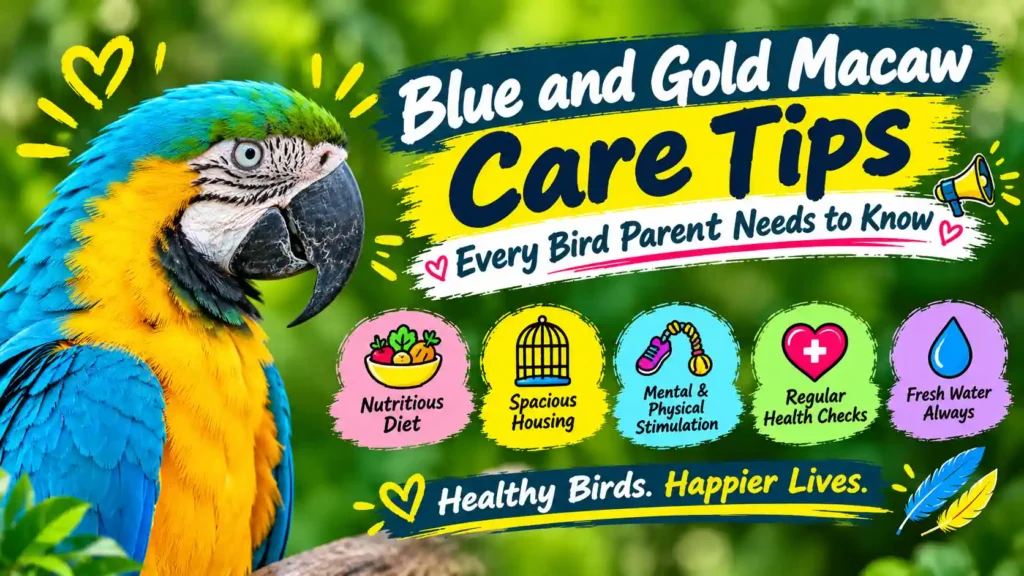
Blue and Gold Macaw Care starts with space: this bird needs a cage at least 4 feet wide, 4 feet deep, and 5 feet tall, plus daily time outside the cage to stretch its four-foot wingspan. Good Blue and Gold Macaw Care also means a varied diet of fresh vegetables, fruits, nuts, and a quality pelleted mix, since seeds alone lead to fatty liver disease and poor feather health.
These birds are highly social and bond deeply with their human family, so they need at least two to three hours of direct interaction each day to stay mentally and emotionally healthy. Without enough attention, they can develop stress behaviors like feather plucking or excessive screaming. Regular vet checkups, mental stimulation through toys and puzzles, and a stable daily routine round out the care this intelligent, long-lived parrot truly needs.
Blue and Gold Macaw Care: Characteristics and Temperament
Size sets this macaw apart from smaller parrot species almost immediately. Adult birds measure roughly 30 to 36 inches from beak to tail and weigh between 2 and 3.5 pounds. Cobalt-blue feathers cover the back and wings, a golden-yellow chest catches the light, and a lime-green forehead frames a bare white facial patch unique to each bird.
Personality matches the bold appearance. Affectionate and intensely social, this species bonds tightly with a primary caregiver and expects daily interaction. Vocalizations carry well beyond typical household walls, with contact calls reaching over 100 decibels at close range.
- Native range: Panama through central Brazil and Bolivia
- Average adult weight: 2 to 3.5 pounds
- Wingspan: roughly 41 to 45 inches
- Vocabulary potential: 20 to 100+ words with consistent practice
Blue and Gold Macaw Diet and Nutrition
Nutrition ranks among the biggest factors separating a thriving macaw from a chronically sick one. Responsible Care starts with a formulated pellet base rather than a seed-heavy mix, since straight seed diets run high in fat and low in essential vitamins.
What Do Blue and Gold Macaws Eat
A healthy diet centers on high-quality pellets, fresh vegetables, limited fruit, and occasional nuts as enrichment rather than a daily staple. Roughly 60 to 70 percent pellets, 15 to 20 percent vegetables, and small daily portions of fruit and nuts form a workable balance.
The table below breaks down a typical daily diet ratio for a healthy adult bird.
| Food Category | Recommended Share | Example Foods |
| Pelleted Diet | 60-70% | Formulated large parrot or macaw pellets |
| Fresh Vegetables | 15-20% | Leafy greens, carrots, squash, bell peppers |
| Fresh Fruit | 5-10% | Apple (seeds removed), mango, papaya, berries |
| Nuts and Seeds | 5-10% | Walnuts, almonds, macadamias as enrichment treats |
Several common kitchen items cross the line from treat to toxin for this species.
- Avocado, which contains toxic persin
- Chocolate and caffeine
- Alcohol
- Onion and garlic
- Salty, sugary, or fried table food
Blue and Gold Macaw Cage Size and Setup
Housing ranks second only to diet in shaping long-term welfare for this large parrot species. Cramped enclosures lead to feather damage, muscle loss, and chronic stress within months.
An absolute minimum indoor cage measures around 36 by 24 by 48 inches, though most avian specialists recommend closer to 48 by 36 by 60 inches. The World Parrot Trust notes that an ideal outdoor aviary should reach at least 50 feet in length whenever space allows.
The comparison below shows how minimum and recommended housing options stack up.
| Housing Type | Dimensions (W x D x H) | Bar Spacing |
| Minimum Indoor Cage | 36 x 24 x 48 inches | up to 1 inch |
| Recommended Indoor Cage | 48 x 36 x 60 inches | up to 1 inch |
| Outdoor Aviary (ideal) | 50+ feet in length | 1 to 1.5 inches |
Setup matters as much as raw square footage. Stainless steel or heavy powder-coated bars resist a beak strong enough to crack palm nuts, while standard wire mesh wears through within a year or two.
- Multiple perch diameters and textures to protect foot health
- Heavy-duty locking latches, since macaws learn to open standard locks
- Zinc-free and lead-free hardware throughout the cage
- At least 6-8 rotating toys, including foraging puzzles and chew blocks
Blue and Gold Macaw Exercise and Enrichment
Daily movement keeps this athletic species physically and mentally sound. Most specialists recommend a minimum of 3 to 4 hours outside the cage daily, whether that means supervised free flight, play-stand time, or structured training sessions.
Boredom drives much of the destructive chewing and screaming linked to under-stimulated macaws. Foraging toys, rotating chew items, and short training bursts throughout the day all reduce problem behavior.
- Foraging boxes and puzzle feeders
- Rope perches and swinging platforms
- Supervised outdoor time in a secure, predator-proof space
- Rotating toy selection to prevent boredom
Blue and Gold Macaw Grooming and Bathing
Natural chewing on wood and rope generally keeps the beak worn to a healthy shape, so trimming should stay in the hands of an experienced avian vet rather than a home attempt. Nail length needs regular checking, since overgrown nails can catch on cage bars.
Bathing supports feather condition and reduces dust buildup. Misting with plain water two to three times weekly, or offering a shallow bowl for self-bathing, keeps feathers flexible and skin healthy. Soap baths are unnecessary and can strip natural oils.
- Nail checks every 4-6 weeks
- Beak trims only by a licensed avian vet, and only if truly needed
- Mist baths 2-3 times per week
- Regular wing condition checks if flight is restricted
Blue and Gold Macaw Training Tips
Positive reinforcement produces far better results than dominance-based methods with this intelligent, sensitive species. Blue and Gold Macaw Care benefits enormously from short, consistent training sessions rather than long, infrequent ones.
Target training and simple commands like step-up build trust early and prevent biting or territorial cage behavior later. Consistency between household members matters, since mixed signals confuse a bird that remembers routines for years.
- Keep sessions to 5-10 minutes, several times daily
- Reward calm behavior immediately with a favorite treat
- Avoid punishment, which damages trust in intelligent parrot species
- Introduce new people and objects gradually to prevent fear-based aggression
Common Blue and Gold Macaw Health Problems
Regular veterinary attention catches most problems before they become emergencies. Annual checkups with a specialist registered with the Association of Avian Veterinarians give owners a reliable baseline for normal weight and behavior.
Several conditions appear more often in this species than in smaller parrots. Feather plucking frequently signals stress or an underlying medical issue rather than a purely behavioral quirk, so ruling out illness comes first.
- Proventricular dilatation disease (PDD), a serious digestive nerve disorder
- Psittacine beak and feather disease (PBFD), a viral condition affecting feathers and immunity
- Aspergillosis, a fungal respiratory infection linked to poor air quality
- Fatty liver disease, often tied to seed-heavy, high-fat diets
- Psittacosis (chlamydiosis), a bacterial infection transmissible to humans
Prompt veterinary consultation matters whenever droppings change, appetite drops, or feather condition shifts suddenly. Blue and Gold Macaw Care includes knowing these warning signs before a true emergency develops.
Blue and Gold Macaw Care Costs and Lifespan
Lifespan alone separates this species from nearly every other common pet. Blue and Gold Macaws regularly live 30 to 50 years, and well-cared-for birds have been documented living past 60 years. Ongoing Blue and Gold Macaw Care typically runs $150 to $350 per month for food, toys, and a basic vet fund. First-year totals, including the bird, housing, and initial vet visits, commonly land between $3,000 and $8,000.
The breakdown below outlines typical one-time and ongoing expenses for a new owner.
| Expense | Estimated Cost (USD) |
| Hand-raised bird | $1,500 – $4,500 |
| Initial cage and setup | $1,200 – $3,000 |
| Monthly food and supplies | $150 – $350 |
| Annual vet exam (baseline) | $100 – $300 |
International trade of this species falls under CITES Appendix II regulation, so reputable sellers should always provide hatch certificates or microchip documentation proving legal, captive-bred origin. Rescue or rehoming fees generally run lower, often between $500 and $1,500, though adopted birds may carry existing behavioral patterns.
Blue and Gold Macaw Care: What It All Comes Down To
Caring for a Blue and Gold Macaw is a long-term commitment that goes far beyond providing food and a cage. These intelligent, social parrots need a spacious and secure environment, a balanced diet, daily exercise, mental stimulation, and consistent interaction with their owners.
Before bringing one home, consider the time, space, noise, veterinary care, and decades of responsibility involved. With proper care, a healthy diet, regular veterinary attention, and a stable routine, a Blue and Gold Macaw can remain a rewarding companion for many years.
Frequently Asked Questions
How long do Blue and Gold Macaws live?
Well-cared-for Blue and Gold Macaws typically live 30 to 50 years, with some documented individuals surpassing 60 years under excellent nutrition and veterinary care.
How big of a cage does a Blue and Gold Macaw need?
A minimum indoor cage measures around 36 by 24 by 48 inches, though 48 by 36 by 60 inches or a dedicated aviary works far better for long-term welfare.
What do Blue and Gold Macaws eat?
A balanced diet centers on 60 to 70 percent formulated pellets, with fresh vegetables, limited fruit, and occasional nuts filling the remaining daily portion.
Are Blue and Gold Macaws good pets for beginners?
Generally, no. Their size, volume, and decades-long lifespan suit experienced bird owners with realistic expectations far better than first-time pet owners.
How much does a Blue and Gold Macaw cost?
Purchase prices commonly range from $1,500 to $4,500, with monthly upkeep averaging $150 to $350 for food, toys, and basic veterinary needs.
Do Blue and Gold Macaws need a lot of attention?
Yes. Most specialists recommend at least 3 to 4 hours of daily interaction or supervised out-of-cage time to prevent boredom and behavioral problems.