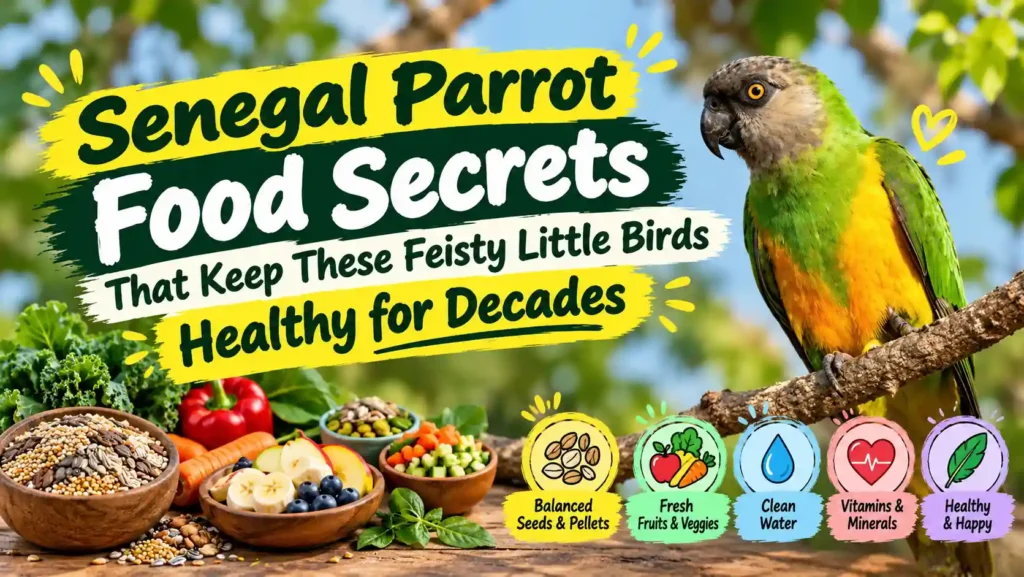
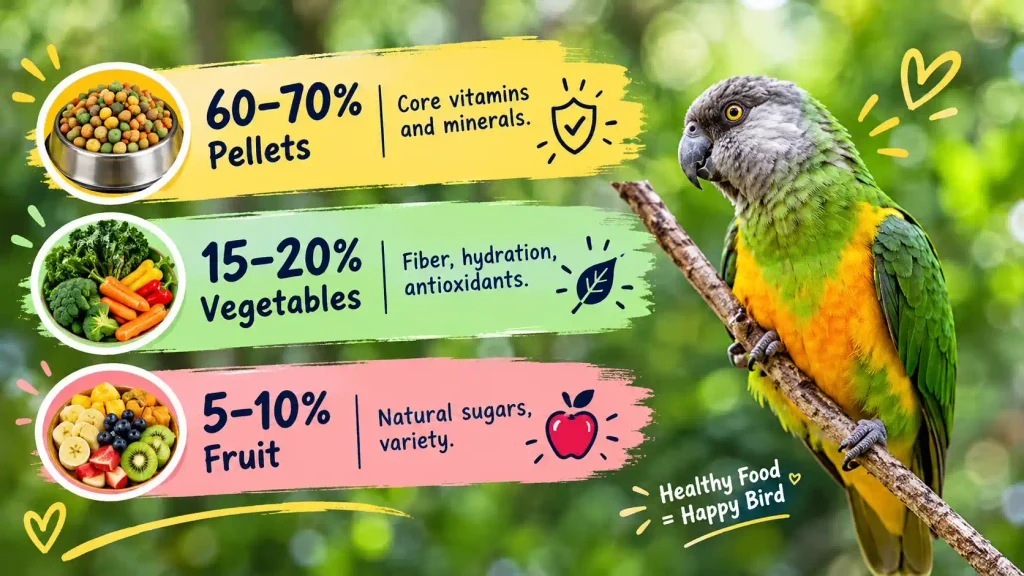
A healthy Senegal Parrot Food plan centers on 60-70% high-quality pellets. The rest should be fresh vegetables, a little fruit, and small amounts of nuts or seeds as treats. Pellets provide balanced vitamins and minerals. Seeds alone cannot do this. Seeds are high in fat and low in nutrients. Fresh foods like leafy greens, carrots, sweet potato, and small pieces of apple or berries add fiber and variety.
Nuts such as almonds or walnuts can be given a few times a week. Keep the amount small, since nuts are high in calories. Clean, fresh water should always be available. Remove any fruit or vegetable left in the cage for more than a few hours. This prevents spoilage. Getting this balance right early builds a strong foundation. It supports better health across the bird’s long life, which is the real goal of good Senegal Parrot Food.
Senegal Parrot Food Basics You Need to Know
A healthy plate for this species usually breaks down into a mix of formulated pellets, fresh vegetables, limited fruit, and a small seed portion. Wild Senegal parrots forage across savanna woodlands in West Africa, eating fruit, seeds, blossoms, and nuts depending on the season. Captive birds do best when that natural variety gets translated into a structured daily plan rather than a single bowl of mixed seed.
Owners who copy this pattern tend to see fewer digestive issues and calmer, more engaged birds. The Association of Avian Veterinarians recommends formulated diets as the foundation for most companion parrot species, with fresh produce added daily. Sticking to a routine also makes it easier to spot changes in appetite, which is often the first sign something is wrong.
A useful starting point breaks the daily plate into rough proportions rather than exact grams, since appetite varies by bird, season, and activity level.
| Food Group | Approximate Share of Diet | Purpose |
| Pellets | 60–70% | Core vitamins and minerals |
| Vegetables | 15–20% | Fiber, hydration, antioxidants |
| Fruit | 5–10% | Natural sugars, variety |
| Seeds and nuts | 5–10% | Healthy fats, enrichment |
Senegal Parrot Pellets
Good Senegal Parrot Food starts with pellets, since they close the nutritional gaps that a seed-only diet leaves behind, especially calcium, vitamin A, and amino acids. Choosing a reputable, age-appropriate brand matters more than the color or shape of the pellet itself. Many owners rotate between two pellet brands to reduce the chance of a picky bird refusing food if one formula changes.
Switching an adult bird from seeds to pellets takes patience, since this is a learned behavior rather than an instinct. Mixing a small amount of pellets into a familiar seed dish and gradually increasing the ratio over several weeks usually works better than a sudden swap.
- Look for pellets free of artificial dyes and preservatives.
- Offer fresh pellets daily and remove uneaten portions after a few hours in warm weather.
- Avoid switching brands abruptly, since sudden changes can trigger appetite strikes.
- Keep pellets stored in a sealed, cool, dry container to prevent mold growth.
Senegal Parrot Seeds
Seeds still have a place in the diet, but only as a smaller supplement rather than the main course. Sunflower and safflower seeds are high in fat, which can lead to obesity and fatty liver disease if fed in large amounts to a bird this size. A small daily seed mix works well as a training reward or foraging item rather than a free-choice staple.
Millet spray is a favorite enrichment food for many Senegal parrots and can be offered a few times a week in modest amounts. Seed mixes formulated specifically for African parrot species tend to include a better balance of smaller, lower-fat seeds than generic blends.
What Do Senegal Parrots Eat in the Wild?
Wild Senegal parrots eat a varied diet of native fruits, seeds, nuts, buds, and blossoms found across the savanna woodlands and forest edges of Senegal, Gambia, Guinea, and neighboring West African countries. Seasonal availability drives much of this variety, with fruiting trees and grain crops making up a large part of intake during certain months. This natural pattern is the reason experts recommend variety over a single seed type in captivity.
Senegal Parrot Fruits
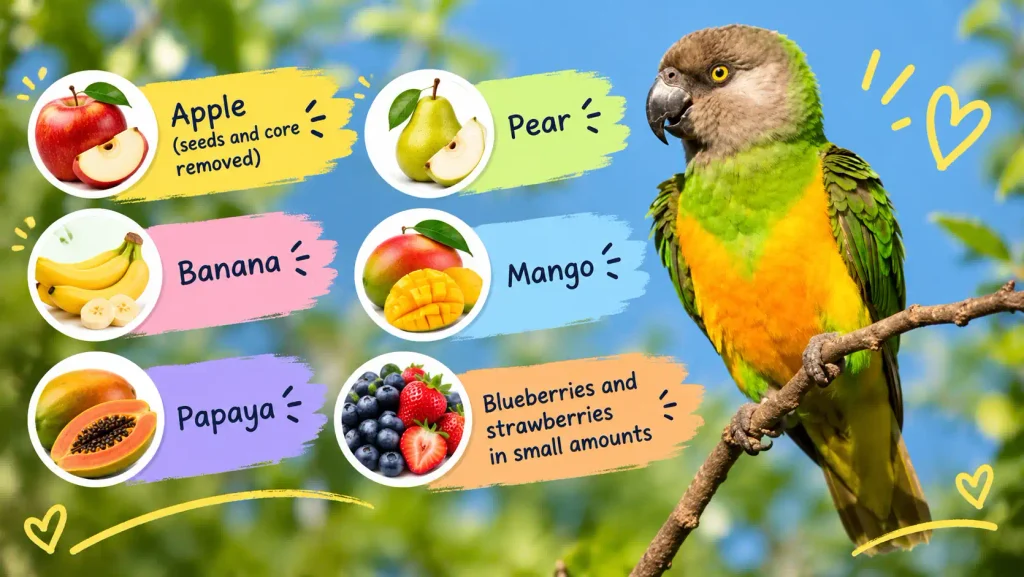
Fresh fruit adds natural sugars, moisture, and antioxidants, though portion size needs to stay small given how compact these birds are. Apple, pear, banana, mango, and papaya are generally well tolerated in small chopped pieces a few times a week. Rinsing produce thoroughly removes pesticide residue that can build up over repeated feedings.
Citrus fruits in small amounts are usually fine for most healthy adult birds, though some owners notice loose droppings if given too much at once. Grapes and berries make good variety items but should still be treated as an occasional addition rather than a daily habit.
- Apple (seeds and core removed)
- Pear
- Banana
- Mango
- Papaya
- Blueberries and strawberries in small amounts
Senegal Parrot Vegetables
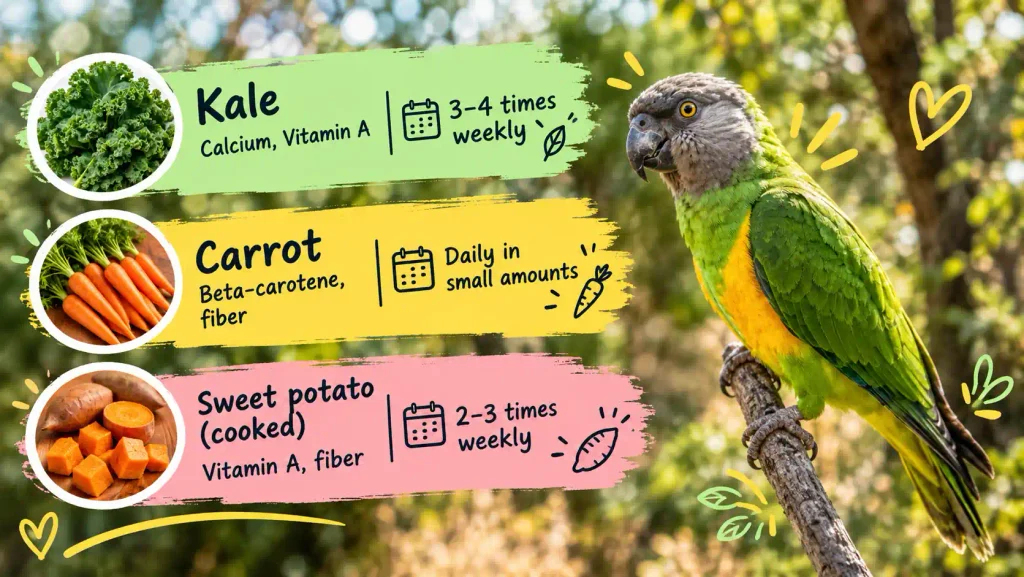
Vegetables should make up a larger daily share than fruit, since they offer more fiber and fewer natural sugars. Dark leafy greens such as kale, dandelion greens, and Swiss chard bring calcium and vitamin A that support feather and bone health. Orange vegetables like carrot and sweet potato add beta-carotene, which the body converts into vitamin A.
Steaming harder vegetables like squash or sweet potato slightly can make them easier to eat without stripping away too many nutrients. Rotating vegetable choices through the week keeps meals interesting and reduces the odds of a bird fixating on just one item.
A quick reference table makes it easier to see which vegetables offer the most nutritional value for regular feeding.
| Vegetable | Key Nutrients | Feeding Frequency |
| Kale | Calcium, Vitamin A | 3–4 times weekly |
| Carrot | Beta-carotene, fiber | Daily in small amounts |
| Sweet potato (cooked) | Vitamin A, fiber | 2–3 times weekly |
| Broccoli | Vitamin C, calcium | 2–3 times weekly |
| Bell pepper | Vitamin C | 2–3 times weekly |
Senegal Parrot Nuts
Nuts bring healthy fats and make excellent foraging and training treats when offered in shell or as a puzzle-feeder item. Almonds, walnuts, and pine nuts are popular choices, though portion control matters because of how calorie-dense nuts are for a bird under 170 grams. Peanuts in the shell are generally avoided by careful owners due to the risk of aflatoxin contamination from improper storage.
Offering nuts as an occasional reward rather than a daily item helps prevent unwanted weight gain, which is a common issue in pet parrots that get too little flight time. Cracking a nut open can also serve as mental enrichment, since the physical effort mimics natural foraging behavior.
Senegal Parrot Grains
Whole grains such as brown rice, quinoa, and oats provide complex carbohydrates and additional fiber alongside the core pellet diet. Cooked, unsalted grains mixed with vegetables create a warm, engaging meal that many birds find appealing, especially in cooler weather. Plain, air-popped popcorn without butter or salt is another grain-based option some owners use occasionally.
Avoiding added salt, butter, or sugar keeps these grains a healthy addition rather than an empty-calorie filler. Whole grain pasta cooked plain can also be offered occasionally as a novel texture for enrichment purposes.
How Much Senegal Parrot Food Should a Bird Eat Daily?
A healthy adult Senegal parrot typically eats around 1 to 2 tablespoons of pellets combined with a small serving of fresh vegetables and a limited amount of fruit, seeds, or nuts each day. Exact amounts vary with activity level, age, and season, so weighing a bird regularly helps track whether portions need adjusting. A sudden drop in appetite or interest in favorite foods is worth mentioning to an avian veterinarian promptly.
Senegal Parrot Treats
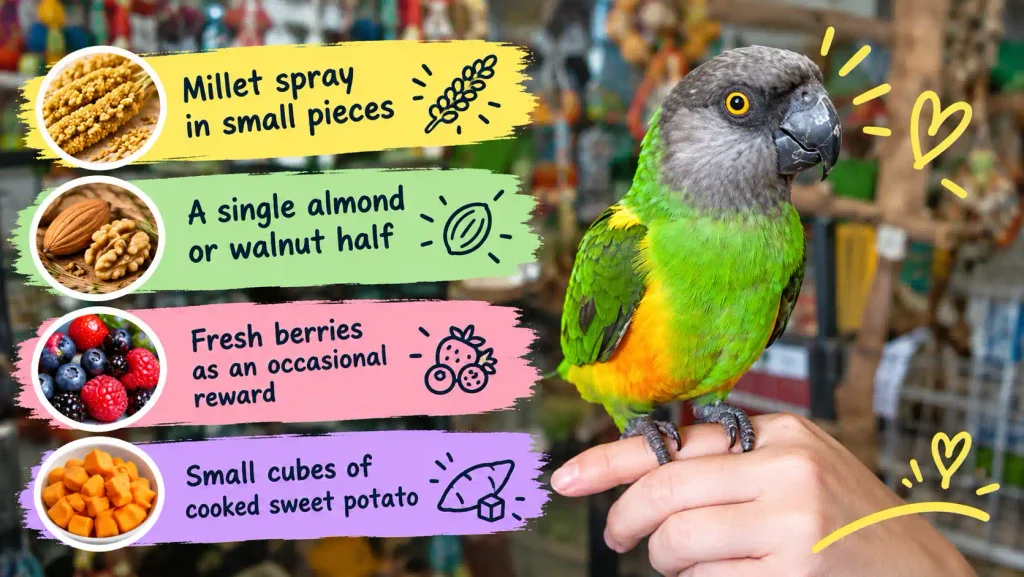
Treats work best as training tools rather than a constant snack, since overuse quickly adds unwanted calories to a small frame. A single nut, a few pieces of millet spray, or a small chunk of fruit makes an effective reward during training sessions. Store-bought parrot treats should list recognizable ingredients rather than long lists of fillers, sugar, or artificial coloring.
Rotating treat types keeps a bird motivated during training without relying on any single high-fat item too often. Homemade options, such as a small piece of plain cooked sweet potato, often work just as well as commercial treats.
- Millet spray in small pieces
- A single almond or walnut half
- Fresh berries as an occasional reward
- Small cubes of cooked sweet potato
Can Senegal Parrots Eat Human Food Safely?
Plain, unseasoned human foods such as cooked rice, steamed vegetables, and small amounts of fruit are generally safe for Senegal parrots, provided salt, butter, sugar, and seasoning stay out of the dish. Processed snacks, fried foods, and anything high in sodium should stay off the menu entirely. Checking a food against a trusted toxic-food list before offering anything new is always the safer choice.
Senegal Parrot Food to Avoid
Any responsible Senegal Parrot Food plan needs a clear no-list, since certain everyday foods carry real risk for parrots and deserve permanent removal from any feeding routine. Chocolate, caffeine, avocado, onion, garlic, and alcohol all rank among the most dangerous items for pet birds. Avocado in particular contains persin, a compound that can cause serious heart and respiratory problems in birds even in small amounts.
Fruit pits and apple seeds contain trace amounts of cyanogenic compounds and should always be removed before offering the fruit. High-salt snacks and anything containing xylitol also belong on the permanent no-list for this species. The World Parrot Trust and other avian welfare groups publish updated toxic-food guidance that is worth reviewing periodically as new research emerges.
Keeping a printed list near the kitchen helps prevent accidental feeding, especially in households with children who may want to share snacks.
| Food Item | Why It’s Dangerous |
| Chocolate | Contains theobromine, toxic to birds |
| Avocado | Contains persin, can cause heart failure |
| Onion and garlic | Can damage red blood cells |
| Caffeine | Affects heart rate and nervous system |
| Salty snacks | Leads to kidney and electrolyte issues |
| Xylitol-sweetened foods | Toxic even in small quantities |
Avocado stands out as one of the most dangerous items on this list because persin can trigger fluid buildup around the heart and lungs within hours of ingestion. Contacting an avian veterinarian immediately is essential if accidental ingestion is suspected, and the RSPCA advises treating any suspected poisoning in a pet bird as an emergency.
Wrapping Up the Right Senegal Parrot Diet
Getting the basics right matters far more than chasing a perfect formula, since consistency across pellets, vegetables, fruit, seeds, nuts, and grains builds a genuinely balanced plate over time. Pellets should form the nutritional backbone of daily meals, while seeds and nuts stay in the picture as smaller, calorie-aware additions rather than the main event. Fresh vegetables deserve a bigger daily role than fruit, and rotating choices through the week keeps meals interesting without overloading on natural sugar.
Treats earn their place as training tools rather than constant snacks, and knowing which everyday items to avoid protects against accidental poisoning. Weighing food, watching appetite, and adjusting portions as a bird ages all help catch problems early. A little planning around Senegal Parrot Food turns feeding time into one of the simplest ways to support a long, healthy life for this lively little parrot.
Frequently Asked Questions
What is the best daily diet for a Senegal parrot?
A balanced daily diet leans on formulated pellets as the base, topped with fresh vegetables, a small amount of fruit, and limited seeds or nuts for variety and enrichment.
Can Senegal parrots eat seeds every day?
Small amounts of seed are fine as a supplement or training reward, but a seed-only diet lacks enough calcium and vitamin A for long-term health.
How often should fresh food be offered?
Fresh vegetables and pellets should be available daily, while fruit, nuts, and treats work better as smaller, occasional additions a few times a week.
What human foods are safe for Senegal parrots?
Plain cooked rice, steamed vegetables, and small pieces of fresh fruit are generally safe, as long as salt, butter, sugar, and seasoning are left out.
What foods should never be given to a Senegal parrot?
Chocolate, avocado, caffeine, alcohol, onion, garlic, and anything containing xylitol should always be kept away from this species.