

Senegal Parrot Temperament is usually calm, curious, and gentle, but the bird can become nippy, jealous, or bossy when it feels stressed, bored, or crowded. Most Senegals bond with one main person and may lunge or bite when others come too close. They are quieter than many parrots; they learn tricks easily, and they need daily play, chew toys, and time outside the cage to stay happy.
Pinched eyes, a fanned tail, or a raised head show that the bird is excited or annoyed, so step back when you see these signs. Early handling, a steady routine, and patient training are the best ways to shape Senegal Parrot Temperament in a positive direction.
Understanding Senegal Parrot Temperament
Native to the savannas and woodlands of West Africa, the Senegal Parrot (Poicephalus senegalus) developed sharp instincts for spotting danger and bonding tightly with a flock. Wild flock behavior explains much of what pet owners see at home, including the bird’s caution around strangers and its loyalty toward familiar faces. Independence runs deep in this breed, so a Senegal often plays alone happily for long stretches, then suddenly demands attention. Conservation groups such as the World Parrot Trust track wild Poicephalus populations and note ongoing habitat pressure in parts of West Africa. Mood swings, playful mischief, and quiet stubbornness all sit comfortably within the normal range for this species. Owners who study these traits early tend to build calmer, more trusting relationships over time.
Individual variation matters as much as breed-wide tendencies, since two Senegals raised in similar homes can still develop noticeably different personalities. Age also plays a role, with young birds often showing more flexibility and older birds settling into firmer habits and preferences. Households with a calm, predictable pace generally see steadier moods than homes with constant chaos or unpredictable schedules.
What Shapes Senegal Parrot Temperament The Most?
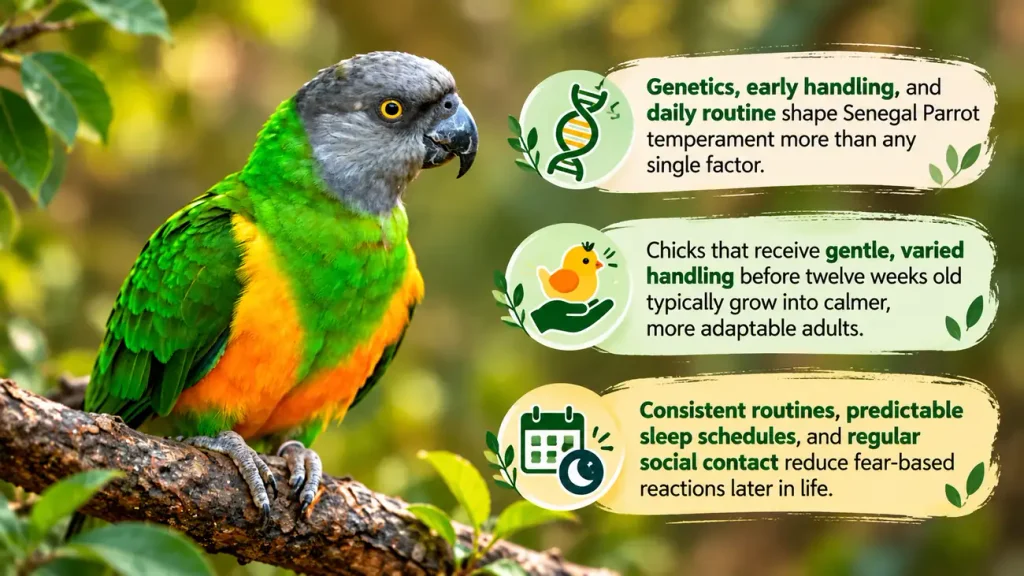
Genetics, early handling, and daily routine shape Senegal Parrot Temperament more than any single factor. Chicks that receive gentle, varied handling before twelve weeks old typically grow into calmer, more adaptable adults. Consistent routines, predictable sleep schedules, and regular social contact reduce fear-based reactions later in life. Hormonal cycles and environmental stress can still cause temporary shifts even in well-socialized birds.
Senegal Parrot Personality Traits That Define The Breed
Several personality traits appear again and again in owner reports, breeder observations, and avian behavior literature. The table below breaks down the traits most commonly linked to this compact, big-personality parrot.
| Trait | What It Looks Like In Daily Life |
| One-person bonding | Often chooses a favorite person and stays close to them. |
| Independence | Enjoys solo play with toys for long stretches |
| Stubborn streak | Refuses commands it already knows if bored or annoyed |
| Playful curiosity | Investigates new objects, textures, and sounds constantly |
| Territorial instinct | Protects a favorite cage, room, or perch from intruders |
| Quick learner | Picks up tricks, words, and routines faster than many parrot species |
These traits combine to shape Senegal Parrot Temperament in ways that surprise many first-time owners, especially the sharp contrast between clingy affection and sudden independence. A bird that begs for cuddles at breakfast may ignore the same person entirely by dinner. That shift is normal behavior, not rejection, and reflects the bird’s natural need for autonomy.
Confidence tends to build gradually rather than appearing overnight, so patience during the first several months pays off later. Curiosity often extends to household objects like phone chargers, paper, and jewelry, so supervised time outside the cage matters for safety as well as bonding. Owners who mix mental challenges, such as puzzle feeders, with quiet downtime tend to see fewer behavior problems overall.
Senegal Parrot Behavior Patterns And Daily Habits
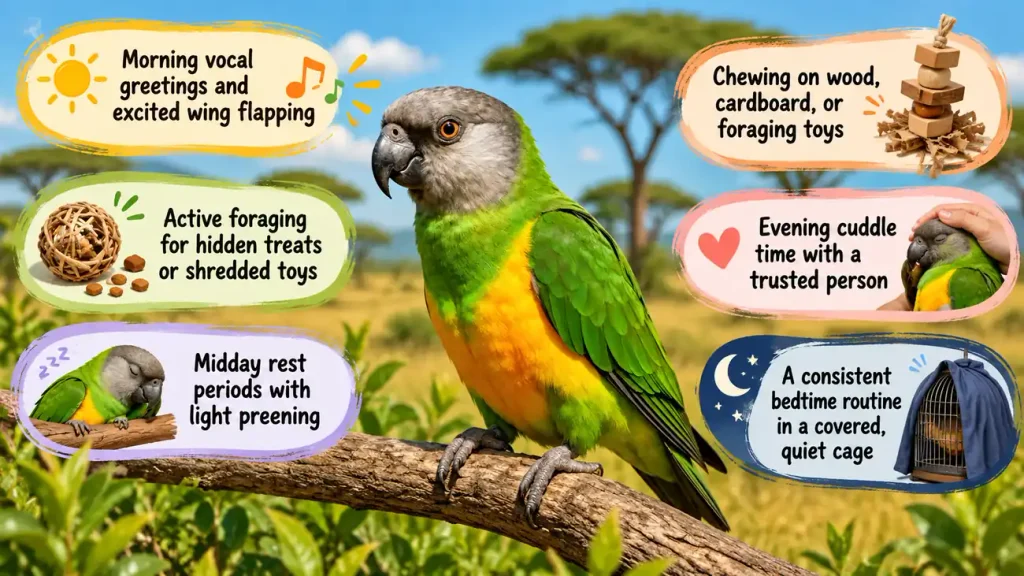
Daily behavior tends to follow a fairly predictable rhythm once a Senegal settles into a household routine. Mornings usually bring the highest energy, with vocal greetings, active play, and eagerness to leave the cage. Midday often slows down into preening, napping, or quiet chewing on approved wood toys. Evenings frequently bring a second burst of activity before the bird winds down for the night.
Typical daily patterns include:
- Morning vocal greetings and excited wing flapping
- Active foraging for hidden treats or shredded toys
- Midday rest periods with light preening
- Chewing on wood, cardboard, or foraging toys
- Evening cuddle time with a trusted person
- A consistent bedtime routine in a covered, quiet cage
Disruptions to this rhythm, such as travel, houseguests, or a change in cage location, often trigger temporary crankiness or extra noise. Most birds settle back into their normal pattern within a few days once the household routine stabilizes again. Keeping feeding times, lights-out schedules, and play sessions roughly consistent helps minimize stress during these transitions.
How Do Senegal Parrots Behave Around New People?
Senegal Parrots typically react to strangers with caution rather than open aggression. Many birds freeze, lean away, or fluff their feathers when an unfamiliar person approaches too quickly. Slow, calm introductions with treats and quiet talking usually help a wary bird relax within a few visits. Forced handling by strangers often backfires and can create lasting distrust.
Senegal Parrot Biting And Aggression Causes
Biting rarely happens without a reason, even when the trigger is not obvious to the owner. Fear, pain, hormones, and poor past handling all rank among the most common causes of aggression in this breed. The Association of Avian Veterinarians recommends ruling out illness or discomfort first whenever a normally gentle bird suddenly starts biting.
| Biting Trigger | What It Usually Means | What Helps |
| Fear or startle | Bird feels cornered or surprised | Slow movements, more warning before contact |
| Hormonal season | Increased territorial or nesting drive | Shorter daylight hours, limit cuddling near the body |
| Pain or illness | Underlying health problem | Prompt avian vet checkup |
| Overstimulation | Too much handling or noise | Short breaks and quiet recovery time |
| Poor socialization | Limited early exposure to handling | Gradual, positive trust-building sessions |
Aggression usually eases once the underlying cause is addressed rather than punished. Yelling, tapping the beak, or flicking the bird only teaches fear, not better manners. Reward-based training and predictable routines produce far more reliable results over weeks and months.
Timing matters too, since biting that appears suddenly in an otherwise calm adult often signals pain rather than a behavior problem. A veterinary exam should come before any training plan when a bite pattern changes abruptly. Bite pressure also varies by context, with a warning nip differing greatly from a hard, sustained bite meant to drive someone away.
Senegal Parrot Bonding And Socialization Tips
Strong bonds form gradually through consistent, low-pressure interaction rather than forced closeness. Offering favorite treats by hand, talking softly during daily care, and respecting the bird’s space all build trust over time. Positive daily routines strengthen Senegal Parrot Temperament traits like confidence and calmness, especially in younger birds still learning what to expect from people.
Practical bonding tips include:
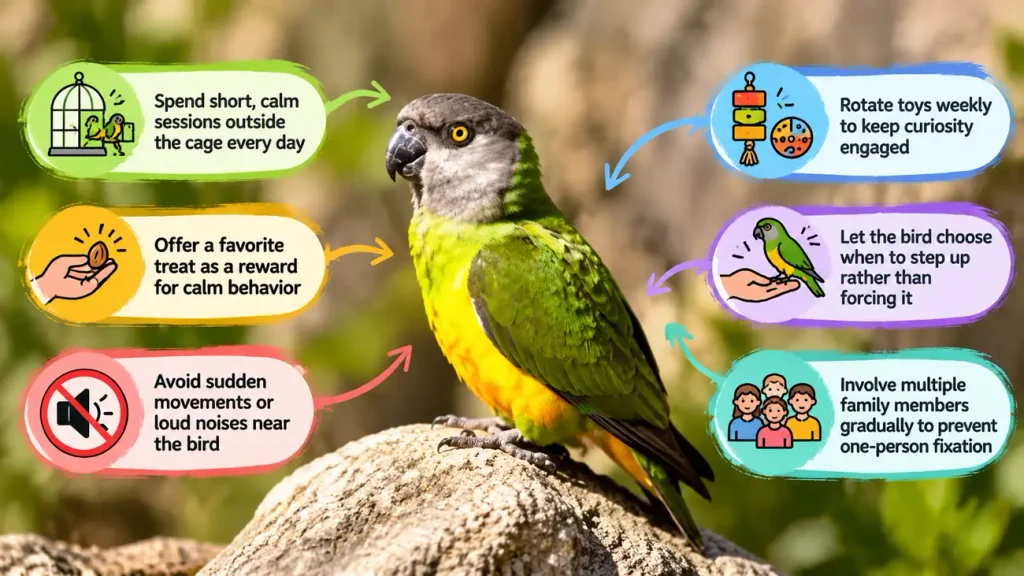
- Spend short, calm sessions outside the cage every day
- Offer a favorite treat as a reward for calm behavior
- Avoid sudden movements or loud noises near the bird
- Rotate toys weekly to keep curiosity engaged
- Let the bird choose when to step up rather than forcing it
- Involve multiple family members gradually to prevent one-person fixation
Socialization works best as an ongoing habit rather than a one-time project completed during the first few weeks. Short, frequent sessions generally beat long, occasional ones, since a tired or overstimulated bird learns very little. Progress often looks slow at first, then accelerates once trust reaches a certain point in the relationship.
Senegal Parrot Body Language And Jealousy Signs
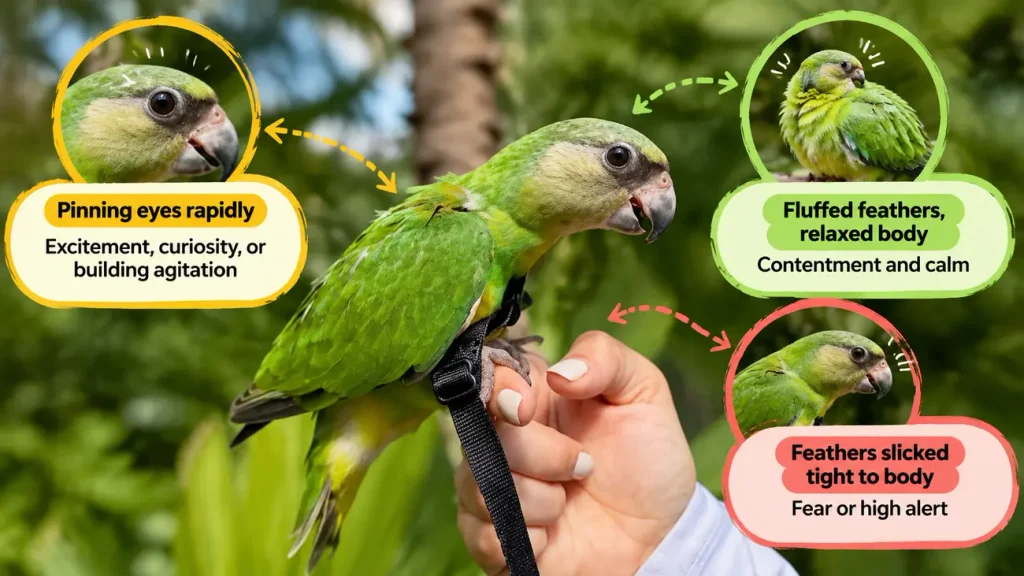
Reading body language correctly prevents many accidental bites and misunderstandings between bird and owner. Feather position, eye pinning, tail movement, and posture all communicate mood long before a bite ever happens.
| Body Signal | Likely Meaning |
| Pinning eyes rapidly | Excitement, curiosity, or building agitation |
| Fluffed feathers, relaxed body | Contentment and calm |
| Feathers slicked tight to body. | Fear or high alert |
| Wings slightly raised, tail fanned | Warning display before a possible bite |
| Beak grinding at rest. | Sign of contentment before sleep |
Body language should always be read in combination rather than in isolation, since a single signal can mean different things depending on context. A relaxed posture paired with rapid eye pinning, for example, usually signals excitement rather than aggression. Watching the whole bird, including feet grip and breathing rate, gives a far more reliable read than focusing on one feature alone.
Signs of Senegal Parrot Jealousy
Jealousy often surfaces as lunging, loud vocalizing, or blocking access whenever a favorite person shows attention to another pet or family member. Some birds attempt to bite the “rival” or climb aggressively toward the person they consider their own. Redirecting attention calmly, rather than scolding, usually reduces jealous outbursts over time. Consistent, shared attention from multiple household members can prevent single-person fixation from developing in the first place.
Senegal Parrot Noise Levels And Vocalization
Compared with larger parrots such as macaws or cockatoos, this species ranks as one of the quieter mid-sized parrots kept as pets. Daily vocalizing usually includes chirps, whistles, and occasional mimicked words rather than sustained screaming. Loud outbursts typically signal boredom, excitement, alarm, or a demand for attention rather than random noise.
Buyers should also confirm that any Senegal Parrot comes from a legal, traceable source, since the species is listed under CITES Appendix II, which regulates international trade to protect wild populations. Reputable breeders and sellers should provide documentation on request. Apartment dwellers and condo residents often find this species more manageable than larger, louder parrot breeds, though no parrot qualifies as truly silent.
How Loud Is A Senegal Parrot Compared To Other Parrots?
Senegal Parrots produce moderate noise levels, well below the piercing screams associated with macaws, cockatoos, or Amazon parrots. Typical daily sounds include short chirps, whistles, and occasional word mimicry rather than prolonged screeching. Excessive noise usually points to boredom, attention-seeking, or an unmet need rather than a fixed trait of the breed.
Quick Summary of Senegal Parrot Traits
Senegal Parrot Temperament brings together independence, loyalty, curiosity, and the occasional stubborn streak into one compact, clever package. Personality traits like one-person bonding and territorial instinct explain why this bird forms such strong attachments so quickly. Daily behavior tends to follow predictable morning and evening rhythms once a routine settles into place. Biting and aggression almost always trace back to fear, hormones, pain, or poor early handling rather than random meanness. Bonding and socialization improve steadily through patient, low-pressure interaction and shared family involvement. Body language and jealousy signs offer early warning before conflicts escalate, rewarding owners who pay close attention. Noise levels stay moderate compared with larger parrot species, making this bird a realistic choice for many households. Patience, consistency, and respect for this parrot’s independent streak reward owners with one of the most devoted companions in the parrot world.
Frequently Asked Questions
Are Senegal Parrots aggressive by nature?
Senegal Parrots are not naturally aggressive, though fear, hormones, pain, or poor socialization can trigger biting or territorial behavior.
Do Senegal Parrots bond with one person only?
Many Senegal Parrots show a strong preference for one person, though shared handling from multiple family members early on can broaden that bond.
How noisy are Senegal Parrots compared to other parrots?
Senegal Parrots are moderately quiet compared to macaws or cockatoos, typically chirping and whistling rather than screaming for long periods.
Why do Senegal Parrots get jealous?
Jealousy usually develops when a bonded bird feels attention shifting toward another pet or person, leading to lunging or loud vocal protest.
What is the best way to stop a Senegal Parrot from biting?
Identifying the trigger, avoiding punishment, and using calm reward-based training usually reduces biting more effectively than scolding or physical correction.