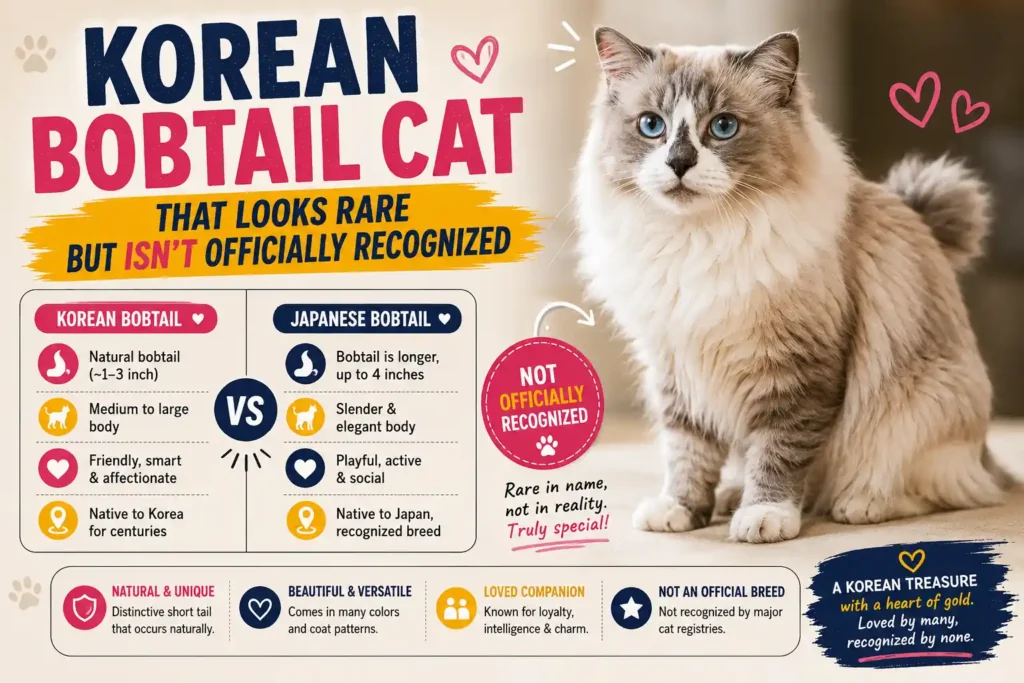
The Korean Bobtail cat is a rare and unusual breed known for its short, curved tail that looks like a bunny’s tail instead of a normal cat tail. This breed comes from Korea, and it has lived there for a very long time, but not many people outside Korea know about it. A Korean Bobtail cat usually weighs between 6 and 10 pounds and can live from 9 to 15 years with good care.
One special thing about this cat is its voice. It loves to “talk” to its owner with soft, frequent meows, almost like it wants to have a real conversation. It is also very friendly and enjoys staying close to people, which makes it a great companion for homes that want an active and loving pet. Even though it looks rare and special, the Korean Bobtail cat is still not officially recognized by major cat associations, which makes it even more interesting for people who love unique and uncommon breeds.
What Is a Korean Bobtail Cat?
A Korean Bobtail cat is a natural breed best known for its short, kinked tail, which looks more like a puffball than a typical cat tail. Nobody engineered this trait in a lab; it developed on its own over generations in Korea. The breed shares ancestry with the Japanese Bobtail, though most historians treat them as separate lines.
Neither The International Cat Association (TICA) nor the Cat Fanciers’ Association currently lists it as its own recognized breed, which is why solid data stays scarce. Even so, cat lovers in Korea have cherished this bobbed-tail feline for generations.
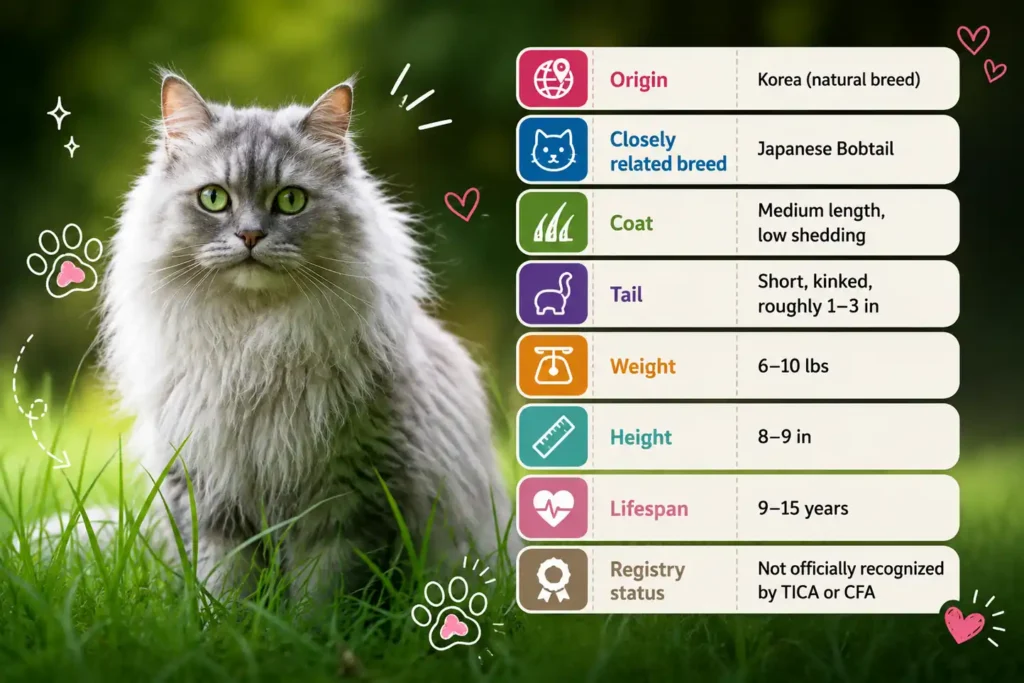
Here’s a quick snapshot of the Korean Bobtail cat’s core traits.
| Trait | Detail |
| Origin | Korea (natural breed) |
| Closely related breed | Japanese Bobtail |
| Coat | Medium length, low shedding |
| Tail | Short, kinked, roughly 1-3 in |
| Weight | 6-10 lbs |
| Height | 8-9 in |
| Lifespan | 9-15 years |
| Registry status | Not officially recognized by TICA or CFA |
History and Origin of the Korean Bobtail Cat
The Korean Bobtail is considered an ancient, naturally occurring breed that has lived across Korea for centuries, long before anyone thought about pedigrees. Some historians believe it arrived through trade and migration between Korea, China, and Japan, explaining its resemblance to the Japanese Bobtail. Folklore ties bobbed-tail cats to good luck, and these cats were often kept on farms and near temples to help control rodents. Western interest has picked up only in recent decades, and formal recognition has been slow. Reliable records remain thin, which keeps the Korean Bobtail cat feeling like an undiscovered gem to most Western fans.
Korean Bobtail Cat Appearance
The Korean Bobtail cat has a medium-sized, slender, muscular build with large, almond-shaped eyes ranging from gold to green. Its signature feature is a short, kinked tail that’s never fully absent, though it can look barely there under a fluffy coat.
Coat colors include white, blue, black, brown, chocolate, and lilac, often layered in patches on a mostly white body. Breeders say mostly white cats with colorful patches tend to be the most in demand, which affects kitten pricing. Overall, the look is elegant and a little wild, somewhere between a classic shorthair and a rabbit.
Are Korean Bobtail Cats Rare?
Yes. Korean Bobtail cats are genuinely rare, especially outside Korea, mainly because no major registry runs a structured breeding program for them. Combined with limited English-language information, that scarcity makes finding a kitten outside Asia a real challenge.
See How Proper Care Can Boost Your Cat’s Lifespan. Read more in Korean Bobtail Cat Lifespan That Depends More on Care Than Genetics.
Korean Bobtail Cat Size and Weight
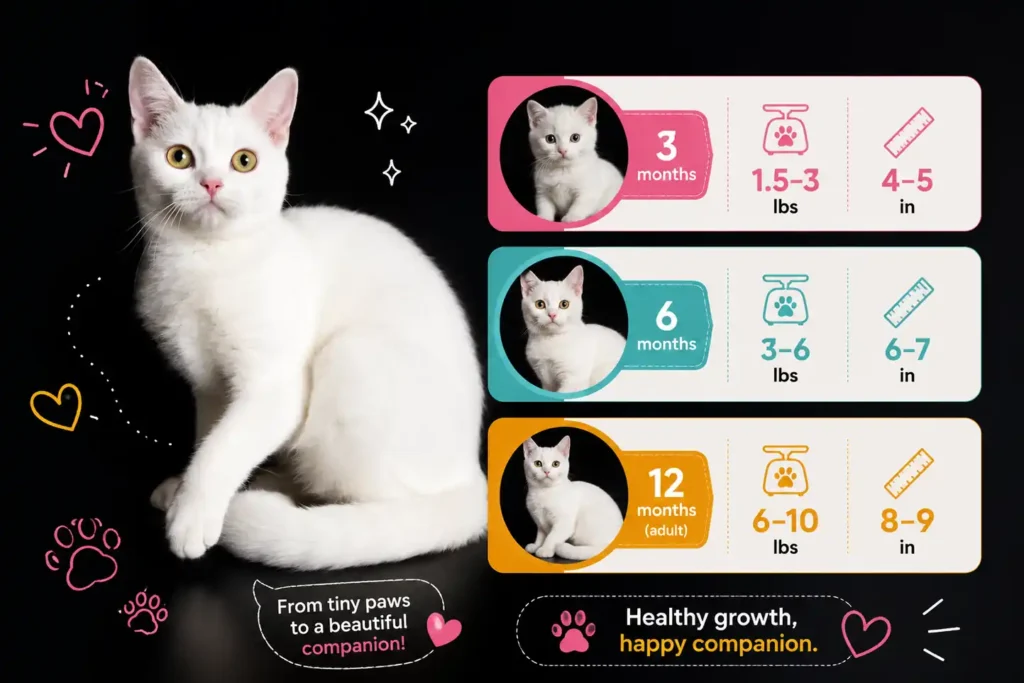
Most adult Korean Bobtail cats stand about 8 to 9 inches tall and weigh between 6 and 10 pounds once fully grown, putting them solidly in the medium-cat category. Kittens grow steadily through their first year, reaching most of their adult size by around 12 months. Because exact growth data on this breed is limited, treat the numbers below as general estimates rather than fixed rules.
Here’s an approximate growth timeline for a Korean Bobtail kitten.
| Age | Approx. weight | Approx. height |
| 3 months | 1.5-3 lbs | 4-5 in |
| 6 months | 3-6 lbs | 6-7 in |
| 12 months (adult) | 6-10 lbs | 8-9 in |
Korean Bobtail Cat Personality and Temperament
This breed is famous for being active, curious, and remarkably vocal, expect meows, chirps, and running commentary while it hunts a toy mouse. A Korean Bobtail bonds closely with favorite humans and prefers company over solitude, so long stretches alone don’t suit it.
It stays playful into adulthood, loves puzzle toys, and can even learn to play fetch, though giving the toy back is optional in its opinion. Independent streaks show up too, and it won’t tolerate rough handling or chaotic energy. Females tend to be more selective and moody, while males are usually goofier and more easygoing.
Discover What Makes the Korean Bobtail’s Personality So Special. Read more in Korean Bobtail Cat Personality That Looks Calm but Acts Wild.
Are Korean Bobtail Cats Good Family Pets?
Korean Bobtail cats generally do well in families, but they’re happiest around older kids rather than toddlers, since sudden loud movements put them on edge. With cat-friendly dogs and calm pets, they usually adjust well once everyone has had time to settle into a routine.
Small caged pets like hamsters or birds are a different story, since this breed’s hunting instinct can view them as prey. Homes that offer steady attention and a predictable environment tend to get the best out of this cat.
Best food for Korean Bobtail cat
Like every cat, the Korean Bobtail is an obligate carnivore, so its diet should center on high-quality animal protein rather than filler carbohydrates. A mix of dry food for dental benefits and wet food for hydration works well for this active breed. Because this cat can overeat when bored, scheduled meals in measured portions beat free-feeding for weight control. Kittens need protein-dense formulas for growth, while adults do better on maintenance formulas matched to activity level. Always check with a veterinarian before switching foods or adding supplements.
Give Your Korean Bobtail the Nutrition It Deserves. Read more in Best Food for Korean Bobtail Cat: The High-Protein Diet Vets Actually Recommend.
Korean Bobtail cat Grooming
The Korean Bobtail’s medium-length coat is fairly low-maintenance, and weekly brushing is usually enough to keep it free of tangles. Nail trims once a month help prevent snags and painful overgrowth, especially for indoor cats. Baths aren’t a regular requirement since cats groom themselves well, so save the tub for genuinely dirty moments. Regular ear checks matter too, since wax buildup can sneak up quickly if ignored.
Simple Grooming Habits for a Healthy, Happy Cat. Read more in Korean Bobtail Cat Grooming That’s Trickier Than It Looks.
Korean Bobtail cat Training
Thanks to its sharp intelligence, the Korean Bobtail typically picks up litter box habits with almost no trouble. Basic commands like “come” and “down” are within reach when you use short, upbeat sessions built around treats. Clicker training works well for tricks, and many owners teach a version of fetch using a small toy. Consistency matters more than intensity, so five-minute daily sessions beat one long weekly session.
Build Good Habits with Positive Training Methods. Read more in Korean Bobtail Cat Training That Feels More Like Training a Dog.
Korean Bobtail cat Health problem
Korean Bobtails are generally considered a hardy, healthy breed without dramatic conditions tied to their short tail. Like most cats, they can develop periodontal disease and progressive retinal atrophy as minor, monitorable concerns. More serious issues that occasionally appear include hip dysplasia and gastrointestinal problems, both benefiting from early veterinary attention.
The American Association of Feline Practitioners recommends annual wellness exams for adult cats, with more frequent visits for kittens and seniors. Because breed-wide health data is limited outside Korea, a vet who tracks your cat’s history closely is especially valuable.
Are Korean Bobtail Cats Healthy?
Generally, yes. Korean Bobtail cats are considered a robust, naturally hardy breed with no major genetic red flags tied specifically to their tail. Routine checkups, dental care, and a healthy weight go a long way toward keeping this breed in good shape for its full 9- to 15-year lifespan.
Help Your Korean Bobtail Live a Longer, Healthier Life. Read more in Korean Bobtail Cat Health Problems That Often Go Unnoticed.
How Much Exercise Does a Korean Bobtail Cat Need?
This is an energetic breed that needs daily interactive play, not just a bowl of kibble and a nap in the sun. Wand toys, puzzle feeders, and a sturdy cat tree help burn off its curiosity and prevent boredom-driven mischief. Aim for at least two 10- to 15-minute play sessions a day, since short bursts suit a cat’s hunting instincts better than one long outing. Without enough stimulation, a Korean Bobtail can slide into overeating and weight gain, which strains its joints over time.
Indoor vs Outdoor Life for a Korean Bobtail Cat
Keeping a Korean Bobtail indoors is the safer choice, protecting it from traffic, predators, and diseases it could pick up outside. That said, this breed’s curiosity means indoor life needs real enrichment, like window perches, cat shelves, and rotating toys.
A secure, enclosed catio offers a nice middle ground, giving your cat fresh air without the risks of an unsupervised yard. Unsupervised outdoor access is discouraged for any rare, hard-to-replace breed, since the cost of losing one is high.
How Much Does a Korean Bobtail Cat Cost?
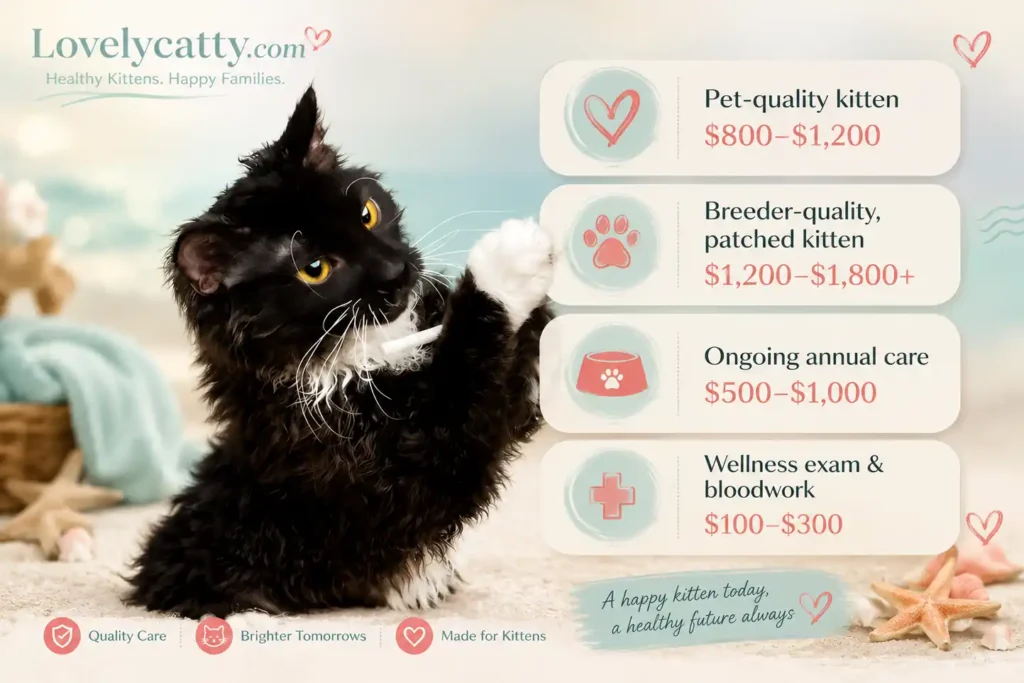
Because the Korean Bobtail is so rare outside Korea, exact pricing data is limited, and buyers should expect real detective work to find a litter. Based on prices for comparably rare bobtail breeds, a kitten from a reputable, health-tested source likely falls between $800 and $1,800 USD, with mostly white, patched kittens at the higher end. Ongoing costs like food, litter, and vet care typically run $500 to $1,000 USD a year. Since breed-specific rescues are nearly nonexistent, general shelters or bobtail rescue networks are worth checking if budget matters more than pedigree.
Planning to Buy a Korean Bobtail? Start Here. Read more in Korean Bobtail Cat Price That Varies More Than You’d Expect.
Here’s a rough budget breakdown for bringing home a Korean Bobtail cat.
| Cost item | Typical price (USD) |
| Pet-quality kitten | $800-$1,200 |
| Breeder-quality, patched kitten | $1,200-$1,800+ |
| Ongoing annual care | $500-$1,000 |
| Wellness exam & bloodwork | $100-$300 |
How Much Does a Korean Bobtail Cat Cost in 2026?
In 2026, a Korean Bobtail cat kitten from a reputable source generally costs between $800 and $1,800 USD, depending on coloring, pedigree claims, and how far you need to travel to find a breeder. Ongoing yearly care typically adds another $500 to $1,000 USD.
Pros and Cons of Owning a Korean Bobtail Cat
- Pro: Unique, rabbit-like tail and striking, patched coloring
- Pro: Affectionate, people-oriented, and highly trainable
- Pro: Generally healthy with a solid 9-15 year lifespan
- Con: Very rare and difficult to source outside Korea
- Con: Vocal nature may not suit noise-sensitive households
- Con: Limited long-term health and breed data available
Is the Korean Bobtail Cat Right for You?
The Korean Bobtail cat suits people who want a chatty, people-focused companion and don’t mind being followed room to room. It works well in calm households with older kids, cat-savvy dogs, and owners who commit to daily play.
It’s a poor match for anyone chasing a low-maintenance lap cat, since this breed genuinely wants engagement. Patience is essential too, since sourcing one responsibly, especially outside Korea, takes real time and research.
Frequently Asked Questions About the Korean Bobtail Cat
What is a Korean Bobtail cat?
A Korean Bobtail cat is a naturally occurring breed from Korea, known for its short, kinked tail, medium build, and vocal, affectionate personality.
How much does a Korean Bobtail cat cost?
Most Korean Bobtail kittens cost between $800 and $1,800 USD from a reputable source, depending on coloring, pedigree, and location.
Are Korean Bobtail cats recognized by TICA or CFA?
No. As of 2026, neither TICA nor the Cat Fanciers’ Association officially recognizes the Korean Bobtail as its own distinct breed.
Are Korean Bobtail cats good with kids?
They tend to do best with older, gentler children rather than toddlers, since sudden loud movements can startle this breed.
Do Korean Bobtail cats shed a lot?
No. Their medium-length coat sheds only moderately, and a weekly brushing session is usually enough to manage loose hair.
Are Korean Bobtail cats healthy?
Generally, yes. They’re considered a hardy breed, though periodontal disease, retinal atrophy, hip dysplasia, and GI issues can occur.
How intelligent are Korean Bobtail cats?
Very. They learn litter habits and basic commands quickly and often pick up tricks like fetch with consistent, reward-based training.
What is the lifespan of a Korean Bobtail cat?
Most Korean Bobtail cats live between 9 and 15 years, with proper nutrition, exercise, and routine veterinary care extending that range.