

Cockatoo care starts with the cage: birds need a minimum space of 3 feet by 4 feet by 5 feet, with room to fully spread both wings without touching the bars. Beyond size, proper cockatoo care means bar spacing of no more than 1 inch, since cockatoos can bend or break wider bars with their strong beaks. The diet side matters just as much: a base of high-quality pellets (60-70%) mixed with fresh vegetables, some fruit, and a few nuts as treats, while avocado, chocolate, caffeine, and salty foods stay off the menu completely.
Daily needs don’t stop at food and space; cockatoos need at least 4 to 6 hours of supervised out-of-cage time each day, plus regular interaction, or they can develop feather plucking and loud, repeated screaming. Good cockatoo care also includes yearly checkups with an avian vet, nail and beak monitoring, and safe toys that get rotated often to keep the bird’s mind active
How to Care for a Cockatoo
Cockatoo care starts with a blunt fact: these birds need more daily interaction than almost any other companion animal. That means several hours of supervised out-of-cage time, rotating foraging toys, a pellet-based diet, and a cage roomy enough for a full wingspan stretch.
Bathing or misting 2-3 times a week keeps feathers healthy, since cockatoos produce a fine powdery dust that needs rinsing. Annual avian vet checkups catch problems early, as birds tend to hide illness until it’s advanced. Consistent routines matter more than any product; cockatoos thrive on predictability and get anxious when schedules shift.
Owners who plan realistically for this commitment tend to raise calmer, healthier birds. Budget matters too: the bird itself costs $700-$3,000, initial cage/setup runs $250-$1,300, and ongoing food and enrichment cost $20-$250 monthly.
Cockatoo Cage Requirements
Minimum cage dimensions change significantly by species, and the table below breaks down space requirements recognized across the aviculture community.
| Cockatoo Size Group | Example Species | Minimum Cage Size (W x D x H) | Bar Spacing |
| Small | Goffin’s, Bare-eyed, Galah | 30″ x 24″ x 48″ | 5/8″–3/4″ |
| Medium | Citron, Lesser Sulphur-crested | 36″ x 30″ x 60″ | 3/4″–1″ |
| Large | Umbrella, Moluccan, Greater Sulphur-crested | 40″ x 30″ x 60″+ | 3/4″–1″ |
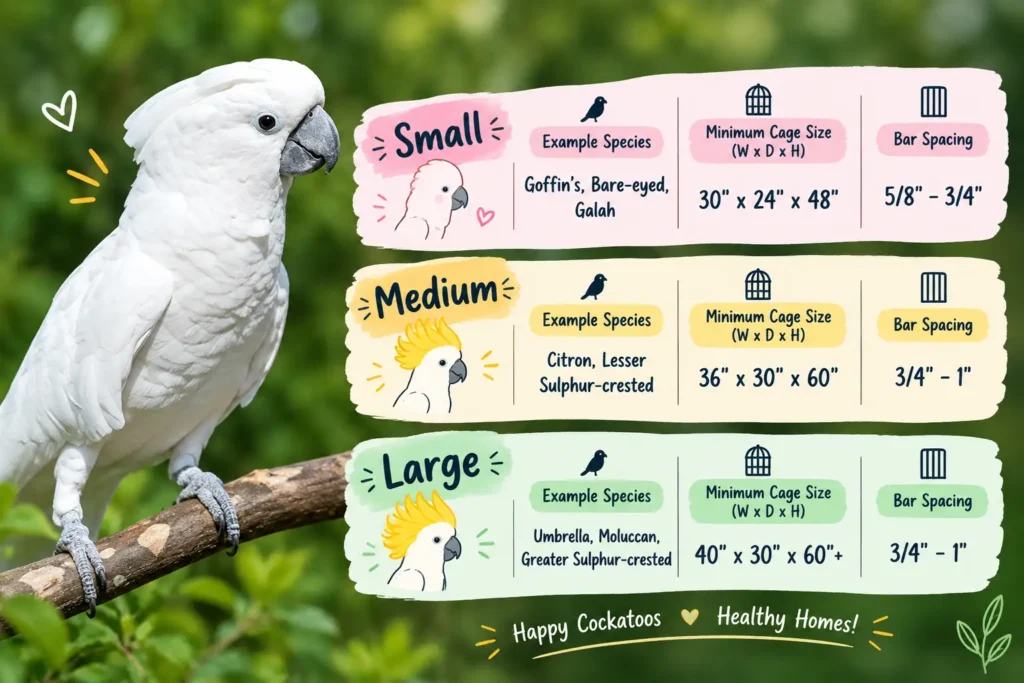
Bar spacing matters as much as overall size, since a curious beak or head can get stuck in gaps that seem harmless. Stainless steel cages last longer and resist corrosion from droppings and chewing better than powder-coated ones. Placement matters too: a corner spot feels safer than an exposed, open-room spot, and the kitchen should be avoided entirely, since fumes from overheated non-stick cookware can kill birds within minutes (per ASPCA guidance). Varied perch sizes support foot health and reduce nail trims. Overall, bigger is better, since cramped cages often lead to feather plucking and stress within months.
What is the minimum cage size for a cockatoo?
Small cockatoo species like Goffin’s need at least a 30 x 24 x 48-inch cage, medium species like the Citron need around 36 x 30 x 60 inches, and large species such as the Umbrella or Moluccan cockatoo need a minimum of 40 x 30 x 60 inches, though bigger is always better for these active, wide-winged birds.
Cockatoo Diet and Nutrition
Feeding ratios recommended by avian veterinary nutritionists have shifted away from seed-heavy mixes, and the comparison below shows where a cockatoo’s daily plate should land.
| Food Type | % of Daily Diet | Examples |
| Formulated pellets | 60–70% | Species-appropriate large-parrot pellets |
| Fresh vegetables & leafy greens | 20–30% | Broccoli, carrots, bell peppers, dark leafy greens |
| Seeds, nuts & fruit (treats only) | Up to 10% | Almonds, walnuts, small apple pieces |
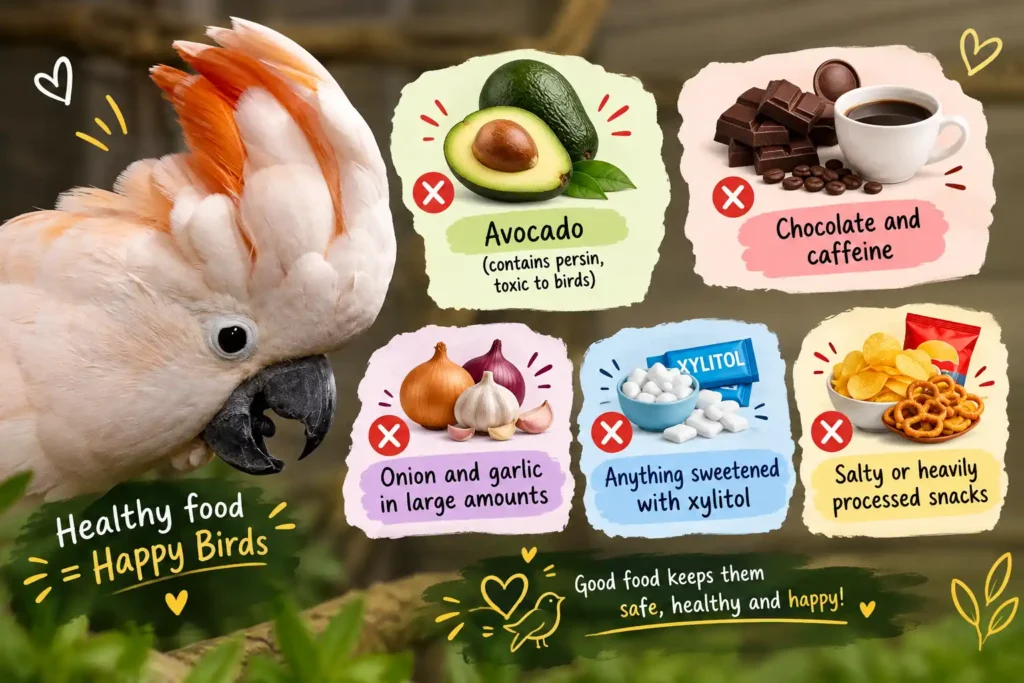
Seed-only diets remain the single biggest nutrition mistake among new cockatoo owners, since sunflower and safflower seeds run high in fat and low in the calcium a large parrot’s bones and reproductive system require. The Association of Avian Veterinarians and independent nutrition researchers both point toward pellet-based feeding as the safer long-term foundation, with fresh produce added daily for fiber, vitamin A, and hydration. Toxic foods deserve their own warning list, since several common kitchen items are dangerous in any amount:
- Avocado (contains persin, toxic to birds)
- Chocolate and caffeine
- Onion and garlic in large amounts
- Anything sweetened with xylitol
- Salty or heavily processed snacks
Weight checks on a gram scale, done weekly, catch slow creeping obesity long before it becomes visible to the eye. Fresh water needs a daily change, since bacteria multiply quickly in a bowl a bird has been dunking food and toys into all day.
What do cockatoos eat every day?
A healthy daily cockatoo diet is built mostly around formulated pellets, making up roughly 60 to 70% of intake, with fresh vegetables and leafy greens covering another 20 to 30%, and seeds, nuts, or fruit kept to occasional treats under 10% of the total diet.
Cockatoo Grooming
Grooming schedules vary by task, and the breakdown below shows how often each part of a cockatoo’s coat and body actually needs attention.
| Grooming Task | Recommended Frequency | Who Should Do It |
| Bathing or misting | 2–3 times per week | Owner, at home |
| Nail trims | Every 4–8 weeks, as needed | Avian vet or trained groomer |
| Beak maintenance | Rarely needed; monitor for overgrowth | Avian vet only |
| Wing feather check | At each molt | Avian vet or trained groomer |
Grooming goes beyond feeding schedules and covers a routine most new owners underestimate, one that keeps a cockatoo healthy while doubling as an early warning system for hidden problems.
- Bathing: Powder-down feathers give cockatoos their soft, chalky feel; bathing too often strips this natural coating, leaving skin dry and irritated
- Nail trims: Overgrown nails catch on fabric, cage bars, and toys; a trim every 4 to 8 weeks helps prevent injury
- Beak care: Should rarely be done at home; a healthy beak wears down naturally through chewing, and overgrowth often signals a liver or nutrition issue rather than a simple grooming gap
- Wing clipping: Genuinely debated among avian vets, worth a conversation with one rather than a snap decision based on convenience
- Health checks: Grooming sessions double as a chance to spot feather damage, skin irritation, or nail discoloration early.
How often should you bathe a cockatoo?
Most cockatoos do best with a bath, shower, or gentle misting two to three times per week, since these powder-down birds produce their own protective feather dust and bathing too frequently strips that natural coating, leaving skin and feathers dry.
Cockatoo Exercise and Enrichment
Four to six hours of supervised time outside the cage keeps a cockatoo’s muscles, joints, and mind in working order, a standard reflected in guidance from the World Parrot Trust and multiple avian behaviorists. Foraging toys that hide food behind cardboard, paper, or simple puzzle mechanisms replicate the hours a wild cockatoo would spend searching for food across the forest canopy.
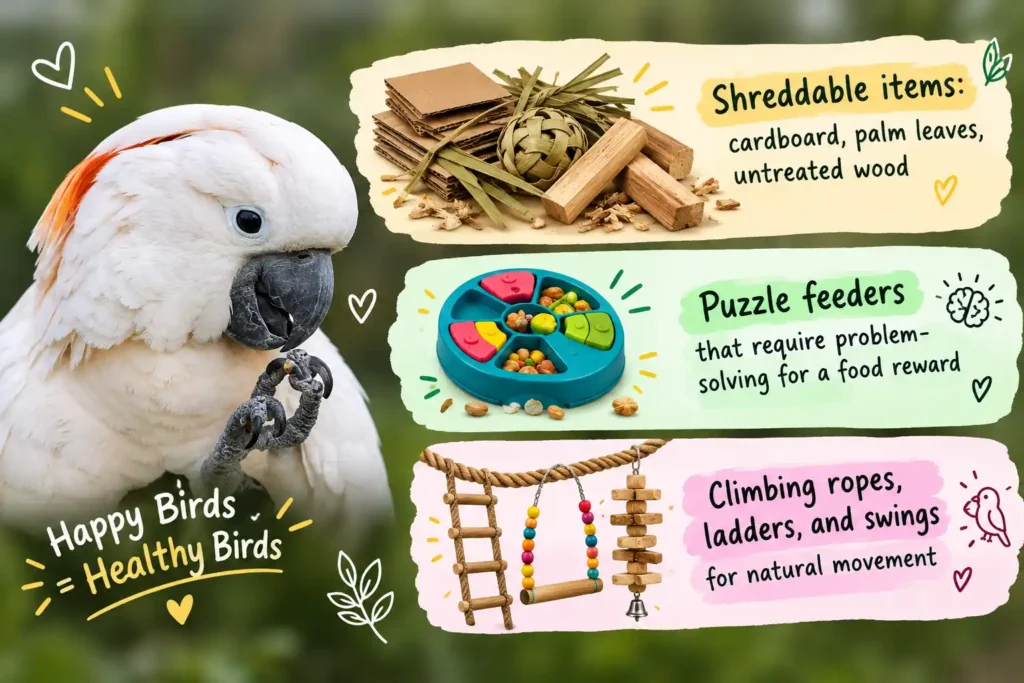
Boredom shows up fast in this species as screaming, feather plucking, or destructive chewing, and all three behaviors tend to improve once mental stimulation increases. Rotating toys weekly keeps novelty high, since cockatoos lose interest quickly in anything left unchanged in the cage for too long. A few enrichment categories worth stocking on rotation:
- Shreddable items: cardboard, palm leaves, untreated wood
- Puzzle feeders that require problem-solving for a food reward
- Climbing ropes, ladders, and swings for natural movement
Supervised time outdoors, harness-trained and closely watched, adds sunlight exposure that supports healthy vitamin D levels and feather condition. Skipping enrichment for even a few weeks tends to show up quickly in a cockatoo’s mood and behavior, since boredom compounds fast in such an intelligent species.
Cockatoo Socialization and Attention
Cockatoos bond as intensely as dogs and can develop separation anxiety, screaming, plucking, or self-mutilation without daily social contact. They do better with several short interactions throughout the day rather than one long session, and positive-reinforcement training helps keep them engaged.
Owners with unpredictable schedules or long work hours should think twice before adopting one, since even a second cockatoo won’t replace human bonding; they may bond with each other instead. Honest self-assessment before adoption helps prevent the repeated rehoming so common with this species.
Putting It All Together
Cockatoo care adds up to far more than a cage and a bag of seed, and every section above shows why. Daily basics cover feeding, out-of-cage time, and enrichment rotation, while cage requirements set minimum dimensions from roughly 30 inches for smaller species up to 40 inches or more for large ones.
Diet and nutrition guidance points toward a pellet-based diet with fresh vegetables and only occasional seeds or fruit. Grooming needs stay lighter than expected, focused mainly on regular bathing and professional nail trims rather than home beak work. Exercise and enrichment prevent the boredom-driven screaming and plucking that send so many cockatoos to rescue organizations each year.
Socialization and attention round out the picture, since these birds bond deeply and struggle through long stretches alone. Real costs, from a roughly $700 to $3,000 purchase price to ongoing food and vet bills, belong in the planning stage rather than as a surprise later. Anyone weighing this decision now has a realistic, veterinarian-informed picture instead of guesswork.
Cockatoo Care FAQs
How much cockatoo care is needed each day?
A pet cockatoo needs several hours of direct interaction every day, plus daily feeding, fresh water, and enrichment rotation, along with two to three baths a week and at least one annual visit to an avian veterinarian.
How much attention does a cockatoo need?
Cockatoos need near-constant company. Four to six hours of supervised out-of-cage time daily, spread across multiple sessions, keeps a cockatoo mentally engaged and reduces problem behaviors like screaming and feather plucking.
How do you take care of a cockatoo?
Proper care combines a spacious cage, a pellet-based diet with fresh vegetables, two to three baths weekly, several hours of daily interaction, foraging enrichment, and annual avian veterinary checkups.
Are cockatoos hard to take care of?
Yes, relative to most companion birds. Cockatoos are loud, demanding, and prone to anxiety without enough attention, and their 40- to 70-plus-year lifespan means the commitment often outlasts the owner’s original living situation.