
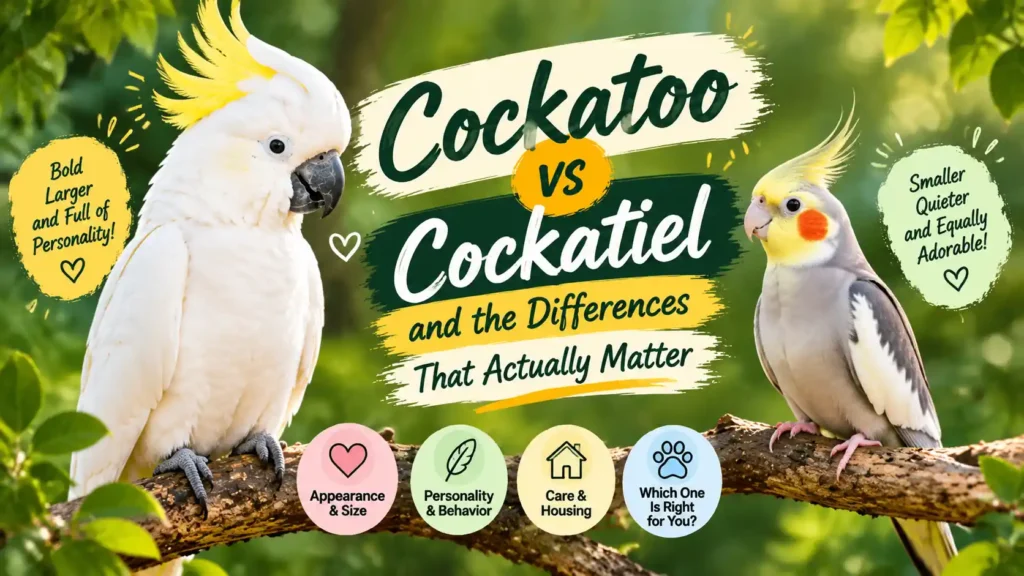
The main difference in the cockatoo vs cockatiel debate comes down to size and lifespan: a cockatoo can grow up to 20 inches long and live for 60 years or more, while a cockatiel stays small, around 12 to 14 inches, and usually lives 15 to 20 years. Cockatoos need a large cage, several hours of daily interaction, and a big budget for food, toys, and vet care, often costing $1,000 to $3,000 just to buy.
Cockatiels are much easier for first-time bird owners, since they cost between $75 and $200, eat less, and need less space. Noise is another major factor in the cockatoo vs cockatiel choice, as cockatoos are known for loud, piercing screams that can disturb neighbors, while cockatiels make softer chirps and whistles that fit better in apartments. Anyone comparing these two birds should think honestly about their daily schedule, living space, and long-term plans before deciding which one fits their life.
Where Cockatoos and Cockatiels Come From
Cockatoos and cockatiels share a family tree but little else in daily life. Cockatiels belong to their own subfamily (Nymphicinae) within Cacatuidae, technically making them the smallest cockatoo species, despite looking quite different from their crested cousins. The cockatoo vs cockatiel comparison hinges on scale: cockatoos are large and demanding, while cockatiels are compact and easier to fit into everyday home life.
Both birds originate in the wild across Australia, with some cockatoo species also native to Indonesia, New Guinea, and the Philippines. They share one clear trait: crest movement, which both use to signal excitement, alarm, or curiosity. Colors differ widely, too: most cockatoos show white, pink, or black plumage, while cockatiels come in mutations like pearl, lutino, and pied. Everyday ownership, though, diverges fast once size and noise enter the picture.
Cockatoo and Cockatiel Size
Body length and weight reveal the starkest contrast in the cockatoo vs cockatiel comparison, with adult cockatoos often growing four to six times heavier than a full-grown cockatiel. Species like the Umbrella Cockatoo or Moluccan Cockatoo reach 18 to 20 inches long and weigh close to a pound, while smaller cockatoo species such as the Goffin’s Cockatoo stay closer to 12 inches. Cockatiels, by comparison, rarely exceed 13 inches in total length, and roughly half of that length comes from tail feathers alone. Wingspan differences matter for cage and room planning, since larger cockatoos need significantly more flight space to stay physically and mentally healthy.
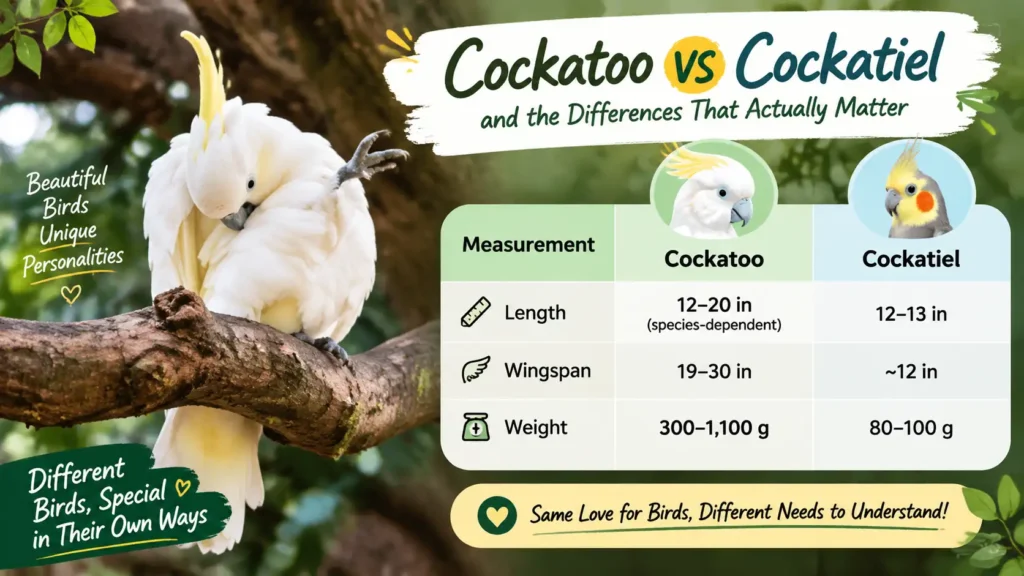
The table below lays out average size measurements for the most commonly kept species of each bird.
| Measurement | Cockatoo | Cockatiel |
| Length | 12–20 in (species-dependent) | 12–13 in |
| Wingspan | 19–30 in | ~12 in |
| Weight | 300–1,100 g | 80–100 g |
Differences between cockatoos and cockatiels: Lifespan
Lifespan represents the single biggest lifestyle commitment buyers overlook. Large cockatoo species regularly live 40 to 60 years in captivity, and well-documented cases put some individuals past 80 years old with attentive care. Cockatiels live considerably shorter lives, typically reaching 15 to 20 years, with some individuals documented past 25 years under excellent nutrition and veterinary support.
Genetics, diet quality, and mental stimulation all influence how close a bird gets to its maximum potential lifespan. Families adopting a cockatoo should plan for a companion that may outlast children moving through school, college, and early careers. Chronic stress, poor diet, and inadequate mental stimulation can shorten lifespan considerably in both species, regardless of genetic potential.
The comparison below shows typical lifespan ranges recorded by avian care organizations.
| Lifespan Stage | Cockatoo | Cockatiel |
| Average captivity | 40–60 years | 15–20 years |
| Documented maximum | 80+ years | 25+ years |
| Sexual maturity | 3–7 years | 6–12 months |
Cockatoo vs Cockatiel Personality
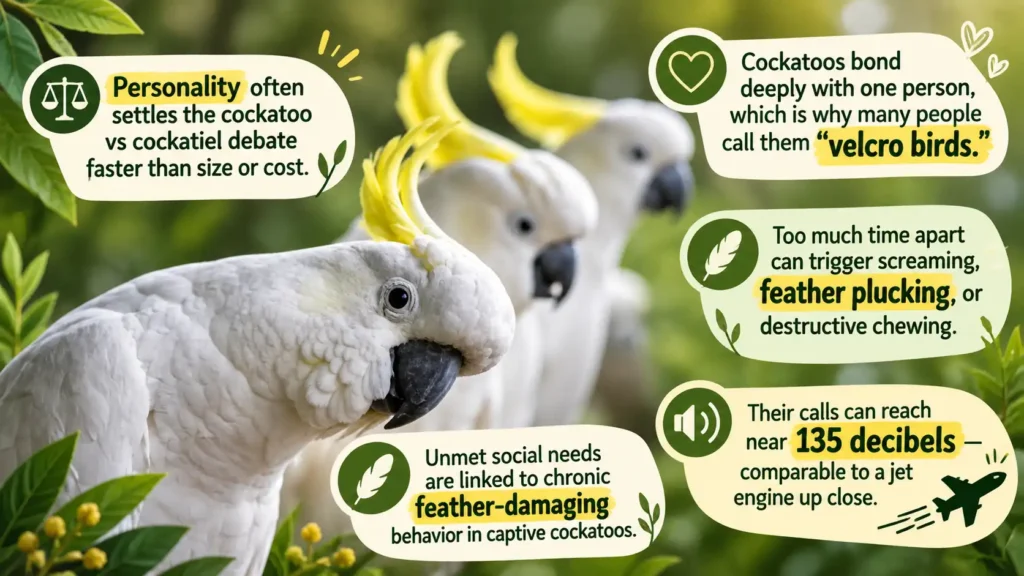
Personality often settles the cockatoo vs cockatiel debate faster than size or cost. Cockatoos bond so deeply with one person that behaviorists call them “velcro birds,” and time apart can trigger screaming, feather plucking, or destructive chewing. The World Parrot Trust links unmet social needs to chronic feather-damaging behavior in captive cockatoos, whose calls can reach near 135 decibels, comparable to a jet engine up close.
Cockatiels, by contrast, are gentler and more independent, happy with just a few hours of daily interaction. Many also learn to whistle full tunes once bonded with their owner. For apartments, shared housing, or families with young kids, cockatiels are usually the calmer, easier fit.
Cockatoo vs Cockatiel Care
Daily care needs differ sharply between the two. Cockatoos need a cage of at least 3 by 3 by 4 feet, plus 2 to 4 hours of supervised out-of-cage time daily to prevent boredom-related behavior problems. Cockatiels do well in a smaller 20 by 20 by 24-inch enclosure, with just 1 to 2 hours of daily interaction. Both birds thrive on a pelleted diet with fresh vegetables, limited fruit, and occasional seeds, rather than an all-seed diet.
The Association of Avian Veterinarians (AAV) recommends annual wellness exams for both species, including nail trims, beak checks, and wing feather assessments. Foraging toys and chewable wood also help keep both birds mentally engaged and reduce the risk of anxiety-driven feather damage.
A few care essentials apply to both species:
- Fresh water changed at least once daily
- Pelleted diet forming 70–80% of total intake
- Two or more toy rotations weekly to prevent boredom
- Nail, beak, and wing checks at every vet visit
Cockatoo vs Cockatiel Cost
Purchase price marks one of the widest gaps in the cockatoo vs cockatiel comparison. Cockatiels typically cost $75 to $250, making them one of the most affordable parrot species. Cockatoos cost far more, with common species like the Umbrella or Goffin’s Cockatoo priced between $1,200 and $3,000, and rarer or endangered species climbing past $4,000. CITES trade restrictions on several endangered cockatoo species, such as the Yellow-crested Cockatoo, further limit supply and push prices higher.
Monthly costs also differ sharply: cockatoo owners spend $50 to $100 on food and enrichment, versus $20 to $30 for cockatiels. Cage setup runs $300 to $1,000+ for a cockatoo but only $80 to $150 for a cockatiel. Adoption through bird rescues offers a cheaper option for both, with rehomed cockatoos often available for $200 to $600.
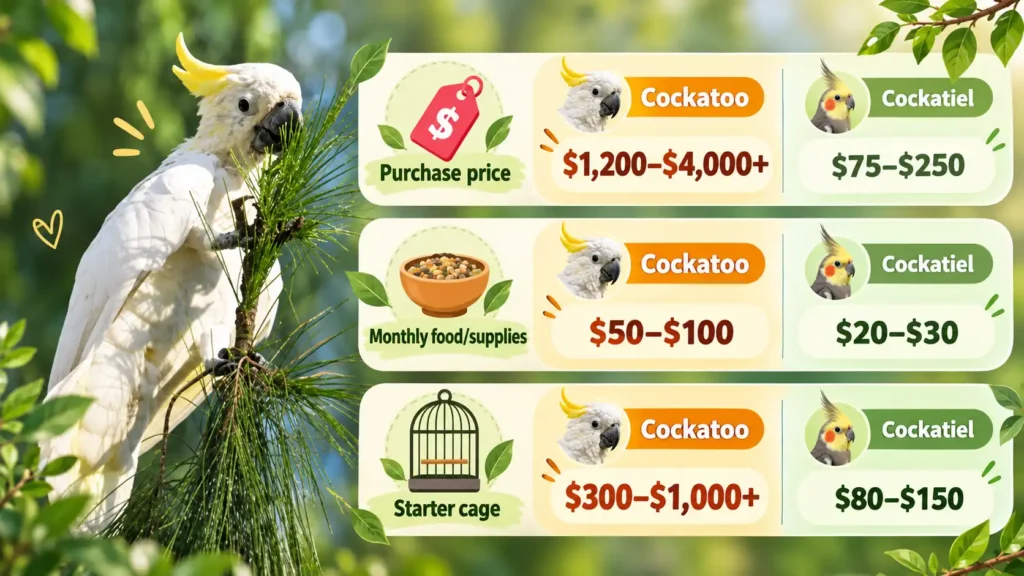
The breakdown below compares typical U.S. purchase and monthly costs for each bird.
| Cost Category | Cockatoo | Cockatiel |
| Purchase price | $1,200–$4,000+ | $75–$250 |
| Monthly food/supplies | $50–$100 | $20–$30 |
| Starter cage | $300–$1,000+ | $80–$150 |
Cockatoo vs Cockatiel as Pets
Choosing between the two comes down to experience, time, and noise tolerance. First-time owners generally do better with a cockatiel, since diet, socialization, and cage care stay manageable. Experienced owners with flexible schedules and soundproofed or rural homes handle cockatoos more successfully. Cockatoos see higher rehoming rates, often because owners underestimate the decades-long commitment. Apartments and close neighbors almost always favor the quieter cockatiel. Anyone considering a cockatoo should also plan for long-term care, since the bird may outlive its owner. Positive-reinforcement training with target sticks and treats builds trust in both species.
A cockatoo may not be the right fit when:
- Living space includes thin walls or close neighbors
- Daily free time runs under two hours
- No backup caregiver exists for illness or travel
- Household members are highly noise-sensitive
Cockatoo vs. Cockatiel: Which Parrot Is Right for You?
Choosing between these two popular parrots comes down to matching a bird’s needs with a realistic lifestyle. Size differences alone separate a half-pound cockatiel from a cockatoo that can weigh over a kilogram and live past 60 years. Lifespan expectations demand serious long-term planning, especially for cockatoo owners committing to a companion that may outlive decades of life changes.
Personality traits favor cockatiels for quieter homes, while cockatoos reward experienced owners with deep emotional bonds and remarkable intelligence. Daily care routines, from cage size to veterinary checkups, require considerably more time and space for cockatoos than for cockatiels.
Cost comparisons show cockatiels winning on nearly every front, from a $150 purchase price to modest monthly food bills. Overall pet suitability tips toward cockatiels for first-time owners and toward cockatoos for households ready for a lifelong, loud, and deeply rewarding relationship. The cockatoo vs cockatiel decision ultimately rewards buyers who research thoroughly before bringing either bird home.
Cockatoo vs Cockatiel FAQs
Is a Cockatoo Bigger Than a Cockatiel?
Yes, cockatoos are physically larger than cockatiels across every standard measurement, including length, wingspan, and body weight. Even the smallest cockatoo species, the Goffin’s Cockatoo, still outweighs a cockatiel by a wide margin, and larger species like the Umbrella or Moluccan Cockatoo can weigh ten times as much. Buyers choosing a cage or carrier should size it for the specific species rather than assuming one standard applies to both birds.
Do Cockatoos and Cockatiels Get Along?
Supervised interaction between cockatoos and cockatiels can work, though housing them in the same cage is not recommended. Size and strength differences mean a cockatoo can seriously injure a cockatiel during rough play or a territorial dispute, even unintentionally. Separate cages with supervised, out-of-cage time in a neutral room tend to produce the safest results for both birds.
Which Is Better, a Cockatoo or a Cockatiel?
Neither species is objectively better, since the right choice depends entirely on lifestyle, budget, and experience level. Cockatiels suit first-time owners, smaller homes, and tighter budgets, while cockatoos suit experienced caregivers who can commit decades of time, space, and money. The cockatoo vs cockatiel decision should weigh noise tolerance and long-term commitment above color preference or size alone.
Is a Cockatiel Easier to Care for Than a Cockatoo?
Yes, cockatiels are considerably easier to care for than cockatoos across nearly every category. Smaller cage requirements, lower food costs, quieter vocalizations, and less intensive social needs make cockatiels a more manageable choice for beginners and busy households. Cockatoos demand significantly more daily interaction, larger living space, and a much higher long-term budget.