

Ojos Azules Cats are one of the rarest cat breeds in the world, known for their striking deep blue eyes that can appear on almost any coat color, including black, calico, and tabby. Unlike most blue-eyed cats, whose eye color is tied to white fur or Siamese-style patterns, Ojos Azules Cats carry a unique dominant gene that allows this blue shade to show up regardless of coat type.
This same gene, however, comes with a serious risk: cats born with two copies of it often develop skull and health defects, so responsible breeders only pair Ojos Azules Cats with cats that carry none of the gene at all. This careful, limited breeding approach keeps their population extremely small and makes finding a healthy Ojos Azules cat a rare event even for experienced breeders.
History and Origin of Ojos Azules Cats
The story starts in 1984 in New Mexico, when Annie Gass noticed a tortoiseshell stray with strikingly deep blue eyes, later named Cornflower. She brought Cornflower to feline geneticist Dr. Solveig Pflueger, who worked closely with the registry now known as TICA. When Cornflower was bred to males without blue eyes, nearly all her kittens still inherited the trait, proving the gene was dominant rather than recessive.
That discovery mattered because most blue-eyed cats, like Siamese, get their eye color from a recessive gene tied to specific coat patterns. TICA accepted the breed for registration in 1991, in both short- and long-haired varieties. However, only ten Ojos Azules Cats were known to exist by 1992, and that number never grew much beyond a small handful of bloodlines. This breed’s history is short, unusual, and a little bittersweet.
Everything You Need to Know About the Ojos Azules Legacy. Read more in Ojos Azules Cat History Starting From a Single Stray in Mexico.
How Did the Ojos Azules Cat Breed Begin?
The breed began in 1984, when a blue-eyed tortoiseshell stray named Cornflower was discovered in New Mexico. Breeders paired her with cats that didn’t carry blue eyes, and nearly every kitten still inherited the trait anyway. That single litter became the entire foundation for the breed we now call Ojos Azules.
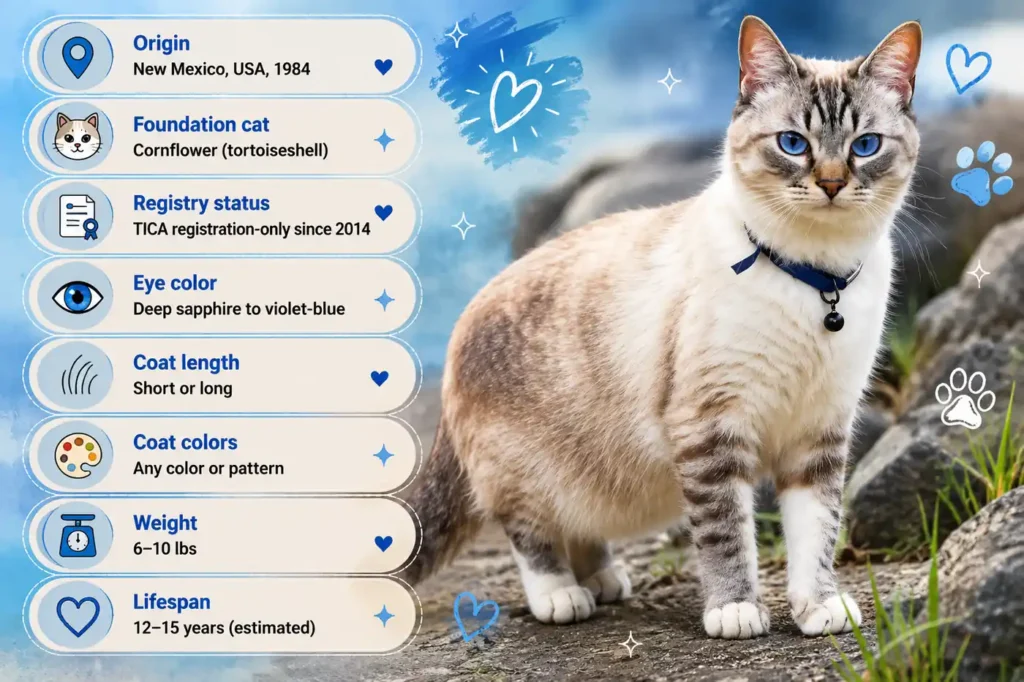
Here’s a quick snapshot of the breed’s core traits, which makes it easier to compare Ojos Azules Cats with other rare breeds at a glance.
| Trait | Detail |
| Origin | New Mexico, USA, 1984 |
| Foundation cat | Cornflower (tortoiseshell) |
| Registry status | TICA registration-only since 2014 |
| Eye color | Deep sapphire to violet-blue |
| Coat length | Short or long |
| Coat colors | Any color or pattern |
| Weight | 6–10 lbs |
| Lifespan | 12–15 years (estimated) |
Find Out How Much an Ojos Azules Cat Really Costs. Read more in Ojos Azules Cat Price That Explains Why It’s So Rare.
Physical Characteristics of Ojos Azules Cats
Ojos Azules cats are medium-sized, with a muscular but not bulky build, and most weigh between 6 and 10 pounds once fully grown. Their standout feature is obviously the eyes, a deep, saturated blue noticeably richer than what you’d see on a Siamese or a Ragdoll. Unlike those breeds, the blue-eyed gene in Ojos Azules Cats isn’t tied to any particular coat color, so it can appear on a solid black cat, a tortoiseshell, or a striped tabby.
Many also carry a small patch of white on the tail tip and toes, even when the rest of the coat shows no white. Their face tends to be slightly triangular, with wide-set eyes and a gently arched neck.
Understand the Hidden Genetic Risks Before Considering this Breed. Read more in Serious Ojos Azules Genetic Disorders Breeders Rarely Mention.
Ojos Azules Cats Eye Color Explained
The blue-eye trait in Ojos Azules Cats comes from a dominant gene, not the recessive one behind blue eyes in Siamese or all-white cats, which is why the color can appear regardless of coat pattern. Breeders discovered that when a kitten inherits two copies of the gene, it can trigger cranial deformities and stillbirth, a major reason the breed’s population stayed so small.
Find Out Why Ojos Azules Cats Have Such Rare Blue Eyes. Read more in Ojos Azules Cat Eyes That Look Unreal but Are Natural.
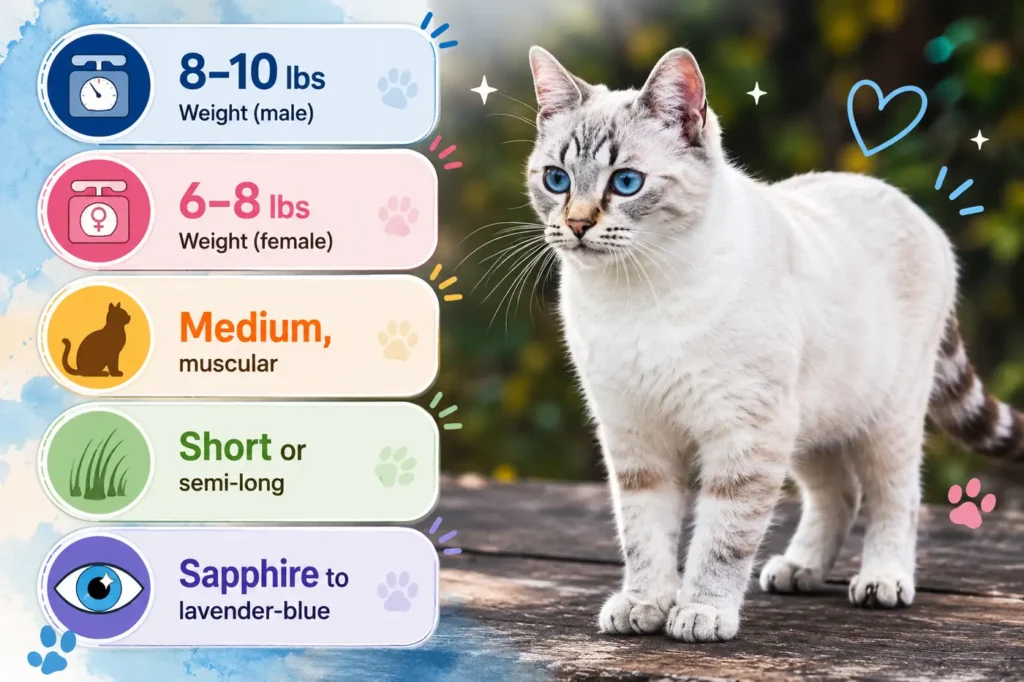
Since exact measurements are hard to pin down for such a rare breed, here’s the general range reported by breed historians and TICA breed documentation.
| Feature | Typical Range |
| Weight (male) | 8–10 lbs |
| Weight (female) | 6–8 lbs |
| Body build | Medium, muscular |
| Coat type | Short or semi-long |
| Eye shade | Sapphire to lavender-blue |
Ojos Azules Cats Personality and Temperament
Because the breed is so rare, detailed temperament studies don’t really exist, but reported behavior stays fairly consistent across owners and breed historians. Ojos Azules cats are generally described as affectionate, easygoing, and genuinely attached to their families. They tend to follow their owners from room to room, rather than sitting off in a corner by themselves.
Discover the Personality Traits That Make Ojos Azules So Special. Read more in Ojos Azules Cat Personality Comes With a Few Unexpected Traits.
That said, some individuals lean more independent or shy, since the breed was built through outcrossing with several domestic lines instead of one consistent personality type. Most do well with children and other pets when introductions happen slowly. Since so few of these cats exist, anyone claiming to know their “typical” personality with total confidence is overstating it a little.
See Why Their Temperament Makes Them So Fascinating. Read more in Ojos Azules Cat Temperament Proves Looks Can Be Deceiving.
Understand Their Temperament Before Bringing One Home. Read more in Ojos Azules Cat Dangerous? The Truth Behind Those Piercing Blue Eyes.
Health Tips for Ojos Azules Cats
Ojos Azules Cats don’t have a long list of publicly documented health issues, mostly because there simply haven’t been enough of them around to study over time. Still, responsible care means sticking to the basics: annual wellness exams, up-to-date vaccinations, and regular dental checks.
The Cornell Feline Health Center recommends yearly veterinary visits for every cat, even ones that seem healthy, since cats are notorious for hiding pain until a problem becomes serious. Keeping a consistent, healthy weight matters too, since extra pounds strain joints and organs in any breed. If you’re considering one of these rare cats, finding a vet with experience in genetically unusual breeds is a smart move.
Common Health Problems in Ojos Azules Cats
The biggest known concern with this breed isn’t a health problem in living adult cats; it’s what happens genetically when two blue-eyed genes combine. Kittens inheriting the gene from both parents can develop cranial deformities, a curled tail, excess white fur, and often don’t survive birth. This is why ethical breeding always pairs a blue-eyed cat with a non-blue-eyed partner. In cats carrying just one copy of the gene, no squinting, deafness, or crossed eyes have been reported.
Protect Your Ojos Azules with Early Health Awareness. Read more in Ojos Azules Cats Health Problems That Come With Those Famous Blue Eyes.
Learn Whether These Rare Cats Are Allergy-Friendly. Read more in Are Ojos Azules Cats Hypoallergenic? Rare but Not Allergy-Free.
Is the Ojos Azules Cat Breed Extinct?
Not quite, but it’s close. After discovering the risk of cranial deformities,TICA suspended active breeding programs. By 2014, it had moved the Ojos Azules breed to registration-only status. Existing cats could still be registered, but the organization no longer promoted or developed the breed. As a result, most sources now consider the Ojos Azules cat functionally extinct or critically endangered as a distinct breed.
Why Ojos Azules Cats Are So Rare Today? Read more in Ojos Azules Cat Extinct Before It Even Got Famous Worldwide.
Pet Food Guides for Ojos Azules Cats
Ojos Azules cats don’t have breed-specific dietary requirements, which is a relief for anyone who finds pet food shopping confusing. Like any cat, they need a diet built around real animal protein, since cats are obligate carnivores and can’t process carbohydrates efficiently. Wet food helps with hydration, and portion control matters more than owners expect, since even a medium-sized cat can gain weight fast on free-feeding. Fresh water should always be available, and switching foods gradually over 7 to 10 days avoids stomach upset. A quick chat with your vet beats any generic feeding chart online.
Best Diet for Ojos Azules Cats
A high-protein, low-carbohydrate commercial diet, ideally with real meat or fish listed as the first ingredient, tends to work well for most Ojos Azules Cats. Kittens need more frequent, calorie-dense meals to support growth, while adults generally do fine with two measured meals a day. Wet food served a few times a week can also help support long-term kidney and urinary health.
Everything You Need to Know About Ojos Azules Cat Nutrition. Read more in Best Food for Ojos Azules Cats That Actually Matches Their Rare Genetics.
Foods to Avoid for Ojos Azules Cats
- Onions, garlic, and chives, which are toxic to cats
- Grapes and raisins
- Chocolate and anything containing caffeine
- Raw bread dough or products containing xylitol
- Excess dairy, since many adult cats are lactose intolerant
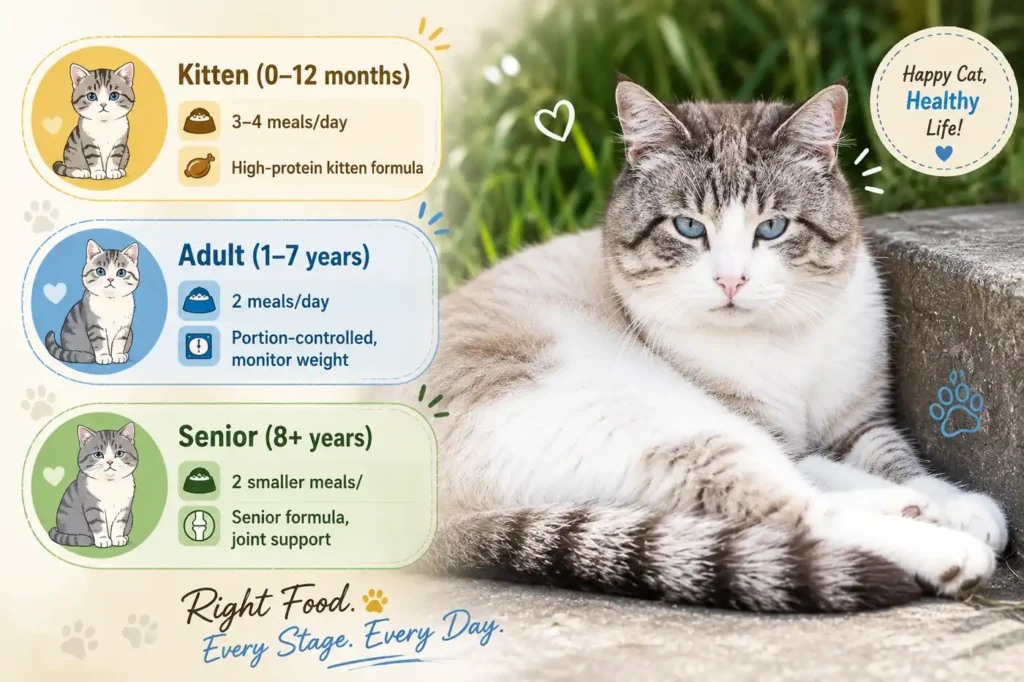
To make feeding simpler, here’s a general breakdown by life stage that applies to most healthy adult Ojos Azules cats.
| Life Stage | Feeding Frequency | Notes |
| Kitten (0–12 months) | 3–4 meals/day | High-protein kitten formula |
| Adult (1–7 years) | 2 meals/day | Portion-controlled, monitor weight |
| Senior (8+ years) | 2 smaller meals/day | Senior formula, joint support |
Grooming Guides for Ojos Azules Cats
Grooming needs come down mostly to coat length, since Ojos Azules Cats can be short-haired or semi-long-haired depending on lineage. Short coats need brushing once a week to remove loose hair, while longer coats benefit from two to three sessions weekly to prevent tangles. Bathing isn’t usually necessary unless the cat gets messy, since regular brushing keeps the coat clean on its own. Nail trims every two to three weeks help prevent overgrown claws. Overall, this breed isn’t high-maintenance in the grooming department, a nice change from some other rare breeds.
earn the Grooming Routine Every Ojos Azules Owner Should Follow. Read more in Ojos Azules Cat Grooming That Looks Complex but Stays Simple.
Coat, Ear, Nail, and Dental Care
Ears should be checked weekly for wax buildup or odor, and cleaned with a vet-approved solution when needed, never with cotton swabs pushed too deep. Dental care matters more than most owners realize, since the American Association of Feline Practitioners notes that dental disease affects many adult cats by age three. Brushing teeth a few times a week, or using approved dental treats, can make a real difference over time.
Training Tips for Ojos Azules Cats
Ojos Azules cats are generally considered intelligent and food-motivated, which makes basic training easier than expected. Short, positive-reinforcement sessions work best, ideally five to ten minutes at a time, since cats lose interest once a session drags on. Clicker training can teach simple commands like “sit” or “come,” and treats should stay small so they don’t add up into extra calories. Consistency matters more than intensity, so daily short sessions beat one long weekly session.
Unlock Your Ojos Azules Cat’s Intelligence with These Tips. Read more in Ojos Azules Cat Training Your Cat Is Secretly Waiting For.
Litter Box and Basic Behavior Training
Litter training is usually straightforward, and most kittens pick it up within days when given a clean, accessible box. The general rule from veterinary behaviorists is one litter box per cat, plus one extra, placed in a quiet spot. Scooping daily and doing a full litter change weekly helps prevent litter box avoidance, one of the most common behavior complaints among cat owners.
Ojos Azules Cats Lifespan
Because the breed has never had a large enough population for long-term studies, exact lifespan numbers are more of an estimate than a hard fact. Most sources place the typical Ojos Azules cat’s lifespan somewhere between 12 and 15 years, fairly average for a medium-sized domestic cat. Genetics, diet, and preventive veterinary care all play a bigger role in lifespan than breed alone, especially for a cat with such a limited gene pool. Keeping up with annual checkups, dental care, and a healthy weight gives any cat, rare or not, the best shot at a full life.
Learn How Proper Care Can Support a Healthier Life. Read more in Ojos Azules Cat Lifespan Hides a Genetic Risk Few Talk About.
Is the Ojos Azules Cat Right for You?
Ojos Azules Cats can be a good choice if you want a rare, friendly, and easygoing companion. They are known for their beautiful blue eyes and affectionate nature. However, this breed is extremely rare, so finding one from a responsible breeder is very difficult. If your main goal is to adopt a loving family pet, many other cat breeds offer similar personalities and are much easier to find.
Learn What to Expect Before Bringing an Ojos Azules Home. Read more in Ojos Azules Cat Adoption Isn’t as Simple as Walking Into a Shelter.
Frequently Asked Questions About Ojos Azules Cats
What does “Ojos Azules” mean?
It’s Spanish for “blue eyes,” a nod to the breed’s signature deep blue eye color, which shows up regardless of coat pattern.
Are Ojos Azules cats hypoallergenic?
No. No cat breed is truly hypoallergenic, since allergens come mainly from saliva and skin oils rather than fur, according to allergy and immunology researchers.
Can I still get an Ojos Azules kitten today?
It’s extremely difficult. Since TICA moved the breed to registration-only status, no active breeding programs are producing new litters, so most sources consider it critically rare.
What colors can Ojos Azules cats have?
Almost any coat color or pattern, including solid black, tortoiseshell, tabby, and calico, as long as the deep blue eye trait is present.
Are Ojos Azules cats good with children?
Generally yes. Most reported temperaments describe them as affectionate and adaptable, though individual personality can vary since the breed came from mixed outcrossing.
How rare are Ojos Azules cats?
Extremely rare. Only about ten were known to exist in 1992, and the population has likely stayed small or shrunk further since breeding was scaled back.