
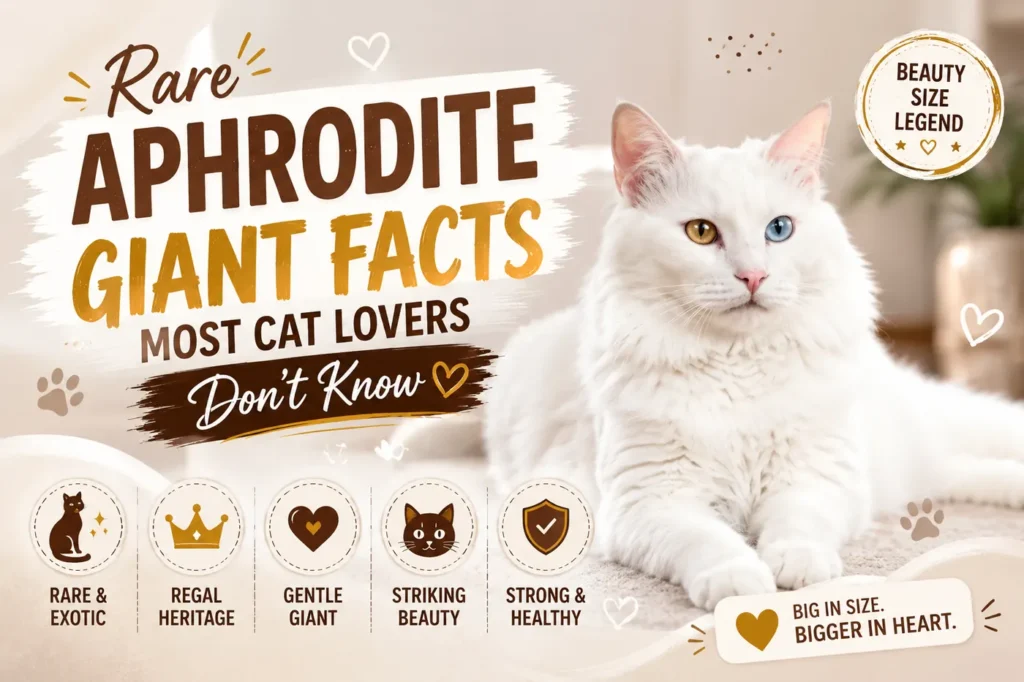
Aphrodite Giant cats come from Cyprus, where they developed naturally in the island’s mountains without human breeding programs. The Aphrodite Giant is a large, muscular cat known for its strength and its calm, affectionate nature toward people. TICA officially recognized the breed in 2017 under the name “Aphrodite,” though the World Cat Federation uses the fuller name “Aphrodite’s Giant.”
Because breeders are still rare outside Cyprus, finding an Aphrodite Giant kitten can take patience, and prices reflect that scarcity. Despite their tough, wild ancestry as skilled hunters of snakes and rodents, Aphrodite Giant cats are famous for being gentle, loyal, and almost dog-like with their owners.
Aphrodite Giant: What Makes This Cat Special?
The Aphrodite Giant isn’t a designer mix cooked up in a breeding program. It’s a landrace breed, meaning it developed naturally among Cyprus’s feral cats over close to 9,500 years, with almost no human interference. That wild upbringing shaped a cat that’s big, muscular, and tough, yet calm around people. Unlike breeds engineered purely for looks, this one earned its size and toughness through generations of survival in rocky, mountainous terrain.
The World Cat Federation (WCF) first recognized the breed around 2012, and the International Cat Association (TICA) followed in 2017. Fans often describe this cat as equal parts ancient relic and modern-day cuddle buddy, and it’s easy to see why.
Learn How the Aphrodite Giant Cat Breed Came to Be. Read more in The Aphrodite Giant Cat History From Cyprus to Cat Shows.
Here’s a quick snapshot of what makes this breed stand out.
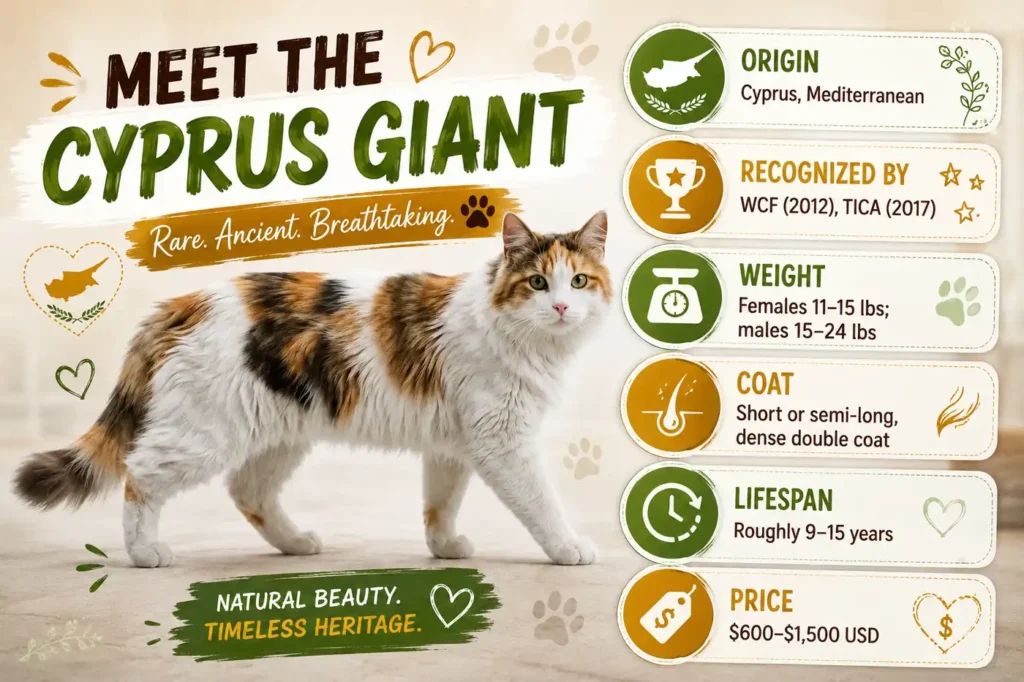
| Trait | Detail |
| Origin | Cyprus, Mediterranean |
| Recognized by | WCF (2012), TICA (2017) |
| Weight | Females 11-15 lbs; males 15-24 lbs |
| Coat | Short or semi-long, dense double coat |
| Lifespan | Roughly 9-15 years |
| Price | $600-$1,500 USD |
How Big Does an Aphrodite Giant Get?
An adult Aphrodite Giant typically weighs 11 to 24 pounds, with males noticeably larger than females. Full size takes time, too; these cats keep filling out for three to five years before reaching their mature, muscular frame.
Aphrodite Giant Appearance and Size
Size is the first thing anyone notices about the Aphrodite Giant. Bodies are long, lean, and powerfully muscled, with back legs slightly higher than the front, left over from climbing rocky terrain. Heads are triangular with a strong chin, and eyes are usually oval or almond-shaped in yellow, green, or blue.
The coat comes in short or semi-long lengths, both dense enough for cold winters, and appears in nearly every color except lilac, chocolate, cinnamon, fawn, mink, and pointed patterns. Growth is slow, so a kitten can look average-sized before a dramatic growth spurt hits around adolescence. Most owners are genuinely surprised by how large and solid this breed becomes.
Learn How Big Aphrodite Giant Cats Can Really Get. Read more in Aphrodite Giant Cat Size Turns Every Room Into Their Kingdom.
Aphrodite Giant Personality and Temperament
Don’t let the muscular build fool you; this is a soft-hearted, people-obsessed cat. The Aphrodite Giant follows favorite humans room to room and often prefers a lap over exploring alone. Many owners compare the temperament to a dog, thanks to the loyalty and eagerness to be involved in daily life.
Discover the True Temperament of the Aphrodite Giant Cat. Read more in Aphrodite Giant Cat Temperament Made Me Rethink Everything.
They’re generally calm rather than hyper, though playful bursts show up often with interactive toys. Long stretches alone don’t suit this breed, so a companion animal or an attentive household works best. Consistent affection goes a long way toward building trust with a new Aphrodite Giant.
Everything You Need to Know About Aphrodite Giant Personality. Read more in This Side Of Aphrodite Giant Personality Will Catch You Off Guard.
Aphrodite Giant Health Tips
As a natural landrace breed, the Aphrodite Giant tends to dodge many conditions that plague heavily inbred cats. Still, no breed is immune to health issues. Hypertrophic cardiomyopathy, a thickening of the heart muscle, shows up occasionally in large breeds, so a baseline cardiac screening is worthwhile. Ear infections and hairballs crop up more often too, thanks to the dense coat and upright ears.
The American Association of Feline Practitioners (AAFP) recommends annual wellness exams for all cats, and that matters even more for a large, slow-maturing breed. Watching weight closely is equally important, since extra pounds strain a big cat’s joints and heart. Routine vet visits and dental checks round out a solid health routine.
Explore the Health Needs of This Gentle Giant Breed. Read more in Loving Aphrodite Giant Health Tips to Keep Them Happy and Strong.
Best Food for Aphrodite Giant
Feeding a cat this size means paying attention to protein and portion control. Kittens generally need food around 30% protein to fuel that slow, multi-year growth period, while adults do well on 25-30% protein diets. Wet food adds hydration, which matters for urinary health, while dry kibble supports dental wear when chosen carefully. Because this breed can pack on extra pounds easily, measured meals beat free-feeding every time.
Omega fatty acids help keep the thick double coat glossy and reduce shedding. Always introduce new foods gradually, and check with a vet before switching brands. A large-breed or high-protein formula is usually the safest starting point.
Give Your Aphrodite Giant the Balanced Diet It Deserves. Read more in The Real Reason Best Food For Aphrodite Giant Matters So Much.
Aphrodite Giant Grooming
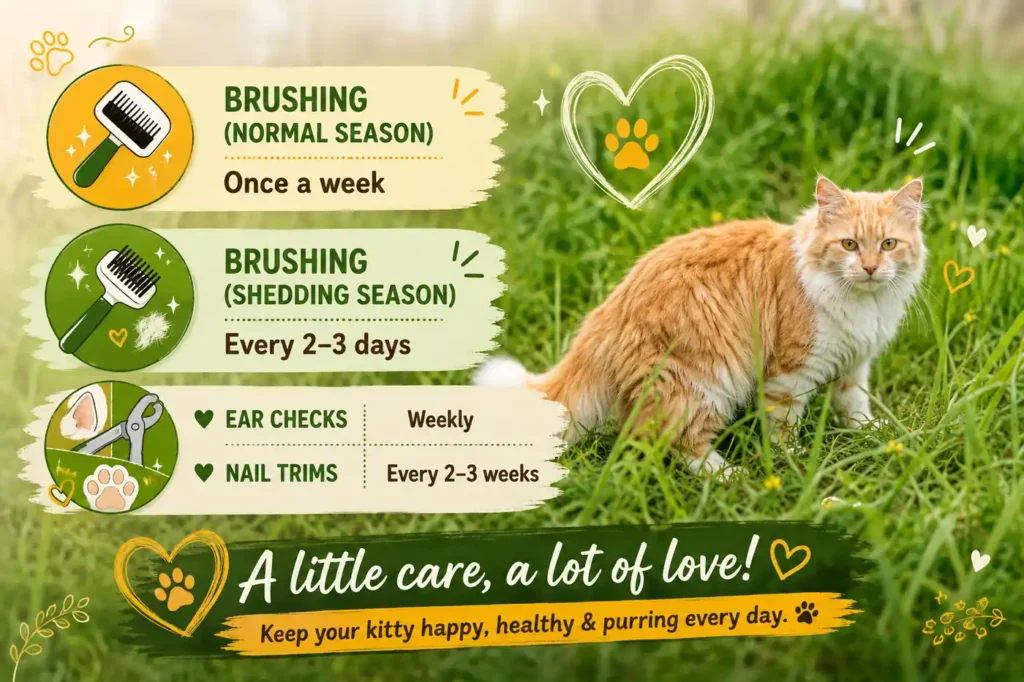
Grooming an Aphrodite Giant is refreshingly low effort for such a large cat. Weekly brushing handles most shedding and prevents mats in the dense coat, though shedding season calls for brushing every other day. Ears need regular checks, since wax buildup can lead to infections if ignored. Nail trims every few weeks and a quick dental check round out the basics. Bathing isn’t usually necessary unless the cat gets into something messy outdoors. Most Aphrodite Giants genuinely enjoy the attention, so grooming often doubles as bonding time.
Make Grooming Easier with These Essential Care Tips. Read more in Aphrodite Giant Grooming Looks Simple Until You Try It Yourself.
A simple weekly schedule keeps this breed looking and feeling its best.
| Grooming Task | Recommended Frequency |
| Brushing (normal season) | Once a week |
| Brushing (shedding season) | Every 2-3 days |
| Ear checks | Weekly |
| Nail trims | Every 2-3 weeks |
Aphrodite Giant Training
This breed’s intelligence makes training easier than most people expect from a cat. Aphrodite Giants respond well to positive reinforcement, especially treats paired with short, five-to-ten-minute sessions. Litter training is typically straightforward, and many owners teach basic tricks, leash walking, or simple recall commands. Clicker training tends to work nicely too, since this breed is food-motivated and eager to please. Consistency matters more than intensity; a few short sessions a week beat one long, frustrating one. Mental stimulation through training also helps prevent boredom-driven mischief.
Are Aphrodite Giant Cats Easy to Train?
Yes, Aphrodite Giant cats are considered easy to train relative to most breeds. Their intelligence and food motivation make short, positive-reinforcement sessions effective for litter habits, tricks, and even leash walking.
Discover the Best Training Tips for Aphrodite Giant Cats. Read more in Stop Doing Aphrodite Giant Training Until You Read This.
Aphrodite Giant Exercise and Daily Activity
Given their mountain-hunting ancestry, this breed still carries an active streak. Daily play with wand toys or puzzle feeders burns energy and satisfies natural hunting instincts. Sturdy cat trees are worth the investment, since this breed loves climbing and needs furniture strong enough to hold its weight.
Leash walking is possible with patient training, giving curious cats safe outdoor time. Without enough activity, an Aphrodite Giant can slide toward the obesity risk mentioned earlier. Overall, this is a moderately active breed rather than a nonstop whirlwind, which suits many households well.
Aphrodite Giant Lifespan and Common Health Concerns
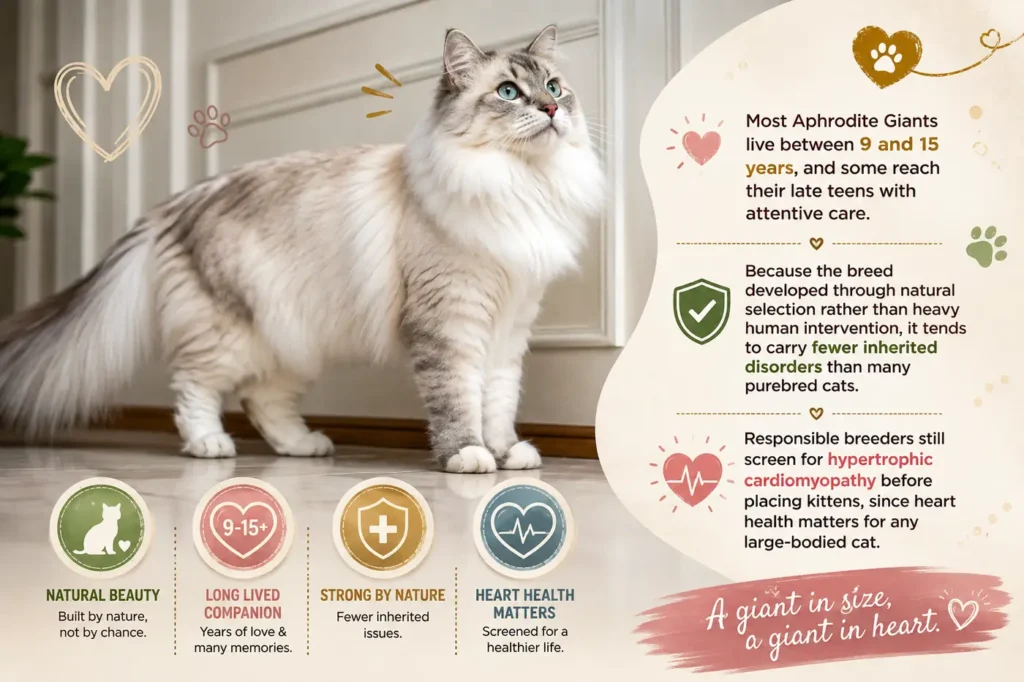
Most Aphrodite Giants live between 9 and 15 years, and some reach their late teens with attentive care. Because the breed developed through natural selection rather than heavy human intervention, it tends to carry fewer inherited disorders than many purebred cats. Responsible breeders still screen for hypertrophic cardiomyopathy before placing kittens, since heart health matters for any large-bodied cat.
The slow growth window also means joint and bone development deserves attention early on. Obesity remains the most common preventable issue, given how easily a big cat gains weight. Regular vet visits and steady weight tracking do most of the heavy lifting toward a long, healthy life.
Learn the Health Factors That May Affect Their Longevity. Read more in The Truth About Aphrodite Giant Cat Lifespan.
How Long Do Aphrodite Giant Cats Live?
The average Aphrodite Giant lifespan runs from 9 to 15 years, with some individuals living even longer under excellent care. Genetics, diet, and consistent veterinary attention all play a role in how long this breed thrives.
Discover What Makes a Cat Truly Hypoallergenic. Read more in Aphrodite Giant Cat Hypoallergenic? 7 Honest Facts About Allergies.
Is Aphrodite Giant Good for Families?
Families looking for a patient, affectionate companion often find exactly that in an Aphrodite Giant. This breed generally gets along well with children, dogs, and other cats when introductions happen gradually. Its calm, dog-like devotion means it tolerates a busy household better than most cats.
That said, the sheer size of an adult cat means small children should be supervised, since an enthusiastic 20-pound cat can accidentally knock over a toddler. Households with plenty of daily interaction suit this breed best, since it doesn’t thrive when left alone for long stretches. Families willing to give this cat attention and space tend to be rewarded with a loyal companion.
- Good for: families with older kids, dog-friendly homes, attentive owners
- Less ideal for: households empty all day, very small spaces without enrichment
Aphrodite Giant Care Requirements
Caring for this breed comes down to space, companionship, and consistency. Given their size, a roomy litter box and sturdy furniture matter more than with an average cat. Mental stimulation through toys and climbing structures keeps boredom at bay.
Because Aphrodite Giants dislike being alone, a second pet or an attentive household works better than a solitary setup. Their double coat handles cold climates well, and indoor life suits them fine with enough enrichment. Apartments can work too, given vertical space for climbing. Routine vet care and weekly grooming round out the basics.
How Much Does an Aphrodite Giant Cost?
Most buyers pay between $600 and $1,500 USD for an Aphrodite Giant kitten, with show-quality lines landing at the higher end. Location, breeder reputation, and health testing all influence the final price. Beyond the purchase, ongoing costs like food and routine vet visits add up quickly for a large-breed cat.
Cardiac screening for hypertrophic cardiomyopathy is a smart upfront investment, even though it adds to the bill. Because this breed is still rare outside Europe and North America, prices vary by region. Adopting from a rescue instead of buying can bring the upfront cost down considerably.
Know What You’re Paying Before Bringing One Home. Read more in Updated Aphrodite Giant Price You Need to Know Before Buying.
Here’s a rough breakdown of what buyers typically budget for.
| Cost Category | Typical Price (USD) |
| Pet-quality kitten | $600-$1,000 |
| Show-quality kitten | $1,000-$1,500+ |
| Annual food and supplies | $400-$700 |
| Cardiac (HCM) screening | $150-$400 |

Where Can You Find an Aphrodite Giant?
Because the Aphrodite Giant is still rare, finding one takes more legwork than picking a Persian or Siamese. Reputable breeders are most common in Europe, particularly Cyprus and the UK, though North American breeders are easier to find through TICA-affiliated cat clubs. A trustworthy breeder should provide health screening records, pedigree paperwork, and vaccination history.
Breed-specific rescues are rare, so general large-breed or natural-breed rescue groups are often the better route. Adoption fees run far lower than breeder prices and give a deserving cat a second chance. Taking time to verify a seller’s practices protects both your wallet and the cat.
Frequently Asked Questions
What is an Aphrodite Giant?
The Aphrodite Giant is a large, naturally occurring cat breed from Cyprus, recognized by TICA in 2017, known for its muscular build and dog-like personality.
How much does an Aphrodite Giant cost?
Most Aphrodite Giant kittens cost between $600 and $1,500 USD, depending on the breeder, location, and whether the kitten is pet-quality or show-quality.
How big do Aphrodite Giant cats get?
Adult Aphrodite Giants typically weigh 11 to 24 pounds, with males generally larger than females, and full size isn’t reached until three to five years old.
Are Aphrodite Giant cats good with kids?
Yes, they’re generally patient and affectionate with children, though supervision is wise given the cat’s large adult size.
What is the lifespan of an Aphrodite Giant?
Aphrodite Giants typically live between 9 and 15 years, with some living longer thanks to good genetics and consistent veterinary care.
Do Aphrodite Giant cats have health problems?
They’re generally healthy, but hypertrophic cardiomyopathy, ear infections, and obesity are the main concerns to watch for.
Are Aphrodite Giant cats easy to train?
Yes, their intelligence and food motivation make them easier to train than many breeds, especially for litter habits and tricks.