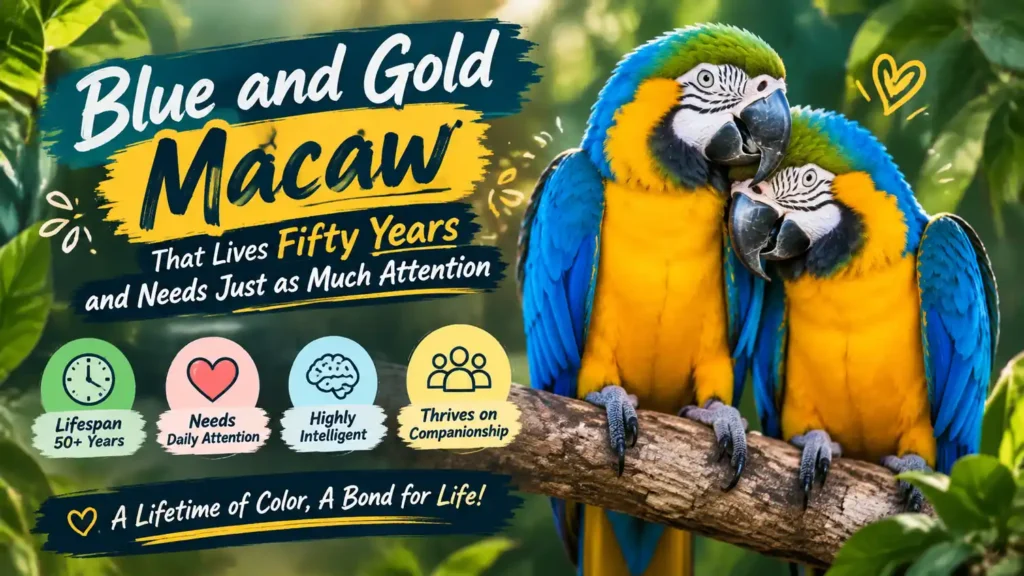
A Blue and Gold Macaw costs between $1,500 and $6,000, depending on the breeder, age, and location. This large parrot is known for its bright blue wings, golden yellow chest, and white facial patch with thin black feather lines. A Blue and Gold Macaw can grow up to 34 inches long, making it one of the biggest parrot species kept as a pet. It needs a spacious cage, daily time outside the cage, and a diet full of fresh fruits, vegetables, nuts, and quality pellets.
This bird is also highly intelligent and social, so it needs daily interaction, mental stimulation, and toys to stay happy and avoid stress-related behaviors like feather plucking. Its loud, natural voice means it is not the best fit for apartments or homes with close neighbors. With proper care, this bird can live 30 to 50 years, so owners must be ready for a long-term commitment before bringing one home.
Blue and Gold Macaw Facts
Ara ararauna, the scientific name for this species, ranges across swampy forests and savannas from Panama down through Venezuela, Colombia, Brazil, Bolivia, and Paraguay. Cobalt-blue feathers cover the back, wings, and tail, while a golden-yellow chest and a green-tinged forehead complete the signature look. Bare white facial skin lined with thin black feather rows sets this bird apart from every other macaw species. Adult birds reach between 32 and 36 inches from beak to tail, making them one of the longest commonly kept parrots. The International Union for Conservation of Nature (IUCN) currently lists the wild population as Least Concern, though numbers continue a slow decline from habitat loss. Quick identification markers include:
- Cobalt-blue back, wings, and tail with a golden-yellow chest
- Green-tinged forehead fading into the blue crown
- Bare white facial patch lined with thin black feather stripes
- Black, hooked beak built for cracking hard-shelled nuts
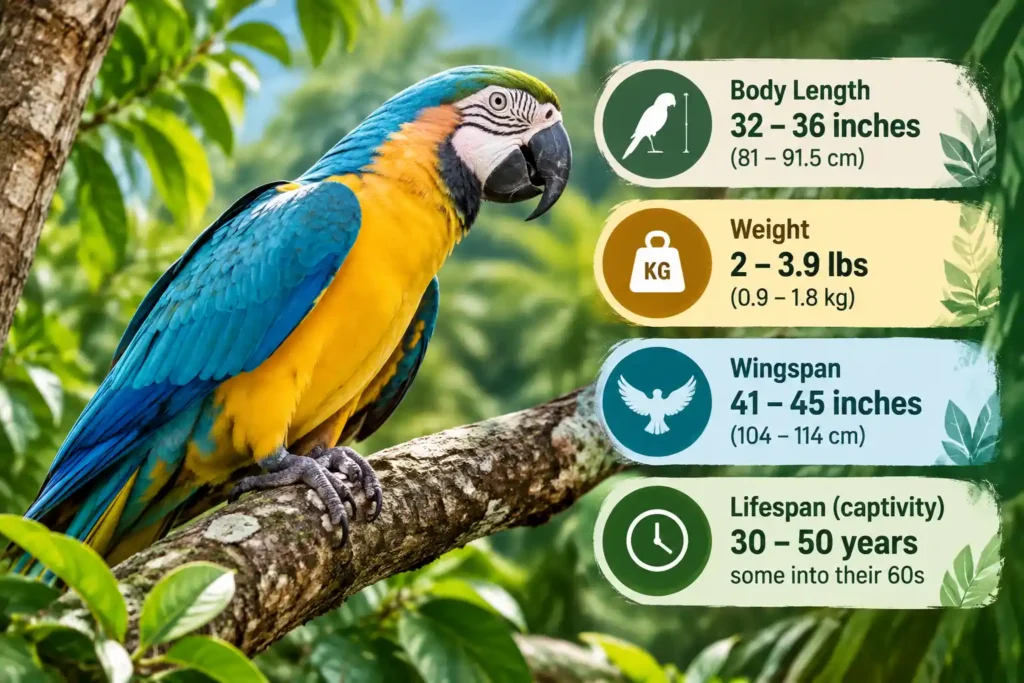
A full physical reference below makes size expectations clear before bringing one home:
| Measurement | Average Range |
| Body Length | 32 – 36 inches (81 – 91.5 cm) |
| Weight | 2 – 3.9 lbs (0.9 – 1.8 kg) |
| Wingspan | 41 – 45 inches (104 – 114 cm) |
| Lifespan (captivity) | 30 – 50 years, some into their 60s |
What Does This Parrot Cost in 2026?
Hand-raised baby macaws from reputable US breeders typically sell for $1,500 to $6,000 in 2026, with most healthy, well-socialized birds landing between $2,500 and $4,500. Listings priced far below $1,500 often signal poor socialization, missing health documentation, or an unethical source. Rescue organizations and adoption groups charge considerably less, usually $300 to $1,500, though many rehomed birds arrive with existing behavioral habits.
Beyond the purchase price, first-year setup costs add another $1,500 to $3,000 for a proper cage, perches, toys, and initial avian vet exams. Monthly ongoing expenses for pellets, fresh produce, and enrichment items generally run $150 to $350. Total lifetime cost easily reaches five figures once decades of food, vet care, and cage replacement are factored in.
Thinking About Buying One? Check the Blue and Gold Macaw Price. Read more in Blue and Gold Macaw Cheap to Buy but Never Cheap to Keep.
A quick breakdown by source clarifies where the money actually goes:
| Source | Typical Price (USD) |
| Reputable breeder (hand-raised baby) | $2,500 – $4,500 |
| Pet store/broker | $3,000 – $6,000 |
| Rescue or adoption | $300 – $1,500 |
| First-year setup (cage, supplies, vet) | $1,500 – $3,000 |
How Much Does a Baby Macaw Cost?
A baby macaw from a reputable US breeder costs $2,500 to $4,500 in 2026, including hand-feeding, weaning, and basic health screening. Prices above $5,000 usually reflect DNA sexing, disease testing, and breeder reputation. Budget an additional $1,500 to $3,000 for cage and initial supplies before bringing the bird home.
Lifespan and Life Expectancy
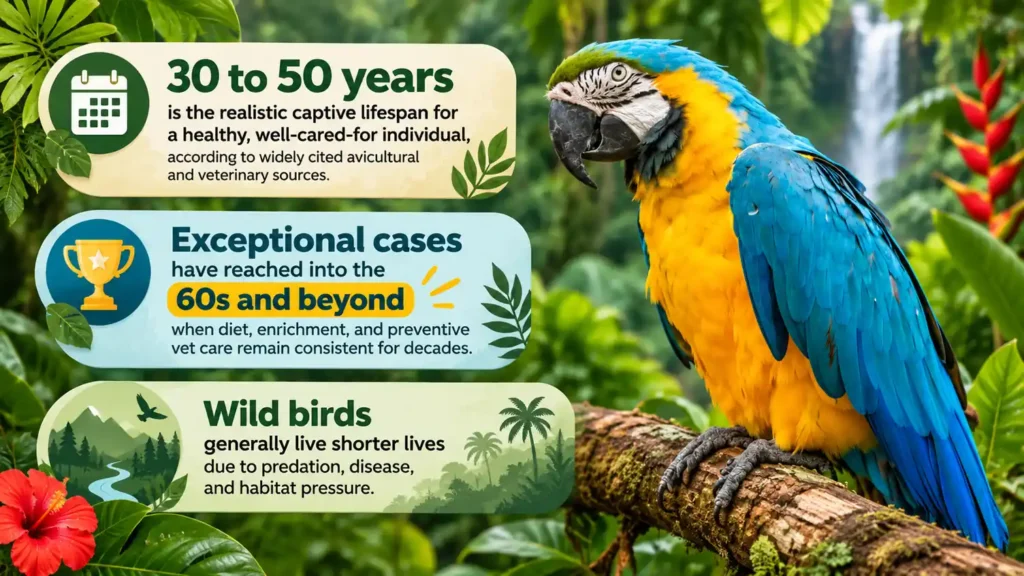
Thirty to fifty years represents the realistic captive lifespan for a healthy, well-cared-for individual, according to widely cited avicultural and veterinary sources. Exceptional cases have reached into the 60s and beyond when diet, enrichment, and preventive vet care remain consistent for decades. Wild birds generally live shorter lives due to predation, disease, and habitat pressure.
Genetics, diet quality, and stress levels influence longevity far more than most new owners expect. A macaw purchased at age two could realistically outlive its original owner, which is why estate planning for exotic pets has become a genuine conversation among breeders and rescues.
Blue and Gold Macaw Lifespan at a Glance
This macaw typically lives 30 to 50 years in captivity with a proper diet, veterinary care, and mental stimulation. Some individuals have been documented living into their 60s. Wild lifespans tend to run shorter because of predation and food scarcity.
Personality and Temperament
Highly social behavior defines a Blue and Gold Macaw more than almost any other trait, with daily interaction directly affecting long-term emotional health. Bonding tends to happen quickly and deeply, often extending to an entire household rather than a single favorite person. Playful antics, gentle head bobbing, and an eagerness to be included in daily activities make this bird feel like a genuine family member.
Boredom and isolation frequently trigger screaming, feather plucking, or destructive chewing within weeks. Daily out-of-cage time of at least two to four hours, combined with rotating toys, keeps behavior stable and affection consistent. Apartment living or long work hours away from home rarely suit this bird’s emotional needs. Common signs of stress or boredom include:
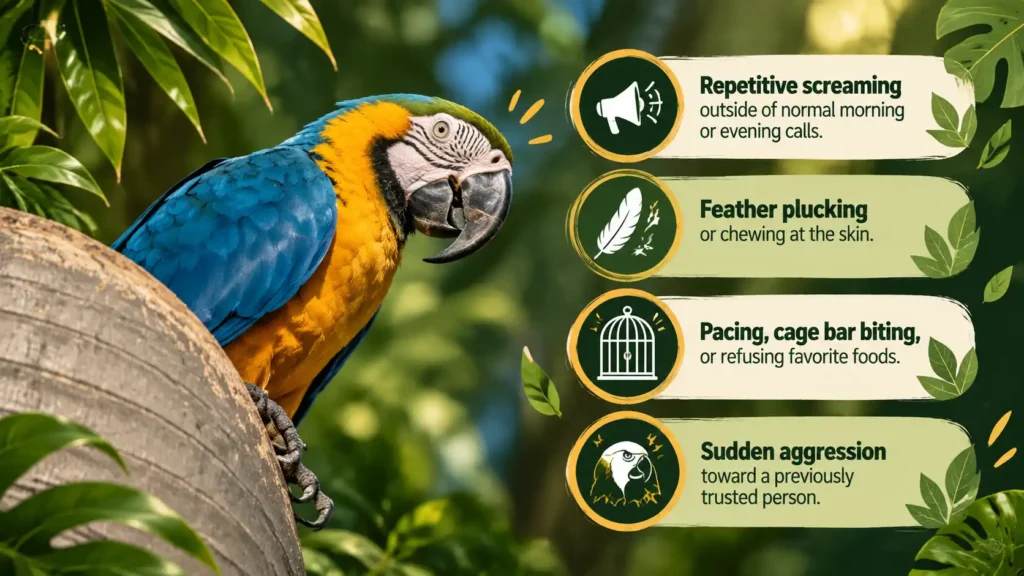
- Repetitive screaming outside of normal morning or evening calls
- Feather plucking or chewing at the skin
- Pacing, cage bar biting, or refusing favorite foods
- Sudden aggression toward a previously trusted person
Diet and Nutrition Essentials
Formulated pellets should make up 60 to 80 percent of a healthy diet, based on guidance frequently cited by avian nutrition specialists and reflected in Association of Avian Veterinarians (AAV) resources. Fresh vegetables and fruit fill another 15 to 30 percent, with dark leafy greens, carrots, and bell peppers offering strong nutritional value. A seed-only diet was standard decades ago but now carries well-documented risks including fatty liver disease, vitamin A deficiency, and obesity.
Feeding a Blue and Gold Macaw the same food eaten by owners can work in small amounts, provided items stay free of salt, sugar, and seasoning. Avocado, chocolate, caffeine, and alcohol remain strictly off-limits due to toxicity risks specific to birds. Fresh water and a clean feeding dish daily prevent bacterial buildup that commonly causes digestive illness. Weight gain, dull feather color, or picky eating often points to an imbalance long before a vet visit becomes urgent.
Explore Healthy Food Choices for Blue and Gold Macaws. Read more in Blue and Gold Macaw Diet Where Avocado Tops the Danger List.
A side-by-side list separates everyday safe foods from items that belong on the never-feed list:
| Safe in Moderation | Avoid Completely |
| Apples (no seeds), berries, carrots | Avocado |
| Sweet potato, broccoli, kale | Chocolate |
| Cooked plain egg, whole grains | Caffeine (coffee, tea) |
| Unsalted nuts (almonds, walnuts) | Alcohol |
| Bell peppers, mango, papaya | Onion and garlic |
Cage Size, Habitat, and Daily Care
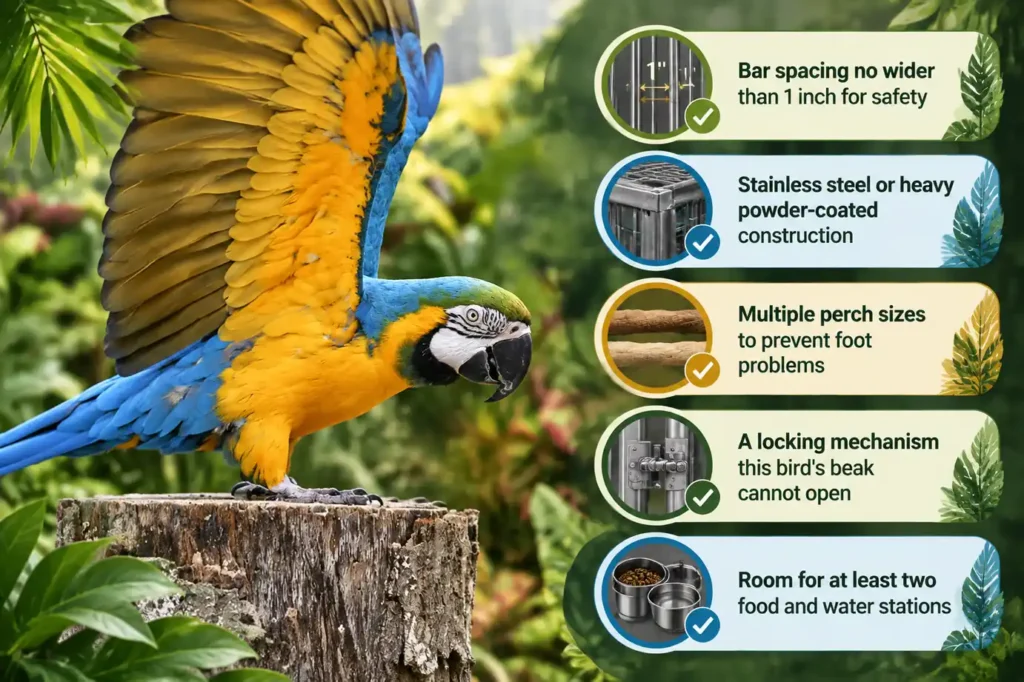
A minimum cage size of 48 by 36 by 60 inches gives an adult enough room to stretch, climb, and use both wings without hitting bars. Bar spacing wider than one inch creates an escape or injury risk given the strength of this bird’s beak and feet. Stainless steel or heavy powder-coated construction holds up far better than standard cages, which get destroyed within months. Placement matters just as much as size, with a bird room or large living area corner working better than a small bedroom or studio apartment.
Housing a Blue and Gold Macaw properly also means budgeting for a dedicated play stand outside the cage for daily enrichment. Humidity around 40 to 60 percent and consistent room temperature between 65 and 80 degrees Fahrenheit keep respiratory health stable. A cage checklist worth confirming before purchase:
- Bar spacing no wider than 1 inch for safety
- Stainless steel or heavy powder-coated construction
- Multiple perch sizes to prevent foot problems
- A locking mechanism this bird’s beak cannot open
- Room for at least two food and water stations
Talking Ability, Sounds, and Training
Vocabulary of 10 to 20 words comes easily to many individuals, with some exceptional talkers learning short phrases and mimicking household sounds like phones or microwaves. Contact calls exceed 105 decibels at close range, comparable to a chainsaw, making early neighbor and apartment considerations essential. Positive reinforcement training using target sticks and favorite treats produces far better results than dominance-based methods, which damage trust.
Short, consistent daily sessions of 10 to 15 minutes build step-up reliability and reduce biting incidents over time. Morning and evening tend to be the loudest natural vocalization periods, mirroring wild flock communication patterns. Realistic expectations about noise level prevent the disappointment that drives many birds into rescue within the first two years.
Wondering How to Train a Blue and Gold Macaw? Find Out. Read more Blue and Gold Macaw Training That Turns Squawks Into Trust.
Can This Macaw Learn to Talk?
Yes, many individuals learn 10 to 20 words or short phrases, along with whistles and household sound mimicry. Talking ability varies significantly between individual birds and depends heavily on early socialization and consistent interaction. Not every bird becomes a strong talker regardless of training effort.
Grooming, Beak Strength, and Bite Behavior
Bite force strong enough to crack Brazil nuts and thick branches means a defensive or startled nip carries real risk, especially for children nearby. Regular nail trims, safe beak conditioning through chewable wood toys, and occasional bathing keep grooming needs manageable at home. Wing trimming remains optional and controversial, with many avian vets now favoring full flight for exercise and mental health when the home environment allows safe supervision.
Bathing two to three times weekly, whether through misting or a shallow dish, supports healthy feather condition and reduces dust buildup. Beak overgrowth or flaking usually signals an underlying liver or nutritional issue rather than a simple grooming problem. A veterinary beak trim, never a home attempt, is the safest route when overgrowth appears.
Explore Essential Grooming Care for Blue and Gold Macaws. Read more in Blue and Gold Macaw Grooming Your Bird Will Actually Enjoy.
Common Health Problems and Veterinary Care
Proventricular Dilatation Disease, psittacosis, and feather-destructive behavior rank among the most serious conditions affecting captive macaws, according to veterinary literature on large parrot health. Annual wellness exams with an avian-specialist vet catch subtle illness early, since birds instinctively mask symptoms of weakness until a condition becomes advanced. Caring for a Blue and Gold Macaw responsibly means budgeting $150 to $400 per year for routine exams, with emergency visits running considerably higher.
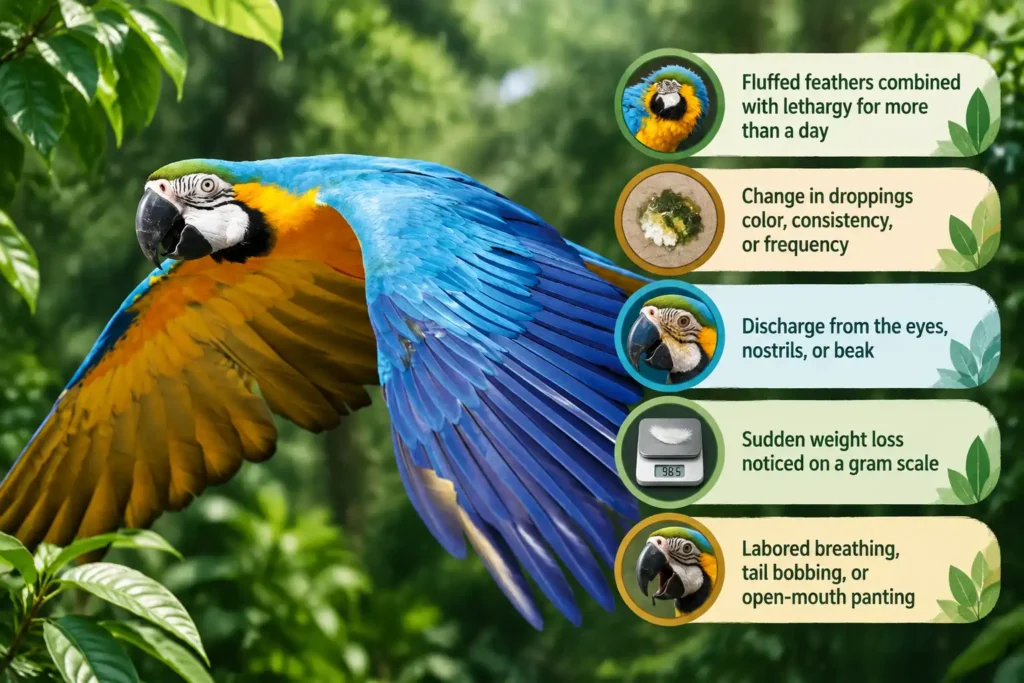
Nutritional deficiencies from outdated seed-heavy diets remain the single most preventable cause of chronic illness in this species. Psittacosis carries zoonotic risk, meaning infected birds can transmit respiratory illness to humans, which is why prompt veterinary attention matters for the whole household. Blood work and fecal testing during routine visits catch organ or parasite issues well before outward symptoms appear. Warning signs that call for an urgent vet visit include:
- Fluffed feathers combined with lethargy for more than a day
- Change in droppings color, consistency, or frequency
- Discharge from the eyes, nostrils, or beak
- Sudden weight loss noticed on a gram scale
- Labored breathing, tail bobbing, or open-mouth panting
Adoption, Baby Birds, and Male vs Female Differences
Adoption through a reputable rescue reduces upfront cost substantially while often including recent medical records and documented behavioral history. Baby birds require hand-feeding for 14 to 30 weeks before weaning, which is real labor reflected directly in breeder pricing. Visual sexing proves unreliable in this species since males and females share identical plumage, so DNA or surgical sexing remains the only accurate method despite some breeders claiming otherwise.
Legal documentation, including CITES paperwork for international movement, matters for buyers considering an imported bird rather than a domestically bred one. A hands-on visit to meet the breeder or rescue, ask for health records, and observe the bird’s behavior beats any online listing. Patience during the search process protects both the buyer’s finances and the bird’s long-term welfare. Questions worth asking before committing:
- Recent avian vet records and current weight history
- DNA sexing results and hatch or acquisition date
- Known behavioral issues, including biting or plucking history
- Diet currently being fed and any recent changes
- Return or rehoming policy if the placement does not work out
Final Thoughts on Bringing One Home
Bringing a large parrot like this into a home means committing to decades of companionship, not just a colorful pet with a one-time price tag. Physical facts, from a three-foot body length to a wingspan approaching four feet, set clear expectations for space and equipment. Realistic 2026 pricing spans $1,500 to $6,000 upfront, with monthly costs and vet care adding up over a lifespan that can stretch past 50 years. Social, playful, and prone to loud vocalizations, this bird thrives on daily interaction and struggles badly with isolation.
A pellet-based diet, a properly sized cage, and consistent positive-reinforcement training form the foundation of long-term well-being. Grooming needs stay moderate, though beak strength and occasional health issues call for a trusted avian vet on speed dial. Adoption offers a lower-cost, often better-documented alternative to buying a baby bird outright. Careful research before bringing one home remains the single best predictor of a successful, lifelong bond.
Frequently Asked Questions
How much does this parrot cost in 2026?
Expect to pay $1,500 to $6,000 for a hand-raised baby from a reputable breeder, with adoption fees running $300 to $1,500 through rescues.
How long does this bird live?
A healthy, well-cared-for individual typically lives 30 to 50 years in captivity, with some documented cases reaching into the 60s.
Is this species good for a first-time bird owner?
Most avian professionals recommend against it as a first bird due to size, noise, and lifespan demands; smaller parrots make better starter pets.
How big does this macaw get?
Adults typically reach 32 to 36 inches in body length with a wingspan between 41 and 45 inches, and weigh 2 to 4 pounds.
What should never be fed to this bird?
Avocado, chocolate, caffeine, alcohol, and onion or garlic are toxic and should never appear in any meal or treat.
Can males and females be told apart by looking at them?
No, both sexes share identical plumage, so DNA or surgical sexing is required for accurate identification.
Do these birds need a companion bird to stay happy?
No, a single well-socialized individual bonds strongly with human caregivers, though a second bird can work with careful, gradual introductions.